How Vikas D. Nahar started a business with 10 thousand rupees, and the company's valuation reached 700 million rupees
Read more
Aaj Tak
www.aajtak.in

How Vikas D. Nahar started a business with 10 thousand rupees, and the company's valuation reached 700 million rupees

Starting a business does not always require significant capital or a large team; sometimes it is enough to understand market needs and act in time. Vikas D. Nahar founded the healthy snack brand Happilo in 2016, starting with just 10,000 rupees and two employees. According to Traction data from January 2026, after almost a decade, the company's valuation reached approximately 700 million rupees.

However, this was not his first entrepreneurial experience. Before that, Nahar spent several years studying issues related to food production, international trade, and consumer brand creation.

Vikas D. Nahar grew up in a family involved in growing coffee and black pepper in Sakleshpur, Karnataka. He then received education in computer applications at the University of Bangalore, followed by an MBA in Marketing at Symbiosis Centre for Management and Human Resources Development (SCMHRD) in Pune. After graduating, he worked in the trading sector and gained experience in international spice trade with Jain Group. During this work, he had the opportunity to study packaged products and goods sold in stores across various countries in detail.

Before launching Happilo, Vikas had already tried himself in business. In 2011, he launched a retail project called Satvik Specialties Foods, which sold chocolate and sugar-free products. His older brother was also involved in this venture. Nevertheless, in 2015, Vikas decided to exit this enterprise. Having gained the necessary experience, he focused on the growing market of branded dried fruits and healthy snacks, as such products were much scarcer then than they are now, and customers often relied on traditional shops or foreign brands.

Vikas launched Happilo in September 2016. Initially, this business operated as a sole proprietorship, and the company was officially registered in 2018. Despite the modest initial capital, additional investment was later required to expand the business. According to available information, Vikas received an interest-free loan of 75 lakh rupees through a government credit guarantee program. These funds helped increase processing capacity, automation, packaging, and the business's supplier network.

Happilo gained an advantage through listing on BigBasket early on. After this, the brand was able to reach customers in six major cities. Gradually, the company increased its presence not only on online marketplaces like Amazon and Flipkart but also in physical retail stores.

Vikas D. Nahar also participated in the Shark Tank India show in the 2023 season as a guest investor, where he evaluated the business ideas of other entrepreneurs. In a video published as part of the show, Vikas D. Nahar stated that about 20 investors declined to invest before the launch of Happilo. Nevertheless, he started and developed his business.

According to Traction data from January 2026, Happilo's valuation was around 700 million rupees. Previously, in January 2022, its valuation was estimated at approximately 1.6 billion rupees. However, in the 2024-25 fiscal year, the company's revenue decreased by 15 percent, amounting to 282.57 million rupees. During this period, the company also incurred losses of 9.55 million rupees. The story of Happilo demonstrates that while a business can be built starting with small investments, there remains constant complexity in further development and profitability.

Similar stories

Chinese automaker BYD demonstrates significant sales growth in the Indian market
Read more
www.aajtak.in

Chinese automaker BYD demonstrates significant sales growth in the Indian market

The Chinese company BYD plans to launch its premium brand Denza into the Indian market. The company's current sales figures demonstrate its activity in this market. In September, the company sold a total of 1137 vehicles, which is a good indicator of growth compared to last year.

Although this figure may seem small when compared to giants like Maruti Suzuki, Tata Motors, and Mahindra, an analysis of the segment, portfolio, and previous sales data for BYD reveals significant progress. The company is actively promoting itself in the Indian market.

According to the report by Auto पंडित्ज, in September of last year (2025), the company delivered 513 vehicles. In September of the current year, this number increased to 1137 units, representing a year-on-year growth of 121.6%. Over this period, the brand sold 624 more cars.

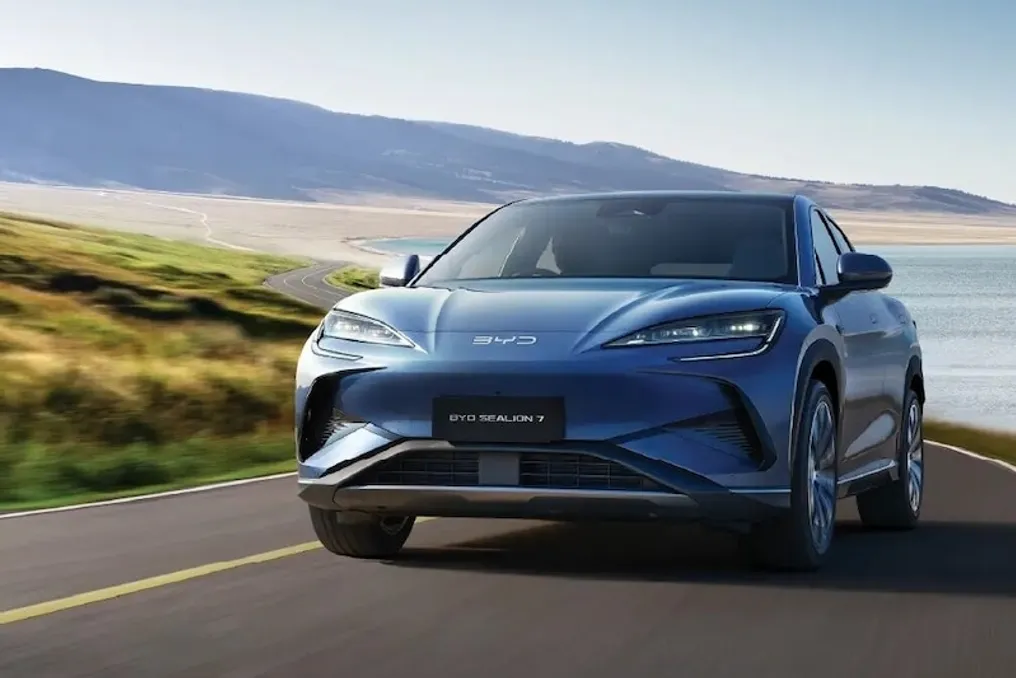
The main driver of growth was the demand for the Sealion 7 and Atto 3 models. These two electric vehicles account for 92% of the company's total sales volume. BYD's portfolio includes four models, with the Sealion 7 being the bestseller, selling 530 units in September. Only 216 such vehicles were sold in September of last year, indicating a year-on-year growth of 145.4% for this model.

The Atto 3 model ranks second in sales, reaching 519 units in September. Last month, 199 Atto 3 units were sold, corresponding to a year-on-year growth of 160.8%. However, Emax 7 sales declined: if 88 units of Emax 7 were supplied in September of last year, this figure was 76 units in September of this year. The least popular model was the BYD Seal, which was supplied in only 12 units.

Currently, BYD does not conduct full vehicle manufacturing in India. The company imports vehicles through CKD or SKD (Completely Knocked Down or Semi Knocked Down) channels and assembles them at its factory in Sriperumbudur, Chennai. Since BYD has not yet received permission for local production for several reasons, the company uses these supply routes, which leads to increased vehicle prices. Denza models may also arrive via this route and will be aimed at luxury segment buyers.

Arohi Surya left her job in Dubai with an income of 1 million dirhams and launched a startup earning 2.2 million rupees annually
Read more
www.aajtak.in

Arohi Surya left her job in Dubai with an income of 1 million dirhams and launched a startup earning 2.2 million rupees annually

Arohi Surya decided to leave her high-paying position in Dubai, where her annual income exceeded 1 million dirhams, to start her own business in India. Along with her husband Anmol Goel, they founded a plant-based dairy brand called Dancing Cow in 2022, investing 6.5 million rupees from personal savings. According to Startup Pedia, the company achieved an annual revenue of 2.2 million rupees in the fiscal year 25.

The idea for Dancing Cow arose while searching for a suitable alternative to dairy products in India. Starting as a personal need, the search quickly transformed into a business opportunity. Product development took about ten months, and sales began in March 2023. After that, the company started working directly with consumers and also expanded its network to cafes and restaurants.

Arohi's education includes obtaining a Bachelor of Technology (B.Tech) degree from LNM Institute of Information Technology between 2011 and 2015. She then received an MBA from IMT Dubai from 2015 to 2017. During her master's studies, she also participated in a semester exchange program in international marketing at ESC Rennes School of Business in France.

Previously, she gained initial experience in market research, sales, and data analysis through internships at institutions such as Imami, Landmark Group, and Indian Institute of Management Lucknow. In 2017, she joined Professional Traders Club DMCC in Dubai as a digital marketing specialist, where she handled digital campaigns, audience analysis, and building contacts with potential clients. One of her projects led to a 67% year-on-year increase in completed application forms.

In November 2018, Arohi took on the role of Marketing Manager for the West Asia and Africa region at HTC. Her responsibilities included developing marketing strategies, public relations, retail marketing, and growth initiatives for the company's smartphones, virtual reality products, and 5G routers. Alongside her corporate job, Arohi was also involved in business as a co-founder of Yalla Veggie in Dubai, where she held the position of Chief Marketing Officer, leading to a successful exit from that venture.

After returning to Lucknow, Arohi faced difficulties accessing the plant-based products she was accustomed to in Dubai. The situation worsened when her mother was diagnosed with diabetes, and her doctor advised excluding dairy products from her diet. While searching for an alternative, Arohi's attention was drawn to oat milk. She saw an opportunity to easily deliver plant-based alternatives to Indian consumers. Therefore, in 2022, she and Anmol Goel invested 6.5 million rupees from their personal funds to create Dancing Cow.

Creating a product that consumers would want to use daily required time. The team experimented with various ingredients for about ten months. They continuously improved the oat milk blends to achieve the desired taste, consistency, and uniformity. The founders aimed for the product not just to be a beverage but to be usable in everyday dishes such as tea, coffee, porridge, and sweets.

Finding a suitable manufacturing partner also proved to be a challenging task. According to the company information, there were only a small number of companies producing plant-based milk in India at that time. To find a potential partnership, Arohi visited Pune multiple times, and after negotiations with various dairy producers, the founders selected a company that met their standards for cleanliness and hygiene.

In March 2023, Dancing Cow began commercial sales of two products in its oat line: Oatish Extra Creamy Oat Milk for beverages and the ready-to-prepare Oatish Rich Chocolate Milk. The founders also saw potential in the foodservice sector. Supplying cafes and restaurants allowed them to reach customers through familiar drinks and desserts, as well as build relationships with establishments that could incorporate oat milk into their menus.

Arohi's experience in marketing, market research, and growth strategy helped introduce a relatively new product segment to Indian consumers. According to Startup Pedia, in the first year, Dancing Cow served about 30,000 customers and generated revenue of 9 million rupees. The founders expanded the brand by collaborating with cafes and restaurants, in addition to direct-to-consumer sales. Later, the company began supplying products to over 500 establishments across India.

By fiscal year 25, the company had served over 125,000 customers, achieving an annual revenue of 2.2 million rupees, which is 144% more than the first year's revenue. Arohi's journey demonstrates that stepping away from a comfortable job does not mean starting from scratch; the knowledge and skills gained through education, corporate experience, and previous entrepreneurship help lay the foundation for a new business.

Production of modern agricultural machinery under the Nasaf brand has begun in Kashkadarya
Read more
podrobno.uz

Production of modern agricultural machinery under the Nasaf brand has begun in Kashkadarya

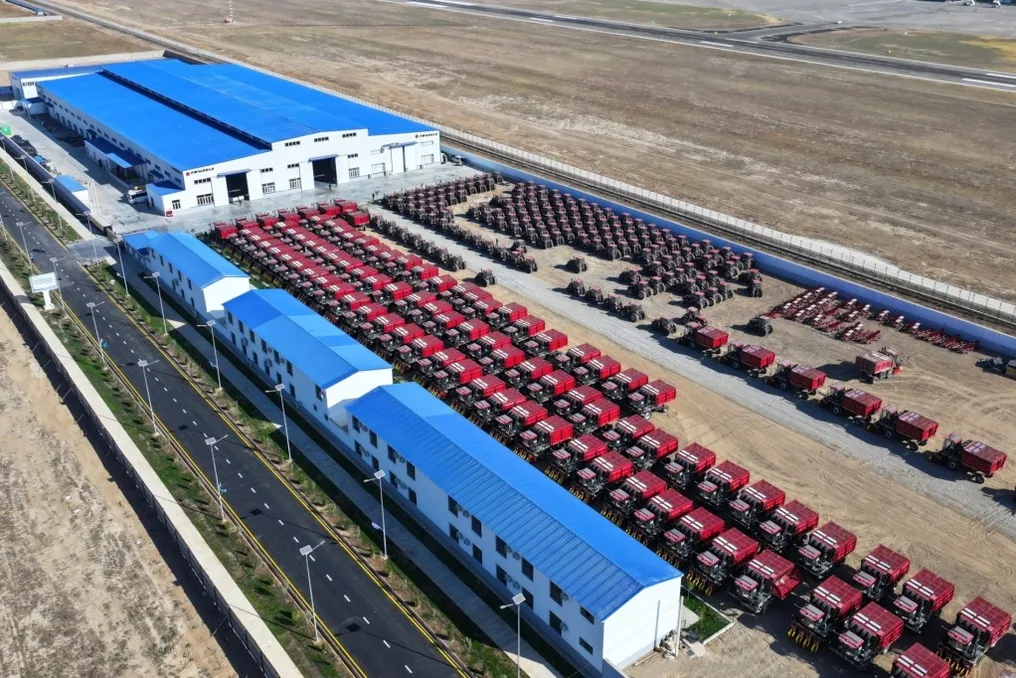
A line for assembling modern agricultural equipment under the Nasaf trademark has been launched in the city of Karshi. This production facility manufactures five different models of tractors, as well as cotton harvesting machines and other types of equipment.

It is planned that in the future, thirty percent of all produced goods will be sent to neighboring countries, with an annual export volume targeted at fifty million dollars.

President Shavkat Mirziyoyev inspected the activities of this enterprise, FM World, on October 21. This project, with a total cost of 20 million dollars, was fully financed by external investments.

The production site covers five hectares of land, of which 12 thousand square meters are allocated for production workshops. Two hundred jobs have been created at the facility, and some production processes are already automated.

The assembled tractors are equipped with GPS navigation and autopilot systems. Fertilizer application and machine monitoring processes are carried out remotely. The use of such technologies allows for more precise field work and reduces the consumption of fuel and other resources.

In addition to direct production, the enterprise organizes personnel training on operating the equipment directly in the field. Specialists learn skills in machine maintenance, prompt fault detection, and compliance with safe operating standards.

Currently, the localization level in tractor assembly reaches 30%. The enterprise independently manufactures one hundred thirty-eight types of components and parts. Plans include increasing this figure through the development of its own production and establishing partnerships with local companies.

The enterprise is part of the Chinese corporation Jiangsu World Group, which is listed among the five hundred largest private enterprises in China.

During his visit, the president emphasized that the development of local production of modern agricultural machinery will help reduce dependence on imports and ease the work of farmers. He also noted that the growth in the localization level corresponds to the reforms being implemented in the agrarian sector.

In the future, the enterprise aims to expand export destinations and enter the markets of neighboring countries.

Popular