Sky turning red in Dantewada: People surprised by the color of the clouds
Read more
Aaj Tak
www.aajtak.in

Sky turning red in Dantewada: People surprised by the color of the clouds

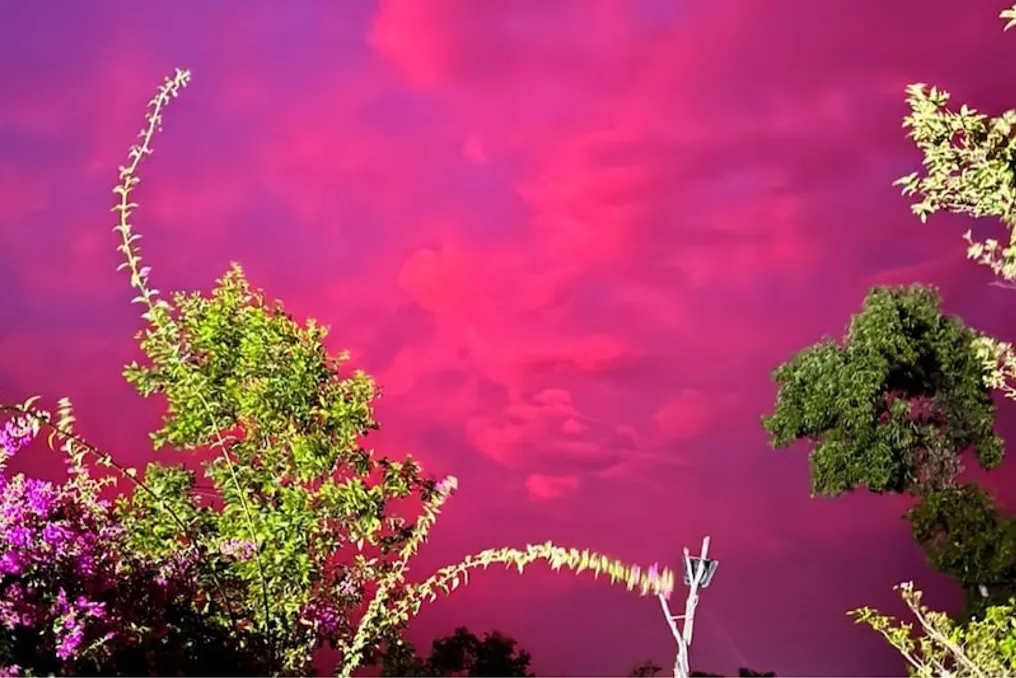
Local residents in Dantewada, Chhattisgarh, looked towards the sky and witnessed an unusual sight where the clouds appeared to be dyed red. This spectacle was so distinct that photos and videos of it began circulating rapidly on social media. It is necessary to await official information from the meteorological department or other relevant government agencies to confirm why the sky's color changed.

This incident occurred in the Kirandul area of Dantewada district, where the sudden appearance of red in the sky and clouds has astonished the people. Various speculations are being made on social media regarding this topic; some people are linking it to the impact of Cyclone Arnob, while others consider it a result of normal weather changes.

Currently, discussions are ongoing in the region about the effects of Cyclone Arnob and the changes in the weather, which are leading to conditions such as strong winds, cloud dynamics, and rainfall. Against this backdrop, the red color of the sky in Kirandul became a source of wonder for the people. However, no official body has confirmed yet what the actual reason for the clouds appearing red was.

To understand the scientific aspect of this event, one can recall sunrise and sunset times. It is known that the sky often appears red, orange, or pink during the morning and evening. This is because sunlight is a mixture of many colors, and when this light passes through the atmosphere, the blue rays scatter more.

The red and orange rays travel relatively farther, which can cause the sky to appear reddish under specific circumstances. Dust, smoke, moisture, and cloud conditions present in the air can also affect this color, but the exact cause in Kirandul remains unknown.

While pictures of the red sky in Kirandul are going viral on social media, the changes in the weather have increased the concern among farmers. Paddy harvesting is underway in this region, and the possibility of strong winds and rain could create difficulties for the farmers. If the harvested paddy crop gets wet in the fields, drying and securing it can be challenging. Thus, the same sky that people are capturing with mobile cameras is also causing farmers anxiety about protecting their hard-earned crops. Currently, pictures of the red clouds in Kirandul are being circulated.


Similar stories

Women celebrated Karva Chauth using video calls and gathering at observation points due to bad weather
Read more
www.aajtak.in

Women celebrated Karva Chauth using video calls and gathering at observation points due to bad weather

Due to the cyclonic storm 'Arnab' and poor weather, clouds covered many regions, including Delhi-NCR, Haryana, Faridabad, and Madhya Pradesh, accompanied by light rains. This forced women observing the Karva Chauth fast to wait a long time for the moon to appear.

However, after the weather improved, the moon became visible in several other parts of the country, such as Guwahati and Mumbai, through the clouds. In Delhi, many women broke their fast while watching the moon via video calls with relatives living in other cities.

In Alwar, Rajasthan, a long queue of cars formed on an overpass to see the moon. In the capital city of Delhi, where the sky was covered with thick clouds and it was raining, women could not see the moon at the scheduled time. In such cases, many used technology to perform worship by looking at the moon through a video call.

Women who could not see the moon due to cloud cover in Delhi contacted relatives living in cities where the moon was visible. Videos were published, such as those of Bharatiya Janata Party (BJP) MP Manoj Tiwari and his wife Surbhi Tiwari, who completed their fast by worshipping the moon using a photo on their phone. Other people also watched the moon through group and individual video calls, performing worship to the moon visible on the mobile phone screen.

In Alwar, Rajasthan, due to adverse weather conditions and rain on Karva Chauth day, there was also a delay in the moon's appearance. The moon was not visible in many areas of the city. As a result, a large number of women went with their families to the Tijara Fatak overpass. A long queue of cars formed on the overpass to see the moon. Women arrived there with their family members and completed their fast by offering prayers to the moon after its appearance. Video of this event is actively spreading on social media.

Due to the influence of cyclonic storm Arnab, rain, and cloudiness, it was difficult to watch the moon during Karva Chauth. In many places, the moon seemed to be playing hide-and-seek with the clouds. Despite the long wait, if the moon did not appear, some women completed their fast by looking at a picture of the moon on their mobile phone. Nevertheless, in places like Guwahati and Mumbai, the moon appeared through the clouds after the weather improved. Thus, despite the rain and bad weather, women celebrated the Karva Chauth festival in various ways by watching the moon.

Weather forecast for Nova Iguaçu (RJ): sun with many clouds during the day and cloudy night
Read more
g1.globo.com

Weather forecast for Nova Iguaçu (RJ): sun with many clouds during the day and cloudy night

The weather forecast for this Tuesday, the 27th, in Nova Iguaçu (RJ), indicates a day with sun interspersed with many clouds, as well as periods of overcast sky. The night will also be marked by many clouds. Predicted temperatures range between a minimum of 17ºC and a maximum of 23ºC.

Throughout the day, the morning and afternoon will feature sun with many clouds. In the nighttime period, the condition will be many clouds.

For Wednesday, the 28th, the weather expectation remains similar: sun with many clouds during the day and periods of cloudy sky, with the night equally covered by many clouds.

The forecasts for the next eight days in Nova Iguaçu (RJ) were automatically generated using data provided by Climatempo.

Why Plane Tree Leaves in Kashmir Turn Bright Red in Autumn, Unlike Many Trees in India
Read more
thebetterindia.com

Why Plane Tree Leaves in Kashmir Turn Bright Red in Autumn, Unlike Many Trees in India

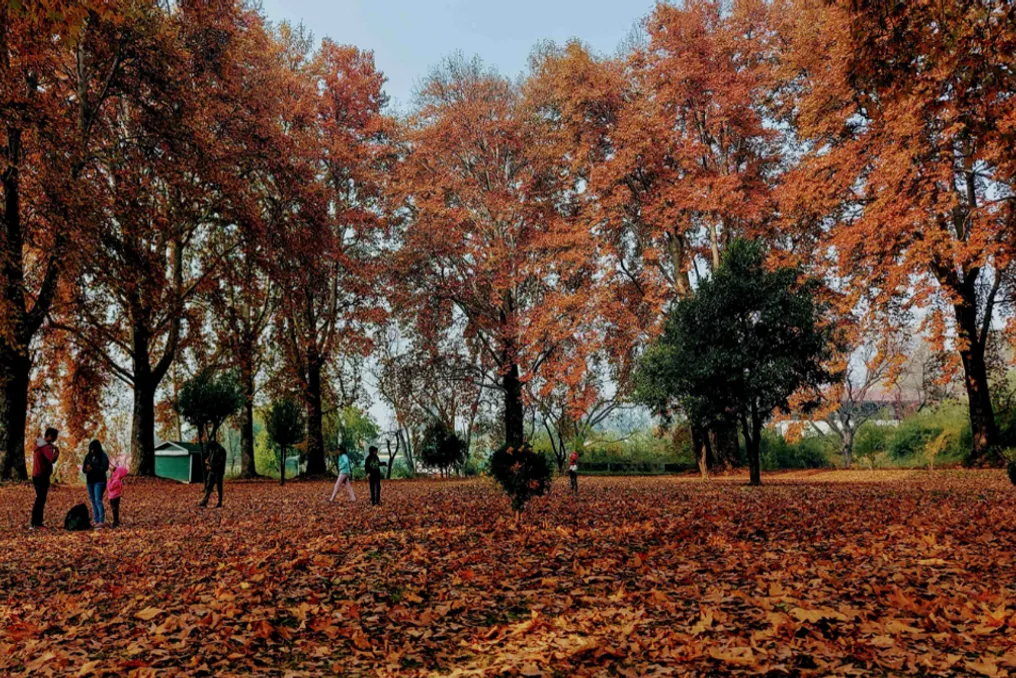
Every October, an amazing natural phenomenon begins in Kashmir. The broad green leaves of the plane trees gradually turn yellow, and then shades of orange and red appear. By November, entire trees seem to glow in the autumn light, their branches covered with leaves ranging from golden-yellow to deep crimson.

For the residents of Kashmir, this is a familiar sign of winter approaching. The Chinar (Platanus orientalis), known locally as Boen or Buen, is the state tree of Jammu and Kashmir. Its extensive canopy provides shade in the summer, and the change in color has become one of the most recognizable autumnal sights of the valley.

However, a question arises: why do the chinar trees turn such beautiful red tones, while many trees in warmer regions of India remain green? The answer lies within a single leaf.

What happens to the leaf as winter approaches?

Throughout spring and summer, the chinar leaves actively produce food for the tree. Their green color is due to chlorophyll—a natural substance that helps the leaves absorb sunlight. Using this energy, the leaves convert water and carbon dioxide into sugars that promote tree growth.

But as autumn arrives, the days in Kashmir get shorter, and the temperature begins to drop. The tree senses the coming cold and starts preparing for a harsher period. Before shedding its leaves, it extracts useful nutrients that can be stored and used in the spring. As a result of the gradual breakdown of green chlorophyll, hidden colors appear.

Interestingly, researchers Mohammad Imran Kozgar and Samiullah Khan explained in a February 2011 article in Science Reporter how the drop in temperature and the breakdown of chlorophyll reveal two types of pigments—carotenoids and xanthophylls. These pigments are responsible for the yellow and orange hues; essentially, the colors were already present in the leaves, but the green was masking them.

But where does this beautiful red color come from?

Red leaves have their own interesting history. In many trees that change color in autumn, reddish and purple hues are formed by pigments called anthocyanins. Unlike yellow and orange pigments, they can be synthesized as autumn progresses. Their formation depends on the amount of sunlight, temperature, and sugar levels in the leaves.

Nevertheless, scientists have not yet precisely determined which specific pigments create each shade of crimson observed in Kashmiri chinar trees. The 2011 article focuses exclusively on the appearance of yellow and orange pigments.

The climate of Kashmir plays a significant role in this seasonal transformation. Chinar trees are deciduous, meaning they shed their leaves before winter. Shorter autumn days and falling temperatures in the Valley contribute to the initiation of this process. In warmer parts of India, many trees follow different seasonal cycles: some remain green year-round, while others shed their leaves during the dry season.

For chinar trees, the change in color signifies a natural process of preparation for winter and resource conservation for the next growing season.

Why is Kashmir working to preserve these trees?

The significance of the chinar in Kashmir goes far beyond its autumn beauty. These trees were planted by Mughal rulers throughout the Valley, including the famous Nishat Bagh in Srinagar, located near Dal Lake. Their characteristic leaves continue to be used in Kashmiri embroidery, carpets, and papier-mâché.

However, the trees face threats related to damage, neglect, and illegal logging. In January 2025, The Indian Express reported on the 'Tree Aadhaar' initiative in Jammu and Kashmir, which assigns a unique identifier to each chinar to help authorities protect these trees.

The project coordinator, Dr. Syed Tariq, stated that at that time, 28,560 trees had been geo-tagged. Their records contain information about location, age, size, health status, and potential threats, allowing authorities to track individual specimens.

As the Kashmiri chinar trees prepare to shed their leaves every winter, efforts to protect them carry a simple hope: that future generations will be able to continue walking under their shade in the summer and watch their leaves turn golden and crimson every autumn.

Popular