Lenovo releases Tianxi AI 4.5 for AI PCs, allowing phones and tablets to offload tasks to desktop computers
Read more
Pandaily
pandaily.com

Lenovo releases Tianxi AI 4.5 for AI PCs, allowing phones and tablets to offload tasks to desktop computers

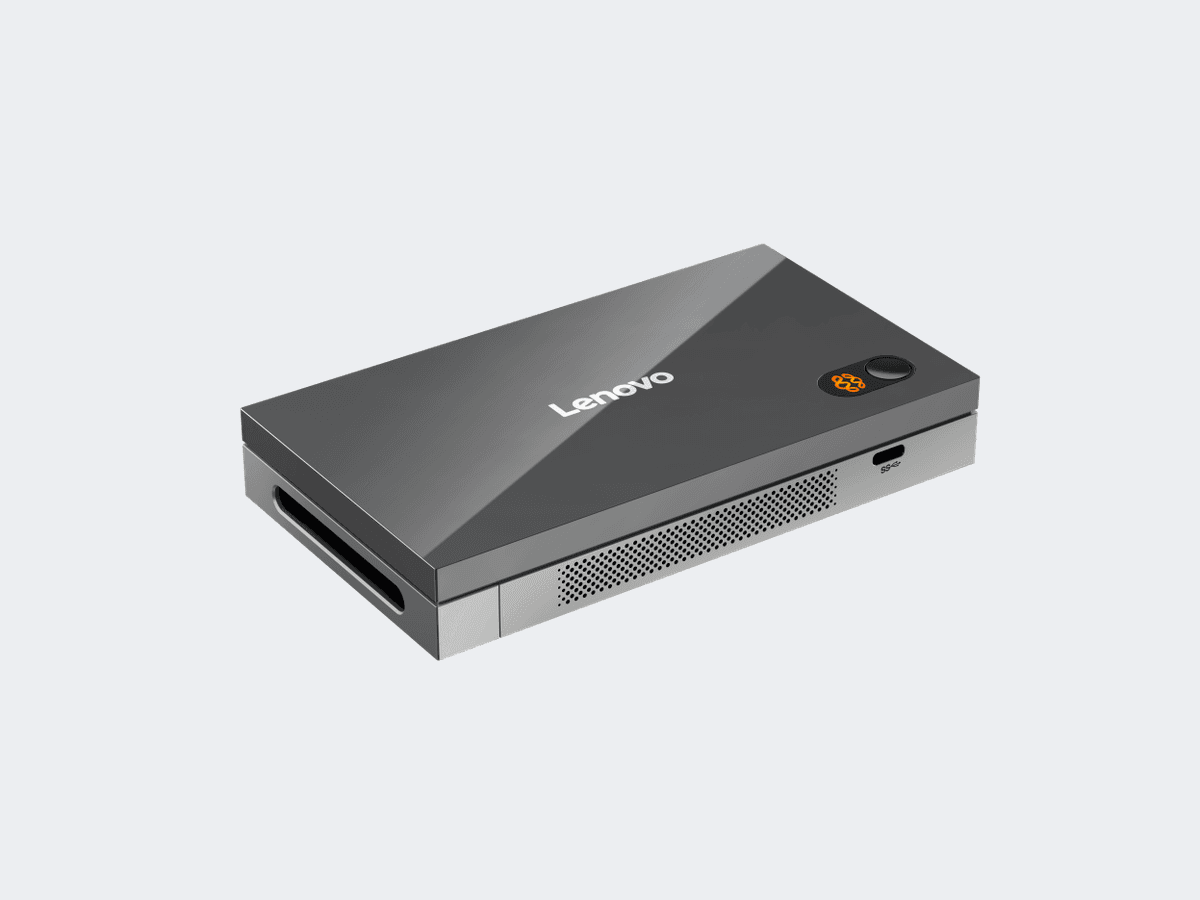
Lenovo introduced its personal AI agent, Tianxi AI 4.5, on Artificial Intelligence PCs (AI PCs) on October 30. This release followed versions for phones, launched on October 20, and for tablets, released on October 27, meaning the update now covers all three device types.

Lenovo positions this version for office workers, offering enhancements for completing work tasks, participating in meetings, and business travel. A central feature is the new Super Mode, which transforms the assistant from a question-answering tool into a task executor.

Tianxi AI 4.5 integrates connectors for Feishu, the Lenovo browser, and WeCom, linking them to a personal knowledge base. This allows for the shared use of local files and cloud documents. A user can issue a single command that prompts the assistant to break down and execute multi-step work across different applications, such as checking meeting schedules, assigning tasks, or finding material and sending a group notification.

A skills marketplace is also available, consolidating connectors, collaborative multitasking, and various skills, including enhanced slide generation. Furthermore, a system management package allows users to customize graphics, power, and system parameters upon request.

The AI note-taking function for meetings has been completely revamped. It now provides real-time transcription with subtitles and can participate in brainstorming as a participant, offering opinions and ideas. Attendees can ask the AI questions during a meeting based on the live transcript, and the system automatically highlights key moments. Upon session completion, summary cards are generated, saved to the knowledge base, and synchronized across devices.

The knowledge base now supports uploading up to 20 files, and images can be uploaded directly into the chat. All three device types support full-duplex voice input, allowing the conversation to be interrupted to add instructions mid-dialogue without repeating the activation word. When the user is away from their workstation, they can use their phone or tablet to initiate a complex task on an office or home AI PC running in Super Mode.

Task progress is visible on the phone or tablet, status notifications are received, and completed results can be previewed and managed remotely. The update also extends to Lenovo's AI Host machines. The AI Host P7 model can access cloud models or function as a local edge computing device. The new Auto mode selects between cloud and local models based on task complexity to minimize unnecessary token usage. These hosts support autonomous, round-the-clock task execution.

Similar stories

Contrast between the rejection of AI in games and its acceptance in hardware development
Read more
olhardigital.com.br

Contrast between the rejection of AI in games and its acceptance in hardware development

In December 2025, the game Clair Obscur: Expedition 33 received two negative awards at the Indie Game Awards due to the use of Artificial Intelligence (AI)-generated textures in the final version. In contrast, corporations like Nvidia employ AI to design their own GPUs, which are used in various games, without facing calls for boycotts.

This scenario raises the question of the gaming community's prejudice against AI. The distinction lies between what is considered acceptable and what is not, requiring analysis not only of data but also of examples where the technology was well-received and of internal practices within the hardware industry.

A survey conducted by GDC 2026, based on responses from over 2,300 industry professionals, assessed opinions on the use of generative AI. The results indicated a worse scenario compared to the previous year, especially regarding the use of generative AI.

Among the interviewed professionals, 52% believe that generative AI harms the industry, a significant increase from the 30% recorded the previous year and 18% two years prior.

The numbers are even more critical when looking at the gaming public. A survey conducted by Quantic Foundry, which collected data from 1,799 players, revealed that about 85% of them expressed an unfavorable opinion towards the use of generative AI, with approximately 63% holding a very negative view.

The Quantic Foundry study points out that the gaming public's motivation is a relevant factor. They demonstrated greater negativity when AI is applied to the creation of art, music, sound effects, narrative, and dialogues.

For comparison, the use of AI to adjust difficulty was viewed negatively by 27% of the public, while its use in visual arts reached 83% aversion. This public resistance was also high in other creative areas, with 77% against music and sound effects, and 70% against narrative and dialogues. This suggests that public objection tends to decrease as the use of AI moves away from strictly creative processes.

An example of AI application that found some public acceptance is DLSS and related technologies. These systems use AI to increase frame rate (FPS), reduce latency, and enhance visual quality. Users welcomed these features due to the remarkable quality and performance achieved.

However, problems began to arise during the evolution of DLSS. Features initially focused on performance turned into dependencies for game development, causing new titles to require these tools, often presenting performance flaws even on powerful computers.

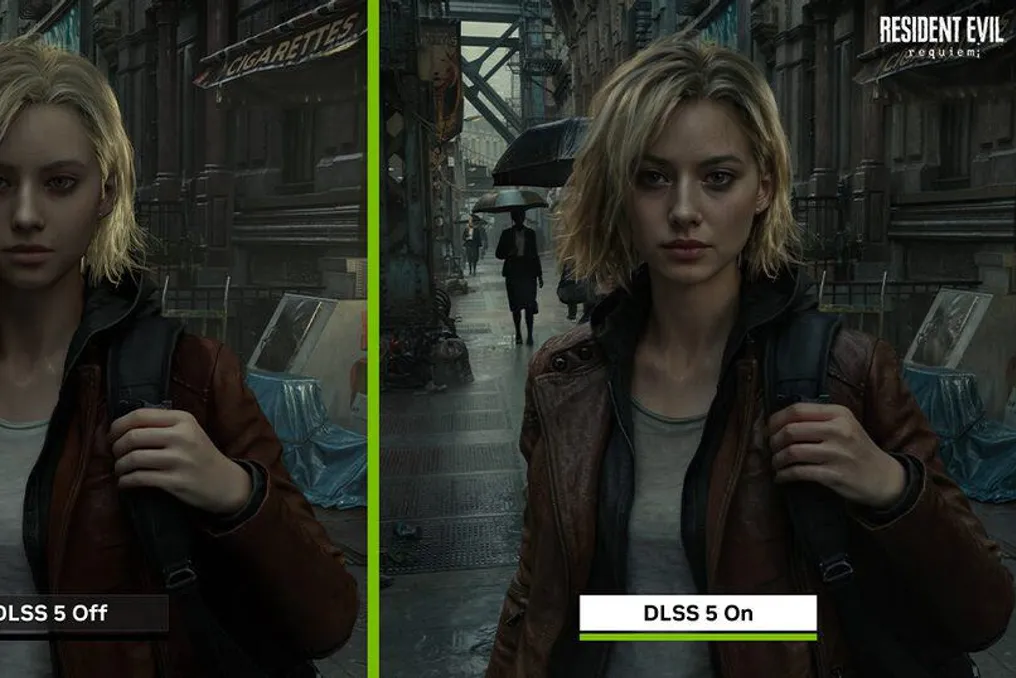
The situation worsened with the presentation of DLSS 5. This tool, which incorporates real-time neural rendering to reconstruct pixels with photorealistic lighting and materials, showed difficulties in maintaining visual coherence between scenes, resulting in the distortion of the original work and artificial and generic characteristics. Such problems were received extremely negatively by the gaming community.

Companies like Nvidia apply AI in their chip designs, covering everything from component layout to final project validation. A notable result was the development of a 64-bit adder—a circuit responsible for summing binary values—that occupies about 25% less chip area when created using PrefixRL, as reported by Jeff Dean of Google and Bill Dally of Nvidia.

At the 2026 DAC (Automation and Design Conference), companies such as Synopsys, Cadence, and Siemens displayed AI-assisted automation projects. Synopsys' long-duration design verification agent demonstrated a process 50 times faster, according to the company itself. Simultaneously, Siemens' project, in collaboration with Nvidia, presented agents capable of characterizing libraries more than ten times faster.

Although these are only two examples, they share one common point: the partial replacement of human work by AI did not generate revolt, protests, or boycotts from the public.

Zhou Hongyi of 360 states that sovereign AI operating system is already in use in some organizations
Read more
pandaily.com

Zhou Hongyi of 360 states that sovereign AI operating system is already in use in some organizations

Zhou Hongyi, founder of 360 Security Technology, announced on October 23rd that his company has developed a sovereign artificial intelligence operating system that is already implemented in several government and corporate structures. The core idea is that businesses should independently control their models, computing power, and data instead of renting them.

These statements were made during a discussion of the recent release by DeepSeek, which opened its internal framework for DeepInfer inference. This framework allows for simultaneous planning of CPU and GPU operations, reducing waiting time and redundant computations. Zhou viewed this release as a sign of technical confidence and openness within the open-source community.

Zhou's broader thesis is that as open models and inference software develop, companies will no longer need to train large models from scratch; they can run AI on their own servers, creating agents that understand the specifics of their business.

Defining Sovereign AI

Zhou defines sovereign AI as a situation where the user has authority over the AI they are using. He identifies five levels of this concept: nations, institutions, enterprises, individuals and families, and devices. He emphasizes that at the enterprise level, this aspect is most critical in the age of agents.

Many companies use AI that is effectively rented, with models, computing resources, and platforms controlled by third parties. In such cases, if the provider raises prices, the company must accept it, and a change in service could lead to the cessation of its operations. According to Zhou, once agents begin performing real work, the issue of ownership of the data processed by them and the accumulated knowledge will become a decisive factor, defining the boundaries of the company's key assets.

According to 360, this operating system includes resources for computation and planning, a sovereign large model, an enterprise AI knowledge base, an agent factory, Agent Teams, a human-agent collaboration platform, and security management. Companies have the option to choose their own models, plan their own computations, and fine-tune on their own data. Data remains within the company's internal network, and the knowledge, skills, experience, and task records generated during use belong to the company itself.

Security is integrated into the system to minimize the risk of unauthorized agent actions. The system monitors and audits agent permissions, tool calls, and operation execution, with key actions requiring human approval, ensuring that the final decision remains with the company.

360 did not disclose client names or the number of deployments, and the description provided is currently architectural rather than a set of technical specifications.

Access to pandaily.com website is restricted using Cloudflare
Read more
pandaily.com

Access to pandaily.com website is restricted using Cloudflare

The owner of the pandaily.com website has temporarily blocked user access to the resource. This restriction is implemented using the Cloudflare service.

For more detailed information about this situation, users can refer to the official Cloudflare documentation on HTTP status codes, specifically at the link https://developers.cloudflare.com/support/troubleshooting/http-status-codes/cloudflare-1xxx-errors/error-1015/.

Popular