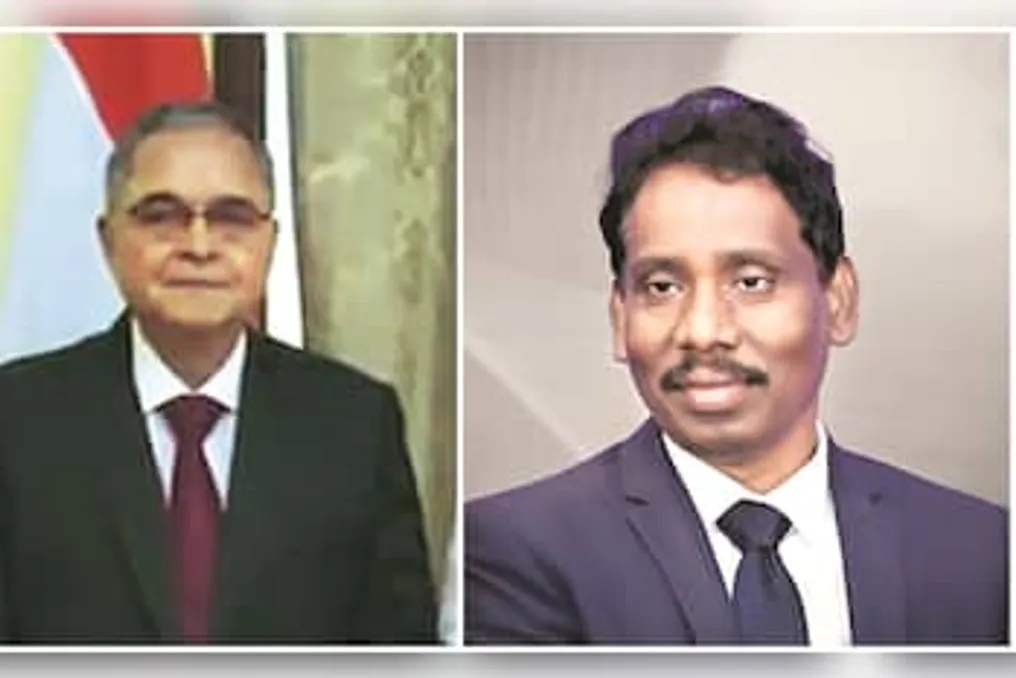
Former CVC Member Suresh N Patel to Head Banking Sector Reform Committee
Read more
Business Standard
business-standard.com

Former CVC Member Suresh N Patel to Head Banking Sector Reform Committee

The Union's Ministry of Finance has established a long-awaited high-level committee to analyze the country's banking sector. The committee's task is to develop structural, regulatory, and legislative changes that will enable banks to achieve global competitiveness and better meet the needs of the developing economy.

The Banking Committee for Viksit Bharat, first announced by Finance Minister Nirmala Sitharaman in the Union Budget for 2026–27, will be headed by former Central Vigilance Commissioner (CVC) Suresh N Patel. He possesses over thirty years of experience in the banking sector, having previously served as Managing Director and CEO of Andhra Bank, as well as Executive Director of Oriental Bank of Commerce.

The committee includes Reserve Bank of India (RBI) Deputy Governor Shirish Chandra Murmu, Padmaja Chunduru, former Managing Director and CEO of Indian Bank, and N S Vishwanathan, former Deputy Governor of the RBI. The joint secretary (Banking) of the Department of Financial Services will serve as the committee's secretary. According to the Ministry of Finance statement, the committee has six months to complete its work, with the deadline set for April 2027.

Although the committee's mandate does not explicitly require bank consolidation, Shaktikanta Das, the Prime Minister's Chief Secretary, stated at the Business Standard BFSI Insight Summit in Mumbai on Tuesday that India must create banks and financial institutions of such scale, stability, and international presence to compete with leading global lenders. His remarks hinted at the necessity for further consolidation of Public Sector Banks (PSBs).

A crucial part of the commission's directives is the review of the Priority Sector Lending (PSL) system and the Leading Bank Scheme. The committee will assess their relevance, effectiveness, and coordination in ensuring inclusive and balanced lending, placing greater emphasis on data-driven lending and evolving economic priorities. In May, the Council of Economic Advisers to the Prime Minister also called for a review of the PSL system, arguing that it should prioritize social equity by directing credit to small and marginalized farmers, micro-enterprises, and vulnerable populations, instead of maintaining a broad sectoral classification that has expanded over time.

Another key area will be the assessment of capital requirements for banks, Development Financial Institutions (DFIs), and Non-Banking Financial Companies (NBFCs), along with formulating recommendations on funding sources and mechanisms to support credit growth. Sachin Sachdeva, Vice President and Head of Financial Sector Ratings at Icra, noted that reviewing long-term capital needs and financing mechanisms will be particularly vital for sustaining strong credit growth by banks and financial institutions. He added that 'adequate capital, competitive financing, and a favorable regulatory framework supported by appropriate prudential safeguards will be crucial to supporting India's growing investment needs.'

The committee will also examine differences in the cost of capital for enterprises and propose policy measures to stimulate private investment and support sustainable economic growth. An analysis of existing regulatory and legal frameworks governing commercial banks, regional rural banks, and cooperative banks will be conducted to enhance efficiency and simplify access and operations. Furthermore, the panel will evaluate current banking practices and prudential norms against global best practices and propose a roadmap for creating globally competitive Indian banks.

This process occurs amid India's drive to expand the scale and reach of its banking system while meeting the financial needs of a growing economy. The ability of banks to mobilize capital, manage risks, and efficiently provide credit will be critical for financing investments and supporting the government's ambitions for Viksit Bharat by 2047.

The committee will also prepare a plan for implementing Artificial Intelligence (AI) and digital innovations in banking institutions, as well as cybersecurity protection measures. It will recommend measures for talent attraction and capacity building to prepare the banking workforce for technological changes. The charter also allows the government to refer additional matters to the committee for consideration.

Kuntal Sur, Partner and Head of Financial Risk and Regulatory Department at PwC India, believes that this review will be crucial as the banking sector expands to meet the lending needs of the next generation, strengthen risk management, develop innovative financial products, and accelerate digital transformation. Sur added: 'The resulting structural reforms are expected not only to strengthen capital efficiency but also to create an inclusive financial ecosystem capable of supporting India's long-term macroeconomic ambitions.'

The committee is expected to use this opportunity to re-examine several long-standing structural and regulatory issues in the banking sector. These include discussions on allowing corporations to enter the banking business, the existing 26 percent limit on large shareholders' voting rights, and the need to optimize the approval process for Foreign Direct Investment (FDI) in banks.

The panel is also expected to study ways to attract a larger volume of domestic and foreign capital into the banking system to support the creation of larger lenders capable of financing India's growing economy. This may involve reviewing restrictions on large shareholders' voting rights and exploring the possibility of converting large NBFCs into banks subject to appropriate regulatory guarantees.

The banking sector has been the subject of a series of major foreign investments in recent years. These include the proposed acquisition by Fairfax Financial Holdings of 60.72 percent of IDBI Bank shares for 52,878 crore rupees ($5.56 billion), the acquisition of 60 percent of RBL Bank shares by Emirates NBD for approximately 26,016 crore rupees ($2.75 billion), and the acquisition of 20 percent of Yes Bank shares by Japan's SMBC for approximately 13,483 crore rupees ($1.6 billion).

Currently, the Indian banking sector comprises 12 public sector banks, 21 private banks, 11 small finance banks, and five payment banks. Since the beginning of the millennium, the RBI has issued only four universal banking licenses—Kotak Mahindra Bank, Yes Bank, Bandhan Bank, and IDFC Bank (which later became IDFC First Bank)—despite private lenders continuously expanding their presence and reducing the dominance of public sector banks. Last year, the regulator approved the application of AU Small Finance Bank to convert into a universal bank.

Similar stories

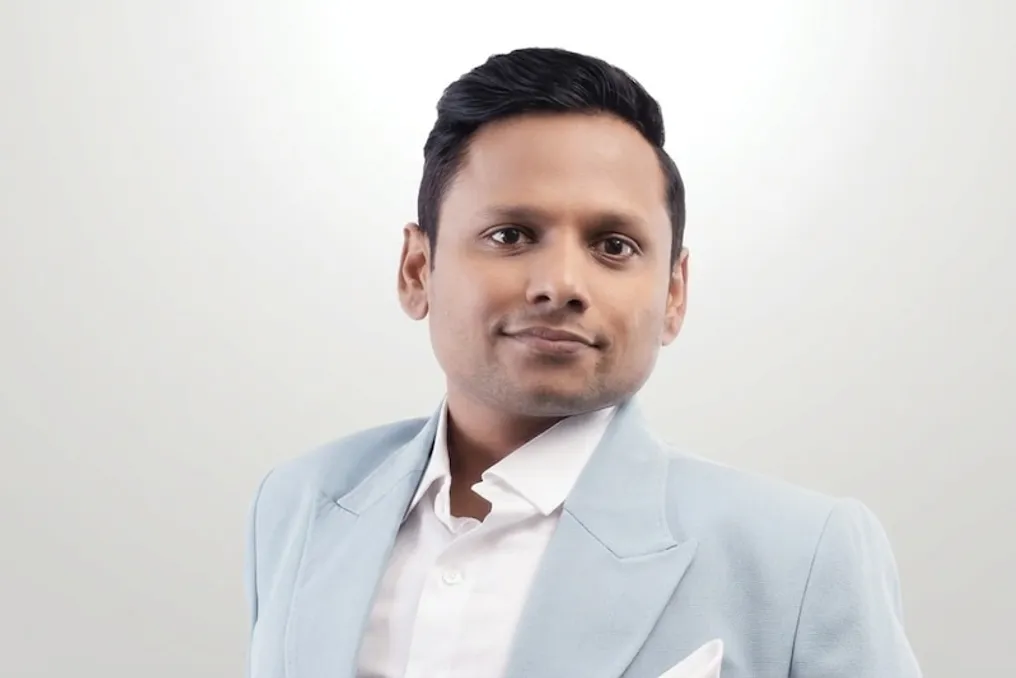
How Vikas D. Nahar started a business with 10 thousand rupees, and the company's valuation reached 700 million rupees
Read more
www.aajtak.in

How Vikas D. Nahar started a business with 10 thousand rupees, and the company's valuation reached 700 million rupees

Starting a business does not always require significant capital or a large team; sometimes it is enough to understand market needs and act in time. Vikas D. Nahar founded the healthy snack brand Happilo in 2016, starting with just 10,000 rupees and two employees. According to Traction data from January 2026, after almost a decade, the company's valuation reached approximately 700 million rupees.

However, this was not his first entrepreneurial experience. Before that, Nahar spent several years studying issues related to food production, international trade, and consumer brand creation.

Vikas D. Nahar grew up in a family involved in growing coffee and black pepper in Sakleshpur, Karnataka. He then received education in computer applications at the University of Bangalore, followed by an MBA in Marketing at Symbiosis Centre for Management and Human Resources Development (SCMHRD) in Pune. After graduating, he worked in the trading sector and gained experience in international spice trade with Jain Group. During this work, he had the opportunity to study packaged products and goods sold in stores across various countries in detail.

Before launching Happilo, Vikas had already tried himself in business. In 2011, he launched a retail project called Satvik Specialties Foods, which sold chocolate and sugar-free products. His older brother was also involved in this venture. Nevertheless, in 2015, Vikas decided to exit this enterprise. Having gained the necessary experience, he focused on the growing market of branded dried fruits and healthy snacks, as such products were much scarcer then than they are now, and customers often relied on traditional shops or foreign brands.

Vikas launched Happilo in September 2016. Initially, this business operated as a sole proprietorship, and the company was officially registered in 2018. Despite the modest initial capital, additional investment was later required to expand the business. According to available information, Vikas received an interest-free loan of 75 lakh rupees through a government credit guarantee program. These funds helped increase processing capacity, automation, packaging, and the business's supplier network.

Happilo gained an advantage through listing on BigBasket early on. After this, the brand was able to reach customers in six major cities. Gradually, the company increased its presence not only on online marketplaces like Amazon and Flipkart but also in physical retail stores.

Vikas D. Nahar also participated in the Shark Tank India show in the 2023 season as a guest investor, where he evaluated the business ideas of other entrepreneurs. In a video published as part of the show, Vikas D. Nahar stated that about 20 investors declined to invest before the launch of Happilo. Nevertheless, he started and developed his business.

According to Traction data from January 2026, Happilo's valuation was around 700 million rupees. Previously, in January 2022, its valuation was estimated at approximately 1.6 billion rupees. However, in the 2024-25 fiscal year, the company's revenue decreased by 15 percent, amounting to 282.57 million rupees. During this period, the company also incurred losses of 9.55 million rupees. The story of Happilo demonstrates that while a business can be built starting with small investments, there remains constant complexity in further development and profitability.

Indian Railways launches door-to-door parcel delivery service
Read more
www.aajtak.in

Indian Railways launches door-to-door parcel delivery service

Users can now send parcels via train without visiting post offices at stations. Indian Railways plans to launch a door-to-door parcel delivery service in eight major cities.

This new service is called 'Ghar Se Ghar Tak'. It allows customers to place orders for receiving and sending parcels directly from their homes. The pilot launch of this service was successful, and the railway now intends to implement it as a regular service in eight cities across the country.

This initiative is expected to benefit ordinary citizens, as well as small entrepreneurs and online sellers.

Initially, the service will be available in cities such as Delhi, Mumbai, Kolkata, Chennai, Ahmedabad, Hyderabad, Bangalore, and Pune. Customers can book the sending and receiving of parcels from home through the Rail Parcel App or the railway's website. South Central Railway shared information about this service on social media on May 6, 2026. According to the railway, this measure aims not only at parcel delivery but also at supporting business and strengthening connections between people.

The railway collaborates with logistics companies within this service. The railway is responsible for transporting parcels from one city to another, while logistics partners handle picking up the parcel from the customer's home and delivering it to the specified address. Customers can order a parcel up to 15 days before the train departure, and they also have the option to book one day before the scheduled train departure. Logistics partners must hand over the parcels to railway staff no later than one hour before the train departs.

Through the Rail Parcel App, customers can not only book a parcel but also make online payments and track its location. Each booking will be accompanied by a 10-digit Progressive Reference Number (PRR). This number will allow customers to find out the status of their parcel. Additionally, the app will provide digital GST invoices and real-time tracking updates. Payment options include UPI, credit cards, debit cards, and internet banking. Verification using a One-Time Password (OTP) will be required to ensure parcel delivery.

The railway has established cancellation and refund rules for this service. If a customer cancels a freight booking before the parcel is picked up, they will receive a full refund for the freight charge minus an administrative fee of ₹10. However, refunds for home pickup and delivery services will be processed according to the policy of the respective logistics partner, not the railway's rules.

This new railway initiative could significantly benefit those who regularly send parcels between cities. Small entrepreneurs, online sellers, and private customers will be able to send parcels without leaving home. They will no longer have to visit railway stations to drop off or pick up parcels. The railway's goal is to make its parcel sending services more convenient and accessible. Nevertheless, for now, the service will only be available in eight cities, and the exact start date has not yet been announced.

Young Generation Gen Z Aims for Early Retirement Using the FIRE Strategy
Read more
www.aajtak.in

Young Generation Gen Z Aims for Early Retirement Using the FIRE Strategy

In 2026, young Indians aged 20 to 25 are changing the traditional concept of retirement. For previous generations, such as Gen X and baby boomers, retirement meant working until age 60 in government or private service, receiving funds from the Provident Fund (PF), and living off that pension. However, the current youth plans to leave work between the ages of 35 and 40, rather than worrying about retirement at 30.

This approach is known as the FIRE movement (Financial Independence Retire Early), which involves achieving financial independence and retiring early. Young people aged 22–25 are preparing to become debt-free and financially independent through regular investments via SIPs, stocks, and increased income.

FIRE primarily means financial freedom and the ability to retire early. It does not mean that after 35 years old, a person stops working and becomes lazy. The goal is to accumulate enough capital so that one does not have to be forced to work a 9-to-5 job just to earn a living.

After achieving financial independence, a person can engage in any activity of their choice, whether it is traveling, painting, photography, or social work. Furthermore, they will not have to worry about whether the salary arrives at the end of the month.

Unlike the previous generation, which saved 20% of its income, young members of Gen Z adhering to the FIRE movement save and invest 50% to 70% of their salary. They maintain a disciplined lifestyle, avoiding wasteful spending and purchases of expensive status brands.

These young people aim to create a fund equal to 25 times their annual expenses. This principle is called the 25 rule. For example, if annual expenses are 6 lakh rupees, the FIRE goal is to accumulate capital worth 1.5 crore rupees.

Gen Z believes that simply keeping money in bank deposits or savings accounts is insufficient to combat inflation. Therefore, young people aged 22–24 start working on investments and alternative sources of income immediately after starting their careers.

Using equity mutual funds and SIPs, they immediately begin investing small amounts, such as 10–15 thousand, to take advantage of the power of compound interest. They also invest in stocks and index funds, which have the potential for multiple growth in the long term.

Instead of depending only on one salary, they create additional and third streams of income through freelancing, content creation, or digital products. This is done with the aim of generating passive income without the need for constant employment.

Gen Z has witnessed the older generation tiring of work pressure, toxic corporate culture, and illnesses. This cohort is convinced that nothing is more valuable than time and peace of mind. The main focus of the FIRE movement is on high savings, investing, creating multiple income streams, and building a fund equal to 25 times the annual expenditure. Thanks to this, young people strive to achieve financial freedom at an early age to spend important years of life on their own terms, rather than in office cubicles.

Popular