Palace in Ras Al Khaimah Becomes Venue for Local Businesses During Themed Event
Read more
Khaleej Times
www.khaleejtimes.com

Palace in Ras Al Khaimah Becomes Venue for Local Businesses During Themed Event

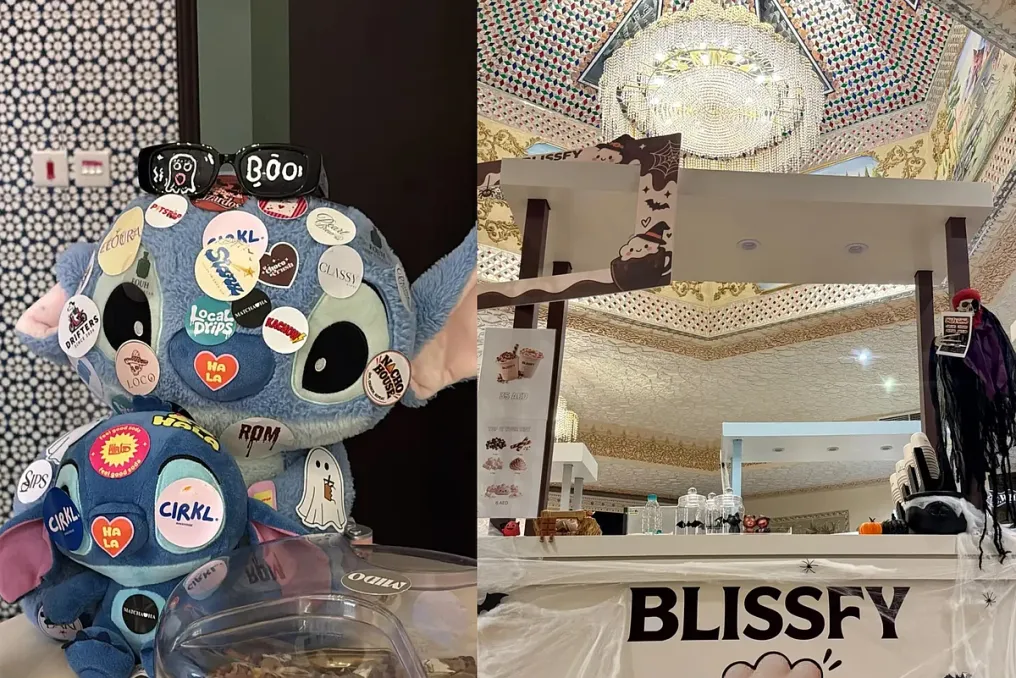
For many years, the Al Qasimi Palace in Ras Al Khaimah was known for mystical legends and ghost stories. However, over three days in October, this iconic landmark took on a new function, welcoming visitors who wished to tour its interiors, purchase goods from local entrepreneurs, and enjoy a Halloween-themed pop-up event.

The local name for this building is the 'Ghost Palace.' From October 16th to 18th, the Qasr Al Jin pop-up took place, bringing together small businesses, cafes, and guests in an atmosphere distinct from traditional markets and trade fairs.

For Jana Belal, a native of Ras Al Khaimah, this event provided an opportunity to finally visit a landmark she had heard about since childhood. Belal told Khaleej Times that 'growing up in Ras Al Khaimah, no matter where we went past the palace or even talked about it in school, it was always associated with ghosts and scary stories.'

Having heard these tales throughout her youth, visiting the palace with a friend brought back memories of the legends surrounding the building. She noted: 'We knew about it our whole lives, and for a long time it wasn't open to the public. So, being able to go there felt really cool to us.'

Beyond its mysterious reputation, Belal emphasized that the event was valuable because it gathered small businesses and gave guests a chance to support local entrepreneurs. With her own experience running a small business, she tries to buy from independent sellers whenever she visits similar fairs. She stated: 'I always want to support small local businesses. It was very nice that they were all in one place, supporting each other.'

Belal, who considers Halloween one of her favorite annual events, particularly noted how vendors integrated the theme into their stalls through decorations and themed merchandise. Another highlight for her was the presence of animals, which she called 'lovers,' noting their appearance near the stalls and other activities.

She also toured the upper floor of the palace, where rooms displayed art, furniture, and decorative items reflecting various cultural influences. Belal shared that 'each room had its own theme, and you could see that a lot of thought was put into every detail, from the beds and paintings to the small ornaments.'

While the unusual location attracted visitors, the event also provided emerging entrepreneurs with an opportunity to showcase their products to a wide audience. For Fatima Al Bloushi, owner of Blissfy, deciding to participate was largely driven by the venue itself and the curiosity it might generate. She said: 'What prompted us to participate was that the pop-up concept was different from regular events. There was a sense of mystery and something unusual that could spark people's curiosity.'

She hoped the palace's reputation would attract visitors who had never explored the building before, giving her newly launched business a chance to reach potential customers. This event marked Blissfy's first participation in a pop-up format since its official launch, a significant milestone for the company. 'Honestly, the experience was tiring, but at the same time pleasant and worth the effort.'

Despite the demands of participating in the three-day event, Al Bloushi reported that the large number of visitors led to encouraging sales and positive customer interaction. She added: 'Attendance was huge, and the crowds were the biggest indicator of the event's success. Fortunately, sales were good, and the reaction to our products was positive.'

She also highlighted that the palace's architecture and unique atmosphere made the experience particularly memorable.

Mariam Eissa Al Bloushi, owner of Mido, was also an entrepreneur participating in the pop-up for the first time. Like Fatima, she saw the unusual location as an opportunity to introduce her business to customers who might not otherwise find it. She stated: 'We wanted to try something new and present our Mido project to a wider audience.'

Although the stories associated with the palace initially piqued her curiosity, Mariam noted that the atmosphere was far from frightening. She said: 'The stories associated with the palace added to the atmosphere and heightened our curiosity, but the place wasn't scary. On the contrary, the atmosphere made the experience more enjoyable.'

For Mido, the event was also a chance to interact directly with visitors, present their products, and better understand customer tastes and interests. Mariam noted that the combination of the palace's unusual setting and visitor curiosity created an experience different from typical pop-ups. She concluded: 'The most striking thing was the unusual atmosphere, which was both eerie and pleasant, as well as the visitors' curiosity about the place and the offered products.'

Since both companies appeared at the pop-up for the first time, the event served as an opportunity for direct sales to visitors, relationship building with clients, and gaining experience that could support future participation in similar events.
Similar stories

Jeju: South Korea's volcanic island with attractions beyond the beaches
Read more
viagemeturismo.abril.com.br

Jeju: South Korea's volcanic island with attractions beyond the beaches

Jeju is recognized as one of Asia's most famous tourist destinations and is one of the most visited places by South Korean residents to enjoy beaches and vacations. Due to its predominantly subtropical climate, this territory, located in the Korea Strait, also attracts many tourists from Japan and Taiwan, especially during the summer months, between July and August.

The lava tunnels of this volcanic island were classified as a UNESCO World Heritage Site in 2007. In addition to beautiful volcanic landscapes and paradise beaches, Jeju offers historical temples and a rich local culture.

Notable Volcanic Landscapes

Volcanic landscapes constitute one of the highlights of the island. Among them, Mount Hallasan, known as Halla, stands out, as it is the highest point in South Korea, reaching an altitude of 1,950 meters. This volcano, which is no longer active, has a crystal-clear lake at its summit. The experience of visiting Hallasan is valued both for the superior view and the hike, which consists of a long and steep trail to the top.

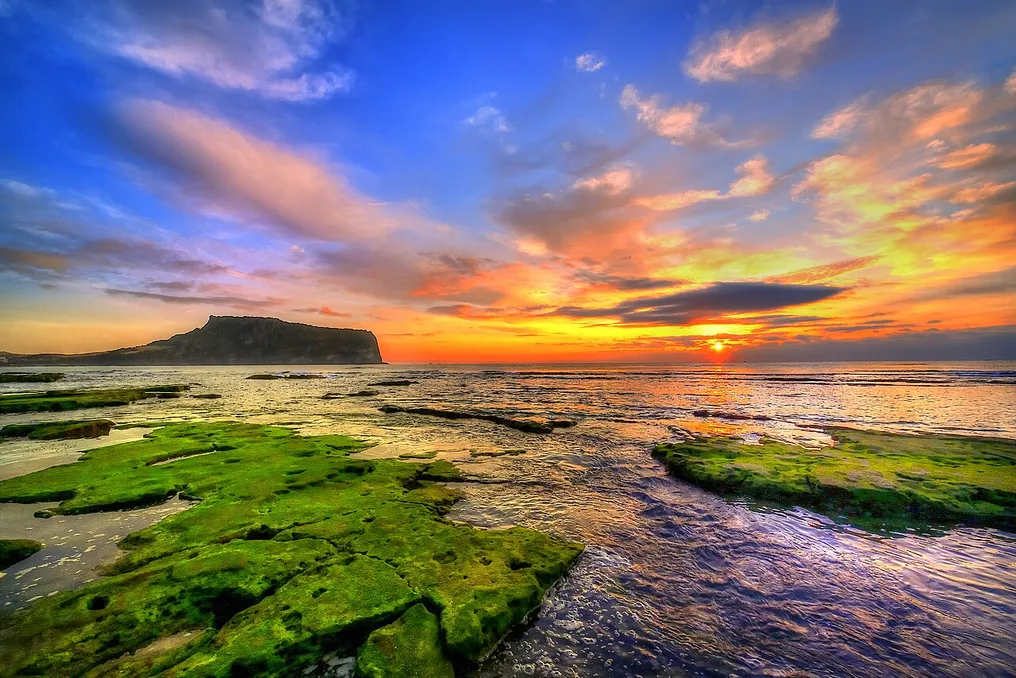
Another important volcano is located on Seongsan Ilchulbong Peak, situated on the eastern tip of the island. It is possible to hike in this area, taking between 30 and 50 minutes to cover its 182 meters, providing a panoramic view of the ocean and an impressive sunrise.

For those who wish to explore the famous lava tunnels, the Manjanggul Cave is unmissable. This system of lava tunnels, one of the largest in the world, spans 13 kilometers, although only one section is open to visitors.

For beach enthusiasts, the island also meets expectations, featuring white sand beaches and clear waters, such as Hyeopjae, Hamdeok, Geumneuung, and Sehwa. The region is also rich in waterfalls. Jeongbang Waterfall, located in Seogwipo, south of Jeju, is unique in Asia for having its waterfall flow directly into the sea. It is worth mentioning that the city of Seogwipo gained worldwide notoriety for hosting four matches of the 2002 World Cup, including the Brazil 4x0 China group stage game.

Cultural Attractions and Tours

The Olle Trails offer the possibility of integrating all these landscapes into a single itinerary. It is a network composed of 21 interconnected routes that circle the entire island, totaling 436 kilometers and passing through farms, rock formations, and beaches.

The Haenyeo, nicknamed Jeju Mermaids, are a cultural pillar of the island. They are women who practice diving fishing without using oxygen tanks. These divers reach depths of up to 20 meters to collect seaweed, shellfish, and abalone. This tradition was recognized by UNESCO as Intangible Cultural Heritage of Humanity and symbolizes the island's autonomy. More information can be obtained by visiting the Haenyeo Museum of Jeju.

When traveling around the island, one is likely to encounter the Dol-Harbang, known as 'Grandfather Statues'. These sculptures made of volcanic stone are distributed throughout the island and, for the locals, they represent spiritual guardians that bring protection and fertility.

Jeju's typical cuisine also deserves mention, including black pork barbecue, porridge made with abalone caught by the Haenyeo, and the famous Hallabong tangerines.

Jeju's Buddhist temples are also worth visiting, as they combine spirituality with coastal and volcanic landscapes, with many located by the sea. Yakcheonsa Temple, located in Seogwipo, is one of the largest in Asia, featuring a three-story wooden Buddha statue in its main hall.

Furthermore, Jeju is known for its themed museums, such as Jeju Loveland, a theme park that displays about 140 erotic sculptures. Other unusual places include the Teddy Bear Museum and the Gimnyeong Labyrinth Park.

Review of Current Exhibitions in Tehran Art Galleries
Read more
www.tehrantimes.com

Review of Current Exhibitions in Tehran Art Galleries

A number of exhibitions featuring works by various artists are currently taking place in Tehran's art galleries. For instance, Ech Gallery is hosting an exhibition of paintings by Sahar Farah titled 'Habnameh,' which runs until October 30th. This gallery is located at 10 Mirza Taraj, opposite Dowlat Street, on Shariati Avenue.

Iranshahr Gallery features an exhibition of paintings by Mani Mehrzad called 'After the Snow,' available until October 27th. The gallery is located at 69 Sepand Street, near Karim Khan Avenue.

Melina Bahrami is exhibiting her latest works at Bostan Gallery. Her exhibition, 'Absence,' concludes on October 27th and is held at Number 71, 22nd Alley, Larestan Street, near Motahari Avenue.

Afrand Gallery currently hosts an exhibition of paintings by Negar Nasiri titled 'Unrelated,' running until October 30th. The gallery is located at 48 Jalal Hosseini Street, Jahan Ara Street, near Jalal Ale Ahmad Highway.

Paintings by Khabihe Lowri are displayed at an exhibition in Asr Gallery. The exhibition, titled 'Memory of Imagination,' will run until October 26th and is located at 18 Delavis Street, near North Mirzaie Shirazi Street.

Jaleh Gallery currently showcases paintings by Bahar Akhvakan titled 'Growth,' which will last until October 23rd. The gallery is located at Number 3, Noshar Alley, Iranshahr Street, Karim Khan Avenue.

Dena Gallery also has an exhibition of paintings by Vahika Hartuniian, visible until October 30th. The gallery is located at 4 Soussan Alley, near Karani Street.

Saless Gallery is hosting an exhibition of works by Ahmad Mokaddasi, which ends on October 27th. This gallery is located at 148 Karim Khan Street.

Shirin Gallery presents the latest collection of paintings by Mostafa Akbari. The exhibition runs until October 27th and is located at Number 5, 13th Street, Karim Khan Street.

Pouya Kosari is exhibiting his new collection of paintings at Inja Gallery. His exhibition, titled 'Oblivion,' will run until October 30th and is located at 4 Pedram Alley, Neofl Le Chateau Street.

Popular