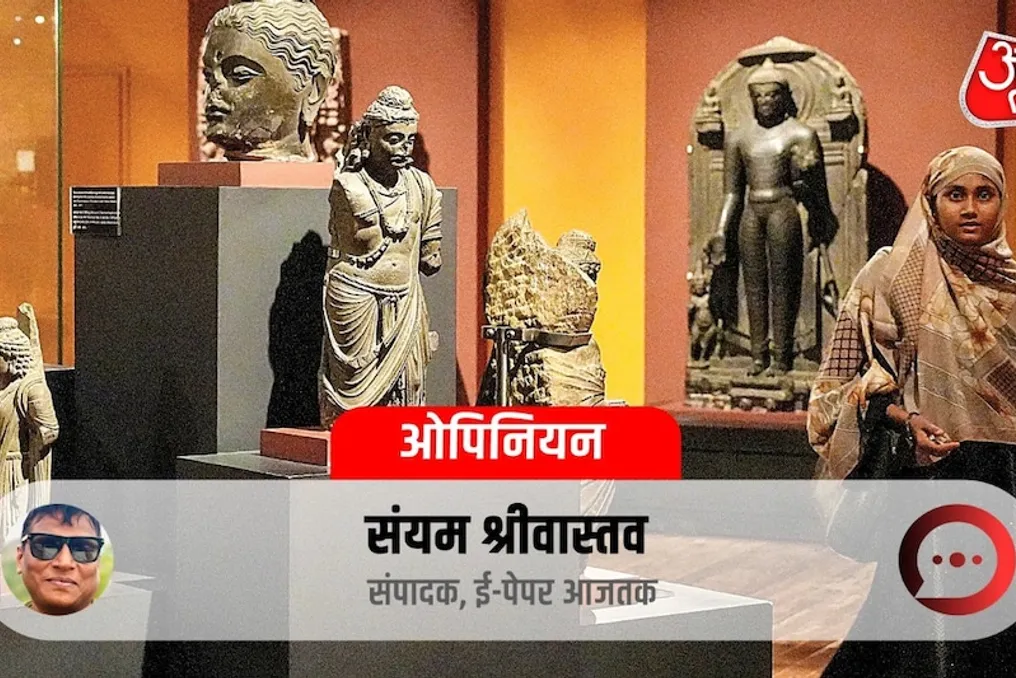
Bihar Museum in Patna Gains Global Recognition, Enters List of World's Best Museums
Read more
Aaj Tak
www.aajtak.in

Bihar Museum in Patna Gains Global Recognition, Enters List of World's Best Museums

Bihar, often associated with poverty, migration, unemployment, crime, and backwardness, has now secured a place among prestigious global cultural institutions thanks to the museum located in the state capital, Patna. The Bihar Museum ranked ninth in the 'Top 100 Museums in the World' list for 2026. This is the highest position for Asia and the only spot in India's top 100.

The presence of the Bihar Museum's name alongside world-renowned institutions such as the Louvre in Paris and the Metropolitan Museum of Art in New York instills pride in every Indian. This achievement is significant because it elevates Bihar's identity beyond traditional political and economic discussions, placing it on the global stage of history, art, and culture.

Bihar's identity has always been linked to its glorious past: the lands of the Magadha empire, the Mauryan and Gupta periods, educational centers like Nalanda and Vikramashila, as well as the traditions of Buddhism and Jainism, which have contributed immensely to world culture. However, paradoxically, in the modern era, Bihar has struggled to effectively present its historical and cultural heritage to the world. At times, discussions about Bihar became synonymous with the 'jungle government' and political instability.

The task of changing the state's image was not just about improving road infrastructure, electricity supply, and law and order; it also required reasserting Bihar's historical distinctiveness and cultural confidence. In this context, the concept of the Bihar Museum must be considered. Former Chief Minister Nitish Kumar included this project in his ambitious plans, beginning concrete work on its formation around 2013, although the initial idea predated that.

The goal of the project was not merely to gather old statues and artifacts in one building but to create a modern museum capable of presenting Bihar's history on a global level. The involvement of Japanese architect Fumihiko Maki and Indian colleagues lent the project an international architectural perspective. Part of the museum was opened to the public in 2015, and the main exhibition halls were grandly inaugurated in 2017. Thus, transforming a political decision into an institutional reality required years of planning, administrative effort, and expert knowledge.

Nitish Kumar often receives credit for efforts to change Bihar's image. Although his tenure faced debate and criticism regarding law and order, roads, education, and basic amenities, a project like the Bihar Museum is viewed as an example of his cultural vision and administrative priority. Evaluating the government's achievements is not limited to momentary statements. There are projects whose significance endures even after a change in power. The museum is precisely such a public institution. Its creation is decided by one government, but future generations benefit from it.

The importance of this achievement is amplified by the fact that many major universities, technical institutions, research centers, and hospitals in India strive for international recognition. Concerns are often voiced about the limited presence of Indian institutions in global rankings. At a time when the state of Bihar's museum enters the top ten globally, it demonstrates that international recognition is not a privilege reserved only for megacities or wealthy states. With proper planning, professional management, a quality collection, and effective presentation, world-class institutions can be created even in smaller towns.

The success of the Bihar Museum is not just the success of a building. The historical heritage housed within introduces visitors to the long journey of Bihar's civilization. Ancient sculptures, archaeological finds, manuscripts, coins, and folk art tell the story of a society that played a vital role in shaping Indian history and culture. A historical artifact such as Yakshi Didarganj is a hallmark of this museum. Dedicated children's halls and modern exhibitions make it useful not only for researchers but also for the general public and the new generation.

Nevertheless, caution is necessary regarding this achievement. The 'Worth a Journey' ranking is published by a travel publication that prepares it based on its data, algorithms, and direct observations. It should not be considered an indisputable academic ranking of all museums worldwide. However, this does not diminish the significance of the achievement. The mere inclusion of Patna's museum in such an international rating is a major event. The task now is to transform this recognition into a sustained positive experience through preservation, research, and international cooperation.

The recognition received by the Bihar Museum represents both an opportunity and a message for Bihar. An opportunity to use its history, archaeology, and cultural tourism as a foundation for a new economy. The message is that Bihar's identity should not be defined solely by past glory or current problems. Modern universities, top hospitals, research centers, technical centers, and industries must develop here with the same ambition as...
Similar stories

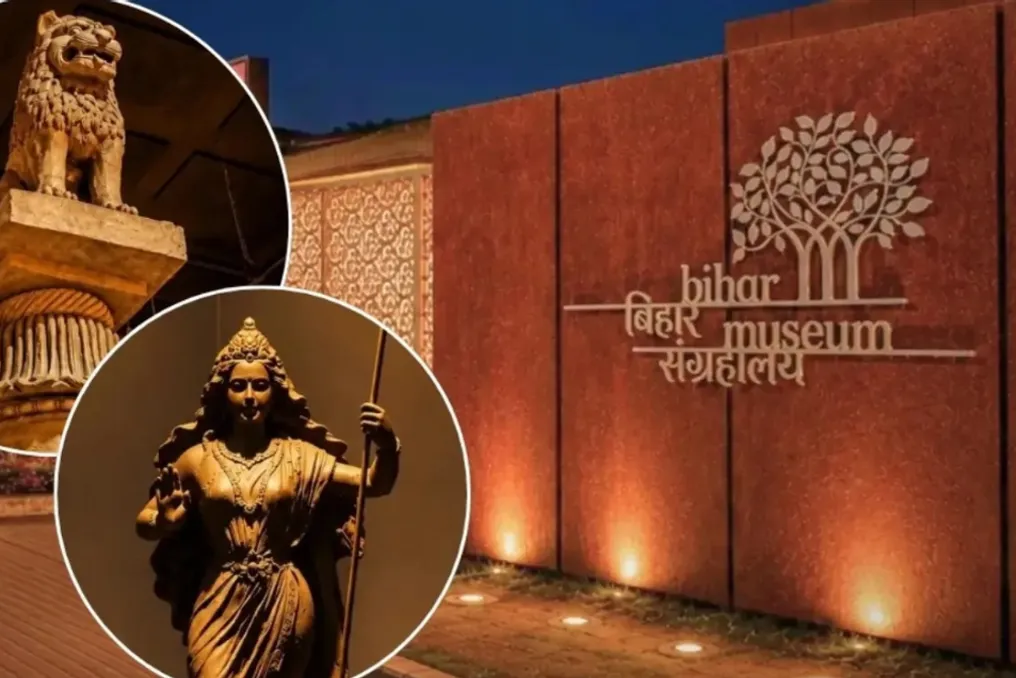
Bihar Museum ranks ninth in world rating, surpassing New York's Metropolitan Museum of Art
Read more
thebetterindia.com

Bihar Museum ranks ninth in world rating, surpassing New York's Metropolitan Museum of Art

The question of what makes a museum worthy of global travel finds an answer in the Bihar Museum, located in Patna. This museum was included in the list of the top 100 museums in the world for 2026, securing ninth place. It surpassed well-known institutions such as the Metropolitan Museum of Art in New York and the Louvre in Paris.

The independent guide Worth a Journey, based in Munich, Germany, compiled this ranking using data analysis, visitor reviews, and on-site assessments. The Bihar Museum is the highest-ranked museum in Asia and the only Indian institution to make the top 100.

In addition to the ranking, visitors can expect to see ancient sculptures, archaeological treasures, folk art, and modern architecture, which together tell the story of a region with centuries of cultural heritage.

Modern Space for Ancient Stories of Bihar

The Bihar Museum was established in 2015 with the aim of providing a more spacious venue for exhibiting the extensive collection of historical artifacts from the state. Although the existing Patna Museum already possessed a significant collection, the new institution allowed the heritage of Bihar to be presented on a much grander scale.

Spanning over 13 acres, the museum was designed by Japanese architect Fumihiko Maki in collaboration with Opolis Architects from Mumbai. The result is a modern building featuring large galleries, open courtyards, and landscaped areas, making the museum visit an event in itself.

Inside the exhibition, visitors are guided through the history of Bihar, starting from early civilizations up to 1764. Ancient sculptures, archaeological finds, coins, and manuscripts provide insight into the lives, beliefs, and artistic traditions of people who lived here long before the formation of the modern state.

The museum also pays attention to living traditions, housing galleries dedicated to folk and contemporary art. These collections collectively narrate a history that extends beyond dynasties and dates, exploring how people expressed themselves through culture and art.

What Makes It Worth a Visit?

For families with children, the museum offers a special Children's Gallery, featuring themes such as animals, folk art, culture, and science. This allows younger visitors to interact with exhibits, going beyond simply viewing items behind glass.

The Diaspora Gallery explores Bihar's connections with communities outside the state, adding another dimension to its history. Furthermore, for guests wishing to taste local flavors, the museum has a restaurant offering Bihari cuisine.

The architecture is also one reason to spend time here. The interplay between enclosed galleries, open spaces, and landscaped courtyards gives visitors opportunities to pause between viewing exhibits. Instead of perceiving history as a series of artifacts to rush through, the museum provides several ways to study it at one's own pace.

For anyone visiting Patna, it is a chance to discover Bihar through its art, people, and past, all under one roof.

What Supports the Bihar Museum?

The Bihar Museum's placement at ninth in the ranking places it among the most renowned cultural institutions globally. The 2026 list is topped by the National Museum of Anthropology in Mexico City, followed by the Prado Museum in Madrid and the Louisiana Museum of Modern Art in Denmark. The State Hermitage Museum in Russia ranks fourth, and the Vienna Museum of Art History is fifth.

The Şanlıurfa Archaeological Museum in Turkey is sixth, followed by the Museum of World War II in Poland and the National WWII Museum in New Orleans, USA. The Metropolitan Museum of Art is tenth, and the Louvre is thirty-first.

For its 2026 edition, Worth a Journey analyzed over a million locations to create 36 lists of the best places in the world across travel and hospitality categories. The museum ranking draws attention to destinations that do not always receive the same global recognition as their more famous counterparts.

A Reason to Discover Bihar Differently

Visiting the museum can change a person's perspective on a place. A sculpture becomes a key to an ancient civilization; a piece of folk art opens a window into daily life; and the architectural space transports centuries of history into the present.

At the Bihar Museum, these stories merge in an environment that is simultaneously very modern and deeply rooted in the region it represents. Its position among the world's top ten gives travelers another reason to include Patna in their itinerary. More importantly, it invites them to look beyond conventional tourist destinations and uncover the many layers of India's cultural heritage, gallery after gallery.

How award-winning Bengaluru airport enhances passenger experience through art and design
Read more
yourstory.com

How award-winning Bengaluru airport enhances passenger experience through art and design

Terminal 2 at Kempegowda International Airport in Bengaluru has gained widespread recognition for its eco-conscious design, which is based on lush garden architecture. This year, it entered the Top 5 of Skytrax's global rankings in the 'Best Art in an Airport' category.

This achievement highlights the airport's systemic approach to integrating art into its operational and architectural structure. The created works are not viewed as separate exhibits but are an integral part of the entire passenger journey.

The airport also positions itself as a living museum, paying special attention to showcasing local Karnataka art. The fusion of cultural narratives and spatial design creates a deep and engaging experience for travelers.

Yamini Telkar, advisor for the art program at Bangalore International Airport Limited (BIAL), noted that 'art and culture were conceived as an integral part of the four pillars of design, alongside the Garden Terminal, Sustainability, and Technology.' The art program serves as a cultural bridge for the seamless integration of art into the infrastructure.

She added that this forms an immersive passenger journey focused on two main themes: the rich heritage and culture of Karnataka, and the concept of Navarasa, or nine emotions from Bharata's Natyashastra.

Formally, the Art Program was launched on September 8, 2023. Currently, over 300 artworks by more than one hundred artists are displayed in both domestic and international terminal arrival and departure areas of the airport.

Among the featured artists are Vivek Matthew, Ganesh Shankar, Dinesh Manir, LN Tallur, Madhvi Subrahmanyam, Yayati Godbole, Sakshi Gupta, and many others. Their diverse works include paintings, installations, mixed media, sculptures, and digital displays.

Telkar explained that 'over 90% of the artworks were commissioned specifically for the Art Program. Institutional partners include the Department of Archaeology Museums and Heritage, as well as the Museum of Art and Photography.'

Airports function not only as transport hubs but also as the first and last impression of a destination. However, for many passengers, the airport experience is often defined by queues, navigation issues, crowded spaces, uncertainty, and long waits.

Art and design have the power to transform an airport from a transit point into a place that welcomes, inspires, and connects people, as shown in the photo essay. Integrating creativity into the airport environment makes journeys more memorable and engaging.

Human-centric design, clear navigation, intuitive layouts, and accessible signage can ease passenger movement. Even the flight information displays in Terminal 2 offer passengers recommendations for visiting art installations based on available time.

The use of natural materials, biophilic design, natural light, greenery, and calming color palettes helps make terminals less stressful. Art, immersive installations, and the sound of running water soften the tension in a busy setting.

The integration of local art, crafts, architecture, materials, stories, and cultural references gives passengers an authentic sense of place. Terminals can become cultural showcases, offering visitors a meaningful introduction to the region and instilling pride in local residents.

For example, the Bengaluru airport hosts live performances during festivals. This week marked the six-day cultural celebration of Nadahabba Dasara with live music, dance, traditional crafts, games, and culinary experiences.

The artworks throughout the airport can create unforgettable moments throughout the passenger's journey, making the airport experience unique and contributing to organic word-of-mouth promotion.

It is important, however, to ensure that the creativity enhances usability rather than distracting from important passenger information. This balance was carefully considered in the design of Terminal 2.

For BIAL, the overall architecture and interior design were curated by Skidmore, Owings & Merrill (SOM). However, as Telkar explains, the schematic planning and placement of artworks were carried out by the team of artists.

The identity of Bengaluru is reflected even in the entrance concepts. 'They showcase the lush greenery of Bengaluru and Karnataka in the form of backlit photographs that were specially commissioned,' she describes.

Inspired by the Natyashastra's Navarasa, the airport's Art Program interprets nine fundamental human emotions through various artistic expressions: love, laughter, sorrow, anger, heroism, fear, disgust, wonder, and tranquility.

The collection of works was formed through open competitions, partnerships, loan programs, patronage, commissions, and art events. This multi-layered approach allows the program to unite diverse artistic voices and practices.

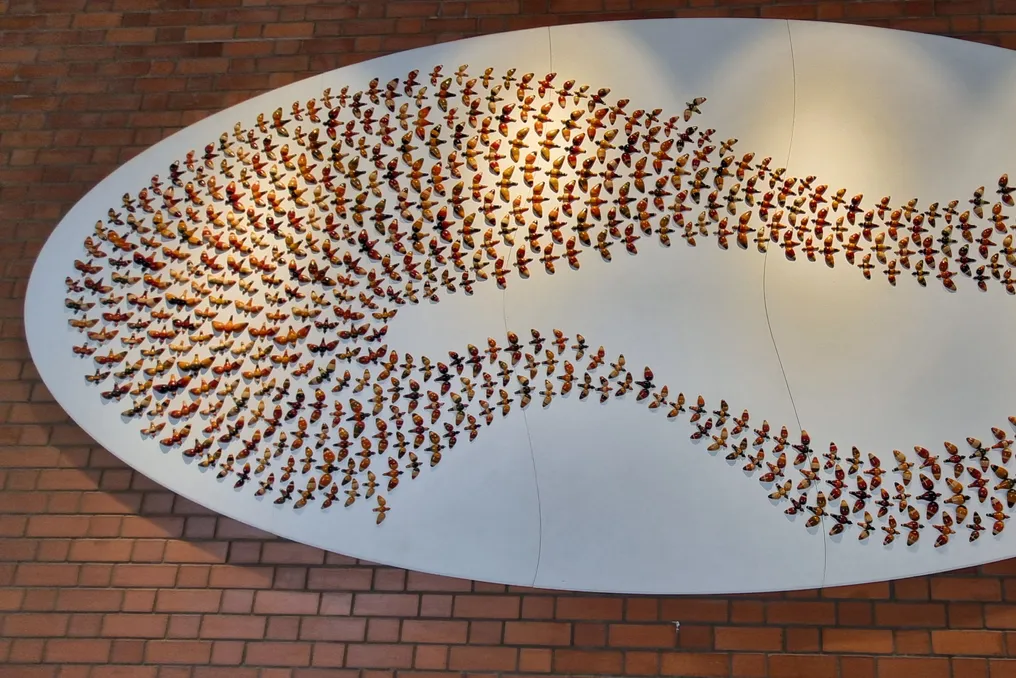
The artistic experience extends beyond the airport. In the arrivals area, passengers enjoy an impressive installation titled 'Soul of Bengaluru' by the renowned Catalan artist Jaume Plensa. This sculpture consists of intertwined figures that symbolize the collective human capital that contributes to Bengaluru's growth as a global technology and innovation hub—individual personalities united by a common goal, imagination, and pursuit.

In conclusion, art and design are not just aesthetic additions; they are strategic tools for enhancing efficiency and differentiating the airport. They improve the entire travel process and even encourage passengers to choose specific terminals and airlines for their trips.

Ten Attractions in Chandigarh to Visit
Read more
www.aajtak.in

Ten Attractions in Chandigarh to Visit

Chandigarh is known for its picturesque streets, green parks, lakes, and magnificent architecture. There are many places here where you can spend quality time with family or friends. If you are planning a weekend trip, Chandigarh can be the perfect choice, as it combines natural beauty, historical buildings, and religious sites, appealing to every visitor.

Below is a list of ten places that should be included in your Chandigarh tourist itinerary.

Raukh Garden is famous for its unique works of art. It was created by Nek Chand using discarded materials. In the park, you can see many beautiful sculptures made from broken bangles, tiles, glass, and other old materials. A walk through the garden allows you to admire the fountains, colorful art objects, and scenic pathways. This place is ideal for those who appreciate art and nature.

If you want to escape the hustle and bustle of the city, Sukna Lake is recommended. Located near the Shivalik hills, this lake is a wonderful spot for walks in the morning and evening. Here you can engage in water sports, stroll along the shore, or simply enjoy the beautiful views. The atmosphere becomes especially picturesque at sunset, and it also holds special significance for bird watchers.

Zakir Hussain Rose Garden is a wonderful place to admire the beauty of flowers. Various varieties of roses are presented here. This garden, surrounded by flowering plants, green grass, and trees, is excellent for family recreation and photoshoots. The garden's beauty during the blooming season is particularly impressive, and it is worth visiting for nature lovers.

When touring Chandigarh, one cannot overlook the Capitol Complex. It was designed by the renowned architect Le Corbusier. The complex includes a number of important government buildings related to Punjab and Haryana. Its distinguishing feature is its unique architecture, large structures, and open spaces, which sets it apart from other attractions. Those interested in modern design and history will definitely like this place; it is recommended to check entry rules and guide availability before visiting.

To learn more about how Chandigarh was designed, you can visit the Le Corbusier Centre. Information about the city's layout and construction is gathered here. Through old maps, photographs, and blueprints, visitors can study the architecture of Chandigarh in detail. This place is especially valuable for those interested in history, design, and buildings.

Pinjore Garden, also known as Yadavindra Garden, is located in Pinjore, Panchkula area, near Chandigarh. This Mughal-style garden offers visitors walks through lush lawns, fountains, terraced gardens, and beautiful structures. Here you can relax and spend time with family. It is an excellent option for a trip slightly further from the city.

If you enjoy shopping, cafe hopping, and observing city life, Plaza Sector 17 is a must-visit. It is one of Chandigarh's main shopping centers, housing numerous shops, dining establishments, and open areas for walking. The atmosphere is especially pleasant in the evening, making it a great place to meet friends, shop, and have a good time.

The ISKCON Temple in Chandigarh is known for its spiritual and religious atmosphere. Worship of Lord Krishna takes place here. During bhajans and religious events, the temple is always full of devotees. If you want to spend time in tranquility during your trip, you can visit this temple after familiarizing yourself with the rules and service timings.

For art and history enthusiasts, the Government Museum and Art Gallery is an interesting place. It houses a collection of ancient sculptures, paintings, Gandhara art, and historical artifacts. Visiting this museum provides deep insight into the art and culture of India. This museum should be included in your list if you aim to learn something new during your visit to Chandigarh.

Instead of revisiting Raukh Garden, you can consider the International Puppet Museum. It features puppets from different countries and items related to traditional costumes. This is a good choice for families with children.

Popular