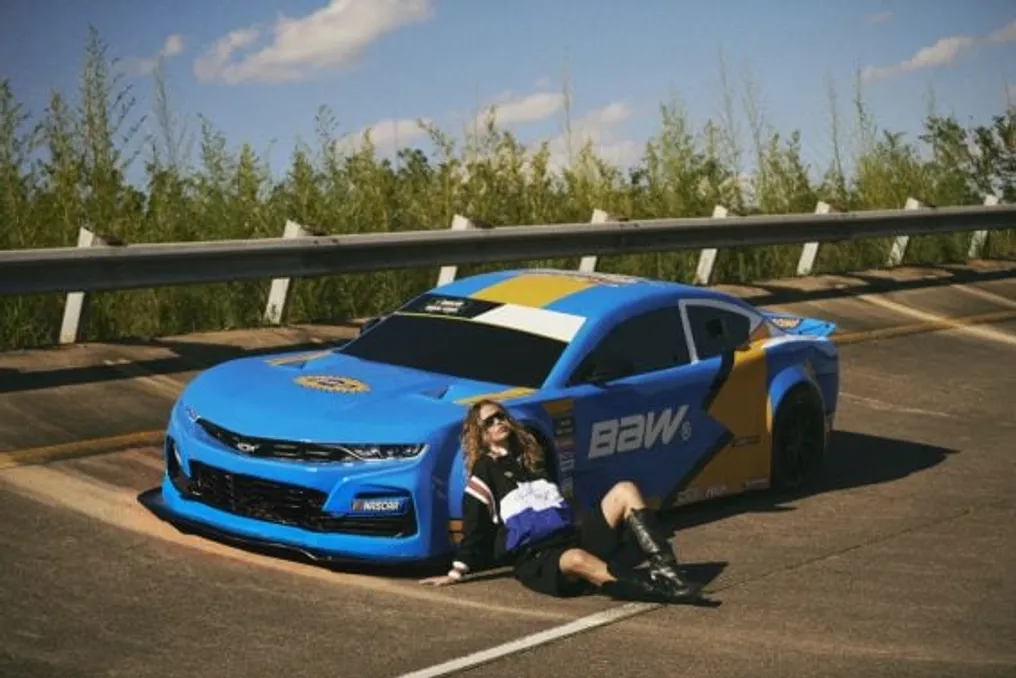
Chevrolet launches streetwear collection in partnership with brand BAW Clothing, inspired by racing overalls
Read more
AutoPapo
autopapo.com.br

Chevrolet launches streetwear collection in partnership with brand BAW Clothing, inspired by racing overalls

Chevrolet has established a new collaboration with the São Paulo brand BAW Clothing, aiming to adapt the look of race tracks to everyday wear. The collection, named BAW Racing by Chevrolet Motorsports, features nine items with a retro aesthetic inspired by competitions and is already available for purchase on the BAW website.

This is the second time the brands have joined forces; the first partnership occurred in 2025 and focused on reinterpreting elements of the Opala in accessories and clothing, celebrating GM's 100 years in Brazil.

Gustavo Aguiar, Marketing Director for General Motors South America, explained that the goal of this initiative is to create a closer connection between the brand and the consumer's lifestyle. The executive stated that the collection 'reflects all of Chevrolet's legacy in motorsports with a modern and bold touch.'

The designs were developed by BAW stylists in conjunction with Lucas Karra, the founder of the brand along with his brothers in 2014, in the Bom Retiro neighborhood, located in the central area of São Paulo. Highlights of the line include the jacket and twill pants, both adorned with embroidery and applications that evoke the pilots' attire when worn together.

Furthermore, the collection includes three unisex t-shirts—two of which are in an oversized model and two are babylooks—a cap, and a tote bag. According to Karra, the jacket has an unprecedented feature in the Brazilian market: the customer receives the piece in one way and can use it in another.

The collection's promotion includes an online game, developed in partnership with BrandsDecoded. In this game, the participant selects the desired driver and circuit, and upon finishing the race, obtains discount coupons to purchase the products. The drivers featured in the game are portrayed by presenters and guests of Podpah, a podcast hosted by Igão and Mítico.

The collection's presence will also be felt on the tracks through a temporary store (pop-up) that will accompany the final stages of the NASCAR Brasil and Stock Car seasons. This store will be present at the NASCAR Brasil stage in Brasília on November 28 and 29, and will conclude its journey at the Stock Car stage in São Paulo, between December 12 and 13.
Similar stories

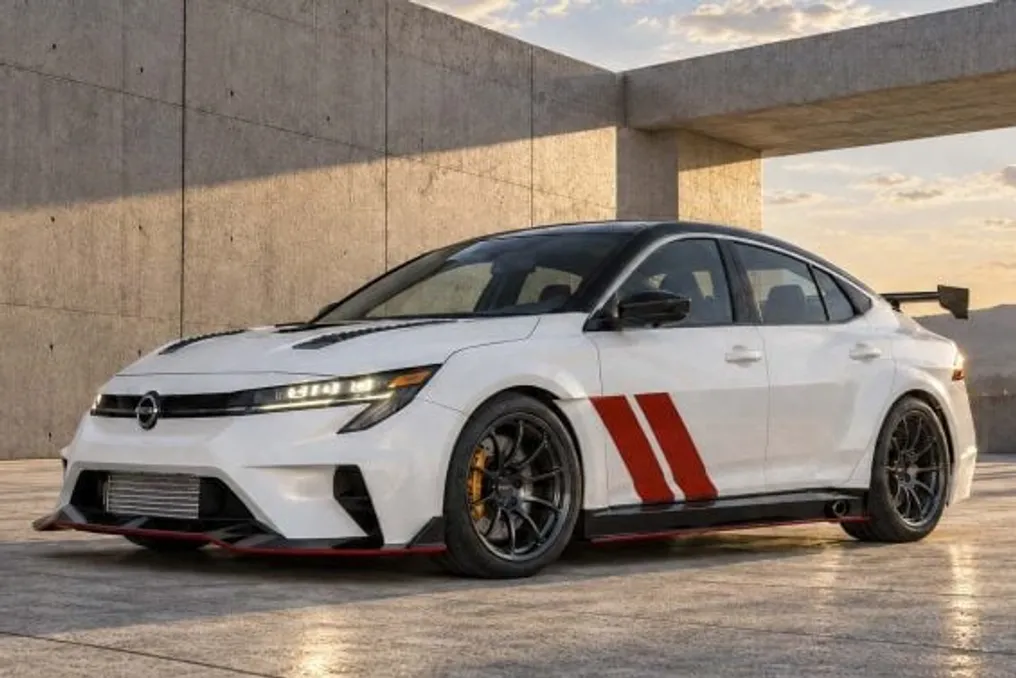
Nissan transforms Sentra sedan into 304 hp sports concept with supercar components
Read more
autopapo.com.br

Nissan transforms Sentra sedan into 304 hp sports concept with supercar components

The Sentra, a mid-size sedan known for being a more traditional vehicle and which was discontinued in Brazil in July, has been transformed into a high-performance sports model in the United States.

On Wednesday, the 28th, Nissan presented the Sentra Spec-V Concept. This concept features a 2.0 turbo engine that generates 304 horsepower, a six-speed manual transmission, and incorporates several components taken from the GT-R supercar.

This concept car serves to celebrate the 35th anniversary of the Sentra SE-R, a sporty version that captured enthusiasts in North America. It will be exhibited at the Sema Show, the main automotive accessories and tuning fair in the US, which will take place in Las Vegas between November 3rd and 6th.

In the standard version, the Sentra's 2.0 engine is naturally aspirated and produces 151 hp. However, in the concept version, it was equipped with a Garrett G25 turbocharger, front intercooler, JE forged pistons, and Carrillo connecting rods, along with other internal reinforcements. These modifications raised the wheel-measured power to 304 hp, doubling the original output.

The transmission system includes a six-speed manual gearbox and an automatic locking differential, both sourced from the Juke Nismo RS, the sporty version of the compact SUV. The assembly is complemented by a lighter engine flywheel supplied by Centerforce.

The brakes were inherited from the GT-R Nismo, featuring Brembo six-piston calipers and 39 cm discs in the front, and four-piston calipers with 38 cm discs in the rear. Other supercar elements given to the concept include the rear spoiler and Recaro front seats.

Aesthetically, the Sentra received a widened body kit, an air scoop hood, a side-exit exhaust system, and 19-inch Nismo forged wheels mounted with Yokohama Advan tires.

To optimize track performance, the suspension was enhanced with front shock absorbers that have external reservoirs, stiffer springs, and new stabilizer bars.

Despite its advanced features, Nissan clarifies that the Sentra Spec-V is strictly a concept car and will not be available for commercial sale. According to Kim Less, Vice President of Aftermarket and Customer Loyalty for Nissan in the Americas, such projects function as a way to inspire fans and demonstrate the potential that can be achieved with models like the Sentra and the Z.

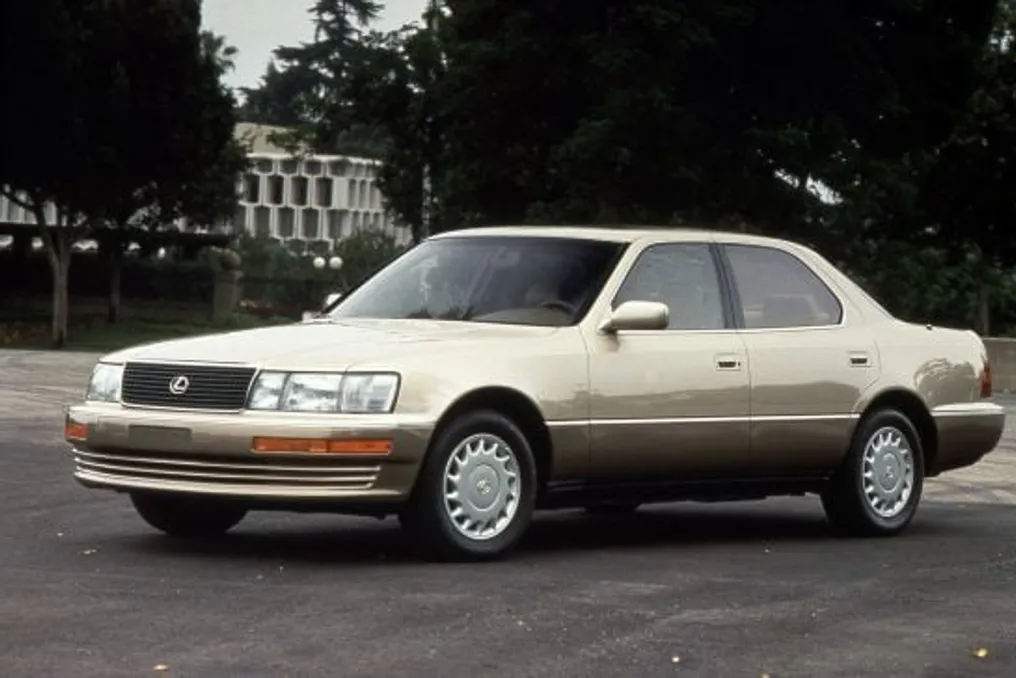
Lexus LS400 challenged Mercedes-Benz and forced changes in the development of the S-Class
Read more
autopapo.com.br

Lexus LS400 challenged Mercedes-Benz and forced changes in the development of the S-Class

Luxury vehicles function as technological showcases for manufacturers, demonstrating their capabilities. Although Toyota was already recognized as a good general manufacturer, it created Lexus with the aim of proving that it could go beyond that level. This strategy has been imitated by Chinese brands, which introduce expensive models to lend credibility to higher-volume cars.

The first Lexus vehicle was the LS400 sedan, launched in 1989, which caused a great impact on competitors such as Mercedes-Benz, BMW, Jaguar, and Cadillac. For many Brazilians, this car is known for being the one that must be destroyed in a bonus phase of Street Fighter II.

Toyota already had an exclusive luxury model for Japan, the Century, launched in 1967. This car followed a typically Japanese philosophy, focused on discretion, smoothness, and silence. The Lexus division maintained these characteristics but combined them with high technology and performance.

The main benchmark in this segment has always been the Mercedes-Benz S-Class, which was frequently chosen by heads of state, diplomats, and celebrities. In 1983, Eiji Toyoda, then president of Toyota, initiated the project to create a 'Japanese Mercedes.' The defined goals did not include deadlines or budget, but rather surpassing European manufacturers in aerodynamics, interior quietness, top speed, and fuel efficiency.

This ambitious project mobilized 60 designers, 1,400 engineers distributed across 24 teams, 2,300 technicians, and over 200 support staff. 450 prototypes of the car and 900 of the engine were produced, totaling 2.7 million kilometers driven. The car reached its final forms in 1987, undergoing durability tests and validation until its launch in early 1989. Toyota's initial goal was to sell 50,000 units annually, with 40,000 destined for the United States.

All this effort resulted in the Lexus LS400, the pioneer of the division's luxury line. Its design was conservative, without excessive grilles or hood ornaments, but featured precise panel fits and attention to aerodynamics. The LS400's engine was an unprecedented 4.0 V8, the 1UZ-FE, which used a cylinder bore larger than the piston stroke to ensure greater smoothness.

One of the launch announcements illustrated this smoothness with the car accelerating on a dynamometer with stacked cups on the hood, which remained stable due to the V8. This engine generated 260 hp and 36 kgfm, reaching 100 km/h in 8.5 seconds and a top speed of 250 km/h. The four-speed automatic transmission incorporated electronic control, which was innovative for the time. Furthermore, the Lexus LS400 offered electric adjustments for the steering wheel and seatbelts, an electroluminescent dashboard with a holographic effect, air suspension, a Nakamichi sound system, and an integrated mobile phone; in Japan, where it was sold as the Toyota Celsior, it could include GPS.

While Toyota was developing the LS400, Mercedes-Benz was designing a new S-Class, also scheduled for release in 1989. However, the arrival of the Japanese sedan forced the Germans to revisit their designs. The new S-Class was already facing delays due to the development of a V12 engine, necessary to compete with the BMW 750i. After acquiring a Lexus LS400, Mercedes-Benz engineers were impressed by the assembly precision and acoustic insulation of the vehicle.

Consequently, the new S-Class project was postponed by 18 months to improve these aspects and complete the V12 engine. This delay incurred extra costs amounting to US$ 1 billion. Although every unit sold of the first Lexus LS400 resulted in a loss for Toyota, this loss was offset by sales of models like the Corolla, Camry, and Hilux. Mercedes-Benz also recorded losses with the S-Class, but this impacted its financial balance more significantly. During the 1990s, the German brand tried to cut costs, and certain decisions ended up increasing losses, with recovery from the impact caused by Lexus only beginning in the following decade.

Popular