Dongfeng unloads first vehicles in Brazil and plans network of 60 dealerships
Read more
AutoPapo
autopapo.com.br

Dongfeng unloads first vehicles in Brazil and plans network of 60 dealerships

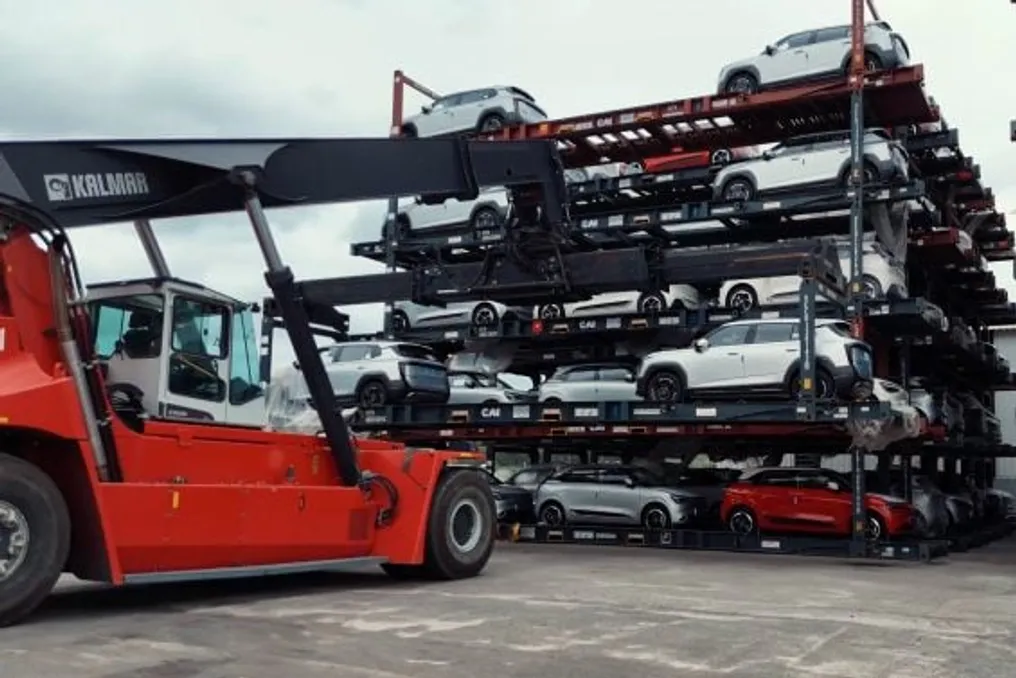
DFM, the Brazilian brand of Dongfeng Motor Corporation, received its first batch of automobiles in the country, although these are not yet available for sale. The shipment includes over 200 units of 100% electric models, the DFM Box hatchback, and the DFM Vigo SUV, which were unloaded at the port of Vitória, located in Espírito Santo.

This first batch will be directed to showrooms and test drives for the future dealership network. Shipments intended for commercialization will be sent in subsequent batches in the coming weeks and months.

Felipe Amaral de Souza, responsible for Sales and Operations areas of DFM in Brazil, commented on the market reception, stating that the public has shown interest in the brand. He emphasized that the next few months will focus on converting this receptiveness into trust through the inauguration of dealerships and the arrival of vehicles ready for sale.

The commercial operation is already established with 32 pre-selected dealer groups. The initial phase involves setting up 60 stores distributed across 48 cities in 22 states, many of which are in the final stages of construction. The manufacturer has greater ambitions, aiming to reach a total of 145 dealerships by 2027.

DFM's entry into the Brazilian market was announced in August during the Interlagos Festival, held in São Paulo.

On the brand's official channel on Mercado Livre, the Vigo model is listed with a price of R$ 163,900 in the E2 version and R$ 169,900 in the E2+, available in a promotional batch of 99 units. The DFM Box has a fixed launch price of R$ 135,900.

The DFM Box is a hatchback with dimensions of 4.02 meters, equipped with a 95 hp engine and 16.3 kgfm of torque, offering an autonomy of 275 km, according to Inmetro certification. This model will compete in the market against options such as BYD Dolphin Mini and Geely EX2. Meanwhile, the Vigo, a compact SUV measuring 4.31 meters, features 163 hp and 23.5 kgfm, achieving 302 km with a load. The brand also reports that it can recharge from 30% to 80% in just 18 minutes.

DFM claims that, combined, the two models will meet more than 80% of the current demand for electric vehicles in Brazil. Both vehicles will have a seven-year warranty for the body and a ten-year warranty for the battery.
Similar stories

Chinese Land Rover with a 1.2-meter screen may appear in Brazil in 2028
Read more
autopapo.com.br

Chinese Land Rover with a 1.2-meter screen may appear in Brazil in 2028

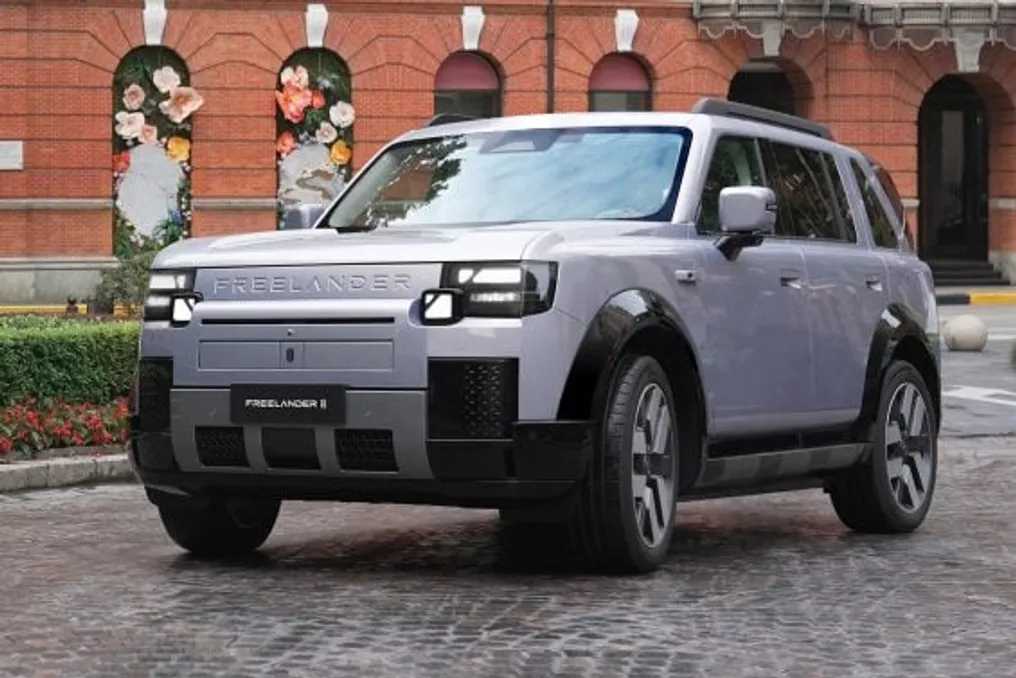
The model, previously known as the Freelander and discontinued by Land Rover in 2014, has returned under a Chinese brand and could potentially arrive in Brazil in 2028.

Chery organized a visit for Brazilian dealers to China to present the Freelander, developed in collaboration with Jaguar Land Rover (JLR), as well as its first model—the Freelander 8 SUV. This information was published by the magazine Autoesporte.

Last week, the international version of this SUV was tested for the first time by foreign journalists and dealers at the Chery International User Summit 2026, held in Wuhan, China.

If this information is confirmed, the Freelander will join the Omoda and Jaecoo models already on the market, as well as the iCaur and Lepas expected in 2027. In China, the Freelander 8 is priced from 233,000 to 301,000 Brazilian reais (equivalent to 309,900 to 399,900 yuan).

The Chinese version is an electric vehicle with an extended range (REEV): one 1.5-liter turbocharged engine functions solely as a generator, while two electric motors provide propulsion. The total power output is 829 horsepower and 82.9 kgm of torque, with acceleration from 0 to 100 km/h taking 4.6 seconds, and the battery range reaching 310 km according to the Chinese CLTC cycle.

The left-hand drive international version is a plug-in hybrid that can be charged from the grid. It combines a 2.0-liter turbocharged engine and two electric motors, collectively producing 625 horsepower and 67.5 kgm of torque. Acceleration to 100 km/h takes 5.8 seconds, and the vehicle covers 110 km on pure electric power.

This SUV, featuring square lines inspired by the original Freelander, has a length of 5.12 m and a wheelbase of 3.04 m, which is 36 cm longer than the Land Rover Defender 110. It is equipped with air suspension and is capable of traversing flooded areas up to 90 cm deep.

The cabin, designed for five or six passengers, features a main 46.3-inch 8K screen covering 1.2 meters at the base of the windshield instead of a traditional dashboard. It also includes a 15.6-inch multimedia system, Harman Kardon acoustics with up to 23 speakers, and, in the most equipped trims, a 10-liter refrigerator.

The international version is planned to debut in the United Arab Emirates in the first quarter of 2027.

Traditional brands adopt Chinese vehicles to accelerate the transition to electrification in the Brazilian market
Read more
autopapo.com.br

Traditional brands adopt Chinese vehicles to accelerate the transition to electrification in the Brazilian market

The recent introduction of Chinese automobiles in Brazil has caused a significant shift in the local market. Plug-in hybrid and electric models have rapidly gained popularity, surprising established manufacturers.

One of the strengths of Chinese companies lies in their agility in developing new vehicles; some models take only two years, which is half the time required by traditional brands. Because of this, certain companies have chosen to adhere to the principle of 'if you cannot compete, join,' to offer consumers the electrified models they are demanding.

The effects of this trend are already visible on the streets, with Chevrolet marketing the Chinese models Spark EV and Captiva EV. Furthermore, Geely acquired a 26% stake in Renault do Brasil, which will involve component swapping during this merger.

In the near future, more cars produced by traditional brands are expected to be launched, but incorporating Chinese design and engineering elements. Some of these vehicles will be manufactured in the country, as detailed below.

Chevrolet

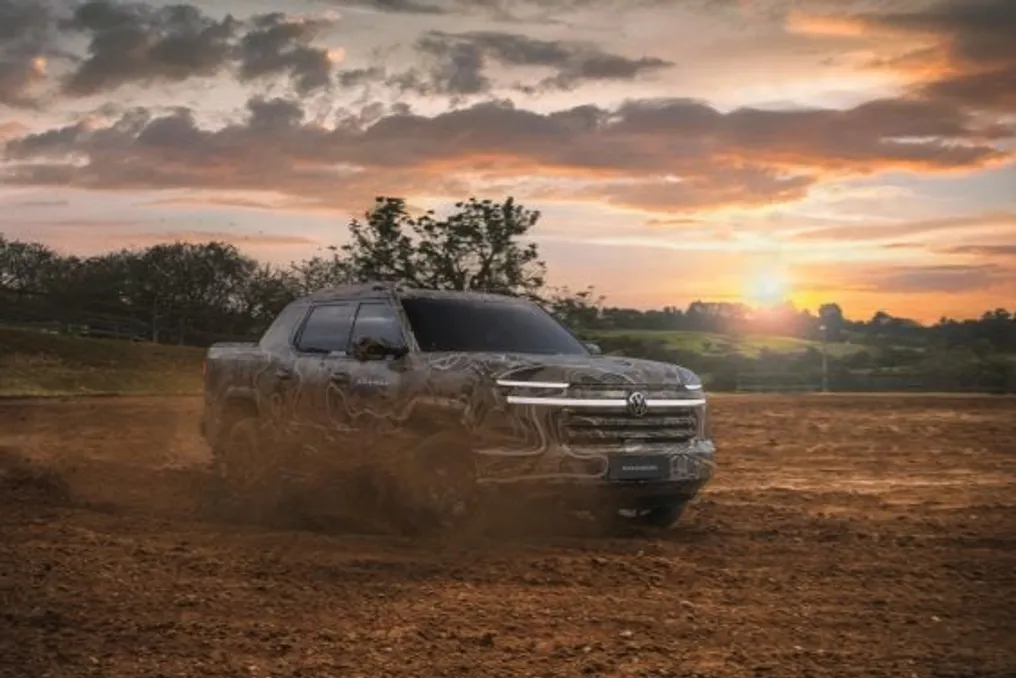
Volkswagen maintains a joint venture in China with the Shanghai Automotive Industry Corporation (SAIC), which is the country's largest state producer. Currently, the German brand is developing the next generation of the Amarok pickup truck in Brazil, using the Chinese Maxus Terron 9 model as a base. This model will serve to expand the Amarok in various aspects. The Maxus has dimensions of 5.5 meters in length, 1.99 meters in width, 1.86 meters in height, and 3.3 meters in length. It will also be available with plug-in hybrid or turbodiesel engine options.

The Amarok project incorporates a separate chassis from the body and an independent rear suspension, keeping the external and cabin design aligned with Volkswagen's visual identity.

Additionally, the German brand will have a van built on the SAIC platform, which will be distributed by its truck division. This vehicle will be derived from the Maxus V90, which is already sold in Europe. The turbodiesel engine of this van is a 2.0 belonging to the same family as the engine used in the Amarok. Although electric versions of this van exist, such propulsion has not yet been confirmed for the Brazilian market.

Renault

Renault do Brasil, in partnership with Geely, confirmed that it will launch a hybrid model in São José dos Pinhais (PR) that will use a Chinese platform. According to the portal Autos Segredos, this car will be the new version of the Arkana coupe SUV, adopting the EX5 EM-i architecture. The national hybrid Arkana will initially be offered with a flex engine, while its counterpart, the EX5 EM-i, will begin production in Brazil with an exclusively gasoline-powered engine. The launch is expected at the end of 2027.

Renault also plans to make electrified versions of the Kardian, Boreal, and Niagara models available, but these systems will come from the French headquarters.

General Motors was the first company to introduce products of Chinese origin in Brazil, with the current generations of the Onix and Tracker. These projects were conceived in China in collaboration with SAIC-GM and involved the Brazilian subsidiary. Currently focused on electric vehicles, GM already markets the Spark EUV and Captiva EV, assembled at the PACE factory in Ceará. Soon, the market will receive a plug-in hybrid version of the Captiva.

The brand also announced that it will have an electric hatchback in Brazil based on the Wuling Bingo Pro, aiming to compete with the Geely EX2 and the BYD Dolphin Mini. According to Auto Esporte magazine, GM plans to bring five more Chinese vehicles, including one from Buick.

Nissan's lineup suffered a considerable reduction in 2026, with the Frontier being discontinued and the new generation of the Sentra not having been launched. Vehicle offerings in Brazil are expected to increase starting in 2027 with the arrival of Chinese models.

This movement will begin with the new Frontier Pro, which is derived from the Dongfeng Z9. Similar to the new Volkswagen Amarok, it is a medium pickup truck with a separate chassis from the body, although it is larger than medium ones. It will be offered as a plug-in hybrid, but in other countries, it also has a turbodiesel engine. This electrified mechanism generates 416 hp. The N7 sedan and the NX8 SUV are also planned, both fully electric and the result of collaboration with Dongfeng. This pair of vehicles has already been seen undergoing tests in Brazilian territory.

Stellantis plans to manufacture Chinese vehicles in Spain and France to optimize factory capacity
Read more
autopapo.com.br

Stellantis plans to manufacture Chinese vehicles in Spain and France to optimize factory capacity

Stellantis, the owner of brands such as Fiat, Jeep, and Peugeot, will implement a strategy to utilize the idle capacity of its European manufacturing units by introducing vehicles from partner Chinese manufacturers. This initiative was presented by the conglomerate's CEO, Antonio Filosa, during an event held parallel to the Paris Motor Show this Monday, the 12th.

Filosa stated that instead of shutting down operations, the company intends to share its surplus capacity with solid commercial partners. Among these partners are Leapmotor, in which Stellantis holds a stake, and Dongfeng.

In Spain, the plant located in Zaragoza began producing the Leapmotor B10 electric SUV on the same day, the 12th. Furthermore, the unit plans to assemble an Opel medium-sized electric SUV starting in 2028, using technology provided by Leapmotor.

In Madrid, Leapmotor International, a joint venture between the two corporations, will assume a 49% stake in the Villaverde factory, which currently manufactures the Citroën C4. Stellantis will retain the remaining 51%, and the debut of the Chinese model's production is scheduled for the first half of 2028, although the agreement has not yet been formalized.

In France, the Rennes factory is expected to start receiving models from Dongfeng, which has a long-standing relationship with Peugeot and Citroën in China. The companies are negotiating to establish a joint venture in Europe, which will also cover the marketing of Voyah vehicles, a premium brand belonging to the Chinese group. Stellantis has not yet disclosed details about which model will be produced or the schedule for its arrival.

This production within Europe offers a competitive advantage, allowing Chinese brands to avoid tariffs imposed by the European Union on electric vehicles imported directly from China.

These collaborations are part of the strategic plan called FaSTLAne 2030, launched in May. This plan aims to increase the utilization rate of Stellantis's European factories from approximately 60% to 80% by 2030. To achieve this goal, the company plans to reduce more than 800,000 units of capacity on the continent without resorting to plant closures.

Additionally, in Brazil, Stellantis had already announced the production of Leapmotor B10 and C10 SUVs in the city of Goiana, in the state of Pernambuco, with an expected arrival at dealerships in the first quarter of 2027.

Popular