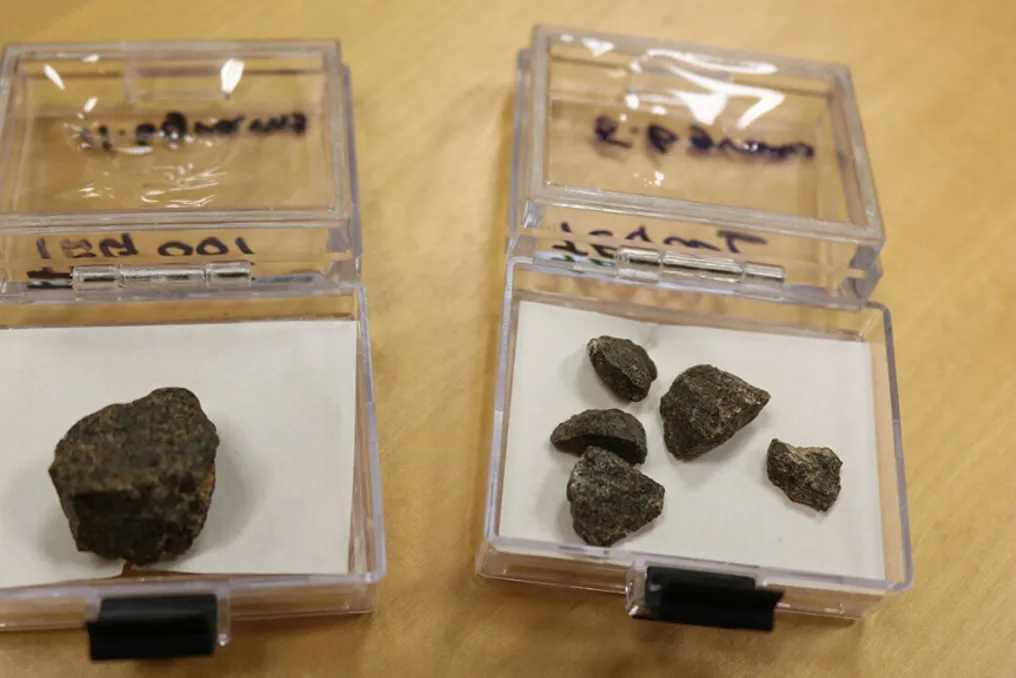
Oldest Mars Meteorite Points to Earth-like Environment
Read more
Olhar Digital
olhardigital.com.br

Oldest Mars Meteorite Points to Earth-like Environment

A meteorite at least 4.1 billion years old may help scientists recreate a very early stage of Mars' history. This sample, named Teghaza 001, possesses characteristics indicating that the planet once had a wetter atmosphere and different conditions from those today, possibly with water circulation on the surface.

The discovery was presented in a study published in the scientific journal Science. Researchers from the University of New Mexico (USA) played a vital role in identifying this material, which was found in the Sahara Desert.

Analysis showed that the meteorite is a sample of Martian volcanic rock, dating back at least 4.1 billion years. According to researchers, this is the oldest identified igneous rock from Mars.

The team paid special attention to the unusual mineralogical composition. The sample demonstrates high concentrations of manganese oxide—a compound that may be linked to microbial activity and is studied by robotic probes on Mars as a potential sign of life-friendly conditions.

Scientists also found features in oxygen isotopes and altered minerals that point to interaction with liquids. This suggests that the rock might have been in an environment where water circulated.

The composition of Teghaza 001 indicates climatic conditions vastly different from those existing on the Red Planet today. Currently, Mars is cold and dry, but the meteorite preserves traces of an era when water could circulate on the surface and interact with volcanic systems and rocks.

Researchers attribute this sample to the Pre-Noachian period—the earliest geological epoch of Mars, which occurred approximately between 4.5 and 4.1 billion years ago. This time frame is particularly important for searching for possible signs of extraterrestrial life.

According to Karl Egee, director of the University of New Mexico Institute of Meteorite Science and one of the analysis participants, if any form of primitive life ever existed abundantly on the surface of Mars, this period would be one of the most promising for it. At that time, Mars might have possessed a magnetic field, a denser atmosphere, and surface water. These conditions could have provided better protection from radiation and created a potentially habitable environment.

However, the discovery does not mean that the meteorite contains evidence of life. Instead, it provides information about the conditions that existed on the planet when the probability of habitable environments was higher.

Furthermore, researchers used remote sensing data obtained from Martian orbiters to search for areas with chemical and geological characteristics similar to those of the meteorite. Analyses revealed possible origins in ancient highlands of the southern hemisphere of Mars. Identifying these regions can help guide future exploration missions, including sending robots and potential sample collection operations.

For scientists, Teghaza 001 represents a rare opportunity to directly study materials preserved from the earliest stages of Mars' evolution. The team emphasizes that finding another such sample could be extremely difficult.
Similar stories

NASA is concerned about Martian dust, which is 500 times finer than a hair strand
Read more
olhardigital.com.br

NASA is concerned about Martian dust, which is 500 times finer than a hair strand

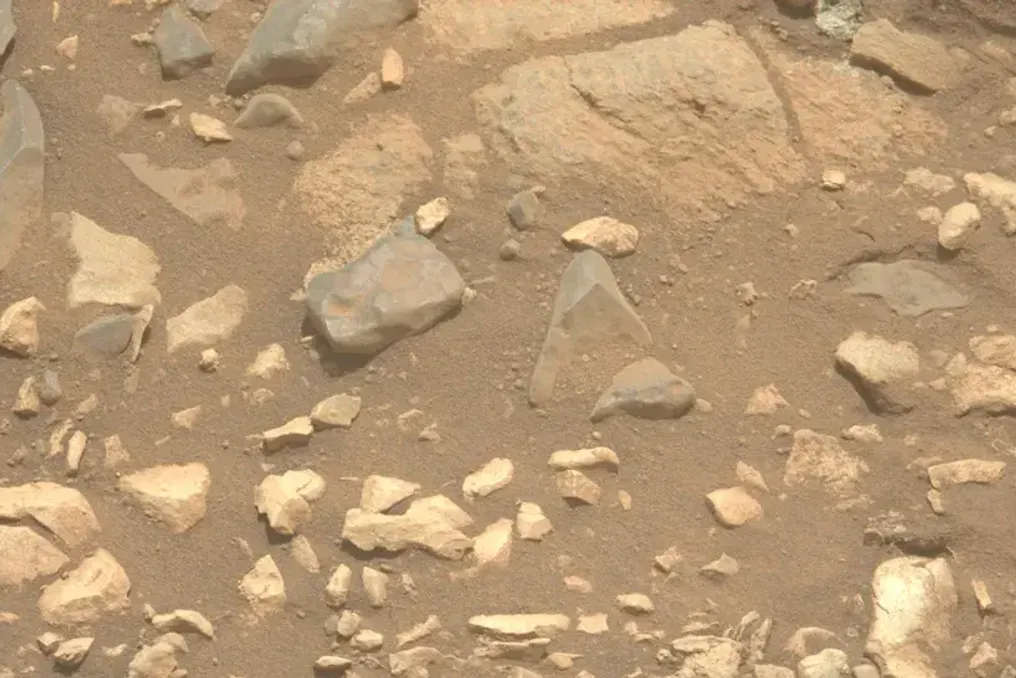
The Perseverance rover, operated by NASA, identified dust particles on the surface of Mars with dimensions of approximately 100 nanometers, making them about 500 times finer than a human hair. This finding raises concerns about the risks this material poses to the health of future astronauts and to the preservation of habitats and spacesuits during crewed missions to the planet.

The detection was made using the PIXL instrument, which analyzed particles accumulated on the rover's equipment and in samples of transported materials. In addition to the ultrafine 100-nanometer particles, the instrument also detected particles with a diameter smaller than 2.5 micrometers.

Such minuscule particles have the ability to penetrate deep into the lungs and reach the bloodstream, potentially causing damage to vital organs. However, according to Scott VanBommel, a planetary scientist at the University of Washington in St. Louis and lead author of the study published in the Proceedings of the National Academy of Sciences, the level of risk is directly linked to the quantity and duration of exposure.

The chemical composition of the Martian dust is also a point of concern, as it contains silica, iron compounds, and chlorine compounds, such as perchlorate, substances that can be harmful in high concentrations.

To investigate how the dust adheres to potential materials for spacesuits, Perseverance carries samples of two types of material: the synthetic fiber Vectran and a protective Teflon coating, both measuring about 20 millimeters on a side. The results of these tests indicated different behaviors; VanBommel emphasized that the tests did not show damage caused by the dust to these materials, suggesting that the observed variations may stem from the physical-electrostatic characteristics of each, affecting particle adhesion.

Additionally, the dust has the potential to deteriorate habitat and spacesuit materials over time. The data collected by the rover are crucial for guiding the selection of appropriate materials and for developing efficient cleaning procedures capable of removing particles smaller than one micrometer.

NASA already has knowledge about the effects of dust on space missions, dating back to the Apollo lunar landings between 1969 and 1972. On the Moon, the material caused wear on the outer layers of suits, damaged seals, and scratched visors, and could also contribute to symptoms similar to hay fever in some astronauts. Lunar dust is primarily formed by surface impacts and remains angular and sharp due to the absence of an atmosphere or wind to wear it down. In contrast, on Mars, the biggest concerns lie in the chemical composition and the reduced size of the particles.

With NASA planning to send astronauts to the Red Planet as early as the 2030s, VanBommel stated that the findings will serve as a basis for guiding the planning of life support systems, the selection of materials for suits and habitats, and the creation of protocols to manage toxicological risks. The researcher concluded that such findings will aid in designing future human support systems for Martian missions, covering material selection and the establishment of effective cleaning methods for sub-micrometer particles.

Is it possible to bring unknown organisms from Mars to Earth?
Read more
olhardigital.com.br

Is it possible to bring unknown organisms from Mars to Earth?

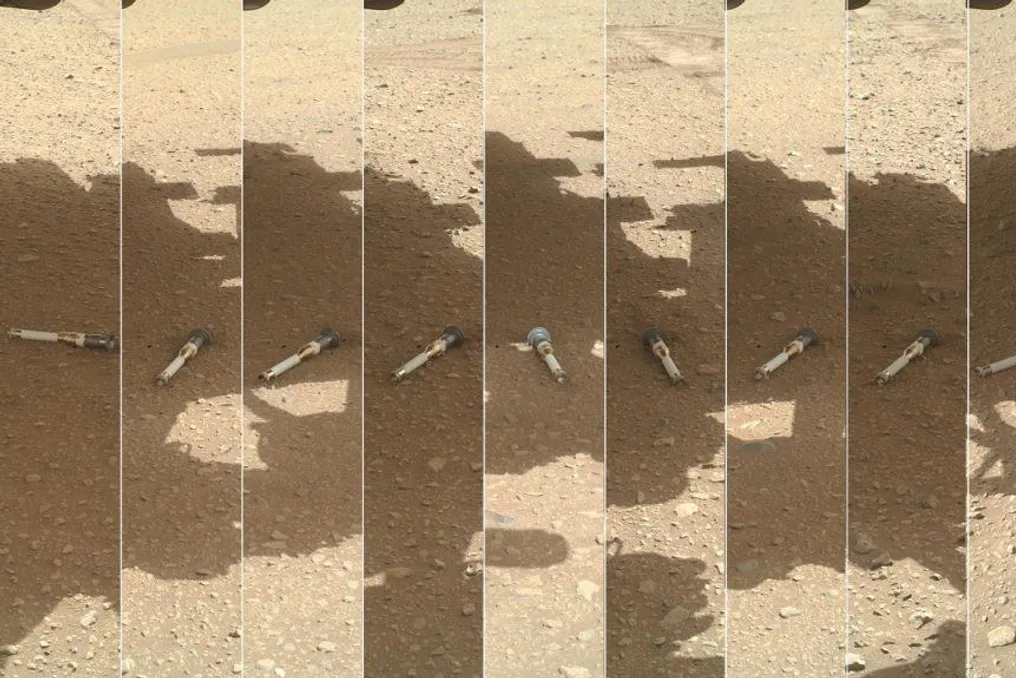
The search for signs of life on Mars partially depends on analyses that can only be conducted with high accuracy on Earth. Samples collected by the NASA rover Perseverance are stored in tubes on the surface of the Red Planet. However, their return involves technological difficulties, high costs, and strict protocols to prevent contamination of the material and protect the Earth's biosphere.

The initial plan of the Mars Sample Return mission, developed by NASA in collaboration with the European Space Agency (ESA), involved collecting the tubes left by Perseverance and delivering them to a lander. Alternatively, two helicopters equipped with robotic manipulators could retrieve samples directly from the surface. A small rocket would launch a capsule containing the material into Martian orbit, from where a European spacecraft would capture and transport it to Earth. The delivery was initially planned for 2033.

Nevertheless, the project has faced technical problems, delays, and rising costs. Due to these obstacles, NASA suspended the original mission architecture and began evaluating more economical options, including proposals from the private sector. As a result, the return schedule has been revised and now depends on determining a new strategy.

While the United States reviews its plans, China is developing the Tianwen-3 mission, which aims to bring Martian material to Earth by 2031. The China National Space Administration (CNSA) intends to collect and return samples using its own technologies. If schedules are met, the country could deliver material from Mars earlier than the American-European mission.

Concerns about sample return are not limited to the possibility of discovering signs of life. Scientists must also ensure that the material is not contaminated during transport and that its arrival on Earth does not pose biological risks.

The planetary protection policy of the Committee on Space Research (COSPAR) establishes international guidelines for reducing contamination between Earth and other celestial bodies. One of the issues is so-called forward contamination, which occurs when terrestrial organisms are transferred to extraterrestrial environments. The reverse process, known as back contamination, involves the possibility that extraterrestrial material could introduce organisms or biological agents to Earth.

In the case of Mars, the hypothesis of microorganisms capable of surviving the journey and causing consequences for the Earth's biosphere must be considered in safety protocols, but there is no evidence of Martian life in the samples. Biological risk should not be confused with a confirmed threat to human health.

In an interview with Olhar Digital, astrobiologist and professor of geobiology at the Institute of Geosciences of the University of São Paulo (USP), Douglas Galante, stated that he considers the risk of any Martian organism posing a biological threat to Earth to be very low. In his opinion, there is no reason to panic, although the possibility of ecological consequences requires a scientifically rigorous approach.

Japan plans mission to collect samples from Mars's Phobos, while Musk works on Mars colonization
Read more
www.aajtak.in

Japan plans mission to collect samples from Mars's Phobos, while Musk works on Mars colonization

Elon Musk is considering the possibility of creating human settlements on Mars and has already begun preparations for this. Meanwhile, NASA has landed nine spacecraft on Mars over the past five decades, and China achieved a landing in 2021. However, none of these missions have managed to bring back samples from Mars, and the idea of collecting soil from Mars's moons seemed like a distant dream. Now, Japan is taking on this task.

Japan has launched a special mission to collect soil and rock samples from Mars's moon Phobos. Scientists aim to determine how both of Mars's moons formed and what factors were behind this process. Japan has launched a space mission to bring soil and rock samples from Phobos back to Earth.

The mission, named Mars Moon Exploration (MMX) by the Japan Aerospace Exploration Agency (JAXA), involves sending a spacecraft to Mars. This spacecraft will land a small rover on Phobos to study the surface. The spacecraft will then collect at least 10 grams of soil and rock samples and return them to Earth. The mission aims to arrive on Earth by 2031.

Not only Japan but also the USA, France, Germany, and the European Space Agency are participating in this mission. Approximately 578 million dollars are allocated to this mission, and the spacecraft itself weighs about five tons. After reaching Mars, it will head to Phobos, where it will land a small rover called Idemix, jointly developed by France and Germany.

The Idemix rover is comparable in size to a microwave oven and is equipped with four wheels. It will operate on the surface of Phobos for about 100 days. Its task is to study the terrain and find a suitable landing site for the main spacecraft. Since the gravity on Phobos is very low, there is a risk that the rover will bounce after landing. Therefore, it is designed to right itself if it tips over. The rover will move very slowly, at a speed of about one millimeter per second, which will help it navigate the surface.

According to the mission plan, the main spacecraft will land on the surface of Phobos in 2028 or 2029. It will stay there for about two hours, during which time at least 10 grams of soil and rock samples will be collected using a drill and other equipment. After collecting the samples, the spacecraft will leave Phobos, fly past Mars's second satellite, Deimos, inspect it, and then return to Earth in 2030. The samples are planned to be delivered to the Australian desert in 2031.

Phobos is about 22 kilometers wide and resembles a potato. Scientists are trying to understand the formation mechanism of Phobos and Deimos. One hypothesis suggests that these moons formed from debris ejected after a large celestial body collided with Mars. Another possibility is that they were small celestial bodies captured by Mars's gravity. Scientists hope to find traces of Martian soil and rocks in the Phobos samples, which will help them understand the history of the moons' formation and possibly provide knowledge about the formation of other planets and their satellites.

In addition to Japan, China is also preparing a mission to collect samples from Mars. China plans to launch its mission in 2028, aiming to deliver samples to Earth by 2031. Furthermore, NASA is working on plans to return samples collected by its Perseverance rover on Mars. If Japan's mission is successful, scientists will be able to analyze the samples brought back from Mars's moons, which will help better understand the formation of Phobos and Deimos, as well as the history of Mars.

Popular