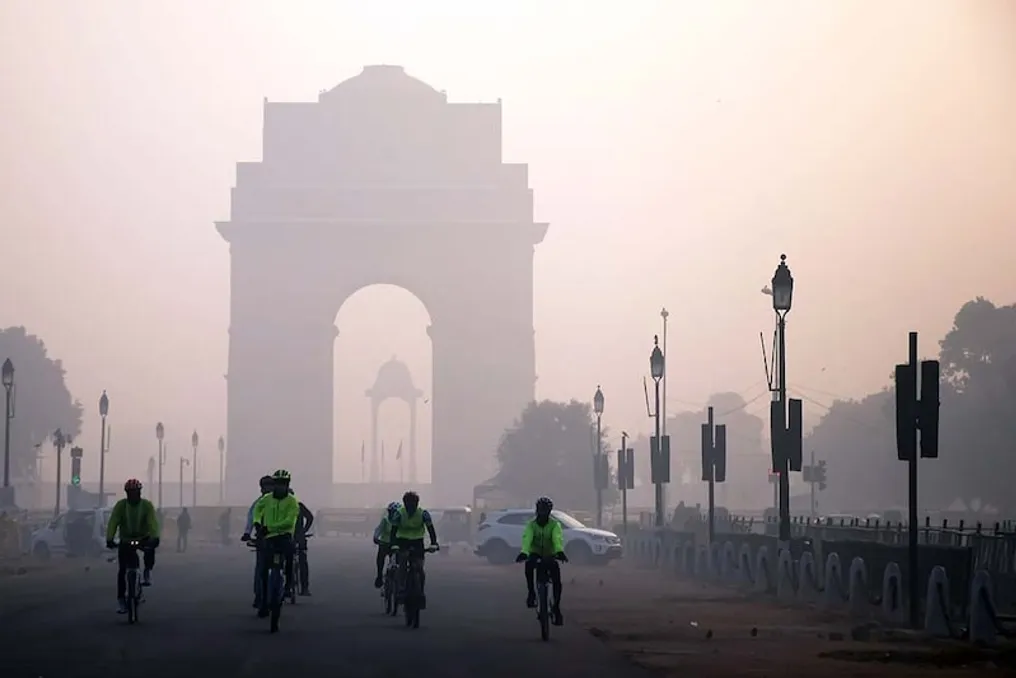
Coldest October Day in Delhi in 75 Years Recorded: Temperature in Safdarjung Dropped to 20.7°C
Read more
Aaj Tak
www.aajtak.in

Coldest October Day in Delhi in 75 Years Recorded: Temperature in Safdarjung Dropped to 20.7°C

On October 30, the weather in Delhi set a new record. The maximum temperature recorded at the Safdarjung weather station was 20.7 degrees Celsius. According to available historical data, this is the lowest maximum temperature for October since 1951, meaning that such a low maximum temperature has not been recorded in October over the past 75 years.

Previously, the record for the lowest maximum temperature in October belonged to October 25, 1975, when the maximum value of 21.5 degrees Celsius was recorded in Safdarjung. However, on October 30, the temperature dropped even lower, surpassing the old record.

Historical data from Safdarjung shows that the new figure of 20.7 degrees Celsius is lower than all previous records. This indicates that the daytime temperature in Delhi remained abnormally low at the end of October.

The maximum temperature is defined as the highest temperature recorded during the day. Usually, the temperature rises during the day, but on October 30, the maximum level in Safdarjung was only 20.7 degrees. Daytime temperature can depend on cloud cover, precipitation, wind direction changes, and other weather factors. Such unusual readings help better understand long-term weather records.

Thus, October 30, 2026, became an important date in Delhi's weather history, as the maximum temperature of 20.7 degrees recorded in Safdarjung is the lowest in October over the last 75 years.

Similar stories

Cyclonic effect caused weather cooling; heavy rain in Delhi-NCR since night
Read more
www.aajtak.in

Cyclonic effect caused weather cooling; heavy rain in Delhi-NCR since night

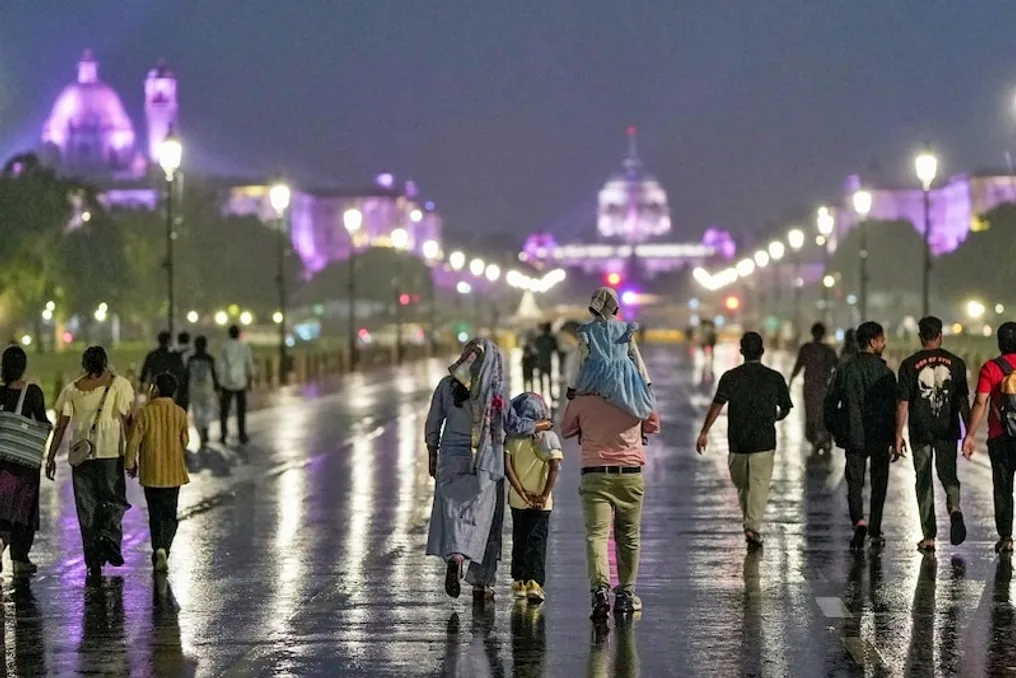
Due to the influence of a western disturbance and the cyclonic storm 'Arnab', the weather in Delhi-NCR has drastically changed. Rain has been falling in several areas of the capital since Thursday. The rain started early on Thursday morning. In Delhi-NCR, there was drizzle on Thursday morning, the weather was clear for several hours during the day, after which rain began in many areas after five in the evening. This rain continues into Friday morning, occasionally stopping.

The strongest impact of the rain is felt in West and Central Delhi. Forecasts suggest that the total amount of precipitation in some areas could exceed 50 millimeters by Friday. Due to the incessant rain and strong winds, the temperature has significantly dropped.

The series of rains, which began in Delhi-NCR on Thursday morning, continued until late at night. Both drizzle and heavy rain were observed in the national capital and surrounding areas. During this period, cold winds blew at speeds of 30 to 50 kilometers per hour, leading to a sudden drop in temperature.

Due to the constant precipitation, the maximum temperature in Delhi dropped by 5.6 degrees below normal, reaching 25.4 degrees Celsius. This is 6.4 degrees lower than the previous 24 hours. The minimum temperature was 19.1 degrees Celsius. In connection with the weather changes, the meteorological department issued a yellow warning for Delhi.

The cyclonic storm 'Arnab' and bad weather led to cloudiness and rain in Delhi-NCR, Haryana, Faridabad, and Madhya Pradesh. This also affected the celebration of Karva Chauth. On Thursday evening, due to dense clouds, women observing the fast had to wait a long time for the moon to appear. After the scheduled time for the moonrise in Delhi passed, the moon was not visible in many areas. In such cases, women continued their fasts using technology and watched the moon via video calls with relatives living in other cities to break their fast.

However, later, when the weather improved, the moon became visible through the clouds in many other parts of the country, including Guwahati and Mumbai. Meanwhile, in Alwar, Rajasthan, a long queue of cars formed on an overpass to see the moon.

Although the period of rain in Delhi lasted about 12 hours, precipitation continues in some places. West and Central Delhi are particularly affected by the rain. It is forecasted that the total amount of precipitation in several places may exceed 50 millimeters by Friday.

Minimum temperature record set in Delhi: temperature dropped to 15.3°C
Read more
www.aajtak.in

Minimum temperature record set in Delhi: temperature dropped to 15.3°C

The influence of cold weather intensified in the capital city of Delhi, as the minimum air temperature reached 15.3 degrees Celsius on Tuesday, October 27. This figure was the lowest recorded in October over the past three years. Previously, on October 27, 2023, the minimum temperature was 15.2 degrees Celsius.

Parallel to the drop in temperature, the air quality in Delhi remains at an average level. According to data from the SAMEER application of the Central Pollution Control Board (CPCB), the Air Quality Index (AQI) in Delhi on Tuesday was 168.

According to meteorological service forecasts, the minimum temperature in the Safdarjung area was 1.9 degrees below normal. The maximum temperature on Tuesday is expected to remain around 31 degrees Celsius. The sky may be covered with clouds during the day, which will lead to a feeling of cold in the morning and at night, while remaining warm during the day.

Temperature readings varied across different areas of Delhi. In Palme, the minimum temperature was 15.5°C, which was 2.3 degrees below normal. Lodhi Road recorded a temperature of 15.6°C, which was 0.4 degrees below the average value. In Ridge, the minimum temperature reached 16.2°C, also 2.3 degrees below normal. In Ayangar, the minimum temperature was 15.2°C, which was 2 degrees below normal. These data indicate that morning temperatures in several areas of Delhi were lower than expected.

The minimum temperature is the lowest reading recorded in a specific place over a 24-hour period. At night, the ground surface cools down, causing a decrease in the surrounding air temperature. In late October, cold weather begins to be felt in Delhi mornings and nights. However, a low morning temperature does not guarantee cold weather throughout the day; the daytime temperature can rise depending on solar activity or cloud cover, explaining the difference between morning and daytime climate.

Against the backdrop of falling temperatures, attention is also being paid to air quality. As shown by the SAMEER CPCB application, the AQI in the capital reached 168 on Tuesday, corresponding to the moderate category. AQI reflects the level of pollution in the atmosphere. According to CPCB, the air is considered good with an AQI value from 0 to 50. The classification scale is as follows: 51 to 100 — satisfactory, 101 to 200 — moderate, 201 to 300 — poor, 301 to 400 — very poor, and 401 to 500 — hazardous.

Thus, an AQI of 168 indicates moderate air quality. At this level, some people may experience breathing difficulties, so people suffering from asthma or lung diseases should exercise extra caution. IMD forecasts suggest that the maximum temperature in Delhi on Tuesday may reach about 31°C, with prevailing cloudiness expected. Although it will be cold in the morning and at night, a temperature increase is predicted over the next six days. Overall, despite the intensification of morning cold, daytime warmth persists, and the average air quality requires public attention.
Popular