Sublight Game Review: A Space Roguelike with Survival Elements
Read more
Olhar Digital
olhardigital.com.br

Sublight Game Review: A Space Roguelike with Survival Elements

Sublight, released on September 15, 2026, for PC (Steam, priced at 38.49 reals), is a space roguelike where the player controls a combat spaceship against waves of increasingly powerful enemies. The game also incorporates elements of the bullet heaven genre, known as survivors, as the player navigates through sectors of a hostile galaxy. The game was tested on PC for 12 hours using a key provided by CODEBREW SOFTWARE LTD.

Sublight successfully combines spaceship control, roguelike, and survivors, and this combination yields positive results, especially in aspects that differentiate it from other games in this subgenre.

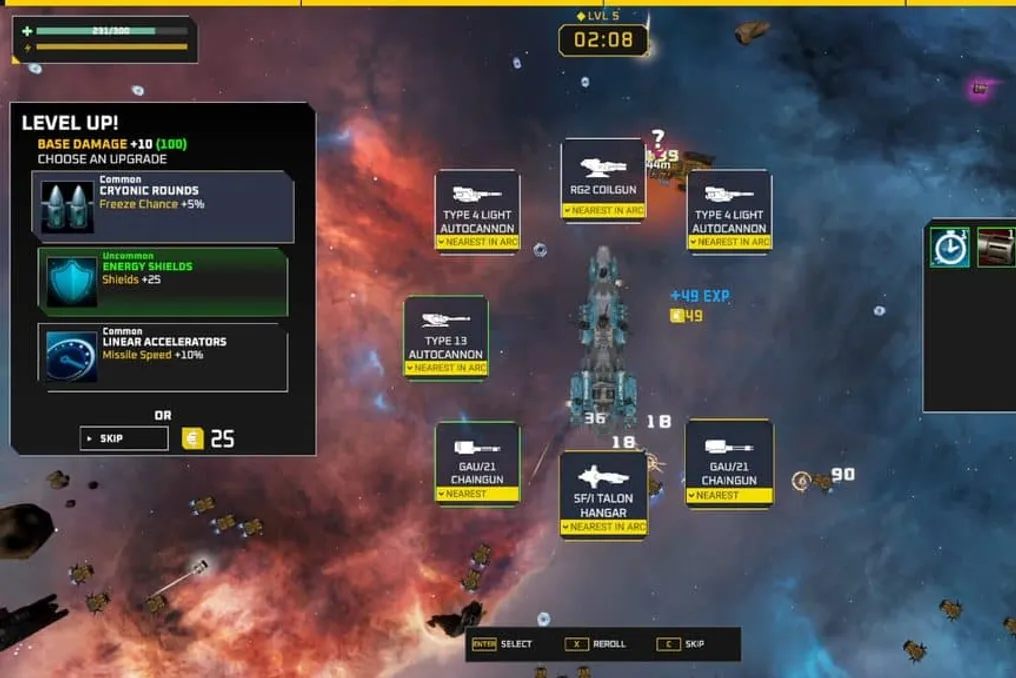
The game integrates core elements of roguelikes and survivors: automatically firing weapons and upgrades obtained on levels or found on the map, alongside enemy waves that grow stronger as the player progresses. Unlike traditional games, the firing direction of each weapon depends on its placement on the spaceship. Each ship has slots for mounting weapons, and the larger the ship, the more armament slots it provides. The player must choose between rotation and speed, or between a large health pool and a greater number of weapons.

Movement truly resembles piloting a spacecraft due to rotation and acceleration, creating a sense of flight in space. Speed and maneuverability vary depending on the chosen ship size, emphasizing whether it is light or heavy.

Destroying enemies grants experience, and upon entering each new level, the player gains access to weapons or upgrades. These types of weaponry can be placed in different slots, and identical weapons can be combined for enhancement. New weapons and upgrades are also acquired by defeating bosses, completing missions, or in shops (using resources accumulated during the current session).

As in other games of this genre, all progress is lost after each gaming session. However, in return, the player is provided with new resources to upgrade their weapons and enhancements, as well as the opportunity to unlock new starships and captains, which eases the start of each new game.

Sublight features nine starships, categorized into light, medium, and heavy classes. They unlock as the player advances, and each differs in terms of health, movement speed, rotation speed, and number of weapon slots. It is also possible to unlock stat upgrades on every level achieved.

Furthermore, there are seven captains. Each one provides a bonus to one of the ship's stats and unlocks three additional bonuses during the game.

During matches, players can re-roll weapon and upgrade options multiple times, the number depending on the situation (the first time free, then for a small resource cost). This feature simplifies gameplay and, along with other elements, expands build possibilities and adds dynamism to the matches.

Sublight also has its drawbacks. Despite the large number of options, some elements become repetitive, and the simple yet engaging mechanic faces challenges.

Each session includes few different types of missions: typically, it involves perimeter defense for a set amount of time, destroying a satellite, or a specific ship. This lack of variety makes the game tiresome after several hours, giving the impression that the player is simply flying from point to point.

Enemies also show limited diversity: generally, they use only a few attack patterns or simply move forward against the ship. The same applies to bosses: they are very similar to each other, including their attack patterns. All of this exacerbates the mission problem and makes the gameplay monotonous over time.

Despite the simple and dynamic mechanics, what is happening on screen is hard to distinguish. The weapons in the game do not have distinct enough shots, making it difficult to determine the most effective and damaging weapon type. There are few types of weapons whose shots are noticeably different—and noticeable enough for the player to identify—whereas weapons of the same type (e.g., turrets) blend into the player's vision.

The most serious issue relates to collisions, which can damage both the player's ship and the enemy's. It is difficult to tell when the player is dealing damage versus taking it, while suspicions of hitbox issues (the collision boxes of each ship or other interactive elements) persist throughout the match.

In conclusion, Sublight is an entertaining and, like any survivor, quite addictive game with an attractive and original concept. For the price of 38.49 reals, it is worth the attention of survivor fans and even those who enjoy space games, especially due to its unique and straightforward mechanics, despite long-term repetitiveness.

Similar stories

Review of three children's horror stories where even monsters feel fear
Read more
gazeta.uz

Review of three children's horror stories where even monsters feel fear

There are three books in the horror genre intended for a child audience where even monsters can feel fear.

One of these books was illustrated by Chris Riddell, who received the prestigious Kate Greenaway Medal three times for his work in book illustration. Riddell's style perfectly complements stories about the world of ghosts.

In this illustration, all characters are depicted elongated, similar to the pointed arches of Gothic cathedrals, and covered with numerous small evil eyes. Limbs—arms, legs, and fingers—are shown twisted, curved, and contorted, resembling spider legs. The heroes, including positive characters, look like wax figures from a curiosity cabinet, as if they are formed exclusively from bones, as if the entire graveyard world gives birth to its inhabitants with such recognizable appearances.

The author notes that in the book by Herman, there was no cemetery map to help understand the characters' movements; such a map can be created using artificial intelligence simply by requesting it.

This book can be recommended to children over 12 for independent reading if they are already familiar with themes of cemeteries, murder, vampires, ghosts, the afterlife, and generally view them positively. If these themes have not yet become part of their life experience, other suitable books are presented in other reviews.

Space Radiation: Analysis of Risks and Protection Methods for Interplanetary Travel
Read more
olhardigital.com.br

Space Radiation: Analysis of Risks and Protection Methods for Interplanetary Travel

When imagining future space travel, such as a direct flight to Mars, a silent and dangerous risk emerges: solar storms. Millions of kilometers from Earth, a large amount of energetic particles can pass through space toward the spacecraft, posing a serious health risk to the occupants, even without visible signs like smoke or explosion.

This fundamental challenge of long space missions lies in how to safeguard astronauts against this invisible threat. Tiny particles, smaller than an atom, have the potential to cause significant damage to human health.

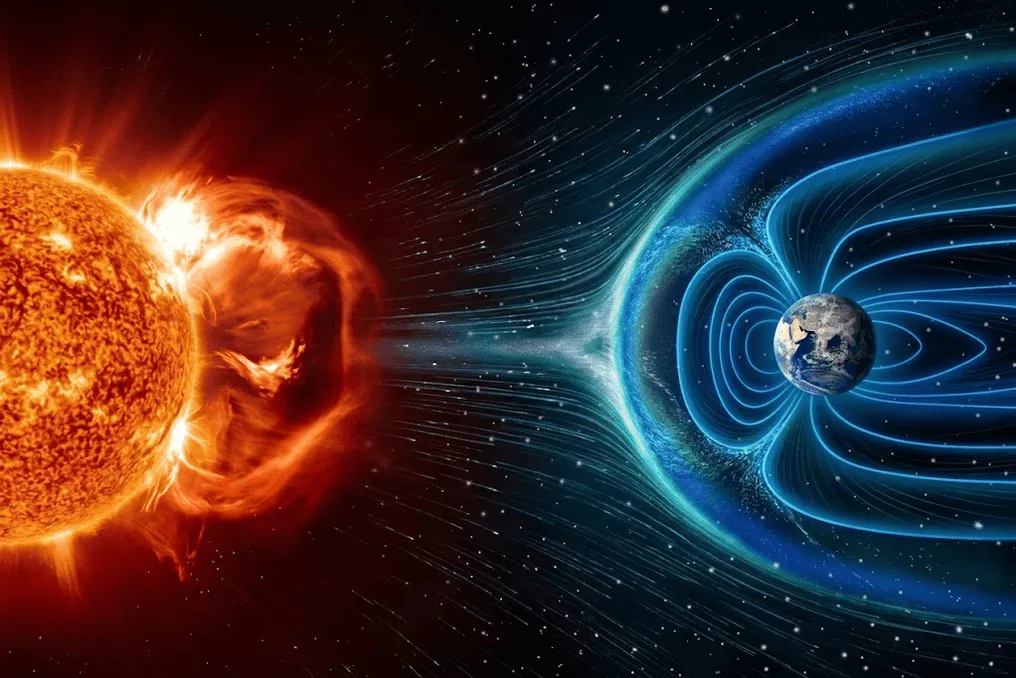
On Earth, protection is guaranteed by the atmosphere, which absorbs much of the radiation, and by the Earth's magnetic field, which deflects many charged particles. However, when we move away from this natural defense, these particles can strike the crew directly, potentially causing acute effects or increasing the risk of cancer and other long-term illnesses.

There are two main types of radiation to consider. The first consists of energetic particles emitted by the Sun, especially during intense solar flares and storms, which can expose astronauts to dangerous doses in short periods. The second challenge is galactic cosmic rays, high-energy particles originating from outside the Solar System, some of which are atomic nuclei traveling almost at the speed of light, making them particularly difficult to block.

To protect future space explorers, hydrogen, the lightest atom, emerges as a crucial ally. It is highly effective in reducing the energy of certain harmful particles, such as high-energy protons and ions present in cosmic rays. Thus, materials like water and hydrogen-rich polymers can be used to protect astronauts.

A promising approach involves using materials already aboard the spacecraft. Water tanks, for example, can be placed around the areas inhabited by the crew, just as food and equipment can be strategically distributed to reinforce shielding.

A test conducted on the International Space Station demonstrated that a barrier composed of hydrated materials, with a thickness equivalent to about six centimeters of pure water, managed to reduce the equivalent radiation dose measured by researchers by approximately 37%. However, it is observed that simply increasing the thickness of the shielding does not always result in a proportional increase in protection, as the collision of more potent cosmic rays with the shielding can generate secondary particles, requiring more than just surrounding the ship with water.

Research is also exploring the conversion of plastic waste into shielding materials. Instead of discarding packaging, a future mission could recycle it to create protective parts. Furthermore, scientists are studying water-based materials, such as 3D-printed hydrogels, envisioning astronauts protected by a gelatinous substance.

Another vital measure is establishing a shelter against solar storms. The idea is to designate a section of the spacecraft that can be surrounded by water, supplies, and other protective materials. Upon detecting a dangerous solar event, astronauts would take refuge in this compartment until the situation improved.

Specialized protective clothing, such as the AstroRad vest, developed to mitigate bodily exposure to specific energetic particles, is also being tested. Experiments conducted during Artemis I, during the flight around the Moon, helped assess the effectiveness of this equipment, although a vest does not replace spacecraft shielding, and solutions must balance protection, weight, and mobility.

Considering the possibility of deflecting radiation, magnetic shielding arises. Since many dangerous particles carry an electric charge, intense magnetic fields could alter their trajectories, diverting them away from the astronauts, following the principle of the Earth's magnetic shield. The obstacle lies in replicating this on a spacecraft, requiring complex systems with superconducting magnets that generate strong fields without adding mass or consuming excessive energy; research is advancing, but a compact and reliable shield is still distant.

A more radical proposal suggests not using shielding, but rather utilizing the protection of a celestial body by installing a shelter inside an asteroid. The rock itself would serve as a natural barrier. Although physically grounded, the application is extremely complex, requiring finding a suitable asteroid, reaching it, constructing an internal shelter, and transforming it into a type of orbital space shuttle, not to mention that secondary cosmic ray particles could still pose a risk even under thick rock.

It is concluded that no single solution solves the problem; protection in the first interplanetary journeys will likely require a combination of appropriate materials, continuous monitoring, shelters for solar events, and, in the future, radiation deflection technologies.

Although many wish to leave the planet quickly, space radiation represents a greater health risk than terrestrial political disputes. While scientists seek safe methods to explore space, it becomes essential to solve the problems on the known planet, which offers all the necessary conditions to sustain life and peace.

Meta Committee points out moderation flaws; SpaceX plans Starship recovery; Musk evaluates merger with Tesla
Read more
olhardigital.com.br

Meta Committee points out moderation flaws; SpaceX plans Starship recovery; Musk evaluates merger with Tesla

Meta's Oversight Board expressed criticism regarding persistent failures in political content moderation during election periods. In a statement released on Tuesday (20), the body mentioned restrictions that impacted Luiz Inácio Lula da Silva's campaign in Brazil, in addition to the temporary suspension of a political account in the United States.

The entity requested greater clarity and uniformity in corporate decisions, as these can inadvertently limit legitimate political expression or fail to safeguard the integrity of the electoral process.

On another front, SpaceX plans to attempt the first capture of the Starship spacecraft and its Super Heavy booster during the next system test flight, scheduled for November. The plan involves using the mechanical arms of the launch tower to recover both parts of the space vehicle, which, if successful, will mark the first complete recovery of an orbital launch vehicle in history.

Additionally, Elon Musk confirmed that studies are underway regarding a possible merger between Tesla and SpaceX. The businessman indicated that he sees benefits in uniting the businesses, but emphasized that there is no consensus yet on the terms of this operation and that its realization is not guaranteed.

Featured Offers

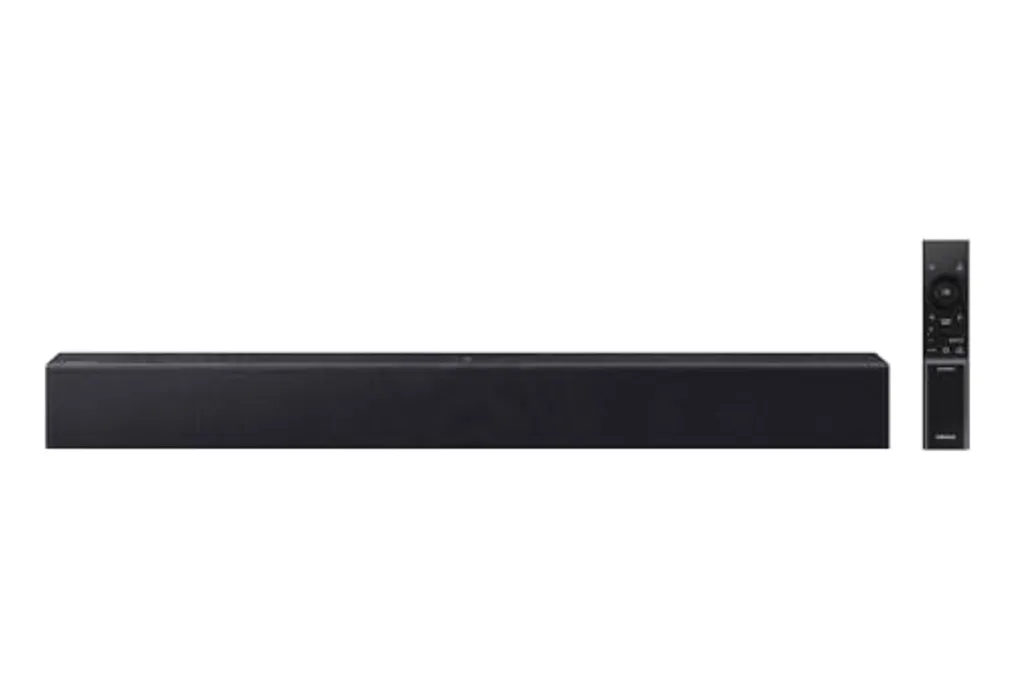
The article also presented various product offers, including Samsung HW-B400F Soundbar, Samsung Galaxy Tab S10 FE+ 5G Tablet, Baseus Super Quick Charger 20W Type-C Wall Charger, I2GO Headphone Bass 300, WAAW by ALOK MOB 500 ANC Bluetooth Earphones, PHILIPS Ambilight 50" 4K Smart TV, PHILIPS Ambilight 55" 4K Smart TV, Universal Fixed Wall Mount, Basike T7 Sports Bluetooth Headphones, Audio-Technica AT-LP70XBT-BZ Wireless Automatic Vinyl Turntable, 6W RMS PC Gamer Speaker, and Baseus Super Si 20w PD Type-C iPhone Charger.

Other news covered the approval by Anvisa of the drug telisotuzumab vedotin, marketed as Emrelis, for the treatment of advanced or metastatic non-small cell lung cancer (NSCLC), making Brazil the second country to authorize the therapy, after the United States in May 2025.

SpaceX reported robust financial performance in the third quarter of 2026, achieving revenue of US$ 14.6 billion (approximately R$ 78.8 billion), representing a 161% increase compared to the same period last year. This growth was mainly driven by artificial intelligence (AI) services, which have become the company's main source of revenue, surpassing the connectivity division, which includes the Starlink service.

Finally, the National Telecommunications Agency (Anatel) issued directives stating that, starting November 12, telephone operators must block calls originating from lines with abusive network use for 15 days, applying the restriction to all numbers linked to the owner's CPF or CNPJ.

In international matters, TikTok employees have repeatedly alerted management to risks involving children and adolescents, such as exposure to harmful content and sexual exploitation in live streams, according to judicial documentation analyzed by NPR. Meanwhile, China demanded that the United States revoke the ban on DeepSeek in civil federal agency systems, alleging that such a measure harms Chinese companies and ignores bilateral agreements.

Popular