Possibility of Recording and Identifying Bat Species Using Ultrasonic Equipment
Read more
N+1
nplus1.ru

Possibility of Recording and Identifying Bat Species Using Ultrasonic Equipment

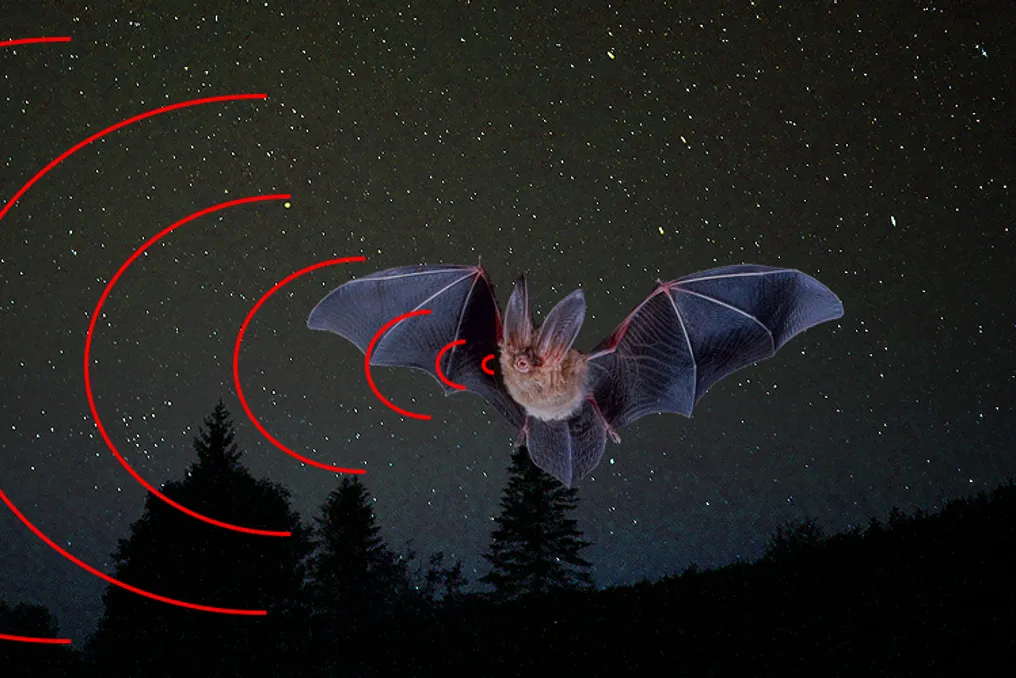
There are special devices capable of recording ultrasonic signals emitted by bats, making these sounds discernible to human hearing. Thanks to such devices, it is possible to listen to bats.

Furthermore, since the vocalizations of these animals often have features characteristic of a specific species, it is possible to identify many different species.

The possibility is offered to listen to echolocation signals of eight bat species found in Russia, slowed down tenfold. Users are invited to try and recognize these species by their voices.

Similar stories

Scientific explanation of owl-eye patterns on moth wings
Read more
www.aajtak.in

Scientific explanation of owl-eye patterns on moth wings

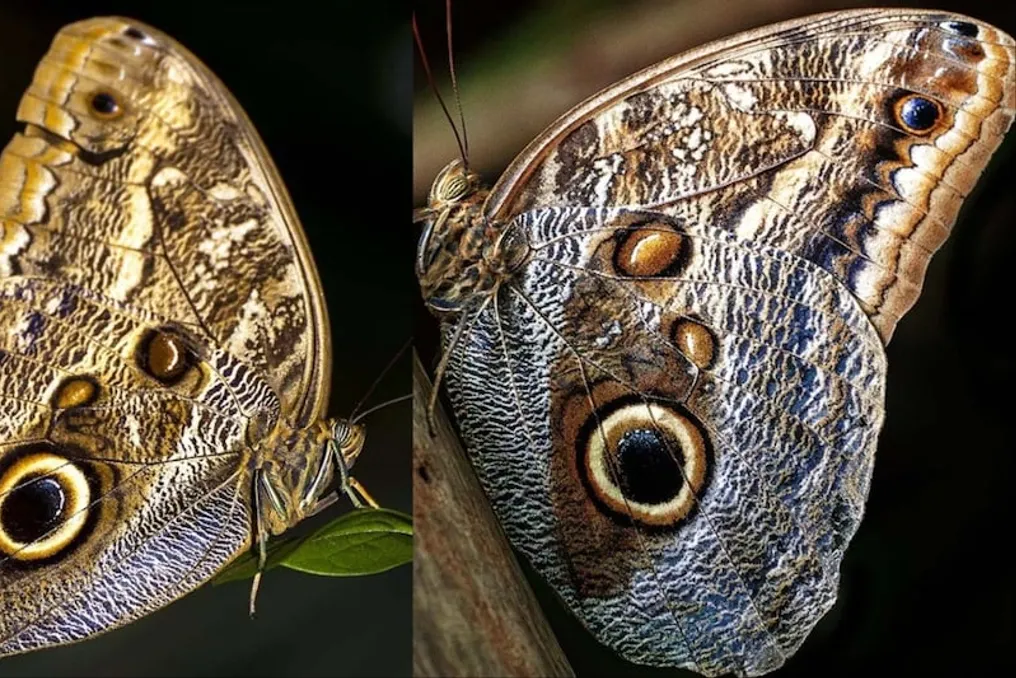
The owl moth, known for its large markings resembling owl eyes, has a unique appearance. This moth inhabits the forests of Central and South America. The circular patterns on its brown wings may serve as a means of confusing predators. However, the reason for these markings on the moth's wings, as well as its habitat and diet, remains an open question.

These patterns distinguish the owl moth from other species. Scientists have studied these markings to understand how they help moths avoid attacks. On the underside of the owl moth's wings are large circular spots, with the central part of these spots being dark and the surrounding area being light. When the moth rests with its wings closed, these markings become clearly visible.

These patterns can help the moth evade predators. When a bird notices these signs, they can momentarily confuse it, giving the moth a chance to fly away. Nevertheless, these signs do not guarantee protection from predators every time.

The owl moth is found in the tropical and humid regions of the forests of Central and South America. It belongs to the Caligo group of moths, which includes many species of owl moths. The wings of this moth are quite large; depending on the species, their wingspan can reach about 20 centimeters. The brown coloration helps it camouflage among trees and surrounding vegetation.

The owl moth feeds on the juice of ripe and rotting fruits, obtaining it from fruits such as bananas, mangoes, and pineapples. It does not rely solely on flower nectar but obtains food in other ways. Its larvae, known as caterpillars, eat plant leaves. Some species of caterpillars also feed on banana and sugarcane leaves, and their large numbers can damage agriculture.

In 2015, a research paper was published in the scientific journal Proceedings of the Royal Society B. Scientists tried to find out how birds react to the eye-like markings on the moth's wings. The study showed that such eye patterns are capable of disorienting birds. This suggests that such markings may contribute to protection against predators. However, this experiment was not conducted with all types of predators and does not reflect real wild conditions. Other studies have also shown that on the wings of some Caligo group moths, these patterns may play a role in attracting mates, meaning the function of these markings may not only be defense against enemies.

The main distinguishing feature of the owl moth is the owl-eye-like patterns on its wings. These signs can help confuse predators, and in some species, they may also be related to mate attraction. Scientists continue to study these markings to understand all their functions.

Ant Group releases Ming-3.0-tts: small speech synthesis models with voice control
Read more
pandaily.com

Ant Group releases Ming-3.0-tts: small speech synthesis models with voice control

The inclusionAI team from Ant Group has released Ming-3.0-tts, a family of speech generation models, to the public. The goal is to provide detailed control over the voice in models that are compact enough for local deployment. The code, task guide, and evaluation tables are available on GitHub, while the weights are hosted on Hugging Face and ModelScope; all materials are distributed under the MIT license.

The release includes two models. Ming-3.0-tts-0.5b is a dense model with approximately half a billion parameters. Ming-3.0-tts-tiny is a mixture-of-experts model built on Ant's Ling V3 architecture, which has a total of 7.9 billion parameters, with 1.3 billion active per token. Both models utilize a unified generative structure: a language model, governed by task-specific control tokens and text, influences the DiT patch-head and audio tokenizer.

The capabilities of these models are extensive. Users can clone a reference voice, create a new voice based on a textual description, or choose from over 100 built-in Chinese voices and five English ones. Speech delivery can be regulated using natural language instructions, and parameters such as emotion, speed, pitch, and volume can be adjusted directly. Fourteen built-in tags allow for the insertion of laughter, sighs, and other vocal sounds in both Chinese and English. The models support Chinese, English, German, Spanish, French, Korean, and Japanese, as well as Sichuanese and Cantonese.

The tiny model additionally supports multi-speaker dialogues generated from scripts and voice samples, which is geared towards creating audio in the style of long podcasts. The team notes that these capabilities function as separate task modes rather than arbitrary combinations.

According to the repository, Ming-3.0-tts ranked first among open-weight models in the Artificial Analysis Controlled Voice leaderboard and achieved first place overall in the Pronunciation Robustness Score, reaching 93.2% correctly pronounced highlighted segments as of October 2026. However, the team warns that these rankings change as new models are added. On open benchmarks, the model demonstrates state-of-the-art results among listed open-source models across all six NVBench paralinguistic metrics with one tag, error frequency on the base Cantonese dataset for the 0.5b model, and word error frequency in German and Spanish for the tiny model.

The README file also honestly lists weaknesses. Voice similarity in recently added languages generally does not make the top three leaders, pitch control is the least accurate attribute, the error rate of the tiny Korean model lags significantly behind the smaller model, and the audio quality for podcasts still falls short of the earlier Ming-omni-tts release. The roadmap indicates accelerated vLLM-Omni inference and a technical report as next steps. The project urges users not to clone real people's voices without consent and to label synthesized speech where it might be mistaken for a real recording.
Popular