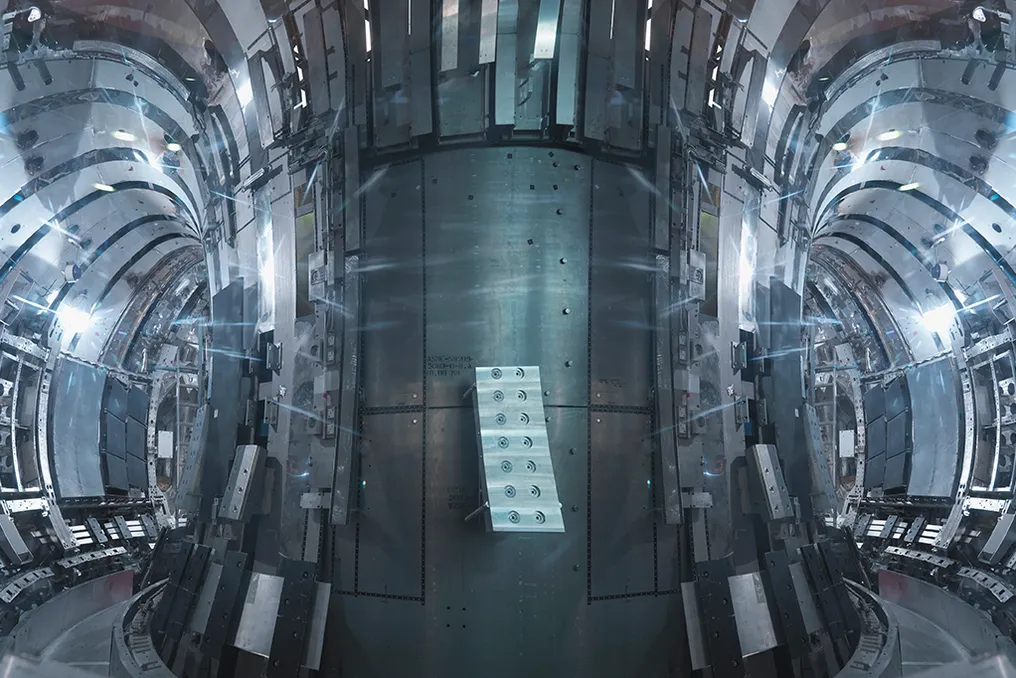
How nuclear fusion power plants work and their potential to transform the energy industry
Read more
Super Abril
super.abril.com.br

How nuclear fusion power plants work and their potential to transform the energy industry

Current nuclear power plants operate based on nuclear fission, a process that involves splitting uranium atoms or other radioactive material to generate heat. This heat turns water into steam, which drives turbines and produces electricity. However, scientists globally are seeking to develop power plants based on nuclear fusion, a mechanism similar to those used in nuclear weapons and the Sun, aiming to reduce the amount of radioactive waste generated by the industrial sector.

Gustavo Canal, a professor at the Institute of Physics (IF) of USP and responsible for the National Nuclear Fusion Program (PNFN), details the distinctions between the two types of plants. He explains that commercial plants use fission, where a heavy nucleus, such as uranium, is struck by a neutron, causing it to destabilize and fragment, releasing energy. The challenge lies in containing the resulting fragments, as they are radioactive and can cause future environmental damage.

In contrast, in fusion, instead of breaking apart a nucleus, a light nucleus, such as deuterium and tritium, is fused. This process generates a helium nucleus, which does not present radiation problems, along with a neutron. Canal points out that most of the energy (about 80%) is released by the neutron, and the total energy from fusion is ten times greater than that obtained from fission.

Deuterium and tritium, frequently used in nuclear fusion tests, are classified as 'hydrogenoids,' which are atoms composed of a nucleus, a single electron, and light nuclei.

According to the professor, nuclear fusion research requires a very high energy consumption, which currently prevents its large-scale commercial application. To initiate the fusion reaction, a gas must be heated to an impressive 150 million degrees Celsius, causing it to reach a plasma state. In this condition, the gas must be kept hot, consuming energy, until the extremely high temperature—ten times hotter than the center of the Sun—allows the fusion reactions to begin.

At the JET tokamak in England, the most significant advance achieved was 70% efficiency in energy production compared to the energy spent keeping the plasma hot. Another approach to inducing fusion reactions is through the creation of high-temperature plasma using high-power lasers. A reactor is under construction in France, under the international consortium ITER, designed to generate ten times more energy than is consumed. This equipment requires the injection of 50MW (megawatts) of power to heat the plasma, which is considered an essential investment to achieve yield.

Thiago Mastrangelo, a professor at the Center for Nuclear Energy in Agriculture (CENA) of USP Piracicaba, states that nuclear fusion energy is reliable and potentially safer than the fission used in conventional plants. Theoretically, fusion plants would be safer; in a conventional fission plant, cooling failures can lead to the melting and fusion of nuclear fuel, potentially resulting in explosions like those seen in Chernobyl, releasing various radionuclides into the water, air, and vapor, as happened in Fukushima.

Mastrangelo clarifies that although the fusion reactor presents risks related to high temperatures and magnetic fields, these are not of the catastrophic type found in conventional reactors. The main byproduct of fusion is helium, an inert gas. However, due to neutron circulation, other materials may become activated, generating some radioactive elements, but on a much smaller scale than observed in a traditional fission reactor.

Besides electricity generation, Mastrangelo indicates that nuclear fusion technology can be applied in other social spheres, such as industry and healthcare. Although the primary focus is electricity, the generated heat can be utilized to produce hydrogen or to desalinate water. Additionally, the neutrons from the fusion reactor can be used to manufacture radionuclides intended for medicine or to create superconducting magnets applicable in MRI equipment.

Similar stories

Iranian Atomic Energy Agency Representative Declares Full Maturity of Country's Nuclear Industry
Read more
www.tehrantimes.com

Iranian Atomic Energy Agency Representative Declares Full Maturity of Country's Nuclear Industry

According to a representative of the Iranian Atomic Energy Organization (AEOI), Iran's nuclear industry has reached full maturity as the country has achieved self-sufficiency in building nuclear power plants.

Behrouz Kamalvandi, who also serves as the Deputy of AEOI for International, Legal, and Parliamentary Affairs, made these statements during an interview with the Iranian State News Network (IRNN) on Wednesday. He discussed the growing significance of nuclear energy and the role of advanced nuclear technologies in meeting the increasing global demand for electricity.

Commenting on the participation of the Iranian delegation in the Sixth Ministerial Conference on Atomic Energy in South Korea, Kamalvandi noted that nuclear technologies cover both energy and non-energy applications, the latter including nuclear medicine, agriculture, and various industrial fields.

He emphasized that the production of nuclear energy is gaining increasing importance against the backdrop of escalating environmental problems and the global drive towards developing cleaner and more reliable energy sources. Kamalvandi stated that the heightened focus on nuclear energy in recent years is partly linked to global environmental challenges, which have become a serious issue for the international community and further underscore the necessity of transitioning to nuclear energy.

Kamalvandi also pointed to rapid progress in artificial intelligence, digital technologies, and electric vehicles as key factors contributing to the increase in global electricity consumption. According to him, as these technologies become more widespread, expanding nuclear energy production becomes a necessary condition for countries aiming to meet their growing energy needs while maintaining a stable power supply.

Nuclear Energy Provides Reliable Base Load

The AEOI representative explained that nuclear power plants generate base load, meaning they are capable of providing stable and continuous energy supply to cover primary demand. Unlike wind and solar energy, whose generation depends on weather conditions, sunlight intensity, and wind speed, NPPs can operate continuously for long periods, provided maintenance and operational requirements are met.

This level of reliability, according to Kamalvandi, strengthens the importance of nuclear energy in national energy systems, especially as demand grows due to the development of advanced technologies and electrification.

Commenting on Iran's technological capabilities, Kamalvandi noted that his approximately 14 years of continuous service at AEOI have given him a clear understanding of the country's progress in developing its nuclear industry. He confidently stated: "Given my experience working at the Iranian Atomic Energy Organization for about 14 years, I can say with certainty that the country's nuclear industry has reached full maturity, and we have now achieved self-sufficiency in building nuclear power plants."

His remarks highlight Iran's emphasis on developing domestic expertise and technological capabilities across its entire nuclear sector, including the construction of power generation facilities. Iran is developing nuclear technologies for both electricity generation and non-energy needs such as medicine, agriculture, and industry, focusing on the role of domestic scientific and engineering capabilities in advancing its nuclear program. Kamalvandi's comments also reflect a broader discussion on the contribution of nuclear energy to energy security, reliable electricity generation, and efforts to solve environmental problems amid continued growth in global energy demand.

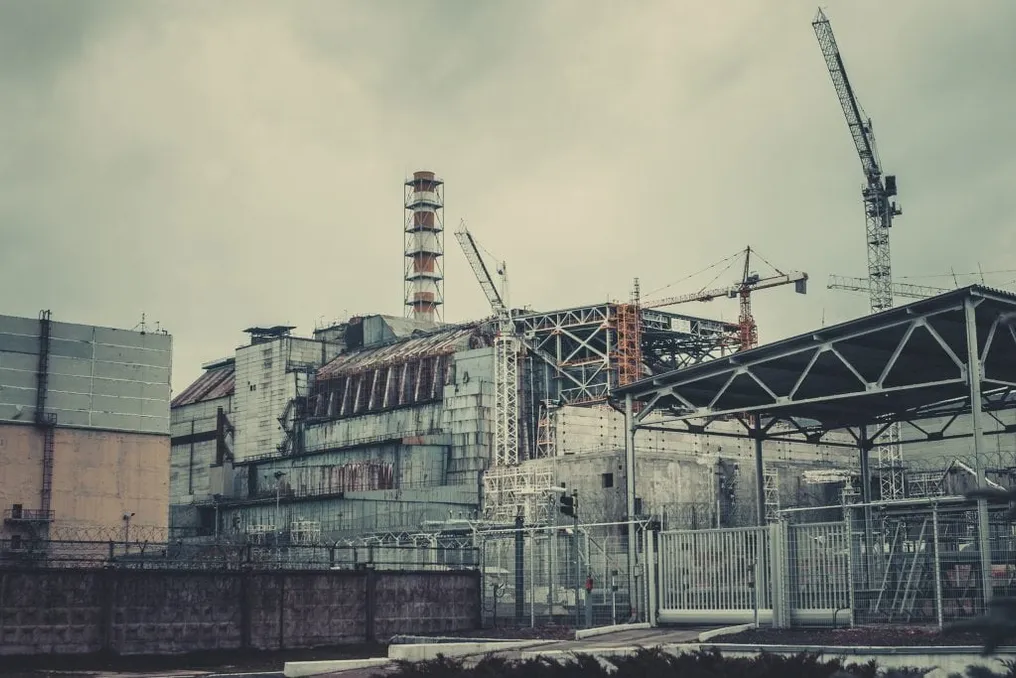
Chernobyl Particles Retain Nuclear Fuel After 40 Years Since the Accident
Read more
olhardigital.com.br

Chernobyl Particles Retain Nuclear Fuel After 40 Years Since the Accident

Four decades after the nuclear disaster in Chernobyl, microscopic particles released by the destroyed reactor continue to retain a significant portion of the original nuclear fuel structure. This finding surprised researchers from Leibniz University Hannover in Germany, who discovered higher chemical stability than expected in six radioactive fragments.

The results obtained may help understand how disaster waste transforms over time and assess the environmental risks associated with radioactive contamination. However, the discovery does not mean the region is safe; the material remains hazardous, and scientists emphasize the need for more comprehensive studies, according to information from Science Alert portal.

The analyzed particles range in size from 8 to 50 micrometers and were collected at two locations in the Chernobyl Exclusion Zone in Ukraine. Researchers divided the fragments into three categories based on the changes caused by the 1986 accident and the extreme conditions inside the reactor.

The first group includes particles that remain chemically and physically similar to the original uranium dioxide nuclear fuel. The second category consists of fragments partially or completely covered with a protective layer of zirconium, or fused with it due to high temperatures during the catastrophe. The third class resulted from the burning of graphite, which was used as a reactor moderator. This fire lasted ten days and contributed to the oxidation of the fuel, forming various uranium compounds.

These differences in chemical composition may affect the rate of degradation of each type of particle in the environment. To study the state of the fragments after four decades, scientists used X-ray diffraction—a method that allows the study of the material's crystalline structure through its interaction with radiation.

The procedure required rotating each particle within a concentrated beam of X-rays in the 100-micrometer range, which is approximately the thickness of a hair. Researchers conducted measurements at 200 different angles to record reflections and reconstruct the internal structure of the fragments.

The analysis showed that the crystalline structure responsible for retaining the nuclear fuel remained virtually undamaged in the samples studied. This indicates that these particles are chemically more stable than scientists had assumed and may act as permanent reservoirs of radioactive material.

This characteristic may have a positive environmental aspect: since part of the radioactive product remains contained within the fragment structure, its release into the soil and other environmental components may occur slower than previously thought. However, the observed stability does not eliminate the danger. Radioactive material is still present and can remain in the environment for decades. If the particles are lifted into the air by wind, erosion, or animals, they can be inhaled, posing a serious health threat.

Furthermore, the results are based only on six fragments obtained from two locations. Since each particle has its own characteristics, the sample is too small to draw general conclusions about the behavior of all radioactive waste dispersed in the region. According to the researchers, even future studies revealing average degradation patterns will not allow predicting the behavior of all fragments, as some particles may be more resistant and release radionuclides later.

Popular