Map of South African Myths: Seven Places Where Legends Endure
Read more
Getaway
getaway.co.za

Map of South African Myths: Seven Places Where Legends Endure

The landscapes of South Africa are impressive in themselves, but deeper exploration reveals even more intriguing aspects. This mythical map offers curious travelers a different kind of journey, one rooted in ancient beliefs and folklore. Although some of the listed locations are well-known attractions, they are viewed through a different lens. Seven locations are presented that plunge visitors into the heart of South Africa.

In the lush Limpopo forest resides Modjadji, the spiritual abode of the Rain Queen of the Balobedu people. It is said that she can summon rain through her rituals, making her a living legend. Her lineage has been passed down from queen to queen for centuries. According to legends, the Rain Queen's power can bring either fertility or famine. The place exudes an otherworldly atmosphere.

On the coast of the Eastern Cape stands a massive arch rock, shaped by centuries of crashing waves. However, the Khoisan people claim it is not the result of erosion, but of love. The legend tells of a beautiful girl who fell in love with a sea creature. When her family rejected the union, the creature called its people from the ocean. They pierced the cliffs so he could reach her, and both vanished into the sea. Locals still assert that the waves here make strange sounds; it might be the wind, but it is believed to be the voices of the sea folk.

Stone Circle of Adam is an ancient ring of stones that some believe is over 75,000 years old. Alternative historians and traditional San folklore consider this site a celestial observatory used by early civilizations, possibly even celestial beings. Others believe it possesses spiritual energy and alignment connected to ley lines.

The San people, the earliest inhabitants of South Africa, believed that caves and mountains served as spiritual portals. Their rock art is found in areas such as the Cederberg and Drakensberg mountain ranges, as well as other parts of the country, telling stories of trance dances, animal spirits, and journeys to the spirit world. These images are sacred records of interactions with the divine.

Table Mountain is steeped in folklore, and the story varies depending on who asks. Some claim it is the resting place of a sleeping giant. Another myth recounts a smoking contest between a local pirate named Van Hankes and the Devil. Their duel created the 'tablecloth,' the misty cloud that hovers over the mountain peak. Others believe a cloud dragon inhabits the mist.

Tokoloshe is perhaps South Africa's most frightening mythical creature. It is a small, goblin-like being said to cause illness, death, or general chaos if angered. During the day, it is invisible to adults, but it comes alive at night. Rural areas of KwaZulu-Natal and the Drakensberg region are hotspots for Tokoloshe sightings, and many still place bricks under beds to lift them off the ground and out of Tokoloshe's reach.

Within Kruger National Park, there are not only the Big Five but also ghostly tales and tribal myths associated with this vast expanse. One story speaks of the White Lion, a sacred and almost mythical creature believed to appear only to those with pure hearts. Others recount ancestral spirits guiding animals and warning rangers of danger through dreams or signs.

Similar stories

Exploration of the Uhahalamba Gorges: Ascent of Sentinel Peak and Africa's Only Via Ferrata
Read more
getaway.co.za

Exploration of the Uhahalamba Gorges: Ascent of Sentinel Peak and Africa's Only Via Ferrata

The Uhahalamba gorges resemble landscapes from the film 'The Land Before Time'; the vast plains depicted in Universal Studios dinosaur animation are visible from the 'Dragon's Tail' ridge on Sentinel Peak. The expedition's goal was to reach this view from Tugela Falls, the highest waterfall in Africa. Members of the expedition team, equipped with ropes and carabiners, prepared to ascend Sentinel and reach the waterfall by traversing the slopes.

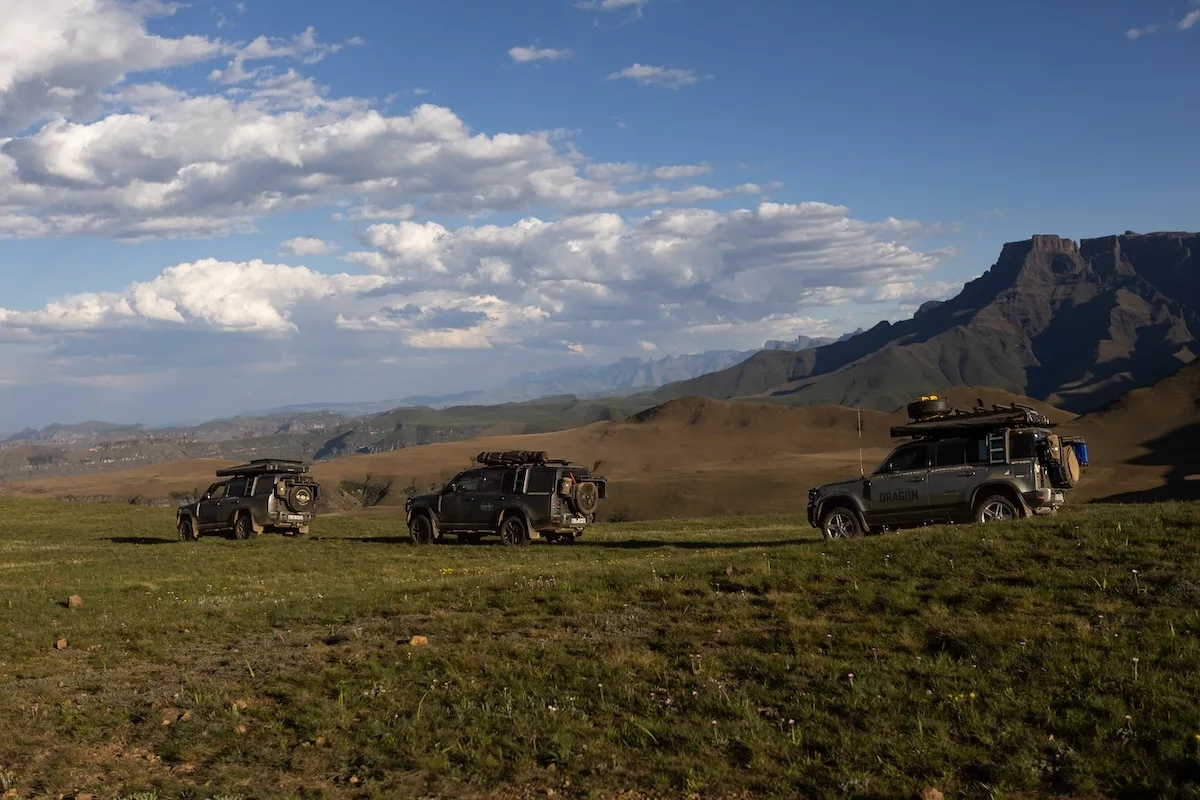
This trek marked the completion of the author's participation in the 44th geographical and humanitarian expedition 'Protector' led by Kingsley Holgate, titled 'Following the Dragon.' The expedition traced the entire Drakensberg range from Iron Crown in Limpopo to Rhodes in the Eastern Cape Highlands. Traveling in Defender 130 vehicles, the team connects remote valleys, high passes, and local communities along the escarpment, combining adventure with malaria prevention, spreading the spectacle Rite to Sight, supporting early childhood development, and providing environmental conservation education for schoolchildren. The foundation also notes the 25th anniversary of its partnership with Land Rover and Defender, which have helped Holgate's team make a difference since the beginning of the century.

For the first two days, the author spent time in a camp with the team in Golden Gate National Park, where eggs of Massospondylus, dating back 200 million years, were extracted from sandstone rocks above the camp, containing the oldest known dinosaur embryos. The park is also home to the Kgodumodumo Dinosaur Interpretation Centre, spanning 120 million kg, opened in June 2025, which consolidates the region's paleontological history in a center filled with full-scale models and interactive exhibits. The name is borrowed from a Basotho legend about a giant beast, fittingly near the Dragon itself. During these two days, park manager Paddy Gordon educated the group on the magic and history of the area.

From Golden Gate, the column ascended towards the border with Lesotho, where the ridge offered a perfect view of the peak they planned to conquer the next day, and of the vast amphitheater below. In the morning, guides advised waiting for the fog to clear but to bring a raincoat. When the sun broke through the 'Dragon's Breath' mist, they set off like hobbits on a seven-hour hike, feeling the pressure of altitude in their chests while trekking through the foothills in search of Sentinel, located at an altitude of 3165 meters above sea level.

There are three ways to reach the top of Tugela Falls: two nearly vertical ladders fixed to the rock, a steep ascent through the Bicorn Buttress gorge, or the 'Iron Path'—Africa's only Via Ferrata. Expedition member Mike Nixon explained that the existence of the 'Via' (Path) Ferrata (Iron) is linked to an unusual deal from World War I. In 1915, Italy was effectively bribed to join the Allies, receiving the promise of a significant portion of Austro-Hungarian territory according to a secret London treaty, and soon became involved in the mountain war on the front passing through the Dolomites. Moving troops and supplies across the vertical limestone using traditional methods was impossible, so both sides hammered iron steps, ladders, and fixed ropes into the rock, allowing ordinary soldiers to climb terrain previously intended for mountaineers. After the war, the equipment remained in place.

Unfortunately, the author learned a historical lesson when the group descended the gorge via a backup route. After experiencing the thrill of being connected to the mountain only by a rope and two carabiners while climbing the slopes at an altitude of about 3000 meters above sea level, overlooking the ravines below, adverse weather took over. The morning sun gave way to dense clouds and a stormy sky as lightning began to move rapidly across the landscape. After the first section of the Via Ferrata, there was no possibility of turning back. The guides decided to use the backup route for the group's safety. It was disappointing not to complete the route, but incredibly powerful to feel the energy of the elements and the immense heights during the first part of the ascent.

Although most of us feel that it is not over and we will try to return to climb Sentinel again, the trek was incredible nonetheless. The weather improved as they reached the bottom of the gorge, and while some returned to Witsishoek, several remained to blaze a new path to the Ladders to ascend the two steel strips attached to the side of the mountain. Some team members proceeded to Tugela Falls via the Ladders, and although they did not reach the summit, they accomplished the most important mission of the day: reaching Tugela Falls to fill the expedition calabash. Previously filled with a thin stream of water above a dinosaur footprint in the highlands of Golden Gate National Park, the calabash has traveled with every Holgate expedition since 1993, collecting symbolic water from the start of the journey and from iconic rivers and lakes along the route. The calabash will be emptied in a ceremony when the trip concludes in November.

On the first night in Golden Gate National Park, Paddy spoke about the spirit of the mountains, the intangible nature that permeates the sandy and clay slopes. Enveloped in the 'Dragon's Breath' and under the dominion of the elements, one truly understands the soul of these ancient escarpments.

Witsishoek

The Witsishoek mountain lodge, located beneath Sentinel Peak, serves as the gateway to the 'Dragon's Tail' Via Ferrata. Helmets, harness systems, and straps are available for rent at the lodge; day visitors are welcome, and a transfer by SUV to the Sentinel parking lot should be booked to conserve energy for the ascent.

Review of Seven Places for Rock Climbing Descents in South Africa
Read more
getaway.co.za

Review of Seven Places for Rock Climbing Descents in South Africa

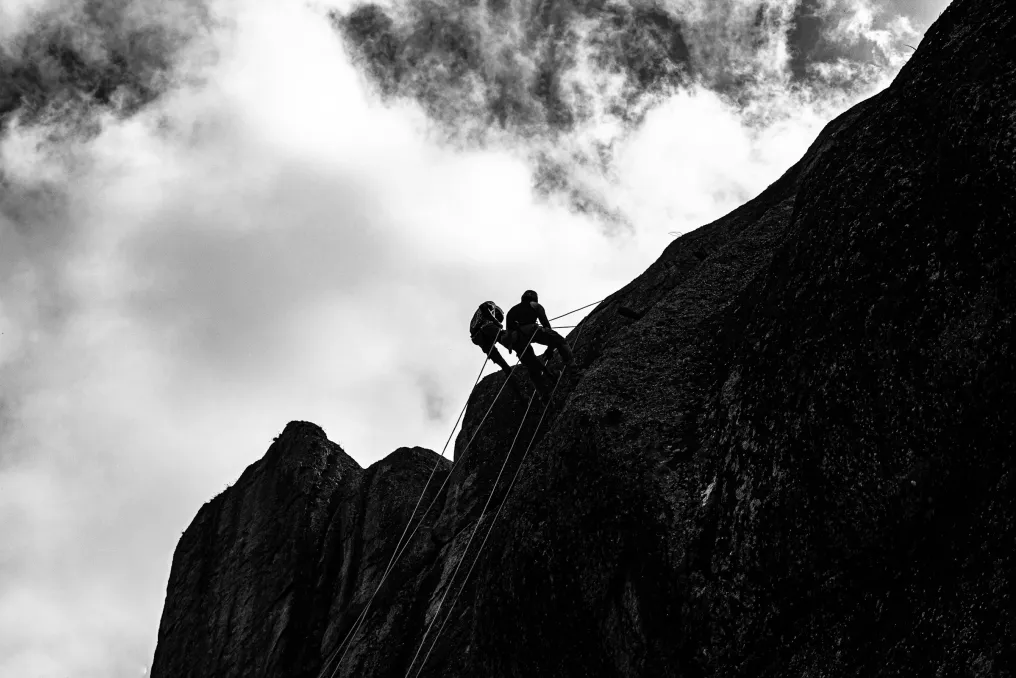
The rocky cliffs, deep gorges, and rugged mountain ranges of South Africa offer numerous opportunities to view the landscape from a new perspective. For those willing to take a risk, rock descending is an adventure that combines breathtaking views with a necessary dose of excitement.

Rock descending, also known as rappelling, involves going down a steep rock face using a rope and specialized equipment. With a qualified guide, proper protective gear, and a suitable location, it can be an accessible introduction to extreme sports.

It cannot compare to the view from Table Mountain. Standing at the summit, overlooking Cape Town, the Atlantic Ocean, and the Twelve Apostles, one can descend 112 meters down a sheer rock face. This service is offered by Cape Town Abseil and is suitable for beginners, requiring no prior experience. The activity includes safety instruction, provision of equipment, and guidance from instructors. After completing the descent, participants hike back up.

Operations may depend on weather conditions, especially if rain or strong winds make the experience unsafe. Allow about an hour for the activity itself, and a cable car ticket is an extra charge if you decide to ascend the mountain via cable car. Location: Table Mountain, Cape Town. Booking: Cape Town Abseil.

Paarl Rock is an attractive option for those who want to combine active recreation with a trip to the Winelands. Massive granite formations rising above Paarl create an impressive setting for the descent, offering views of the surrounding mountains and countryside. Abseil Africa offers organized tours that include safety briefing, use of the harness system, the descent itself, and a walk in the surroundings. No previous descent experience is required for suitable beginner sessions, but participants should check the operator's current requirements regarding age, fitness, and other conditions before booking. You can spend the day visiting Paarl wineries, staying at local establishments, or taking a tour of the Winelands. Location: Paarl, Western Cape. Booking: Abseil Africa.

For a descent along a waterfall and into a deep forested gorge, head to Oribi Gorge on the South Coast of KwaZulu-Natal. This reserve is known for its dramatic sandstone cliffs, rich avifauna, and extensive views of the uMzimkulwana river valley. The signature Wild Abseil tour, organized by Wild 5 Adventures, takes participants down a 110-meter cliff near Lehr’s Falls. The descent is divided into two parts: the first 45 meters are along the cliff, and the remaining 65 meters are a freefall, leaving the person suspended away from the rock. Beginners receive instructions before the descent, and guides monitor the process. Other attractions are also available nearby, such as a canyon suspension bridge, zip line, and rope bridge, while the reserve's viewpoints and hiking trails offer calmer ways to enjoy the scenery. Location: Oribi Gorge, approximately 25 km from Port Shepstone. Booking: Wild 5 Adventures.

You do not have to travel far from Johannesburg or Pretoria to find a worthy cliff for descending. The Hartbeespoort and Magaliesberg area offers several outdoor activities, making it a convenient choice for a day trip or weekend. Mountain Adventures offers a 50-meter descent near the upper station of the Harties cableway. The descent takes place on a cliff located approximately 300 meters above the valley floor, giving participants a strong sense of height and openness. The same operator also offers rock climbing and kloofing, which involves climbing and traversing through a natural gorge. These activities can be combined for a more eventful day in the mountains. Afterwards, you can visit the Hartbeespoort Dam, stroll through local markets, or have lunch with a view of the water. Location: Hartbeespoort, Northwest. Booking: Mountain Adventures.

If you prefer a more immersive experience than a single rock descent, consider Kamikaze Canyon in the Kougaberg Biosphere. This organized canyoning and kloofing tour combines rock descending with climbing, natural rock pools, and other obstacles encountered while moving through a rugged gorge. The landscape is characterized by steep rock walls and the typical mountain scenery of the Kougaberg area. Abseil Africa has included Kamikaze Canyon in its list of adventure activities. Since canyoning involves movement in a natural environment, conditions and route difficulty can change. It is recommended to check with the operator before booking regarding the current route, water level, required fitness and experience. This is worth considering if you want to spend the day outdoors rather than just arriving at a viewpoint, doing a descent, and going home. Location: Kougaberg Biosphere, Western Cape. Booking: Abseil Africa.

Forested gorges around Storms River are ideal for adventure activities. Located in the Tsitsikamma region along the Garden Route, this area is known for its indigenous forests, dramatic river scenery, and rugged coastline. Rock descending was offered as part of organized adventures in the Storms River area, sometimes combined with kloofing. Depending on the activity, the trip may include descending into a ravine, moving along the river, overcoming natural obstacles, and exiting through the surrounding landscape. This combination is interesting for travelers who wish to see the Garden Route beyond beaches and well-known hiking trails. However, one cannot assume that all historical activities are currently available; it is necessary to confirm the availability of a suitable organized descent or canyoning tour for the intended dates and check whether it takes place inside or outside the national park. Location: Storms River and the adjacent Tsitsikamma region, Eastern Cape.

The Karkloof area, near Hoewey in the Midlands of KwaZulu-Natal, offers a different backdrop for a rock descending adventure, where forested landscapes and waterfalls replace the open mountain cliffs found elsewhere. Rock descending is associated with the Karkloof waterfall area, where the surrounding environment makes the landscape as important as the activity itself. Nevertheless, access and commercial operations can change, so before planning a trip specifically dedicated to this sport, confirm the availability of an organized rock descent. The wider Midlands region is well-suited for a weekend, offering country roads, farm stalls, craft shops, and places to stop for lunch. If you are traveling with someone who prefers to stay on the ground, the region has many alternative ways to enjoy the area.

A little preparation is very important when your plans involve ropes, steep descents, and open cliffs. It is necessary to book services with a reputable operator, choosing a company that uses trained guides, appropriate equipment, and clear safety procedures. You should request information about qualifications and how the equipment is checked and maintained. It is important to check the weather forecast, as wind, rain, thunderstorms, and slippery surfaces can make the descent dangerous, and events may be canceled on short notice, especially in open mountainous areas. Clothing should be appropriate: closed shoes with good grip, comfortable activewear, and a warm layer are reasonable choices. Avoid loose items that could snag on equipment. Required conditions, such as minimum age, weight restrictions, fitness level, and medical limitations, vary depending on the operator and activity, so they must be confirmed before payment. Sufficient time must be allocated: the descent itself may not take long, but safety briefings, gearing up, arrival at the site, and return to the starting point can increase the duration of the outing. Never attempt an unfamiliar descent alone; commercial rock descending differs from setting up a rope system independently. Technical solutions and safety checks should be left to properly trained personnel.

Overview of Paleontological Sites in South Africa Suitable for Family Visits with Children
Read more
getaway.co.za

Overview of Paleontological Sites in South Africa Suitable for Family Visits with Children

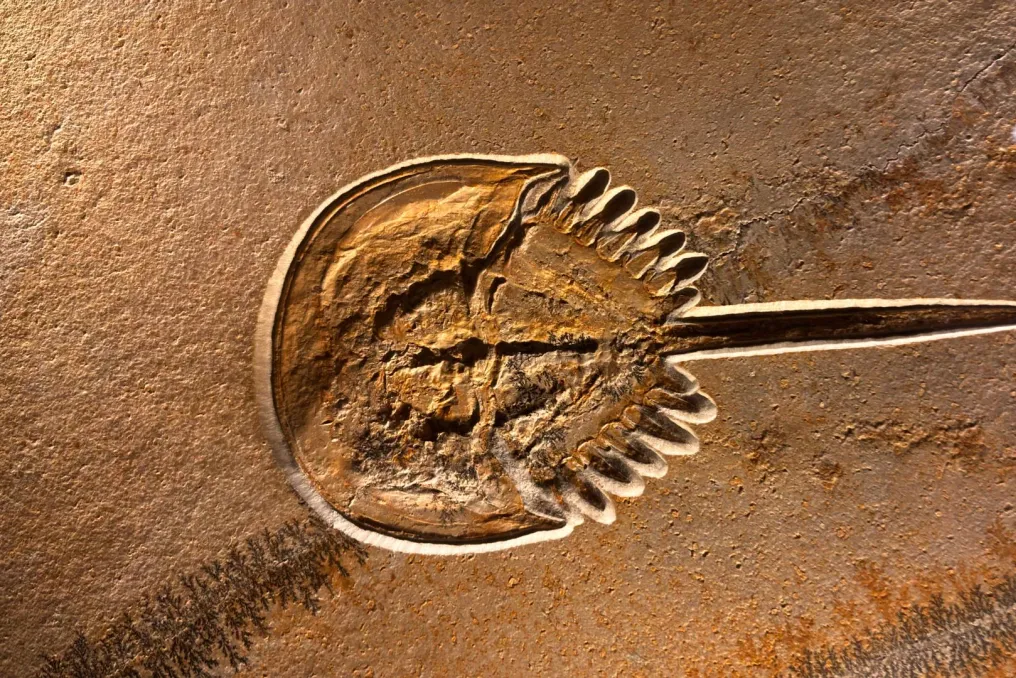
The history of South Africa is captured in its rocks, caves, and fossil deposits, and some of the best places to study this history are ideally suited for family outings. Children can see remains of animals that lived millions of years ago, walk along trails strewn with real fossils, and learn about the early ancestors of humans who inhabited this landscape.

The country's prehistoric attractions are very diverse. In the West Coast Fossil Park, the remains of saber-toothed cats and other extinct animals tell the story of a completely different coast. Free State features full-sized dinosaur exhibits that bring prehistoric creatures to life, while Karoo offers opportunities to learn how fossils are found and carefully extracted.

For families planning an educational day trip or a longer vacation, these paleontological trails and prehistoric sites in South Africa offer a memorable way to spark children's interest in science, geology, and the natural world.

Imagine the landscape of the West Coast, where saber-toothed cats, ancient bears, short-necked giraffes, and other remarkable animals once roamed. About 5.2 million years ago, this region looked very different from the coast known today, possessing a warmer climate and more extensive vegetation.

The West Coast Fossil Park preserves an internationally significant collection of fossilized animal remains from this period. Its visitor facilities include exhibitions and access to the fossil site, where visitors can learn about paleontological discoveries in the area.

For children, the appeal lies in imagining the animals that lived here and learning how scientists gather an ancient ecosystem using bones, teeth, and other fossil evidence. It is also an opportunity to explain that not all animals in prehistoric South Africa were dinosaurs; many were mammals, including relatives of animals that look very different today.

Families can join a guided tour or visit the museum; walking and cycling routes are also available. The park is located approximately 150 km north of Cape Town, making it a possible day trip for families residing in the Mother City, although a longer stay on the West Coast is another option.

For children who can distinguish a Tyrannosaurus Rex by silhouette, the Kgodumodumo Dinosaur Interpretation Centre is a particularly appealing stop. This centre celebrates the region's prehistoric heritage through fossil exhibits, interactive displays, and full-sized dinosaur models. It also introduces visitors to important local discoveries, where evidence of ancient life from the Triassic and Jurassic periods is preserved.

Instead of just looking at dinosaur skeletons, children can learn how paleontologists use fossil evidence to understand what prehistoric animals looked like, how they lived, and how the world changed over millions of years. Since the centre is located within the Golden Gate National Park, families can combine their visit with a scenic drive through the park's sandstone or a longer stay in the eastern Free State.

Karoo is known for its vast landscapes, but its rocks also hold clues about the world that existed long before the first modern humans. The Karoo National Park makes part of this history accessible through its short Fossil Trail. This trail is about 400 meters long and follows a paved path strewn with exhibits of real fossils, petrified wood, and explanatory information about the region's geology and paleontology. The route is wheelchair accessible, making it a practical option for families preferring a short, manageable walk over an arduous hike.

Use the exhibits to encourage children to closely examine the shapes and textures of ancient remains. What looks like ordinary rock may contain evidence of a plant or animal that lived in a completely different environment. Petrified wood is especially useful for explaining how organic material can be preserved and transformed over geological time.

The Fossil Trail is a good addition to a trip through Karoo, especially for families traveling through Beaufort West. It offers a compact introduction to the region's ancient past without requiring a full day of hiking.

Children do not have to go back to the Jurassic period to find something fascinating in Karoo. At the Kichinga Fossil Research Centre, they can learn about creatures that lived about 253 million years ago, before the dinosaurs. The centre explores the Permian period, when Karoo was home to ancient reptiles and therapsids, a group of animals that included the ancestors of mammals. Full-size reconstructions and information displays help visitors visualize an ecosystem that would be almost unrecognizable today.

One of the highlights is the opportunity to join a guided tour of nearby fossil-bearing rocks. With a guide, visitors learn to distinguish fossils from ordinary stones and see how paleontologists interpret evidence preserved in the landscape. The centre also demonstrates fossil preparation, while younger visitors can enjoy a fossil sandpit and prehistoric animal reconstructions in the garden.

This is especially good for curious schoolchildren, particularly those who enjoy hands-on learning. It is also worth stopping at during a Karoo trip, as the Owl House and the rest of New Bethesda offer other reasons to linger.

What was on Earth before humans existed? And how did our species appear? These are some of the questions explored at the Maropeng Visitor Centre, the official visitor centre for the 'Cradle of Humankind' World Heritage Site. The centre takes visitors on a journey through Earth's history, offering interactive exhibits covering the origin of the universe, the development of life, and human evolution. A voyage through geological time is one of the experiences that can pique younger visitors' interest before they view the exhibits.

The surrounding Cradle of Humankind is of international importance due to the discoveries of early human ancestors. Fossils such as Mrs. Ples and Little Foot helped scientists investigate the origin and evolution of our species. The visitor centre explains the significance of these discoveries without requiring families to visit an active excavation site.

Maropeng is a useful choice for families with children of different ages, as the exhibits cover a wide range of topics. Older children can spend time contemplating human evolution, while younger ones can enjoy interactive elements and the deep time journey experience.

For families interested in human history, the Taung Fossil Site offers a chance to visit a location that helped change the scientific understanding of human evolution. In 1924, a fossilized skull of a young man was discovered in a limestone quarry in Taung. This fossil, known as Taung Child, was identified as Australopithecus africanus, an early hominin species. This discovery provided crucial evidence that early human ancestors lived in Africa and walked upright. The fossil is approximately 2.8 million years old.

For children, this is an opportunity to explain that human history spans millions of years and that fossils provide clues about how our ancestors lived. It is also a chance to discuss how scientists use skulls, teeth, and other physical evidence to reconstruct the past. The site is part of the broader Taung Heritage Route, which includes other historical and cultural attractions in the area. Careful planning is advised, as Taung is in rural North West and is not as easily accessible as a museum near a major city.

Families with older children who want to go beyond museum exhibits can explore guided tours of fossil sites in the Cradle of Humankind Nature Reserve. Tours led by reserve specialists visit important fossil locations such as Gladysvale and Malapa. Gladysvale yielded a large collection of animal and hominin remains, and Malapa is known for the discovery of Australopithecus sediba in 2008. These visits provide insight into how scientists work with fossil-bearing rocks, why certain sites are important, and how discoveries are documented and studied. The Malapa Museum in the reserve also features full-size plaster casts of Australopithecus sediba skeletons and exhibits on the research conducted there. Unlike a typical museum visit, this experience puts the landscape itself at the center of the story. Children can begin to understand that fossils are not just objects behind glass; their location in the earth, the surrounding rock, and the geological context help researchers interpret them.

Visiting a fossil site can be more engaging when children have something specific to observe. A little preparation can turn an educational trip into a day of questions, observations, and discoveries.

Start with a prehistoric timeline. Explain the difference between dinosaurs, ancient mammals, and early human ancestors. Not everything that lived millions of years ago was a dinosaur. Let children become junior paleontologists. Encourage them to look for patterns, unusual shapes, and textures on displays. Ask what the fossil might tell you about the animal or plant it came from. Choose a suitable trip based on age. Interactive museums and short trails may suit younger children, while older ones can enjoy guided tours explaining excavation methods and scientific discoveries. Pack for being outdoors. Comfortable walking shoes, drinking water, hats, and sunscreen are useful for outdoor trails or uneven terrain. Leave fossils where they are. Fossils are valuable scientific and historical resources. Do not remove specimens from the site and follow the instructions of guides and site staff.

South Africa's paleontological heritage offers numerous opportunities to make science tangible for children. A short trail in Karoo, a dinosaur-focused visit at the Golden Gate National Park, or a tour of the Cradle of Humankind can introduce young travelers to a past that is difficult to imagine from a textbook alone.
Popular