How to extract 100% pure mustard oil at home without using a machine
Read more
Aaj Tak
www.aajtak.in

How to extract 100% pure mustard oil at home without using a machine

During the Diwali festival, there is a need to use mustard oil for lighting oil lamps, as they lend a special glow to the festive atmosphere. Although electric lighting can be used, the true joy of Diwali is incomplete without lit lamps in the house and yard. Mustard oil is widely used in Indian families—from religious rituals to preparing vegetable dishes. However, there are often reports of impurities in oils sold in stores, which raises doubts about their purity.

Therefore, there is an opportunity to prepare 100% pure mustard oil at home without using any mechanical devices. This oil can be used both for lighting lamps during Diwali and for preparing traditional dishes such as puri and other treats.

To begin the process of extracting oil from mustard seeds, you must thoroughly clean the seeds, removing all dirt, small stones, or any other impurities. The seeds can also be sifted for cleaning.

Next, spread the cleaned seeds on a clean plate or dish and leave them in the sun for some time to remove all moisture. If you want to slightly heat the seeds to remove moisture, do so over low heat, strictly ensuring that they do not burn. Any smell of burning can transfer to the finished oil.

After this, place the clean and dry seeds into a food processor bowl and grind them into a coarse crumb, working with the mixer in short intervals. Then gradually add a little warm water and continue grinding until the seeds are well ground. It is important to add only the amount of water necessary for grinding.

As a result of this process, a thick mustard paste will be obtained. When grinding, avoid adding a large amount of water at once. The paste should not be too dry nor too liquid.

When the paste is ready, transfer it to a large container. Then, using your hands or a clean spoon, thoroughly knead and press the paste. This will help release the oil and other components contained in the paste.

After this, take a clean cotton or muslin cloth and place the paste in the center of this cloth. A sieve can also be used instead of cloth. Gather the edges of the cloth together, forming a pouch.

Finally, place this pouch over a clean vessel and press on it very slowly so that the liquid that begins to drain collects in the vessel.

Similar stories

How to make natural shampoo from retta and hibiscus at home, avoiding chemicals
Read more
www.aajtak.in

How to make natural shampoo from retta and hibiscus at home, avoiding chemicals

Modern expensive shampoos and hair care products often contain many harmful chemical substances, such as sulfates and parabens, which weaken the hair from the inside. This leads to hair loss, premature graying, and loss of shine. If you strive for strong and clean hair without chemicals, you can apply a traditional method known since ancient times. The combination of retta and hibiscus flowers is a real blessing for hair: retta provides deep cleansing, while hibiscus makes hair soft, thick, and shiny.

Below is a simple instruction on how to prepare this remedy at home.

The following ingredients are needed for preparation: 10-12 dried rettas (without seeds), 5-6 fresh or dried hibiscus flowers, 4-5 hibiscus leaves (optional), 3-4 cups of water, and 1 tablespoon of shikakai or amla powder (if available).

First, you need to remove the seeds from the retta and soak it together with the hibiscus flowers in 3-4 cups of water overnight in one container. In the morning, this mixture should be placed on the stove and slowly boiled for 15-20 minutes so that all the beneficial substances from the retta and hibiscus dissolve in the water. When the mixture thickens and the retta becomes soft, turn off the heat and let it cool. Then, it should be thoroughly rubbed (crushed) by hand and strained. (It is advisable to separate the foaming and smooth liquid).

Your homemade natural herbal shampoo is ready. When washing your hair, apply it to wet hair, gently massage the scalp, and leave it on for 2-3 minutes, then rinse with clean water. This natural shampoo can be stored in an airtight bottle in the refrigerator for up to one week.

Scientists develop method to produce fuel from bamboo that can compete with gasoline and diesel
Read more
www.aajtak.in

Scientists develop method to produce fuel from bamboo that can compete with gasoline and diesel

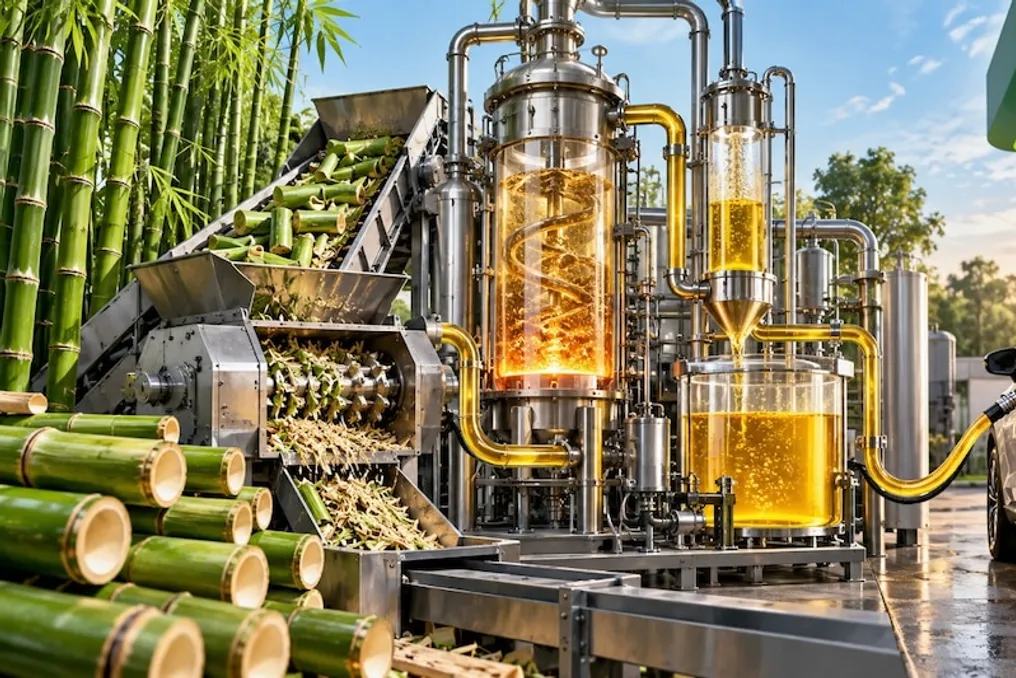
Scientists searching for alternatives to gasoline and diesel fuel have succeeded in creating fuel from bamboo. Researchers from the Massachusetts Institute of Technology in the USA were able to convert bamboo into a substance similar to oil using a special method.

In laboratory conditions, bamboo was heated at a temperature of 300 degrees Celsius for only 10 minutes. During this experiment, over 35 percent of the bamboo's mass was converted into a crude material analogous to oil. This resulting fuel, after purification, could potentially be used in cars, airplanes, and trains.

Researchers suggest that with large-scale production, the cost of this fuel could be around $2.75 per gallon of gasoline. Furthermore, the study claims that compared to diesel fuel, greenhouse gas emissions could be reduced by up to 26 times. It is important to note that these results are currently based on research and assumptions.

To obtain fuel from bamboo, scientists applied hydrothermal liquid-phase technology. This method allows for the production of oil-like substances from plants using water, high temperature, and high pressure. In this test, the bamboo was heated at 300 degrees Celsius for 10 minutes without using a separate chemical catalyst.

As a result of the test, 35.6 percent of the bamboo's weight was converted into an oil-like crude material. However, this crude material cannot be directly poured into vehicles; it requires preliminary purification and further processing to create complete fuel.

Bamboo is characterized by rapid growth and the ability to grow even on less fertile land, making it an attractive alternative for fuel production. Currently, biofuel is also produced from crops such as corn, but growing these crops requires agricultural land.

According to the study, producing fuel equivalent in energy to that obtained from corn may require approximately 13 percent less land when cultivating bamboo. Nevertheless, this is only a preliminary estimate based on research and should not be considered the result of large-scale production.

According to researchers' estimates, after large-scale production begins, the cost of bamboo fuel could be around $2.75 per gallon of gasoline, equivalent to approximately 260 rupees per gallon. This price is a calculated production cost and cannot be directly compared to the prices of gasoline and diesel at gas stations.

Costs for building factories, operating equipment, and transporting bamboo must be taken into account, which will affect the actual cost after mass production starts.

The study shows that bamboo fuel can reduce greenhouse gas emissions by up to 26 times compared to diesel fuel. Greenhouse gases contribute to global warming. However, to accurately calculate this benefit, the entire cycle must be considered: from growing the bamboo to producing the fuel and burning it.

It is also important to consider the energy consumed in the process and other types of pollution. Therefore, this cannot be considered a final conclusion at this time. This study demonstrates the potential for creating transport fuel from bamboo, but it cannot yet be called a complete replacement for gasoline and diesel. Further work is required on scaling up production and verifying the efficiency and cost of this fuel. If subsequent tests show positive results, bamboo fuel may find application in the future in cars, airplanes, and trains.

Tips for Cooking Black Lentils: How to Make Them Soft Without Soaking
Read more
www.aajtak.in

Tips for Cooking Black Lentils: How to Make Them Soft Without Soaking

Black lentils are very healthy and rich in protein, so they are often prepared in Indian cuisine as a snack or a dish. However, with a busy schedule, people sometimes forget to soak the lentils overnight, leading to the question of what to do in the morning if black lentils need to be cooked.

If you cook black lentils without soaking directly in a multicooker, they remain hard inside and firm even after several whistles. But now you don't have to worry! With a simple kitchen trick and a secret tip, you can quickly prepare absolutely soft, buttery black lentils even without prior soaking. Let's look at this simple and useful method.

For preparation, you will need: black lentils: 1 cup (unsoaked); baking soda: 1/4 teaspoon (secret ingredient); salt: to taste; water: as needed (about 2-3 inches above the lentils).

First, thoroughly rinse the unsoaked black lentils 2-3 times with water to clean them. Then place the rinsed lentils in a pressure cooker. Instead of regular water, use warm or slightly hot water (the water should be slightly above the amount of lentils so that they are completely submerged).

Next, add one quarter teaspoon of baking soda and a little salt. Baking soda helps to quickly soften the hard shell of the lentils. Close the pressure cooker lid and cook over high heat until one whistle sounds. After that, reduce the heat to low and continue cooking for about 15-20 minutes (or up to 5-6 whistles).

After turning off the heat, let the steam escape on its own. Open the lid and check—your lentils will be ready, soft as butter, even without prior soaking.

Popular