
India launches plan worth 99,446 crore rupees to transform the formal labor market
Read more
The times of India
timesofindia.indiatimes.com

India launches plan worth 99,446 crore rupees to transform the formal labor market

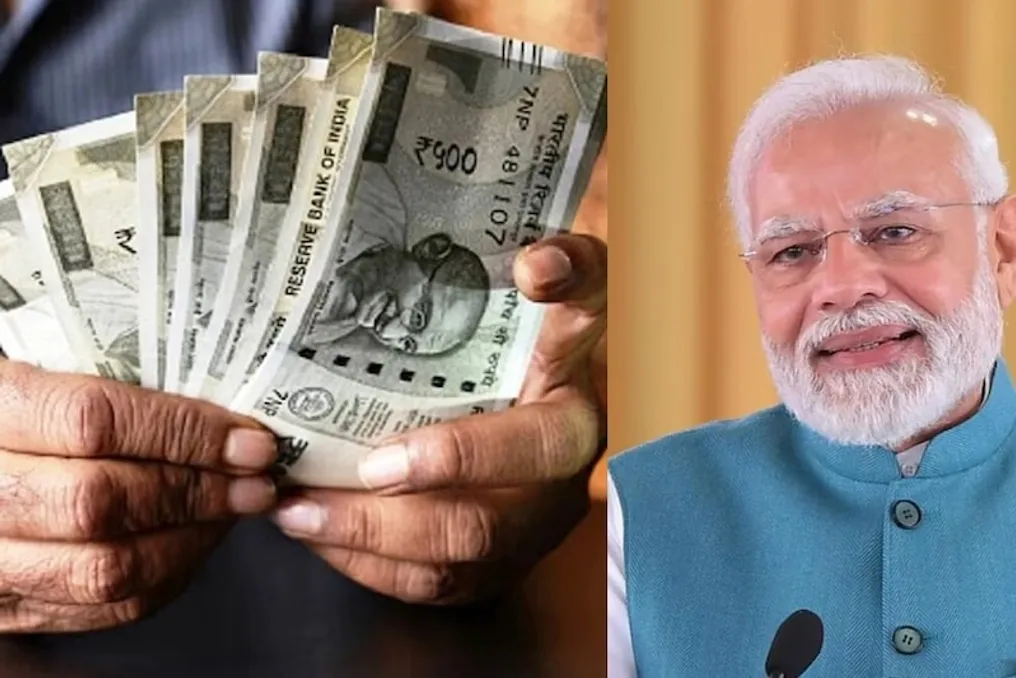
The Indian government has set a target to create over 35 million jobs within two years, including 19.2 million first-time entrants into the workforce. The central government program, named Pradhan Mantri Viksit Bharat Rozgar Yojana (PMVBRY), is designed to stimulate formal employment by providing financial incentives to both employers and employees.

This scheme provides payments to initial employees hired for positions under the jurisdiction of the Employees’ Provident Fund Organisation (EPFO). Furthermore, the program rewards companies that increase their staff and retain new workers.

It should be noted that these targets are governmental plans, not independent assessments of expected job creation.

In India's employment structure, agriculture remains the largest employer, providing work for 43 percent of the workforce. Industry accounts for 12.1 percent, construction for 12 percent, trade, hospitality, and restaurants for 12.9 percent, transport, storage, and communications for 5.8 percent, and other services for 13.1 percent. Mining and quarrying make up 0.3 percent, while electricity, water supply, and related services account for 0.7 percent.

A study titled 'Looking Through Employment Elasticities' showed that in most of the 55 organized manufacturing sectors studied since the mid-2000s, employment elasticity was above 0.5. Employment elasticity measures the relationship between production growth and employment growth. However, the same study found that over 40 percent of new employment created between 2008 and 2017–18 was contract employment. It is important to emphasize that the results apply only to organized manufacturing and cannot be automatically applied to the entire sector.

Specific compliance criteria are set for employers. Workers earning less than 10,000 rupees receive 10 percent of their salary, up to a maximum of 1,000 rupees. For those earning between 10,000 and 20,000 rupees, the amount is 2,000 rupees. For incomes exceeding 20,000 rupees, the incentive reaches 3,000 rupees, provided the gross wage cap is observed.

Incentive payments are made as semi-annual lump sums after completing the relevant six months of work and submitting an electronic application with reporting. The employee must remain with the same employer for at least six months, provided contributions are received during this period. Employers are also required to maintain a minimum threshold of net additional hiring. Companies with a base staff of less than 50 people must hire at least two additional employees, while those with a base staff of 50 or more must add at least five. Incentives are not accrued for months when the corresponding threshold has not been met.

Similar stories

Government Approves 3% Increase in Dearness Allowance (DA) for Central Government Employees
Read more
www.aajtak.in

Government Approves 3% Increase in Dearness Allowance (DA) for Central Government Employees

The government, led by Prime Minister Narendra Modi, announced significant news for central employees ahead of the festive season. The wait for the Dearness Allowance (DA Hike) for July concluded after the Cabinet meeting approved a 3% increase in DA, along with the allocation of ₹10,016 crore for this purpose.

Typically, the central government announces the DA hike for its employees and pensioners in September or October, effective from July. Although an announcement before Durga was expected, the government provided a major gift before Diwali.

The Cabinet approved a 3% increase in the Dearness Allowance (DA) for central government employees. Previously, in April of this year, the first DA/DR hike for employees and pensioners was announced, increasing the DA by 2% to 60%. Thus, thanks to the government's decision to raise DA by 3%, the overall Dearness Allowance for central employees reached 63%.

It should be noted that the central government increases the Dearness Allowance twice a year to help employees and pensioners cope with inflation. The DA/DR hike occurs in January and July.

Earlier reports suggested a 3% rise in DA. The decision on the Dearness Allowance increase is based on data from the All India Consumer Price Index for Industrial Workers (AICPI-IW). According to the Bureau of Labor data, AICPI-IW rose by 1.2 points in August 2026 to reach 154.4. Based on current data for July 2026, a DA increase of 3–4 percentage points is projected.

Calculating the salary increase for central employees after receiving this festive gift in the form of a 3% DA hike is quite straightforward. The article presents calculation examples for various basic salary levels: ₹18,000, ₹25,000, ₹40,000, and ₹50,000.

Which professions offer the highest salaries in the country: an overview of sectors and positions
Read more
www.aajtak.in

Which professions offer the highest salaries in the country: an overview of sectors and positions

Every young person dreams of a good job and a high salary. However, the growing use of artificial intelligence has led to significant changes in the country's technology sector. The question arises: are traditional professions still earning high pay, or have new types of jobs entered this list? According to published notifications and government data, there are sectors where employees earn hundreds of thousands of rupees monthly, but you might not know about it. Regardless of whether it is the private or public sector, we will look at the highest-paying positions.

The position of Chief Executive Officer (CEO) is also among the high-paying ones. Media reports claim that the CEO is among the top executives of a company. The Chief Executive Officer is responsible for the business, strategy, and making major decisions in the company. In large corporations, in addition to salary, bonuses, stocks, or other benefits may be provided in this position. Nevertheless, the CEO does not have a fixed state salary; income depends on the size of the company, its results, experience, and appointment conditions.

The medical sector has always been considered one of the most respected and highest-paid. In large private and public hospitals in the country, highly skilled surgeons, cardiologists, and anesthesiologists earn the most. According to media, they can earn from 2 to 10 lakh rupees monthly, and with accumulated experience, their packages can reach millions.

Artificial intelligence and machine learning specialists work on creating AI-based systems, models, and software, and they are also well paid. AI and machine learning specialists can earn up to 1.5 lakh rupees per month, although this is not a fixed amount, and their annual income can increase to 18–72 lakh rupees as they gain experience.

Regarding government positions, the highest salary in India is paid to the Chief Justice. The Chief Justice of the country receives a fixed salary of about 2.80 lakh rupees, while other judges receive about 2.50 lakh rupees per month. This list also includes IAS and IPS representatives, who, including all allowances and additional benefits, can earn about 2.50 lakh rupees monthly.

Popular