AIIMS Experts Discuss the Institute's 70-Year History and Reasons for Patient Trust
Read more
Aaj Tak
www.aajtak.in

AIIMS Experts Discuss the Institute's 70-Year History and Reasons for Patient Trust

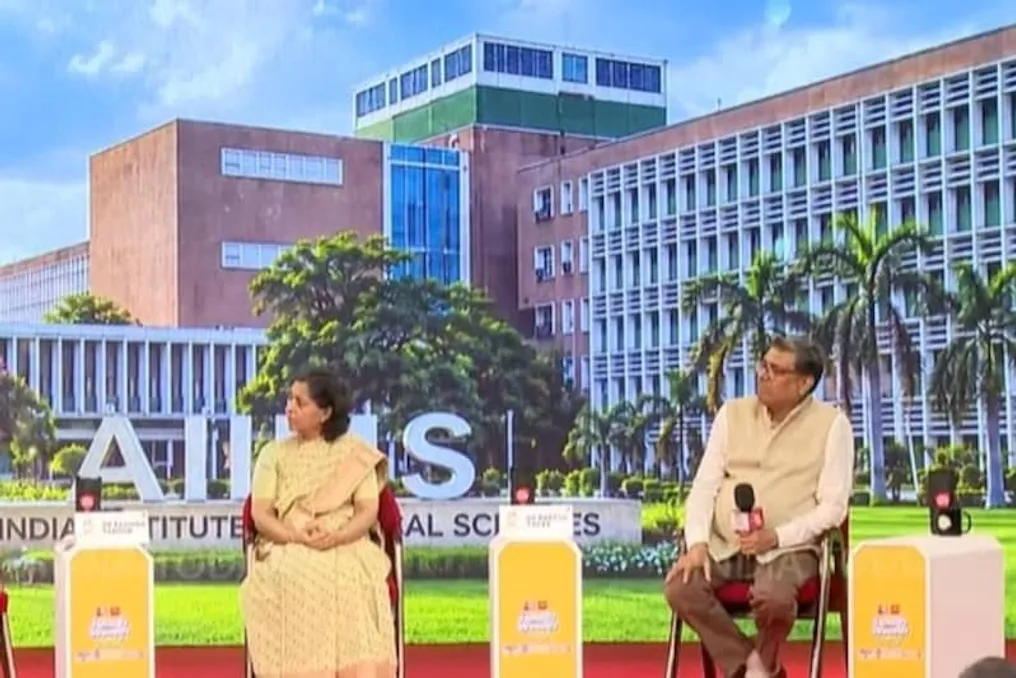
The All India Institute of Medical Sciences (AIIMS) in Delhi is not merely a hospital or a building, but a culture built on dedication, selflessness, and the principle of 'patient first.' During a special session titled 'AIIMS: The Name Says It All' at the Health Wealth Summit, two leading specialists from AIIMS Delhi participated: Professor Dr. Rakesh Yadav from the Cardiology Department and Professor Dr. Radhika Tandan, Head of the Centre for Ophthalmology Sciences.

During this event, both doctors thoroughly discussed the factors contributing to AIIMS' success, the challenges faced by physicians, and the necessity of strengthening new AIIMS branches across the country.

Speaking about AIIMS' reputation, Dr. Rakesh Yadav emphasized that the institute is more of a culture than just a name or a large building. This culture has been shaped by decades of dedication from doctors, nurses, and students. He noted that patients across the country trust AIIMS unconditionally because they are confident they will receive the most appropriate treatment without any commercial or professional vested interest.

Dr. Yadav also acknowledged the growing pressure on doctors, explaining that when a physician becomes well-known, working hours cease to be fixed. Furthermore, doctors have to balance patient care with administrative duties. He appealed to patients to seek treatment for common illnesses at local hospitals instead of creating crowds in the AIIMS Delhi emergency department.

Dr. Radhika Tandan recalled the history of AIIMS, pointing out that it was established in 1956 due to the foresight of the country's first Minister of Health, Princess Amrit Kaur. At that time, Indians had to travel abroad for higher medical education and specialization. The founding of AIIMS aimed to develop world-class medical education and research directly within India.

According to Dr. Tandan, AIIMS' seventy-year legacy is the result of scientific research, innovation, and the dedication of its faculty. At AIIMS, doctors freely consult with each other from different departments to ensure the best possible treatment for the patient.

Both experts highlighted the development of new AIIMS facilities being opened across the country. Dr. Radhika Tandan reported that the new AIIMS branches located nationwide are rapidly developing in terms of infrastructure, modern equipment, and staff qualifications.

She advised patients to first approach their nearest AIIMS branch. Referral to AIIMS Delhi should only be considered in cases of extreme necessity and serious problems. This will allow patients to receive quality care closer to home and reduce the excessive burden on AIIMS Delhi. The main message from the AIIMS Delhi doctors was that the institute's identity is defined not by its equipment, but by the dedication and spirit of serving patients. Strengthening regional AIIMS branches is currently the most pressing need to improve the country's healthcare system.
Similar stories

Experts Discuss Rise in Youth Heart Disease and Women's Pregnancy Issues: The Role of Lifestyle and COVID-19
Read more
www.aajtak.in

Experts Discuss Rise in Youth Heart Disease and Women's Pregnancy Issues: The Role of Lifestyle and COVID-19

Despite several years having passed since the COVID-19 pandemic, the question often arises whether a sudden illness or heart attack in a young person is a consequence of coronavirus. At the Health Wealth Summit forum, specialists held an open discussion on this serious topic.

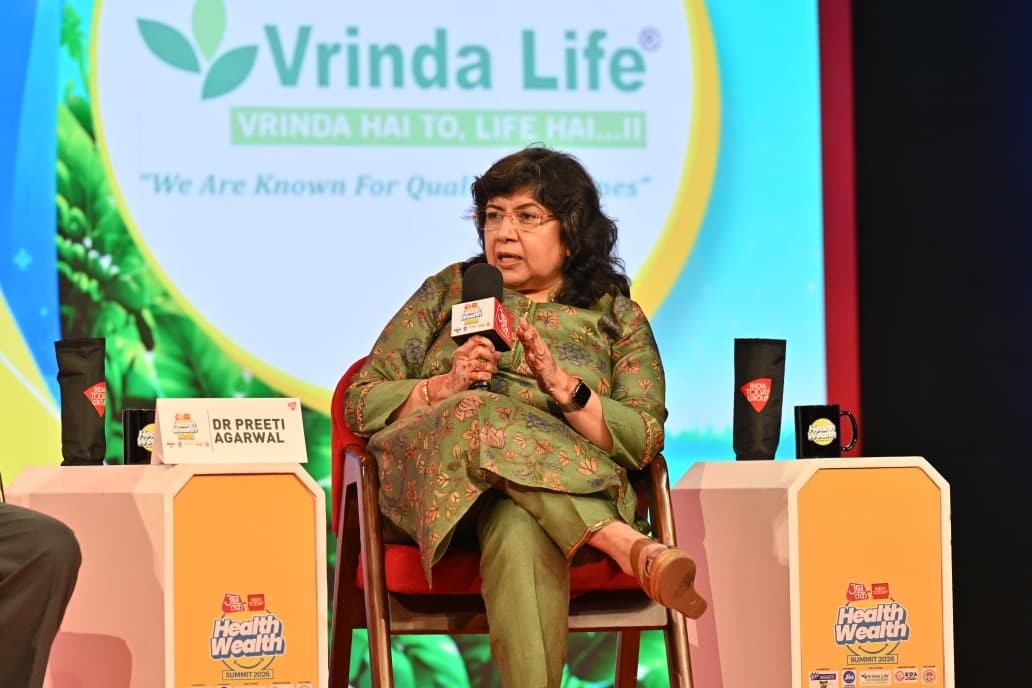
Leading doctors from the country participated in the session: Senior Cardiologist Dr. Padmashri D.S. Gambhir, Dr. Manoj Kumar, Dr. Sanjay Sachdeva, and Gynecologist Dr. Priti Agrawal. They thoroughly discussed the true causes of the increase in heart disease among youth, stress, and fertility problems in women.

Dr. Padmashri D.S. Gambhir emphasized that while the COVID-19 pandemic had a negative impact on the blood clotting system and organs, contributing to the rise in heart disease cases, it is incorrect to blame the coronavirus exclusively. He presented statistics showing that less than half of young patients with a heart attack had ever had COVID-19, whereas over 70% of such patients had never encountered the infection. This indicates that lifestyle changes and other medical factors play an equally significant role.

Dr. Manoj Kumar reported that a study conducted in the UK showed an increased risk of heart attack in people who recovered from COVID-19 because the virus affects the inner lining of blood vessels. However, besides this, other significant 'unconventional risk factors' are rapidly emerging. One of these is a sedentary lifestyle: the risk of a heart attack doubles for people who spend more than ten hours a day sitting. Dr. Sanjay Sachdeva added that factors such as high blood pressure, diabetes, smoking, and obesity are causing problems in young people at a very early age. Furthermore, weakened immunity and nasal and sinus hygiene issues make the body more susceptible to other infections.

Dr. Gambhir explained that mental stress and our work style directly determine health status. He highlighted 'Type A Personality'—people who constantly experience anxiety, participate in competitive races, and take everything to heart; these individuals are at the highest risk of heart attack. Conversely, people with 'Type B Personality,' who remain calm about work and leave office worries at home, remain safer. Doctors advise developing a 'Developed India,' but without immersing oneself in the 'stress furnace' or bringing office stress home.

Discussing reproductive health, Dr. Priti Agrawal noted that during COVID-19, many couples postponed family planning. Naturally, the quality and quantity of eggs in women decrease with age. Women who decided to conceive after the age of 30–35 faced difficulties. Additionally, the growing prevalence of smoking, alcohol consumption, and excessive stress among modern youth negatively affects their reproductive health. Therefore, instead of blaming only COVID-19, it is much more important to seek medical consultation in a timely manner.

The general message from the experts was that changing lifestyles, fast food, lack of physical exercise, and excessive psychological stress have become the main enemies of health. If diet and daily routine are adjusted in time, the probability of developing heart disease and other serious problems can be significantly reduced.

Expert 'The Angry Doc' Discusses Health Risks in the Age of AI and Social Media at Health Wealth Summit
Read more
www.aajtak.in

Expert 'The Angry Doc' Discusses Health Risks in the Age of AI and Social Media at Health Wealth Summit

Dr. Anshuman Kaushal, known as 'The Angry Doc' on social media, a specialist in robotic gastroenterology, bariatric surgery, and obesity, spoke at the Health Wealth Summit. His criticism is directed not at patients, but at those who exploit people's fears for profit under the guise of treatment.

During the 'Doctor vs Internet Education' session on the first day of the summit, Dr. Kaushal openly discussed the problem of medical misinformation spread in the digital age and the dark side of social media. He shared personal experiences that led to him earning the nickname 'The Angry Doc'.

He recounted a case where a patient with progressive breast cancer, whom he had recommended getting checked three months prior, instead sought alternative treatment, leading to the deterioration of her condition. This incident deeply shook him. People who observed his reaction began calling him 'The Angry Doc'.

Memories from his internship at a state hospital also led him to conclude that he often advised patients to consume inexpensive and nutritious foods, such as chickpeas (chana), sattu, and eggs, instead of expensive products to ensure sufficient protein with minimal cost. He emphasized that his anger is directed at those who sell fear and build their business upon it.

'Primary consultations now happen on Instagram and Google'

Dr. Kaushal believes that doctors today cannot ignore social media because patients research all information online before visiting a specialist. Citing a study, he noted that about 72 percent of people use Google or Instagram to search for health information. If a person discovers a lump in their chest, they immediately start searching online, after which algorithms begin showing them relevant videos. If this information contains false claims and sows panic, it can steer the patient's medical decisions in the wrong direction.

He strongly stated that in the current climate, what is most needed is 'evidence-based information without a hidden agenda.' Doctors must provide proper education without being motivated by commercial interests or the desire to sell their own product.

Patient and doctor are a partnership, not a 'commander-follower'

Dr. Kaushal is categorically against prohibiting patients from reading about their illnesses on the internet; he welcomes access to information. In his opinion, the problem is not a lack of data, but a lack of reliability and responsible individuals. He urges patients to openly share what they have read and what fears they have. This improves the dialogue between the doctor and the patient, allowing treatment to be determined considering financial constraints or family status.

The modern Gen-Z generation demands complete transparency, evidence base, and accountability. The era has changed: it is no longer a time when a doctor simply gives orders and the patient silently obeys, but an era of 'partnership.'

Can ChatGPT or AI fix your health?

Discussing artificial intelligence (AI), he noted that it will inevitably become part of healthcare, but this depends on how it is used. AI can help systematize a patient's medical history, summarize reports, and clearly present information to the doctor, saving consultation time. However, it is absolutely wrong to ask AI what your diagnosis is or what medicine to take. For example, if you enter a common headache into an AI chatbot, it might output a list of many terrible and serious diseases, whereas the true cause might be very minor.

'The power of decision-making belongs exclusively to doctors.' Clinical context, responsibility, and trust can only be provided by a human (a doctor).

Doctors should not have a 'hidden agenda' on social media

Dr. Kaushal, who writes scripts for his own videos, explains that his grandmother was a theatrical artist and poet, so he inherited an understanding of the power of words and storytelling mastery. His videos combine emotion, satire, and medical information, but he never resorts to misleading statements just to attract attention. He is convinced that physical and mental health are inseparable. A patient comes to a doctor not only with an illness but also with the burden of responsibility for their family and anxiety, which the doctor must understand.

He appealed to society to develop scientific thinking instead of blindly trusting every viral health claim and to always verify the truthfulness of these assertions.

In NEET PG consultations, general medical education has overtaken radiology as the preferred choice for doctors
Read more
www.aajtak.in

In NEET PG consultations, general medical education has overtaken radiology as the preferred choice for doctors

Among the most talented young doctors vying for top rankings, there is a significant shift in their views on their career path after graduation. General Medicine has taken the first choice spot, significantly surpassing Radiology among the most capable graduates of Indian medical universities.

In the first round of allocation for the National Eligibility cum Entrance Test - Postgraduate (NEET-PG) 2026, 51 doctors in the top 100 chose General Medicine, while the number of applicants who chose Radiology dropped to only 28.

This shift is not sudden nor does it signify a complete rejection of radiology. It indicates what the country's most gifted young doctors desire: the opportunity to follow a path of super-specialization, take on broad clinical responsibilities, shield themselves from the influence of Artificial Intelligence (AI), and have the ability to treat patients directly.

Rise in Popularity of Medicine in Previous Cycles

Analysis shows a gradual increase in interest in General Medicine. In 2024, the difference was small: 48 top performers chose medicine, and 45 chose radiology. In 2025, the ratio was 46 to 40. However, in 2026, this gap increased substantially, reaching 51 to 28.

Medicine as a Career Launchpad

Experts monitoring trends in medical education note that this change challenges the old idea that the most sought-after specialties are those with fixed working hours or higher salaries. Dr. Aviral Mathur, an associate consultant at Sar Ganga Ram Hospital and former chairman of FORDA, believes that medicine has transformed from merely an end goal into a 'launchpad' for a career. By obtaining an MD in medicine, doctors can pursue further training in fields such as cardiology, neurology, nephrology, gastroenterology, and critical care, earning a DM qualification, thereby not limiting themselves to a narrow scope.

Serious Issues Facing Radiology

Despite radiology remaining a prestigious field, students are showing caution due to several new problems. One such factor is the fear of Artificial Intelligence (AI).

Fear of AI

Rapidly developing AI tools in medical imaging are making students question how the work of radiologists will change or suffer over the next decade.

Furthermore, there is the issue of expensive infrastructure. Dr. Satendra Singh from the University College of Medical Sciences (UCMS) points out that equipping and installing equipment for radiology is very costly, and the risk of long-term radiation exposure is also one of the factors.

The limited number of seats should also be noted: there are about 1200 seats for MD in Radiology in India, whereas there are over 4000 for General Medicine. Sometimes students choose medicine over radiology even if they fail to get into their desired college.

The Sense of a Real Doctor and Patient Connection

Dr. Harjit Singh Bhatti, a geriatric specialist from Sitaram Hospital and former chairman of AIIMS RDA, emphasizes that the growing burden of lifestyle diseases, the increase in the elderly population, and the increasing complexity of healthcare needs have heightened the importance of the physician's role. He argues that 'the sense of a real doctor comes from medicine.' This allows for long-term patient care by combining symptoms, test results, and medical history. The attraction to this field has also been strengthened by the central role of the physician in caring for critically ill patients during the COVID-19 pandemic.

The experts' conclusion is clear: modern young doctors are choosing their specialty not only based on ease of life or initial income but are also investing in a broad clinical foundation that will open up numerous career opportunities for them in the future.

Popular