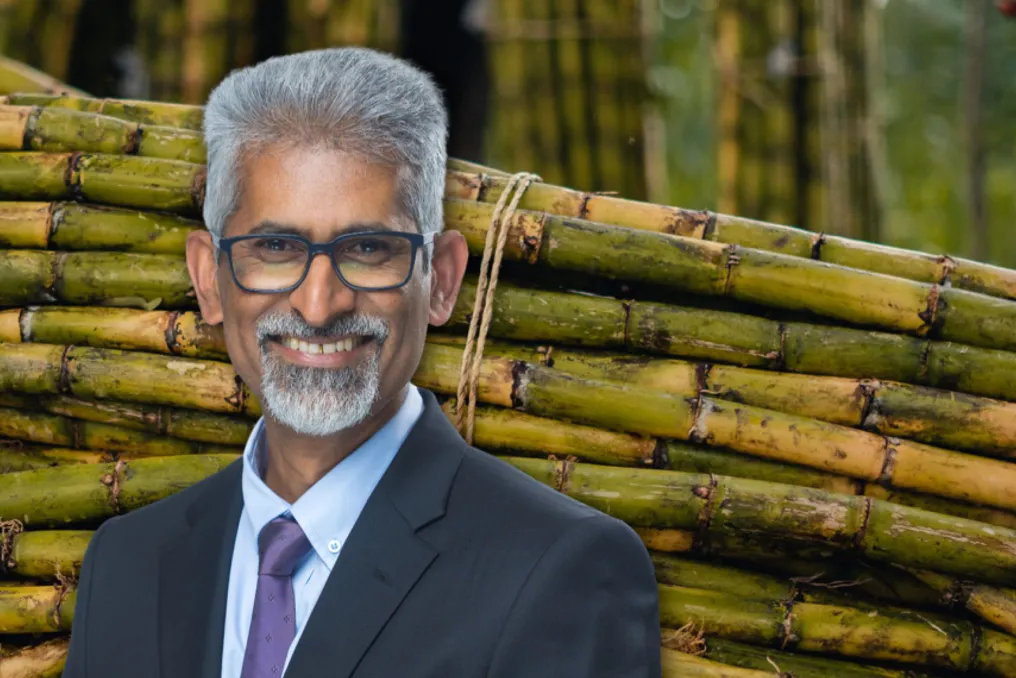
After sugarcane is crushed to extract juice, a fibrous residue known as bagasse remains. Large piles of this material can be seen at sugar mills, awaiting further use. Although some bagasse is already used for energy or paper production, it also holds potential for creating products that can replace plastic and even serve as a source of protein.
Across India, entrepreneurs and young innovators are exploring these possibilities. These range from compostable plates and food boxes to proteins derived through fermentation. Below are four projects finding new applications for sugarcane waste.
When Ved Krishna returned to his family's paper business in Ayodhya, Uttar Pradesh, he began contemplating the environmental cost of traditional food packaging. Materials with plastic coatings and laminations were widely used, but their disposal created a growing problem.
In 2017, his family's company, Pakka Limited, launched the brand Chuk to offer an alternative. This brand uses bagasse, the fibrous residue left after extracting juice from sugarcane, to manufacture plates, bowls, food containers, and other tableware. The fiber is processed into pulp, which is then molded into finished products.
The resulting tableware is designed to be durable enough for daily food service while offering a replacement for traditional single-use plastic and polystyrene items. Chuk's products are used by food service establishments, including Haldiram’s, Starbucks, and Chai Point. According to previous company reports, its tableware can decompose in about 60 days under suitable conditions. By giving a second life to sugarcane residues, Chuk demonstrates how an agricultural byproduct can become a practical substitute for disposable plastic.
Observing the scale of plastic pollution in India, Riya Mazumdar Singhal left her pharmaceutical career in the UK to develop an alternative to single-use packaging. In 2010, she founded Ecoware, building a business around plant-based foodservice products.
Sugarcane bagasse is one of the primary materials used in her range of plates, bowls, trays, and takeaway food containers. The fiber is converted into pulp and molded using high heat and pressure with precision molds. Ecoware claims that its products contain no plastic lining, glue, lamination, or coating, allowing the material to naturally decompose under appropriate conditions.
The company reports that its products can biodegrade in soil in about 100 days in the presence of microbes. The assortment is designed for practical foodservice needs, including serving hot dishes and packaging takeout orders. Ecoware's approach solves two problems simultaneously: the accumulation of single-use plastic and the underutilization of agricultural waste. By offering a plant-based alternative to businesses and households, the company helps make less wasteful food packaging a more accessible everyday choice.
Dinearth, a sustainable packaging initiative founded by Harsh and Jani with support from Abhinav Industries, offers bagasse-based alternatives to the foodservice sector. The business leverages its parent company's experience in food packaging, offering products designed for restaurants, takeout points, and catering companies.
The manufacturing process begins with sugarcane bagasse obtained from sugar mills. The residue is converted into pulp and pressed into molds using heat and pressure to create disposable food packaging. The catalog includes plates, trays, bowls, and takeaway food boxes, offering businesses alternatives to plastic and polystyrene containers.
A crucial part of this approach is ensuring practicality for small food suppliers, not just large restaurant chains. Dinearth's EcoDine line is presented as a more affordable line of biodegradable tableware, with stated prices starting at approximately 1 rupee per unit for individual items. By combining familiar food service formats with materials from plant fibers, Dinearth aims to facilitate the adoption of alternatives to traditional single-use items across a wider range of businesses.
What if agricultural waste could help meet the demand for protein? This is the question behind Kinva Bio—a project developed by students Nitish and Gulshan Kumar at the National Institute of Food Technology, Entrepreneurship, and Management in Haryana.
Instead of turning bagasse into a disposable product, the team is investigating how fungal fermentation can transform agricultural byproducts into mycoprotein—a protein-rich material produced using fungi. Sugarcane bagasse serves as one of the potential raw materials. This process combines biotechnology with artificial intelligence. Fungal fermentation converts the biomass, while an AI-based digital twin helps predict protein yield and optimize production conditions. The goal is to develop a method of producing protein that might require less land and water than traditional sources.
Kinva Bio remains an emerging innovation rather than an established large-scale food producer. Nevertheless, its work points to another opportunity for agricultural waste: using biotechnology to convert low-value residue into a potential food resource.