This year has proven mediocre for Middle Eastern cinema. While Palestine continues to dominate the region's cultural discourse, festivals are becoming increasingly narrow in their film selections, making it difficult for viewers and critics to find anything truly new, as familiar plots are often presented.
There is a growing divergence between the preferences of local Middle Eastern audiences and international viewers. Local audiences seek an authentic reflection of their lives, as far as censorship allows. However, the continuous stream of familiar stories about poverty, war, illegal migration, and toxic patriarchy does not bring them much value.
Meanwhile, the international public is often drawn to the region precisely because of familiarity with such depictions. Years of internal propaganda featuring identical narratives and unchanging archetypes have formed in international viewers a low capacity to accept and enjoy genres with social criticism in a purer form than what is usually presented at festivals.
The main challenge for filmmakers remains preserving artistic integrity while simultaneously using various forms to address political issues. However, a distinctive feature of Middle Eastern films during the autumn and winter seasons is their attempt to transform genres into new hybrids that can satisfy both international and local audiences. Although the overall result may not be perfect, the scale of these attempts should be noted.
Furies
For the past seven years, Lebanese cinema has awaited a surge of energy to break out of stagnation. The debut feature film by Rami Kodai, born in Beirut and living in Los Angeles, could be the spark that revitalizes the stalled Lebanese film scene. The film 'Furies' is a heist thriller executed with a rare combination of elegance and insight.
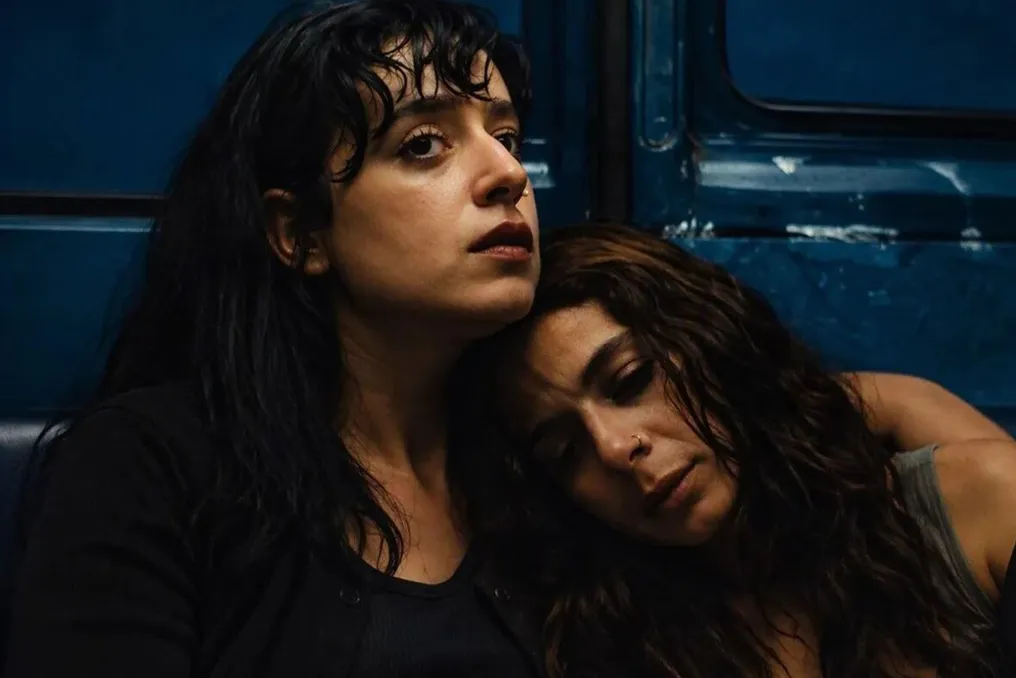
The story is inspired by the 2019 bank robberies carried out by ordinary citizens attempting to retrieve their frozen savings amid the economic crisis in Lebanon. The plot focuses on the sisters Maro (Rim Mroue), a hairdresser and single mother, and Dalia (Maria Nakouzi), a water truck company employee and sex worker.
When Dalia learns she has uterine cancer, Maro tries to withdraw money from the bank, but a indifferent manager refuses her, stating that the bank is not obligated to serve clients under such exceptional circumstances. Faced with her sister's life threat and the absence of a legal system to appeal to, Maro decides to take justice into her own hands and rob the bank with Sunshine (Issam Bou Khaled), an elderly former Phalangean who became a neighborhood assistant, and Hamza (Hassan Akil), Dalia's colleague, who owes money to a local gangster.
Few films have managed to convey the pulse, colors, and soul of the Lebanese capital as vividly and tenderly as 'Furies'. Kodai portrays Beirut as a decaying city whose population is in a state of constant tension: shouting, arguing, embracing, exploiting, and supporting each other.
Through his sharp portraiture and attentive gaze at the minutiae of Beirut life—food, loud pop music, unkempt architecture, distinctive fashion—Kodai brilliantly captures the spirit of this city. It is a Beirut defined by glaring contradictions: communal solidarity versus sectarian strife; the speed of daily life versus the stagnation of corrupt politics; the childish hope for a better tomorrow versus submission to a government that will never change.
No other film after the 2019 mass protests has managed to convey the depth of disappointment and rage over what government-backed banks did to the Lebanese people, or the unbearable injustice inflicted by a failed and fractured political system that will never be held accountable. For those who have experienced such humiliation at the hands of their powerless governments, 'Furies' offers a cathartic experience through weary characters who can no longer tolerate it. Kodai does not shy away from the darker aspects of Lebanese reality—the hyperrealistic clash between Christians and Sunnis serves as a reminder that sectarian affiliation continues to shape social interactions 35 years after the end of the civil war.
'Furies' is not perfect. The relationship between the two sisters lacks sufficient depth, and the car chase in the final part of the film is awkwardly staged, but these are minor notes for an ambitious project that entertains, provokes, and emotionally immerses with a confidence and modesty rarely seen in 21st-century Lebanese cinema. It is highly deserving and perhaps the best Arabic film of 2026.
A Bit of Light
Ali Asghari quickly becomes one of Iran's most internationally recognized filmmakers: a bold voice documenting the influence of new and old political ailments on a diverse population in constant flux. His latest work—brilliantly written, shot, and edited immediately after the start of the war—differs in tone and aesthetic from last year's satirical masterpiece 'Divine Comedy,' which reinterprets Abbas Kiarostami's cult film 'Taste of Cherry,' set in Tehran in February 2026, days before American and Israeli strikes on the country.
Spanning 24 hours, the film tells the story of Arash (Misagh Zareh), an idealistic doctor who decides to commit suicide. He is still haunted by images of the treatment of protesters during the 2025–26 demonstrations and the repressive measures the government forced upon him while he tried to save them, suffering from unbearable guilt and a terminal sense of futility with which he can no longer live.
Torn between the brutality of the Islamic Revolutionary Guard Corps and the barbarity of the US-Israeli blockade, Tehran's middle class finds refuge in art, compassion, solidarity, and mutual resilience. The impending attack acts as a recurring comedic motif in the story. Arash's landlord voluntarily tapes up his office windows to protect them from strikes—an ironic gesture adopted by other characters.
The landlord assures Arash that the US will only target strategic sites and will not harm civilians because 'Trump won't lie!'. Asghari's perfectly calibrated blend of black humor and pathos presents a deeply humanistic and realistic view of a society on the brink of apocalypse. When exhausted people like Arash reach the limit of their patience, the director poses the central question facing every free-thinking person living under an authoritarian regime: how to continue living amidst this pervasive violence?
Asghari does not offer easy answers, but in short moments of comforting interaction—dinner, reading, touch, dance—this 'bit of light' might help endure the night.
Falling House
Mohsen Gharaye's domestic thriller 'Falling House' is less convincing. Farad Aslani plays Rashid, a low-ranking prison guard veteran who is suspended after being accused of taking bribes. His small family, consisting of his wife and two daughters, is forced to leave their current home, which is slated for demolition due to a municipal redevelopment project. Fighting on multiple fronts, the exhausted Rashid is shocked to learn that his daughter Ensi (Laleh Marzban) plans to leave Iran and move to Turkey to pursue her modeling career.
As his paranoia intensifies, Rashid locks up his family and turns his doomed house into a small prison. A game of cat and mouse begins between Rashid and his daughter, while family ties begin to disintegrate, much like their house. In the first half of the film, this is moving, but the inappropriate narrative symbolism later becomes increasingly tiresome and obvious. Rashid is a tangible, well-intentioned, but shortsighted man. He is an unwavering embodiment of the terribly familiar toxic patriarchy that women in this story should fight to achieve freedom. The message is too direct, and the drama is largely monotonous; successive revelations reveal not hidden dimensions of the characters, but merely add details that do little to heighten the tension. Despite strong performances and the difficult situation of the female characters, the viewing experience is intermittent. Nevertheless, the artificiality of the plot makes 'Falling House' a simplified and derivative interpretation of Iranian reality, attempted in the same cliché manner countless times.
No Paradise If You Are Killed by a Woman
Halkaut Mustafa's fifth feature film, a Kurdish-Norwegian director's work, is a Kurdish response to 'Sniper,' but with a female protagonist. On paper, this sounds like a recipe for disaster, but the film ultimately succeeds, becoming a competent action movie with a delightful feminist twist. Vian (Avan Jamal) is a young Kurdish-Norwegian woman who comes to Iraq with her family in 2014 to reconnect with her roots. Soon, the Islamic State (IS) captures Mosul, kills her parents, and kidnaps her along with her younger sister. Vian and her sister are sold into slavery. After some time, Vian kills her captor, escapes, joins a Peshmerga unit, and becomes the unit's most skilled sniper, killing over 100 IS fighters. Traumatized, injured, and scarred after returning to Norway, Vian learns that her sister is alive and was forced to marry an IS commander. She quickly decides to return to Mosul to save her.
Anyone expecting new insights into the complex issue of IS will be disappointed, as 'No Paradise' is a classic adventure story, albeit an engaging and well-executed genre exercise. But by placing Vian at the center of the action, Mustafa restores the subjectivity of women affected by IS, flipping the axis of power by contrasting Vian with every male aggressor she encounters. 'No Paradise' confronts and challenges the dominant concept of the alpha male in mainstream Middle Eastern cinema, offering a fresh and invigorating turn that nevertheless remains largely constrained by rigid narrative conventions, leaving little room for greater depth or dimension.
Elbaraneya
Ashgan El Hamous's directorial debut feature film is a family drama set in rural Egypt. Thanks to naturalistic performances, a realistic backdrop, and a lack of artificiality, it initially appears documentary-like. However, 'Elbaraneya' is a fictional work featuring a cast composed mainly of non-professionals and shot in the style of cinematic verité.
Hamous's chosen aesthetic ties the story to a recognizable Egyptian reality—a rarity in this decade of censorship—but also reveals the limitations of the direction. The film focuses on Amal (Rim Amer), a young pregnant woman living with her family above a jasmine and wheat plantation, which is their main source of income. Their traditional life is threatened when an investor offers Amal's father money to buy his land in exchange for a more comfortable modern house in Cairo.
Initially fiercely resistant, the family begins to consider such a transition, gradually contemplating the significance of the land to them: is it a deeply rooted part of their identity, an unsustainable old way of life, or a minor element of their unshakable family bond? Hamous emphasizes exceptionally observed details, showing Egyptian life on the verge of disappearance: outdated 1980s furniture, open yet sparse leisure areas, lack of personal space. This vision of a poor but self-sufficient world, miraculously untouched by President Sisi's large-scale neoliberal 'progress.'