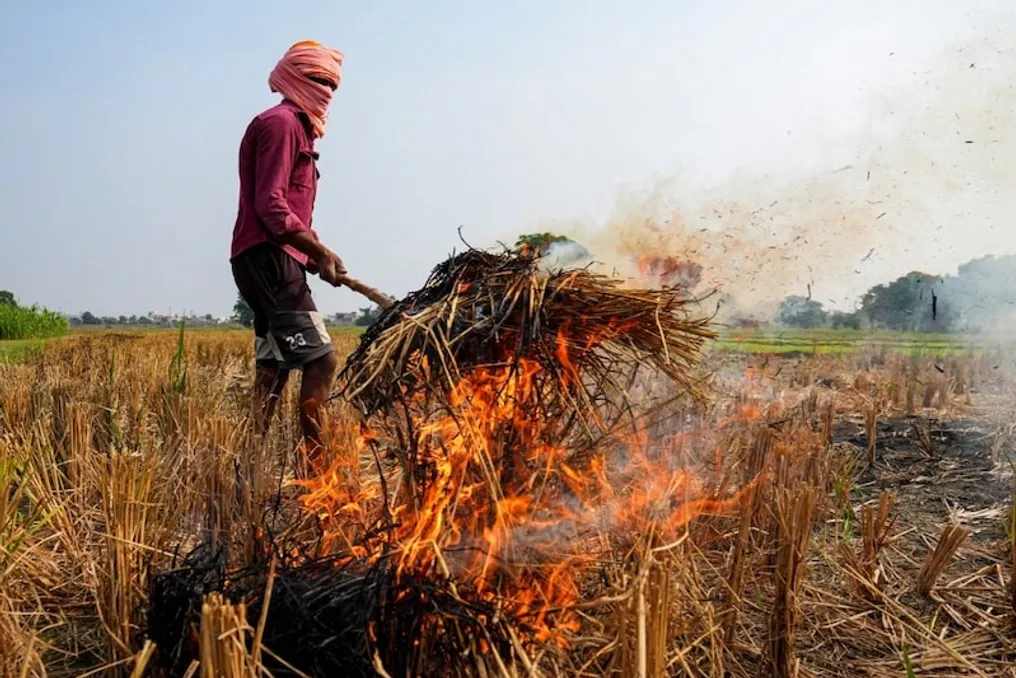
In the state of Punjab, paddy stubble burning cases have nearly doubled over the past week. On October 29, 194 new incidents were registered, bringing the total number of cases in the state to 1007. Of this total, 672 cases are attributed to three districts: Tarn Taran, Amritsar, and Firozpur.
According to official data, fines have been imposed on 349 cases, and 246 criminal cases have been filed. Previously, between September 15 and October 23, 542 paddy stubble burning cases were recorded in Punjab. By October 28, this figure reached 813, and after adding the 194 cases from October 29, the total reached 1007.
The monitoring period began on September 15 and was set two weeks before the start of rice harvesting, which commenced on October 1. The highest number of cases (397) was recorded in Tarn Taran, 171 cases in Amritsar, and 104 cases in Firozpur. Over 90 percent of the rice crops in Tarn Taran and Amritsar have already been harvested.
Fines totaling over 17 lakh rupees have been imposed on 349 paddy stubble burning cases as compensation for environmental damage, of which more than 13 lakh rupees have already been recovered. A total of 246 criminal cases have been filed, with 165 registered in Tarn Taran and 24 in Amritsar. These cases were filed in accordance with Section 223 of the Indian Penal Code, which relates to non-compliance with an order issued by a public official.
Last week, a high-level group led by Rajesh Verma, Chairman of the Air Quality Management Commission for NCR and surrounding areas, held a meeting with Deputy Commissioners and other officials from Amritsar and Tarn Taran. The meeting discussed the strategy for managing stubble and preventing its burning. The group inspected the use of stubble both in and outside the fields, as well as the infrastructure and facilities in the areas. Steps taken in response to the rise in cases in both districts were also reviewed.
The Commission recommended maximizing the use of stubble as fuel in thermal power plants, brick kilns, and industry where possible. Officials were instructed to regularly visit villages and promptly provide farmers with information about facilities and necessary machinery. The Deputy Commissioner of Tarn Taran was tasked with making this a priority and intensifying prevention at the field level.