Europe seeks technological partnership with India, focusing on opportunities rather than just scale
Read more
YourStory [india, en]
yourstory.com

Europe seeks technological partnership with India, focusing on opportunities rather than just scale

In a world where countries are actively investing in their own semiconductor production, artificial intelligence model development, and critical infrastructure, creating everything necessary independently is not always practical or mandatory. The main task is to find a balance between maintaining strategic sovereignty and the need for international cooperation.

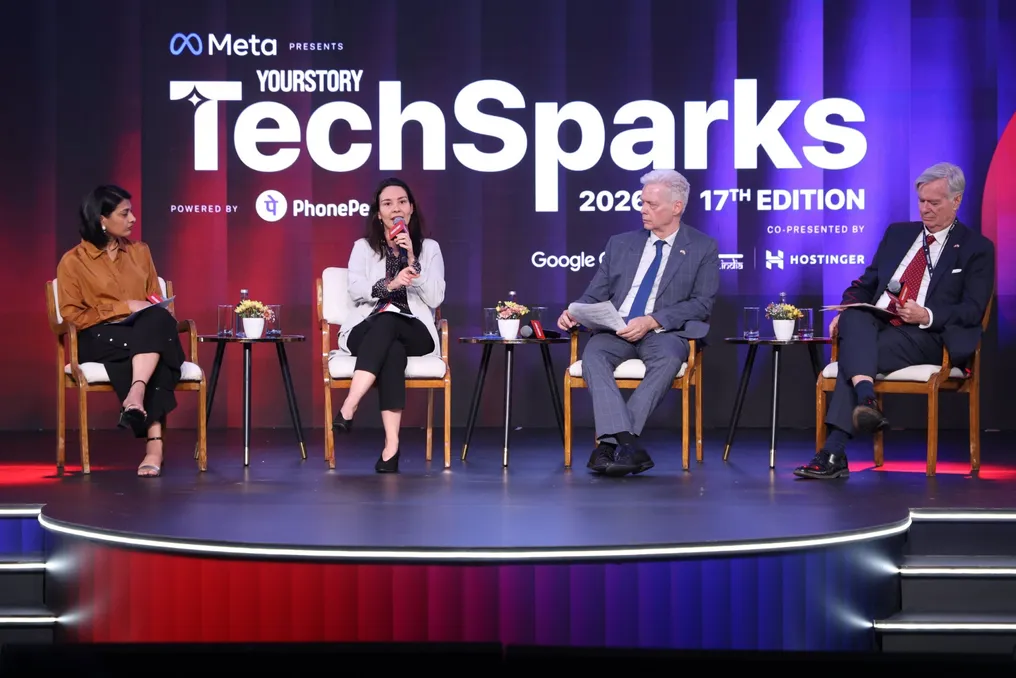
These issues were discussed at a panel titled 'New Technological Alliances: Why Startups Around the World Need India, and Why India Needs the World' during the TechSparks 2026 event, held on October 15 in Bangalore. The discussion focused on how Indian startups can integrate into international technological ecosystems, as well as how global partners can strengthen ties with India.

The panel discussion featured Dr. Angela Honegger, CEO and Consul General of Swissnex India (Switzerland); Jakobus Johannes 'Jaap' Vermeulen, Consul General of the Kingdom of the Netherlands in Bangalore; and Peter Winter-Schmidt from the Consulate General of Denmark in Bangalore. These three representatives spoke about programs that help startups gain access to research, funding, markets, and partnerships both in India and Europe.

Winter-Schmidt emphasized that strategic sovereignty should not be equated with technological independence. He noted that while defense and security require a certain degree of sovereignty, areas such as talent, research, and technical compatibility benefit from international interaction. He cited the European Union's digital wallet as an example, which, he said, is being developed based on the Indian technology stack with support from India.

Vermeulen agreed that states must define critical elements for their own ecosystems while remaining open to partnership, stating: 'I do not believe in isolation' and stressing the importance of finding suitable partners.

Honegger also insisted on the necessity of collaboration, asserting: 'If we want a chance to win, we must cooperate.' She described Swissnex as a science consulate with six global branches, including Bangalore. Swissnex programs cover student and researcher exchange, joint research funding for Swiss-Indian teams, bilateral startup exchanges, and market validation camps. Under the program, companies from each country visit each other to explore opportunities.

As an example of cross-border cooperation, Honegger mentioned the company Suind, which operates in the fields of AI, drones, and agriculture. Founded by a Swiss and Indian entrepreneur, Suind initially opened a subsidiary in Bangalore before relocating its headquarters and subsidiary. Honegger clarified: 'Technically, it is an Indian startup with a Swiss division.'

She called on deep-tech founders in India to consider transferring part of their R&D operations to Switzerland while keeping headquarters and manufacturing in India. She added that Swiss Innovation Parks provide access to research facilities, specialized technology platforms, and government funding for joint R&D with Swiss institutions. The robotics startup CynLr from Bangalore has already opened a subsidiary in one of these parks.

Honegger also highlighted Apertus, an open-source model from Switzerland, as an example of efforts to develop publicly available AI infrastructure and prevent the concentration of control over this technology 'in the hands of a few corporations.'

Vermeulen spoke about the Netherlands' partnership with India in semiconductors, signed several months ago. This agreement covers semiconductor design, photonics, and advanced packaging, alongside manufacturing. He also reported that the Dutch semiconductor equipment manufacturer ASML is expanding its presence in India. Recently, the Dutch consulate brought 17 startups to Semicon India as part of efforts to strengthen technological ties between the two countries.

Vermeulen also mentioned the Brain Bridge program, which connects Dutch and Indian universities with Dutch companies already operating in India. Five Indian medical technology startups were selected for grants to explore opportunities in the Netherlands, and a cybersecurity mission is also planned.

Vermeulen stated: 'We see Bangalore as the Silicon Valley of Asia.' Winter-Schmidt, describing Denmark's approach to working with Indian startups, used the phrase: 'The key word for us is co-development.' He highlighted Denmark's 'Water Challenge,' which invites 10 selected Indian startups to Danish universities to work on AI-based water purification solutions. Afterward, the startups present their ideas to investors, having access to seed funding.

The Green Strategic Partnership Agreement between Denmark and India is also being extended and expanded to include space technologies, deep tech, and defense technologies. Winter-Schmidt mentioned a recent Memorandum of Understanding between DTU and IIT Madras, as well as efforts to unite venture and private investors from both countries through a 'financial bridge.' He also mentioned the Danish Impact Fund, which primarily provides loans for solutions that have a positive impact on the environment.

The three representatives gave practical advice to Indian founders aiming to enter European markets. Winter-Schmidt strongly advised startups to identify a specific market instead of viewing Europe as a monolith. He recommended that founders validate their value proposition before entering the market, dedicate time to building relationships, and be prepared to share their solutions with local partners rather than excessively protecting them.

Honegger called for greater willingness among Indian companies to take risks when working with international startups. She wanted to see a 'greater propensity for risk... to become a co-creator, not just a recipient of innovation.' She explained that Swiss startups often find that discussions with potential Indian partners end after a free pilot project. She argued that companies must be more willing to share the financial and operational risks of developing new technologies. In her view, the solution is to 'share the risk associated with innovation across several shoulders.'

During the Q&A session, an eleven-year-old founder asked how small companies navigate European regulations such as the General Data Protection Regulation (GDPR). The panel advised startups to prepare in advance, carefully select target markets, and seek advice from local partners, consultants, and consulates.

Winter-Schmidt noted that Danish companies traditionally viewed India primarily as a market offering scale. However, in his opinion, this is only part of the possibilities. He concluded: 'You come to India not for scale, you come to India for opportunities.' He also stressed that international partnership should involve learning on both sides, adding: 'We don't have that much to teach India... We can learn as much from them.'
Similar stories

Bengaluru Tech Summit 2026 to Showcase New Technologies, Markets, and Opportunities Beyond AI
Read more
yourstory.com

Bengaluru Tech Summit 2026 to Showcase New Technologies, Markets, and Opportunities Beyond AI

For technology entrepreneurs, the ability to stay ahead requires looking beyond the immediate business environment. New technologies emerge rapidly, industries merge, and opportunities for partnerships, investments, and market expansion are often found at the intersection of various ecosystems.

This makes technological platforms that bring together enterprises, innovators, investors, researchers, and global tech communities particularly valuable. The Bengaluru Tech Summit (BTS) 2026, taking place from November 17 to 19 at the Bangalore International Exhibition Centre, is one such important platform.

The XXIX edition of BTS will gather technology companies, startups, investors, research institutes, and global tech ecosystems from a wide range of sectors. The presence of global tech giants, Indian conglomerates, unicorns, and near-unicorns creates an environment where entrepreneurs can gain a broader understanding of their industry's direction and identify potential business connections.

The international aspect is also highly significant. Tech communities from over 75 countries, including Sweden, Italy, Australia, Poland, the USA, Israel, Spain, Japan, China, Germany, and South Korea, will participate in the exhibition, conferences, and special events.

This opens up opportunities for companies or startups seeking to understand international markets, explore collaboration possibilities, or simply expand their technological network beyond India's borders.

The co-location of Embedded World India, organized by Nuernberg Messe India, highlights embedded technologies at BTS 2026. As embedded systems increasingly form the basis of applications in electronics, automotive, industrial technology, and connected devices, their presence adds another crucial dimension to the technological landscape presented at the summit.

Artificial intelligence and robotics will take center stage at BTS 2026 thanks to the AI and Robotics Pavilion, curated by Bharat fi.AI, showcasing new innovations and advancements shaping the future of these transformative technologies.

For startups and emerging businesses, BTS 2026 offers opportunities far beyond the exhibition hall. Through workshops, masterclasses, mentoring sessions, presentation and product launch opportunities, entrepreneurs can gain practical knowledge, demonstrate their developments, connect with potential investors, and explore new business prospects.

Conclave of the Future

This conclave further brings together founders, investors, and industry leaders, creating a venue for substantive discussions on innovation, funding, and business scaling. All these initiatives aim to help entrepreneurs expand their networks, increase visibility, and build relationships that can accelerate their growth.

The breadth of represented sectors is another reason why the summit stands out. From IT and deep tech, advanced technologies, fintech, healthcare, and biotechnology to electro-semiconductors, cybersecurity, data centers, and Global Capability Centers (GCCs), the summit explores technologies transforming business and creating new avenues for growth. It also extends beyond traditional tech domains, examining emerging opportunities in electric mobility, circular economy, orange economy, and educational technology (edtech), emphasizing how innovation changes industries, opens new markets, and creates opportunities for entrepreneurs.

For companies aiming to identify emerging trends, explore cross-industry opportunities, and understand where the next wave of growth might come from, this diversity makes BTS 2026 a valuable platform for discovery, collaboration, and business development.

The future belongs to entrepreneurs who are ready to dream, innovate, and take the next step. Bengaluru Tech Summit 2026 provides a platform to exchange ideas, gain fresh perspectives, and forge connections that can open new doors. After all, sometimes one conversation, a new point of view, or an unexpected connection can be the start of something extraordinary.

Indian tech boom depends on efficient use of energy and water, in addition to AI infrastructure
Read more
yourstory.com

Indian tech boom depends on efficient use of energy and water, in addition to AI infrastructure

Although India's technological agenda is increasingly defined by artificial intelligence, data centers, and digital infrastructure, a more fundamental issue lies in ensuring the country has sufficient reliable electricity and water to support growing cities and industries.

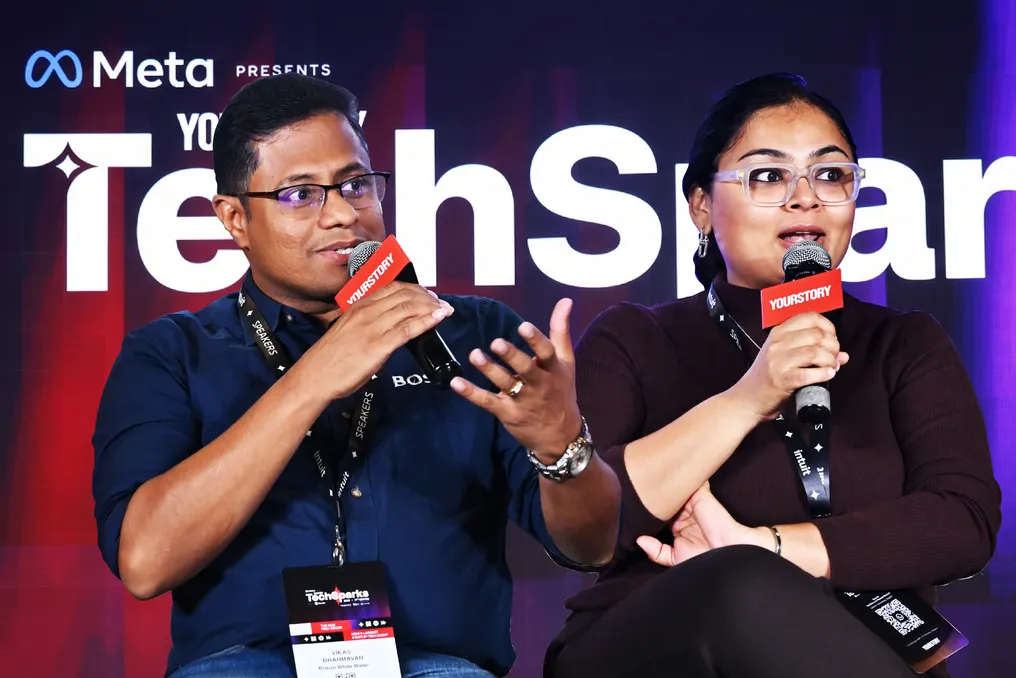
At the TechSparks 2026 conference, during a panel discussion titled 'Invisible Infrastructure: Restoring India's Energy, Water, and Clean Air Systems,' Shreya Mishra, co-founder and CEO of SolarSquare, and Vikas Brahmavar, founder and director of Boson Whitewater, discussed the importance of scaling these solutions, which require more than just technological innovation.

Shreya Mishra, co-founder and CEO of SolarSquare, noted significant changes in the residential solar energy market in India over the past five years. When SolarSquare first entered the market, adoption was limited; consumers had a weak understanding of rooftop solar panels, and initial costs deterred many households. Nevertheless, the company believed that the economics of distributed energy generation and the need for energy security would ultimately drive growth.

Mishra stated that 'distributed solar power, meaning solar panels on every roof, will become the cheapest source of energy.' According to her, it took five years for one lakh (100 thousand) homes in India to switch to residential solar energy when the company started. Today, the country adds many homes every week, and SolarSquare has already powered over 60,000 homes.

However, economic factors alone do not alleviate consumer concerns. Rooftop solar panels require significant upfront payments, and households may worry about equipment reliability, maintenance costs, and whether the system will generate the promised amount of electricity. Therefore, for companies in this sector, building trust is as important as justifying financial viability.

Mishra also views distributed solar energy as a way to reduce the costs associated with long-distance electricity transmission. Although energy can be generated relatively cheaply, transmission and distribution costs can increase the final price for consumers. Her argument is that generating power closer to the point of consumption can help bridge this gap. Currently, SolarSquare serves both individual households and about 500 housing societies.

On the other hand, water presents a different challenge. Vikas Brahmavar, who transitioned from software to working on water reuse, reported that years of effort were required to create the necessary policy environment to support this sector. He explained that 'water, unlike the sun, has a fixed sun that shines,' emphasizing that wastewater treatment must account for changing water quality. The business also needs supportive policies and a viable economy to scale.

This necessity is becoming increasingly acute as cities and industries compete for ever-diminishing freshwater resources. Groundwater extraction remains the primary source of supply, while industrial needs, such as data centers, cooling towers, semiconductor manufacturing, galvanizing, and laundries, require substantial amounts of water. Brahmavar reported that over the past four years, his company has reused about 147 billion liters of water that would otherwise have been lost.

This opportunity is particularly relevant amid the expansion of data centers and the growing demand for water-intensive infrastructure. Reusing treated wastewater for industrial purposes can help reduce the strain on freshwater sources while creating a commercially viable market for recycled water.

However, the water supply economics can be counterintuitive. Brahmavar pointed to the Cauvery supply in Bengaluru, noting that consumers are billed around 7 rupees per kiloliter, while the government spends about 95 rupees per kiloliter to transport water from a distant river to the city. He suggested that this gap illustrates the problem faced by alternative water sources: the solution must compete not only with the availability of fresh water but also with how existing water supply systems are priced and subsidized.

If residential solar energy benefits from growing awareness of consumer savings, recycled water faces an additional hurdle—public perception. Brahmavar recounted how his company spent two and a half years engaging with over 300 housing complexes about the possibility of using recycled water, including for drinking. The response showed that convincing people to accept treated wastewater can be difficult, even if the purification technology is available.

Currently, the company is focused on industrial applications, where recycled water can replace fresh water without requiring consumers to overcome the same psychological barrier associated with consumption. In his view, 'technology is the least of the problems'; the more serious obstacles are commercial viability, public perception, regulatory compliance, and on-the-ground implementation.

Meanwhile, SolarSquare is moving beyond just installing rooftop solar panels. Mishra stated that the company aims to become a full-fledged home energy brand, expanding into batteries, electric vehicle chargers, home energy monitoring, energy optimization, and smart grid integration. The company also uses software for remote monitoring of installations and identifying issues. Mishra noted that monitoring data can help detect voltage fluctuations and recurring power outages, allowing the company to identify potential problems and recommend solutions, such as battery storage, where appropriate. She said such capabilities can improve customer service and reduce the need for physical inspections.

The experiences of SolarSquare and Boson Whitewater demonstrate two different stages of climate infrastructure development. Residential solar energy benefits from growing consumer awareness and a clearer financial proposition, while wastewater reuse is still working to overcome barriers related to pricing, policy, and perception. However, the common challenge for both companies is how to transform a technically viable solution into infrastructure that people and organizations can adopt at scale.

Talent diplomacy could become the next driver of global economic growth
Read more
yourstory.com

Talent diplomacy could become the next driver of global economic growth

Historically, drivers of economic power have always been access to capital, energy, technology, and markets; however, more and more countries are facing a much more complex resource—the ability to generate skilled personnel quickly.

Unlike capital, talent cannot be created instantly; its preparation, training, and workforce development require years. Meanwhile, as global economies need more workers, the number of available people is decreasing.

The situation in the healthcare market is one of the most obvious indicators of this problem. The World Health Organization (WHO) forecasts a shortage of 11.1 million healthcare and care specialists worldwide by 2030. Similar pressure is felt in other sectors, including production logistics, hospitality, construction, and crafts. The workforce in many developed countries is shrinking despite the growing need for essential functions. There is a decline in the number of people willing to perform physically demanding work, creating serious structural gaps that cannot be addressed solely through large-scale migration.

It is important to understand that the skills shortage has ceased to be merely an employment issue; it has become a brake on economic growth. Countries can increase investments in infrastructure, industrial potential, and technological development, but if they lack the people to manage these processes, growth is impossible.

Demographic decline is prompting governments to rethink future development paths. By 2050, more than a third of the European Union's population will be over 65, and countries like Japan and Germany are already experiencing acute shortages of qualified personnel in healthcare and care.

The response from these countries goes beyond simple immigration policy reform. Germany's Skilled Immigration Act, Japan's increased opportunities for foreign workers, and the EU's Talent Partnerships are part of a broader shift: policies are beginning to view 'talent as a strategic asset.'

These agreements are increasingly focused not only on visas but also on workforce training, qualification recognition, and worker mobility. Where countries once competed for access to markets, energy resources, and supply chains, they are now forming partnerships to ensure access to skilled professionals.

This could be one of the most significant changes in economic diplomacy in the coming decade. India's potential should be viewed not as labor export, but as becoming a reliable global workforce readiness hub. At the same time, India's domestic healthcare needs must remain central to this approach, and responsible mobility should contribute to developing additional training bases rather than indefinitely draining resources from already strained areas.

Positive shifts are already visible in policy. India plans to establish 30 International Skill India centers focused on preparing people for overseas work, and the NSDC has certified over 22,455 candidates for international mobility in the last three years. The 'International Mobility Framework 2026,' released by NITI Aayog, also points to a change in mindset, calling for greater state participation in global labor mobility. Collectively, this indicates a broader shift where labor mobility becomes a national asset, helping to create stronger economic partnerships, talent corridors, and making India a reliable partner for the global workforce.

In contrast to taking on the role of educators, artificial intelligence technologies can assist with individualized learning, language training, workplace simulations, and competency assessment. Technology can minimize information discrepancies that traditionally complicated international recruitment. Employers demand guarantees of authenticity in credentials and experience, while applicants need assurance regarding the legitimacy, cost, and working conditions of the offer.

This is becoming an increasingly important competitive advantage. ASEAN is striving for digital recognition of qualifications and credentials to ensure smoother cross-border mobility. For India, the opportunity lies in making workforce readiness portable, verifiable, and trustworthy. Technology can become the infrastructure allowing Indian specialists to prove their preparedness in different markets, lowering barriers for both employers and host countries.

Although India's demographic weight is not the only factor among the growing group of developing countries that have invested years in creating structured talent corridors with host countries, global experience shows that over 8,000 nurses from Germany's Triple Win program, established through intergovernmental recruitment and training systems, as well as Japan's long-standing health corridors with Indonesia, the Philippines, and Vietnam, cover language training, certification, and management.

Thus, the real competition is not for vacancies, but for trust. The labor shortage as a strategic problem of aging economies generates a diplomacy where workforce readiness determines which nations will become indispensable partners in supporting global growth.

Popular