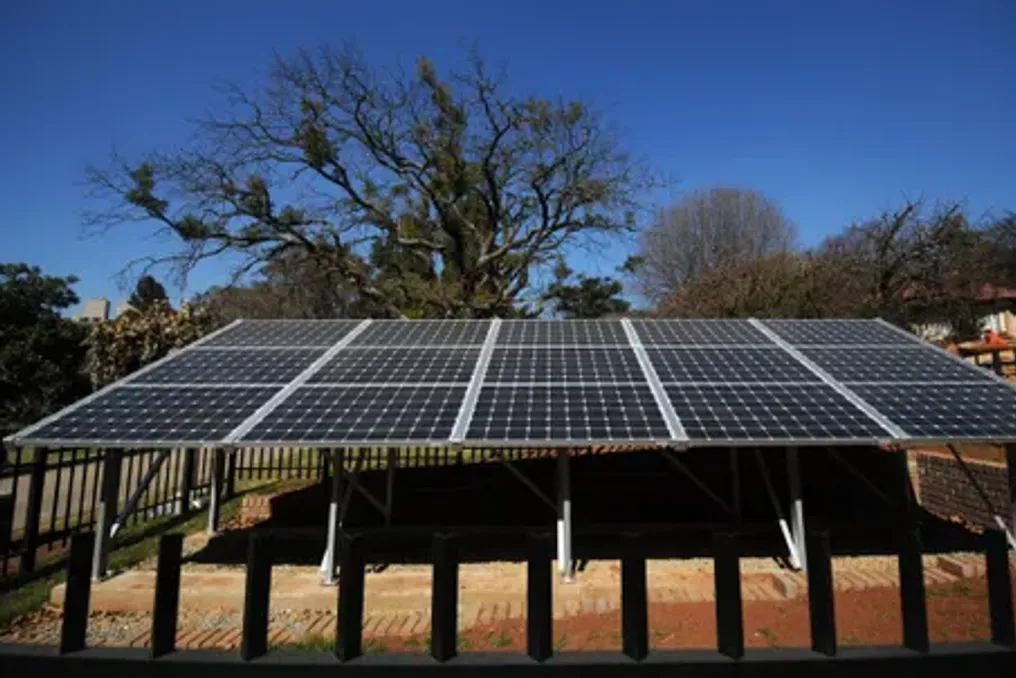
A solar system installer issued a warning to homeowners, noting that fifty-six companies installing solar panels closed down in South Africa this year. He emphasized that customers who choose inexpensive contractors risk ending up with systems that endanger their homes and families.
Marius Rudolph, who installs solar systems for private homes and small businesses in the eastern part of Johannesburg, told a podcast that the industry is flooded with inexperienced people calling themselves specialists. Rudolph noted that this leads to customer dissatisfaction because they have been misled.
His warning came four weeks before the National Energy Regulator of South Africa (NERSA) was set to decide on November 26 whether to potentially increase Eskom's tariffs by 8.83% starting in April. This followed public groups in Durban holding a picket outside Eskom offices in Westville, demanding the rejection of the increase.
Rudolph, founder of Your Solar SA, told the Nabob Media podcast that experienced installers are regularly called in to fix problems in systems installed by other firms. When reviewing competitors' quotes where prices were excluded, he found that in nine out of ten cases, substandard equipment was used. These deficiencies include fewer surge protection devices, inadequate lightning protection, non-compliant grounding, and cables thinner than allowed by national standards.
Rudolph warned that any lithium product poses a fire hazard, and low-quality products are strongly discouraged as they jeopardize property, labor, and human life. Although manufacturers have implemented fire suppression systems in batteries to mitigate this risk, lightning remains one of the most serious threats to any solar installation, especially on elevated areas.
He also mentioned that many installers simply drove a grounding rod into the ground and declared the job complete without conducting a check to ensure the grounding met standards. One farm owner disconnected from Eskom eventually spent another R80,000 on grounding equipment to bring his system into compliance.
Furthermore, some companies attracted clients with promises that no deposit was required, but then increased the initial estimate by R100,000 to R150,000 after visiting the site, citing omitted items. Rudolph also pointed out illegal practices where some installers did not charge VAT to their clients; such businesses could be shut down by tax authorities, leaving clients without service.
Rudolph advised: 'People will come to you with an offer that seems too good to be true. Do you know why? Because it is too good to be true.' He added that it is easy to install a 'wall box,' but no one will replace it if it falls. He reported hearing about ten installers over the last six months who emigrated to Australia and became unavailable to their clients.
Rudolph himself became an installer after starting to buy solar panels more than 11 years ago. One company offered to install 19 panels on his roof, but when he asked why not install 12 larger panels, the seller replied that it would generate less money. Rudolph also cautioned against lease-to-own schemes, noting that his team dismantled 26 such systems in the last two months. Clients under these agreements typically paid between R3,500 and R4,000 per month for an 8kW system, and the payment rose to approximately R7,000 if they wished to upgrade to 10kW. He stressed that such contracts restrict the client's freedom by tying them to the system.
Interest rates for lease-to-own schemes reached 17–18%, whereas a bank could offer a personal loan at 10–12%, so Rudolph recommended that homeowners secure financing through their own bank. In conclusion, Rudolph advised the podcast host Zarif Minti never to accept an estimate until a site assessment has been conducted and the installer has explained the principle of how the panels, inverter, and batteries work together. He strongly recommended always starting with a proper site assessment and then conducting due diligence after receiving the quote.