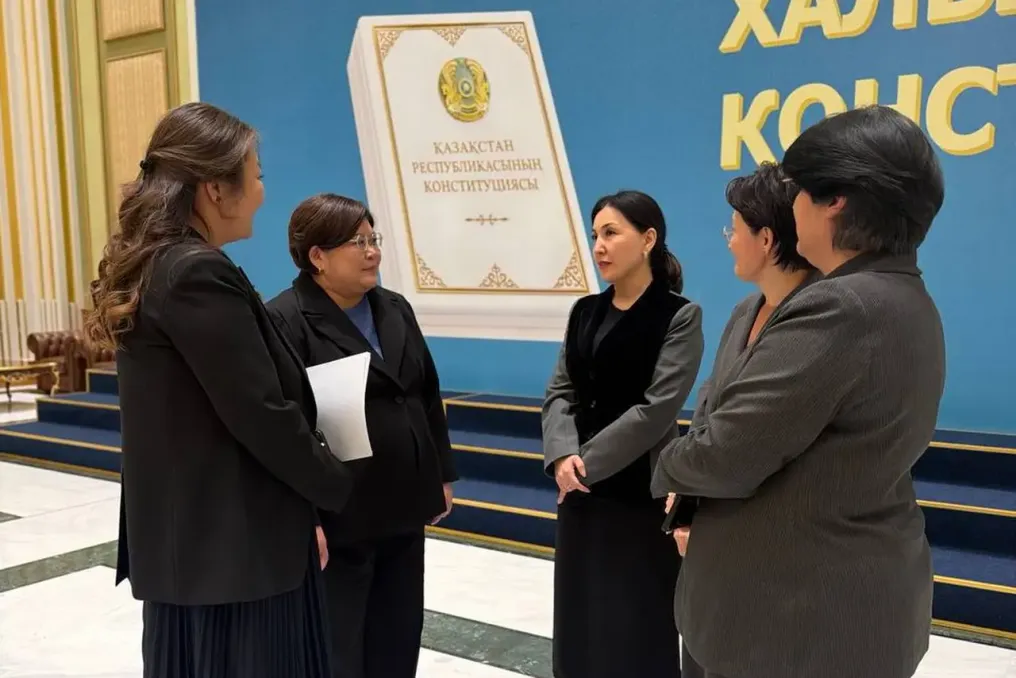
Representatives of Central Asian Ombudsmen Discuss Child Rights Protection in Kazakhstan
Read more
UzDaily
uzdaily.uz

Representatives of Central Asian Ombudsmen Discuss Child Rights Protection in Kazakhstan

As part of the second international forum of Central Asian ombudsmen in Astana, participants examined Kazakhstan's experience in protecting children's rights, supporting families, and strengthening constitutional guarantees for minors.

The forum, titled 'Voice of Children: National Strategies and Safe Digital Environment,' served as a platform for sharing experiences between countries in the region and discussing practical methods for ensuring child protection.

Excursions and Programs

During the second day of the forum, delegations visited Secondary School No. 101 in Astana. This school implements educational and developmental activities in accordance with Kazakhstan's national program 'Adal Azamat.' This program aims to foster honesty, responsibility, patriotism, and respect for the law among students through modern digital educational methods.

According to the information presented, a similar model is being implemented in 217 schools across Kazakhstan. School No. 101 has also introduced digital solutions designed to combat bullying, provide psychological assistance to students, and prevent suicides.

Participants were introduced to the work of Kazakhstan's 24-hour state contact center, named '111.' This system allows children to request help via QR codes placed in educational institutions. Children can contact specialists by phone or through written messages; the system is designed to promptly identify children's problems and needs and ensure their access to appropriate support.

The program also included visits to the 'Januya' Family Support Center and the Department for Child Protection. These institutions assist families by providing social, psychological, and legal support.

Discussion of Constitutional Aspects

On October 28, 2026, forum participants met with Elvira Azimova, Chairman of the Constitutional Court of Kazakhstan. Azimova presented information on the constitutional reforms conducted in Kazakhstan, their significance for the state and society, as well as new constitutional provisions aimed at ensuring the rights and freedoms of children.

Special attention was paid to cases concerning the interests of children reviewed by the Constitutional Court of Kazakhstan, as well as the content of the judicial decisions issued in these cases. Participants also exchanged views on the experience of Central Asian countries in the field of constitutional justice, including approaches to protecting children's rights through constitutional mechanisms.

The practical part of the forum focused on sharing experiences between countries in the region and strengthening international cooperation on child protection issues. The visits and discussions allowed participants to examine Kazakhstan's institutional and digital approaches to supporting children and families, as well as the legal mechanisms for protecting the rights of minors.
Similar stories

Support System for Children with Disabilities in Beijing: From Early Diagnosis to Inclusive Education
Read more
podrobno.uz

Support System for Children with Disabilities in Beijing: From Early Diagnosis to Inclusive Education

A comprehensive support system for children with developmental disorders operates in Beijing. This system covers the full spectrum of a child's needs—from before birth and early diagnosis to rehabilitation, financial assistance, and provision of inclusive education.

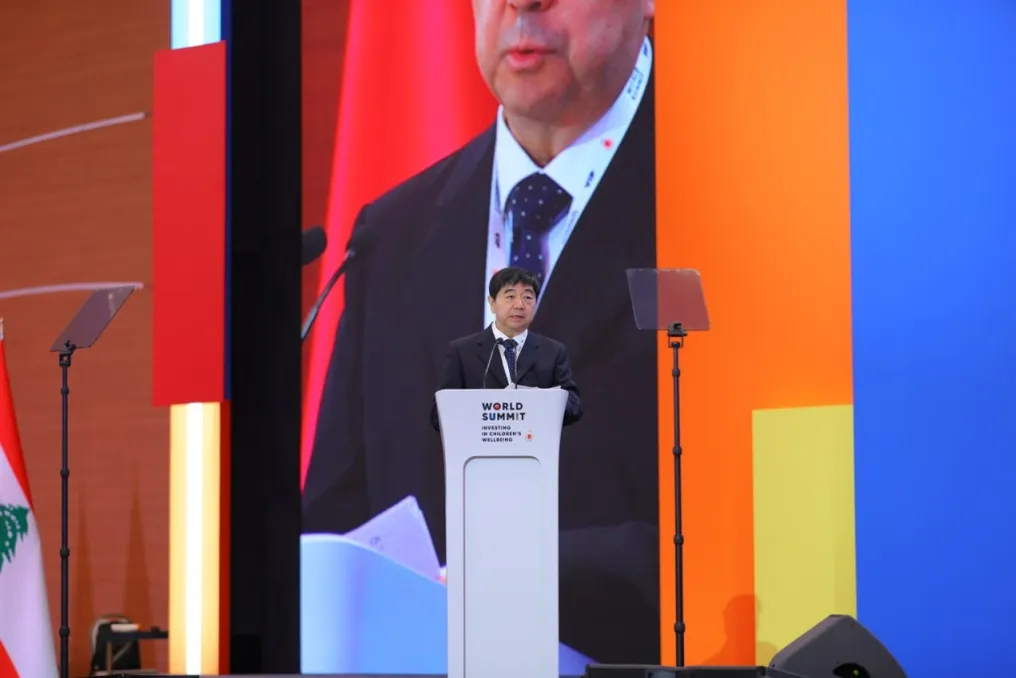
A correspondent from Podrobno.uz received detailed information about the mechanisms of this system during the World Summit on 'Investing in Child Well-being,' held in Samarkand. The speaker at the summit was Li Yan, Chairman of the Beijing Municipal Federation of Disabled Persons of the PRC.

From Examinations to Early Diagnosis

Li Yan emphasized that prevention and rehabilitation in Beijing are viewed as integral parts of a unified approach to assisting a child throughout their life. This system includes measures conducted even before birth, as well as newborn examinations and screening of preschool children. If potential deviations are identified, the child is referred for in-depth diagnosis.

Prenatal screening is carried out in the city, and newborns receive free testing for twelve types of congenital metabolic disorders. According to data presented by Li Yan, coverage of prenatal screening reaches 98.24%, and genetic screening for hereditary metabolic diseases, hearing problems, and deafness covers over 99.6%.

For children aged from birth to six years, screening is organized across five main areas: vision assessment, hearing assessment, motor skills, level of intellectual development, and detection of autism signs. Li Yan also reported that 99.39% of children under seven years old utilize medical services.

Timely detection of disorders allows the child to be promptly directed for additional examination and to determine the specific type of medical care or rehabilitation required.

Rehabilitation and Financial Support

A dedicated block of the system is devoted to providing assistance to children who have already been diagnosed with a disability. According to Li Yan, the age limit for children to receive rehabilitative support in Beijing has been extended to 17 years inclusive. Children with disabilities are entitled to annual financial assistance of up to 36,000 yuan for rehabilitation purposes.

Furthermore, various types of subsidies are provided, including support for living and care, as well as basic social assistance for families that meet established criteria. City authorities are actively working to expand the network of institutions providing medical and rehabilitative care; according to Li Yan, 207 such centers operate in Beijing.

Another important aspect is ensuring children have access to technical rehabilitation aids. Li Yan noted that the city has a complete subsidy system for essential assistive devices for children with disabilities until they reach the age of 17. Among advanced technologies, he highlighted cochlear implants and bionic eyes. The installation of bilateral cochlear implants for children under seven years old is fully funded.

Support Extends Beyond Medicine

The support system in Beijing goes beyond just medical care and rehabilitation, as the infrastructure for special and inclusive education is actively developing. Li Yan stated that a multi-level resource support network has been created for this purpose, covering city, district, educational circuit, and school levels.

Authorities also assist in educating children with disabilities in regular educational institutions and implement a specialized support program for children with autism. Thus, the entire assistance system in Beijing covers the full cycle: from preventive measures and early problem detection to rehabilitation, provision of technical aids, and ensuring access to education.

Speaking in Samarkand, Li Yan also expressed interest in exchanging experiences with other countries in the fields of early screening, disability prevention, and organization of rehabilitation services. It should be noted that the World Bank had previously announced plans for a $100 million program to reform primary healthcare in the Samarkand region, aimed at improving conditions in family clinics, enhancing medical staff qualifications, and digitizing healthcare.

Private schools and universities in Uzbekistan may introduce prevention inspector positions
Read more
podrobno.uz

Private schools and universities in Uzbekistan may introduce prevention inspector positions

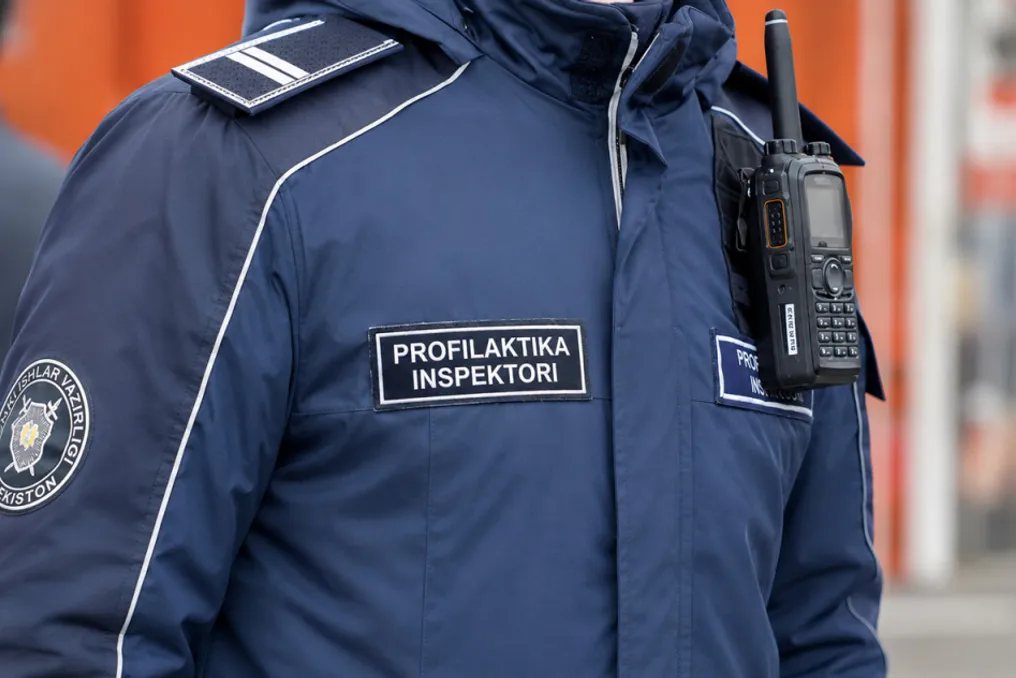
The possibility of establishing prevention inspectors in private educational institutions in Uzbekistan is being considered. The main goal of these specialists' work is to prevent various offenses, combat bullying, drug use, as well as counter extremist ideas and provide support to children from difficult families.

A draft resolution on the matter has been published for public discussion and will be reviewed until November 3rd. According to the submitted document, private educational institutions will have the opportunity to independently introduce new positions using their own financial resources.

It is planned that senior prevention inspectors and specialists in women's issues will be appointed in higher education institutions, while schools and colleges will have positions for psychologist inspectors dealing with minors' affairs.

The appointment process will be carried out by signing an agreement between the educational institution and the local unit of the Ministry of Internal Affairs. After signing this agreement, the Minister of Internal Affairs will issue a corresponding order, and territorial bodies will ensure the staffing of the position within one month.

Key tasks and interaction

The key mission of these employees is to prevent acts of violence, offenses, bullying, drug use, and the spread of extremist views. They will interact with the administration of educational institutions, teachers, psychologists, parents, and mahalla representatives.

Special attention will be paid to students who regularly miss classes, exhibit aggressive behavior, or are influenced by destructive ideas. In schools, preventive events named "Davomat," "Ukuvchi," "Usmir," and "Tungi tekshiruv" are planned, which aim to monitor attendance, detect absent students, and identify minors staying overnight in facilities without adult supervision.

Inspectors will also cooperate with psychologists, organize conversations and training sessions, contributing to improving relationships among students. They must help identify children experiencing stress or depression to prevent suicides. If cases of violence are discovered, inspectors are obliged to report it immediately and ensure the child's protection.

Measures in higher education

In the field of higher education, the project provides for strengthening legal enlightenment, as well as developing sports infrastructure, clubs, and cultural programs. Annually, from September 10th to October 10th, a 'Student Safety Month' will be held. During this event, attendance will be checked, access for unauthorized persons to buildings and dormitories will be restricted, and students needing support will be identified.

In addition, campaigns named "Tig" and "Oriat" will be implemented in universities to ensure safety, prevent the introduction of prohibited items and substances, and combat crimes against life and health. Final regulations will be approved after the completion of the public discussion period.

It should be noted that a proposal was previously put forward in Uzbekistan to create an honorary title for prevention officers to recognize their significant contribution to maintaining public safety.

Popular