The first environmental festival, EcoAtomFest, took place in Tashkent, Uzbekistan, on October 24. The event was organized at the Tashkent branch of the National Research Nuclear University MEPhI and gathered participants from Uzbekistan, Kazakhstan, Tajikistan, Kyrgyzstan, and Russia.
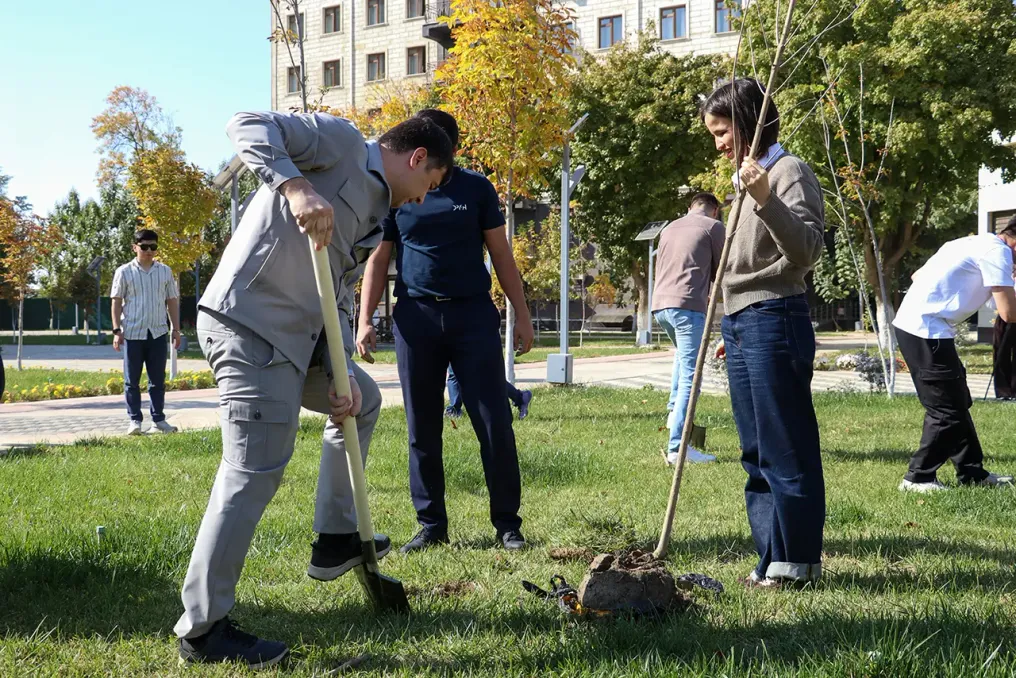
The festival, which concluded the Summer School and Environmental Camp of the Impact Team, combined educational sessions on sustainable development with practical environmental activities. The central event was a joint tree-planting action involving delegates from all five countries.
With support from the Russian state atomic corporation Rosatom and the Uzbek agency Uzatom, 50 apple trees were planted during the event. The program also included environmental seminars and presentations on grant support opportunities for socially beneficial projects.
Activities and Environmental Initiatives
Before planting began, volunteers instructed participants and divided them into groups. Under their guidance, the groups planted 50 apple trees in designated areas. This initiative aligns with Uzbekistan's environmental priorities, including the national project 'Yashil Makon,' launched by President Shavkat Mirziyoyev in 2021.
According to organizers, Uzbekistan aims to increase the share of green spaces from the current 14.2% to 30% by 2030. The practical part of the festival covered topics such as urban ecosystems, plant care, and forming environmentally responsible daily habits.
During the festival, representatives of Oltin Qanot Volontyorlari conducted a master class on growing microgreens, while Pavel Volkov, head of the non-profit organization Indigo, spoke about methods for caring for seedlings and mature trees. Margarita Davydova, an activist from the birds.uz community and bird enthusiast, introduced participants to urban wildlife and the basics of birdwatching.
Environmental expert Mohinurkhon Ergash and the Association of Volunteers of Uzbekistan urged participants to discuss environmental problems in different regions of the country and develop ideas for their solutions. Jamshid Khakimov, chairman of the non-profit organization ECOLAND, delivered an introductory lecture on ecology.
Attendees also participated in creating eco-themed crafts and designing energy-efficient housing. Another block of the program was dedicated to opportunities for receiving financial assistance for environmental protection and public initiatives.
Grant Support and Cultural Program
Organizers presented the international Rosatom grant competition, available to relevant organizations from Uzbekistan and other participating countries. The competition supports projects related to environmental protection, raising ecological awareness, education, volunteering, assisting vulnerable groups, urban development, and other socially significant actions. Applicants can submit both new initiatives and individual stages of existing programs. Successful candidates will receive funding, as well as consulting and organizational support from experts.
The festival also featured cultural performances by young participants from various parts of Uzbekistan. The cultural program began with performances by students of Specialized General Education School No. 11 in Syrdarya region, who performed music on the dombra and danced. Aziz and Akmal Anvarov from Tashkent region presented the Andzhyan polka, and Divas Dance Studio showcased the traditional Korean dance Sarang-Mu.
Conclusion and Calls to Action
At the end of the festival, organizers noted the contribution of environmental activists to Uzbekistan's environmental protection initiatives and thanked representatives of public and volunteer organizations for their educational work. Alexandra Khidirnazarova, Head of the Department of Industrial Safety, Labor Protection, and Environmental Protection of the NPP Construction Directorate, emphasized the importance of engaging youth in practical environmental activities.
She stated: 'Environmental protection and safety culture begin with taking responsibility for our actions. That is why it is so important to involve young people not only in discussing environmental issues but also in practical work.'
Diana Gamazova, member and mentor of the International Council of Youth Consultants Impact Team 2050 and head of the 'Nuclear Energy for Central Asia' project, noted that the international program helped participants understand the interconnection between technology, the environment, and quality of life. She added that the program also fostered teamwork skills and collaborative problem-solving regarding environmental issues.
Alexey Dremuchev, CEO of Rosatom Central Asia, noted that EcoAtomFest was conceived as a platform to unite youth, volunteers, and experts to solve practical environmental challenges. He expressed hope that the festival would become a starting point for new partnerships and long-term environmental protection projects.