South African drivers reminded to renew 2.2 million license discs before holidays
Read more
IOL
iol.co.za

South African drivers reminded to renew 2.2 million license discs before holidays

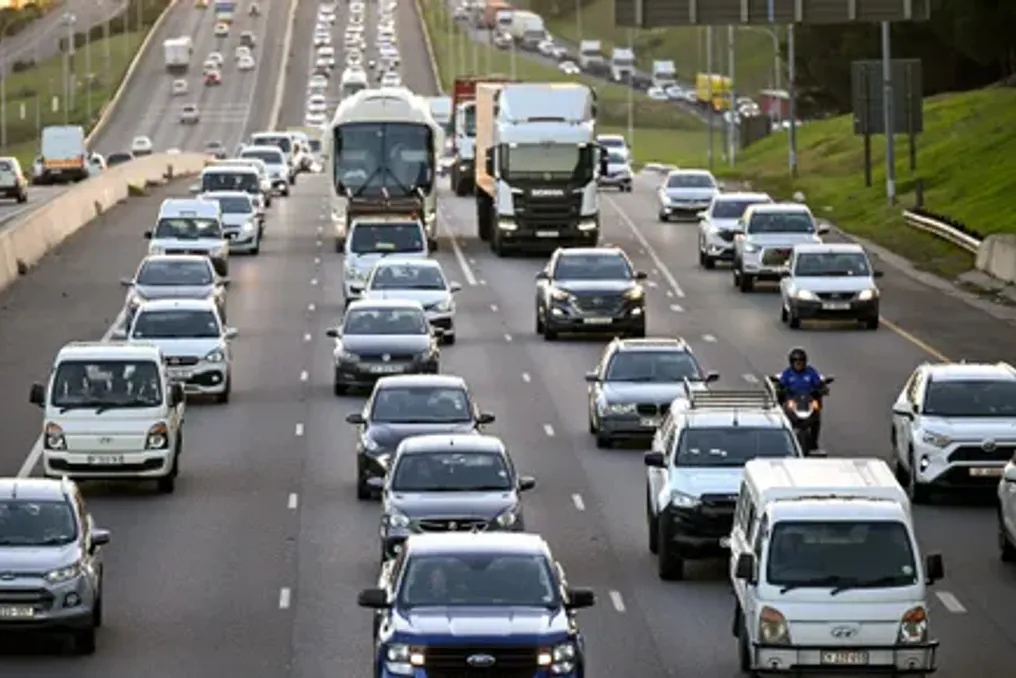
Drivers across South Africa are strongly urged to renew their vehicle license discs in time ahead of the holiday season, as over 2.2 million such discs expire in November and December.

The Road Traffic Management Corporation (RTMC) reported that the largest number of discs requiring renewal is in Gauteng, followed by the Western Cape and KwaZulu-Natal.

The corporation has called on drivers to renew their permits promptly to avoid delays and ensure the legality of their vehicles during busy holiday travel periods.

RTMC emphasized: 'Given the expected significant increase in traffic flow during the holiday season, drivers are advised to renew their license discs and driver's licenses before expiry to avoid unnecessary delays and ensure compliance with road traffic legislation.'

It was specified that 2,248,795 license discs expire within two months, with Gauteng accounting for the largest share—851,687 discs, followed by the Western Cape with 374,761 discs and KwaZulu-Natal with 327,014.

RTMC informs that drivers can use the NaTIS online platform to renew discs and have them delivered to home or work.

Furthermore, drivers are recommended to utilize the extended operating hours of RTMC's Driver Licensing Testing Centres (DLTC), which operate seven days a week, from Sunday to Monday, from 07:00 to 21:00. The corporation added that these extended hours provide drivers with additional opportunities to update their driver's licenses before the start of the busy holiday period.

The corporation also strongly advises drivers to ensure their vehicles are in good working order before traveling, paying special attention to tires, brakes, headlights, and wipers. Drivers are recommended to get adequate rest before long journeys, take regular breaks, and avoid driving while fatigued.

Similar stories

Over 2.2 million driver's license discs expire before the holiday season in South Africa
Read more
getaway.co.za

Over 2.2 million driver's license discs expire before the holiday season in South Africa

More than two million driver's license discs are set to expire in November and December, prompting the Road Traffic Management Corporation (RTMC) to strongly recommend that drivers prepare for a safer holiday travel period.

In November and December 2026, over 2,248,795 driver's licenses will expire in South Africa. This situation compels the RTMC to urge motorists to renew their documents in time and ensure their vehicles are in proper condition before the busy holiday season begins.

The warning came amid expectations of a significant increase in traffic flow during the vacation period. The RTMC calls on drivers to ensure their vehicles are in good working order, that their driver's licenses and vehicle documents are valid, and that they are physically fit for long journeys.

The Gauteng region accounts for the largest share, requiring the renewal of 851,687 licenses. The second largest region is the Western Cape, with 374,761 licenses, and the third is KwaZulu-Natal, with 327,014 licenses. These figures, published by the RTMC, demonstrate the scale of administrative work awaiting motorists and licensing services before the start of the holiday travel period.

Drivers have been advised to renew licenses online if possible and to arrange for document delivery to home or work. Timely renewal will help avoid the need to leave important documents until the last weeks of the year, when licensing services may face increased demand.

The RTMC also announced an extension of operating hours at its Driver Testing Centre. The centre operates seven days a week from 7 am to 9 pm, providing drivers with additional opportunities to renew their licenses before the holiday travel season fully kicks off.

The Corporation emphasized that keeping transport and driver documents current is only part of preparing for a trip. The RTMC stressed that administrative compliance must be accompanied by basic safety checks and responsible driving.

The Corporation strongly recommends that drivers inspect and service their vehicles before embarking on long trips. Special attention should be paid to tires, brakes, headlights, wipers, and other vital safety components. These checks are particularly important when traveling in wet weather, as rainfall is expected in various parts of the country during the holiday season, and drivers are advised to exercise extra caution when driving on wet roads.

Drivers must ensure that tires provide sufficient grip, wipers function correctly, and all lighting equipment is in good condition. These simple checks contribute to improved visibility, braking, and vehicle control in challenging conditions.

The RTMC also appealed to heavy goods vehicle drivers to undergo the necessary medical examinations before long journeys. The purpose of this requirement is to guarantee that drivers are medically fit to drive and capable of handling the demands of prolonged travel.

Drivers were reminded of the necessity of adequate rest, avoiding driving while fatigued, and taking regular breaks during long routes. Transport operators are also responsible for ensuring their drivers are fit for duty and that vehicles are in safe condition before dispatch.

Fatigue can negatively affect concentration, judgment, and reaction time. Planning stops before a trip is a practical way to prevent continuing to drive when the driver is no longer able to operate the vehicle safely.

The RTMC stated that road safety begins even before the journey starts. Proper planning, responsible driving, and regular maintenance are essential to reduce accidents, injuries, and fatalities during the holiday season.

Motorists were reminded to adhere to speed limits, maintain a safe distance, and never drive under the influence of alcohol. Every passenger in the vehicle must wear a seatbelt throughout the trip.

The RTMC concluded that 'Road safety starts before the trip: proper planning, responsible driving behavior, and regular maintenance are integral conditions for reducing road traffic accidents, injuries, and deaths in the upcoming holiday season.'

Given the approaching expiration of over two million driver's licenses, renewing documentation is an immediate step motorists can take before traveling. Checking the vehicle's technical condition and ensuring drivers are rested and fit to drive are equally important aspects of preparing for safer roads.

The RTMC's message is addressed to motorists, heavy goods vehicle drivers, and transport operators: holiday journeys must begin with valid documents, a properly maintained vehicle, and a driver ready for travel.

Toyota Corolla celebrates 60 years, highlighting its six historic sports versions
Read more
flatout.com.br

Toyota Corolla celebrates 60 years, highlighting its six historic sports versions

In 2026, the Toyota Corolla will complete six decades of existence. Although often associated with the stereotype of a conservative vehicle, nicknamed 'Vovorolla' and seen as a safe and reliable option, the Corolla has a rich history of sports versions that challenge this reputation.

Launched in Japan in November 1966, the Corolla took less than ten years to achieve global annual sales leadership in 1974. In 1997, it surpassed the Volkswagen Beetle, becoming the best-selling car of all time, accumulating over 57 million units across its 12 generations.

However, behind the image of predictability and tranquility, Toyota has always offered notable sports editions. These versions, often overlooked by enthusiasts, demonstrate that the Corolla has always had the potential to be a performance-oriented car, starting from the 1960s.

Corolla Sprinter (E10 – 1968)

In the context of the peak of the Japanese economic miracle in 1966, the Corolla emerged focused on excellence, thanks to engineer Tatsuo Hasegawa, the project chief. Its design philosophy was based on an 'over 80 points' evaluation system, aiming for an overall balance above 90 in all aspects of the vehicle.

The initial launch in 1966 presented the model as a sedan and wagon, but it already included sporty touches, such as the 1.1-liter K engine, a four-speed floor shifter, and dashboard details. The suspension, while not revolutionary, was well-tuned, providing a pleasant ride.

A year and a half after the sedan, in May 1968, the Corolla Sprinter (E10 generation / KE15 chassis code) was introduced, a fastback coupe variant with smooth lines and a younger interior. The top-spec version, the Sprinter SL, used the K-B engine, fed by two carburetors, boosting power to 73 hp at 6,600 rpm. This rear-wheel-drive coupe, weighing about 730 kg, was extremely competitive for the time, costing only 30,000 yen more than the sedan.

This first Sprinter was not just a commercial success; it established the starting point for the line's sports division, proving to Toyota management the demand for a daily driver with weekend entertainment capability.

Corolla Levin TE27/Trueno (E20 – 1972)

The second generation of the Corolla (E20), launched in 1970, capitalized on the growth of the Japanese market and incorporated Toyota's Kaizen philosophy, adding comfort, a 45-liter tank, and luxury items like air conditioning and AM/FM radio.

The significant shift for enthusiasts occurred in March 1972, with the birth of the Corolla Levin (meaning 'lightning') and its twin, the Sprinter Trueno ('thunder'), both homologated as street sports cars for tracks and rallies. The TE27 chassis code featured a fastback coupe with a more aggressive stance, characterized by riveted black fender flares.

The technical differentiator lay in the mechanics: the Levin inherited the 2T-G engine from the Celica 1600GT, a 1.6-liter four-cylinder with an iron block and aluminum head with dual overhead camshafts (DOHC), developed in collaboration with Yamaha. Fueled by two dual Solex/Mikuni carburetors, the 2T-G generated 115 hp at 6,400 rpm. For a car weighing only 855 kg, this resulted in an excellent power-to-weight ratio for the early 1970s.

The engineering focused on the purist aspect, offering more direct steering and firm suspension. Furthermore, in the Twin Cam versions, Toyota eliminated power steering, requiring the driver to control braking purely with their foot, which was marketed as a sporty attribute. This setup allowed the Levin TE27 to win rally competitions, such as the Lake 1000 Rally in 1975, driven by Hannu Mikkola.

Due to high demand, Toyota launched the 'Levin J' (Junior) in 1973, an entry-level version with the 2T-B engine with in-block camshafts and 105 hp, making the line more accessible. With production limited to about 5,000 units annually, the TE27 solidified the Levin's legacy.

Corolla Levin/Sprinter Trueno AE86 (E80 – 1983)

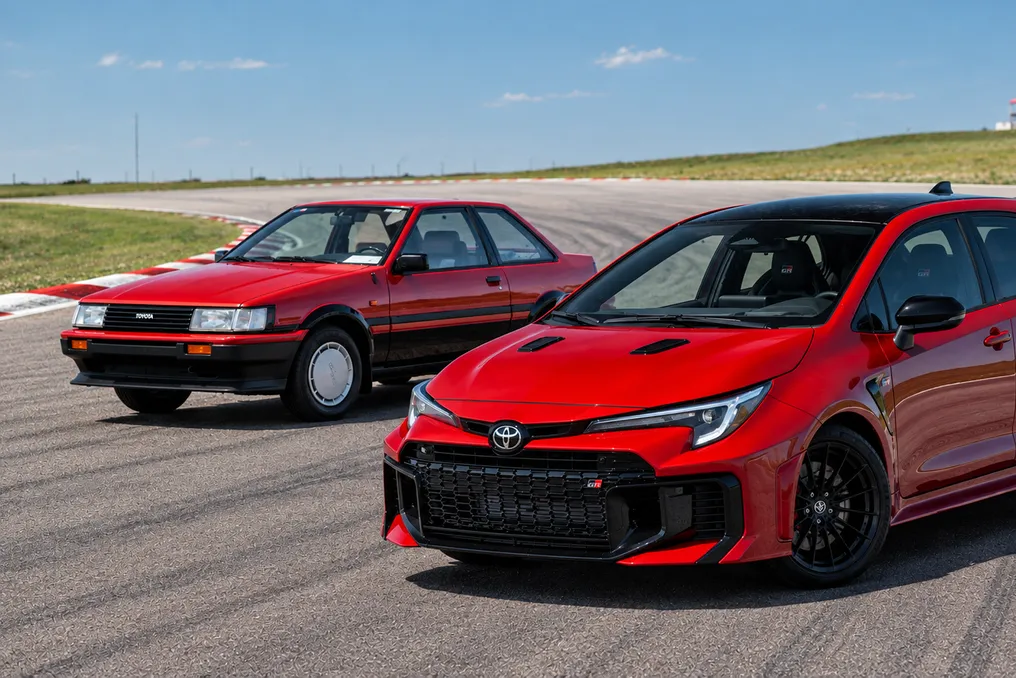
We arrive at the iconic AE86. In the fifth generation, in 1983, Toyota changed the family line to front-wheel drive with a transverse engine to gain space and efficiency. However, the manufacturer exclusively maintained the rear-wheel-drive platform with a longitudinal engine for the two-door coupe and liftback variants, creating the Corolla Levin (with fixed headlights) and the Sprinter Trueno (with pop-up headlights).

Under the AE86 chassis code, the pinnacle of light and cheap rear-wheel-drive sports cars of that era was created. Its heart was the legendary 4A-GE 1.6 16V engine, a DOHC four-cylinder with an iron block and aluminum head, also developed with Yamaha. Equipped with electronic fuel injection and the T-VIS variable intake system, it produced 130 hp at 6,600 rpm in Japanese specifications.

Although modest today, for a car weighing only 920 kg with a near 50:50 weight distribution and four-wheel disc brakes, this power was more than sufficient. The 4A-GE proved to be a revered blank canvas in tuning, accepting extreme modifications, from aggressive camshafts to turbo setups, with tuners like TRD, Tomei, and HKS exceeding 200 hp naturally aspirated and surpassing 300 hp when turbocharged.

On the tracks, the AE86 dominated global touring championships, such as the Japanese JTCC and the British BSCC, thanks to its agility. However, its immortality came on mountain roads, the famous touge. Driven by Keiichi Tsuchiya, known as the eternal Drift King, the Hachi-Roku became a symbol of controlled drifting culture and the protagonist of the manga and anime Initial D.

The AE86 became a legend not for being the fastest in a straight line, but for the ideal combination of low weight, rear-wheel drive, and a high-revving engine. It marked the peak of rear-wheel drive at Toyota, but this does not diminish subsequent Corolla sports cars; it merely differentiates them.

Study projects electric motorcycles could surpass combustion engines in ten years in Brazil
Read more
autopapo.com.br

Study projects electric motorcycles could surpass combustion engines in ten years in Brazil

Electric motorcycles accounted for 1.28% of two-wheeled vehicle sales in Brazil during the first half of 2026. Although this is a modest share, it represents a significant increase compared to the 0.39% recorded in 2024, forcing the industry to make decisions about its production over the next decade.

A study prepared by Luiz Vicente F. de Mello, a motorcycle specialist at Bright Consulting, predicts that the point at which electric bikes will overtake combustion engine motorcycles could occur sooner than currently suggested, reaching around five years in the most accelerated scenario.

Projection Scenarios

This is the most optimistic scenario among the three analyzed. In the baseline scenario, electric motorcycles are expected to become the majority between 2035 and 2037. In the conservative trajectory, the share of electric motorcycles will remain below 50% until 2040.

The projection was calculated using real market data, is periodically updated, and compared with more established markets, such as China and India.

Key Factors for Electrification

For these forecasts to materialize, the study identifies two crucial elements for the mass electrification of motorcycles in Brazil: battery range and available infrastructure.

According to Bright, electrification does not solely depend on advances in cell chemistry; a rapid battery swapping network can commercially compensate for range limitations, especially in high-intensity operations.

Instead of waiting for a battery that simultaneously offers greater range, lower weight, lower cost, and fast charging, a swapping system eliminates recharge time from the operational calculation.

The company Vammo, which provides electric motorcycle rentals for delivery drivers, has been using battery swap points since 2023, but its network is still limited to Greater São Paulo.

Change Starts with Self-Propelled Vehicles

In Mello's personal analysis, the transition does not begin with motorcycles. He observes that self-propelled vehicles are already starting this change, indicating that the transformation is already underway, observable in the indicators of stores in this segment. He states that the change starts at the base.

Mello points to 2026 as a dividing line. Until 2025, the market experienced a wave of mopeds. Starting January 1st of this year, with Contran Resolution 996/2023 in effect, mopeds began requiring registration in Renavam, licensing, annual licensing, and a driver's license.

He explains that because the moped now requires mandatory licensing and driving authorization, ACC noticed a decrease in this segment, which spurred the opening of many self-propelled vehicle stores.

Mello clarifies that the focus of these stores is not exclusively on scooters, but rather on small motorcycles, characterizing what he calls micromobility.

Urban Challenges and Specific Niches

Despite the start of the battery movement, Mello highlights urban infrastructure as the biggest obstacle. For him, smaller models aimed at micromobility have specific legislation but require special attention for circulation, with exclusive lanes considered ideal and a vital point for safety.

The problem is that most large Brazilian cities do not support such a change, and the specialist considers an urban restructuring of this magnitude utopian.

In contrast to professional use, there is the premium, sports, and leisure segment. In this niche, characteristics such as engine sound, vibration, torque delivery, and gear shifting are integral parts of the product, and Mello considers it unlikely that this sector will migrate to electric motorcycles at the same speed, keeping the combustion engine relevant for a considerably longer period.

Popular