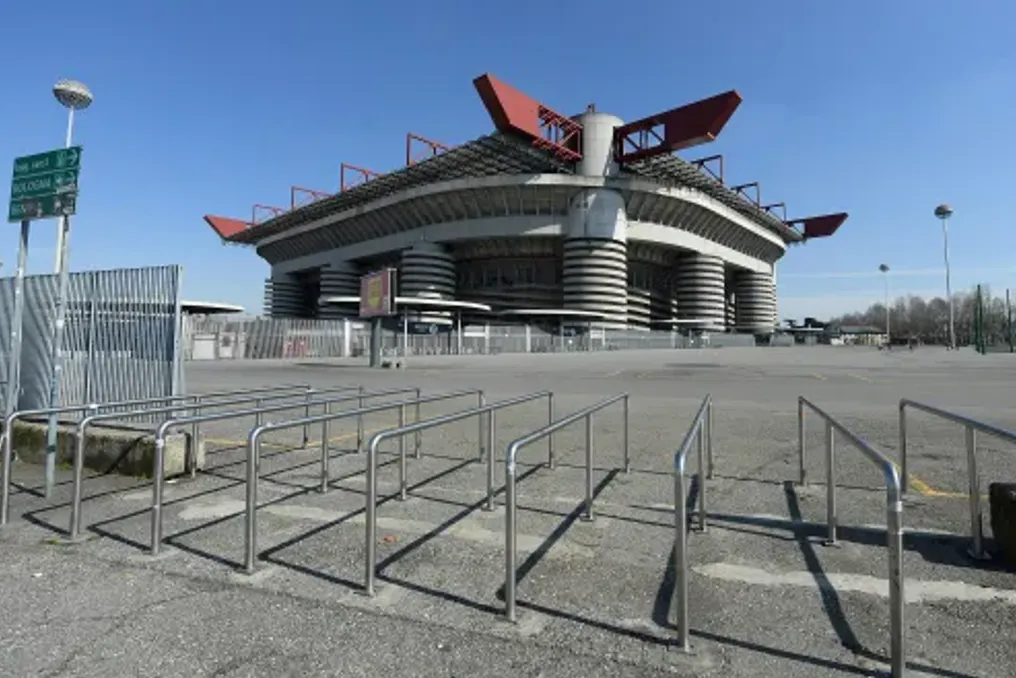
The clubs Inter Milan and AC Milan have officially presented the project for their new 'Generali Stadium,' confirming that one of the most revered monuments of world football—the iconic San Siro—will be largely demolished to make way for an ultra-modern arena valued at €1.2 billion.
The new stadium is designed to accommodate 71,500 spectators and is scheduled to open for the 2031/32 season, replacing the 75,000-capacity concrete cathedral that has defined Milanese football for a century. Both clubs invested €197 million ($219 million) in acquiring the current stadium and adjacent land, with construction work slated to begin in 2028.
Concept of the New Stadium
The project was developed by renowned architects Norman Foster and David Mancay, who previously designed the renovated Wembley Stadium in London. The structure is designed so that spectators are positioned as close to the pitch as possible. Foster stated that the stadium will be situated 'low in the body, rising from both ends' behind the goals, where the stands will ascend at a steep angle of 37 degrees.
Mancay noted at the presentation in Milan that 'the most important thing we understood while developing this project is that San Siro is a feeling.' He emphasized that the stadium is more than just a building, and the task was to transfer that sensation into the new structure. 'We placed all seats as close to the pitch as possible. They couldn't be any closer, so it will feel like you are sitting on the grass.'
Enhancing the Atmosphere
Mancay added that the canopy design was specifically engineered to capture and amplify sound, aligning with the claustrophobic atmosphere that made Giuseppe Meazza legendary.
Functions Beyond Football
The venue, sponsored by the Italian insurance giant Generali, will be used not only for football but also for concerts, rugby matches, and American football games. Mancay expressed a desire for visitors to the new stadium to experience the same excitement as before and to feel the building 'living and breathing with them, as it does now.'
A Century of History
Nevertheless, no modern engineering solution can easily replace the rich history facing demolition. The stadium opened in September 1926 following Inter's victory over Milan in the derby. It soon became Italy's premier sporting theatre. The municipality acquired the site in 1935, and by 1947, both Milan clubs agreed to share the field, which sparked the fiercest and most intimate home rivalry in European football.
In 1980, it was officially named Stadio Giuseppe Meazza in honor of the talisman who won two World Cups with Italy and played for both clubs.
Global Events and European Glory
Throughout its rich life, Meazza witnessed moments of global football. Semifinals were held during Italy's triumphant participation in the 1934 World Cup, Euro 1980 matches took place there, and the stadium served as the center of the Italy '90 tournament, which was marked by the appearance of its iconic cylindrical concrete towers and red-beam roof. The tournament began with the unforgettable shock of Cameroon's national team against Diego Maradona's Argentina.
The arena hosted the coronation of European champions four times: starting with the legendary 'Grande Inter' under Helenio Herrera, who won the European Cup at home against Benfica in 1965, through Feyenoord's triumph in 1970, Bayern Munich's victory in a penalty shootout in 2001, and Real Madrid's defeat by Atletico in the Madrid derby in 2016.
Non-Football Events
Besides football, San Siro hosted the boxing match for the world championship title of Duilio Loi in 1960, and it also accommodated 100,000 people for Bob Marley's historic concert in 1980—which was the largest live audience for the reggae icon. Although modern commercial demands and aging infrastructure made the move inevitable, the upcoming demolition of San Siro will mark the end of an era for world sport, closing the chapter on the greatest concrete cathedral of European football.