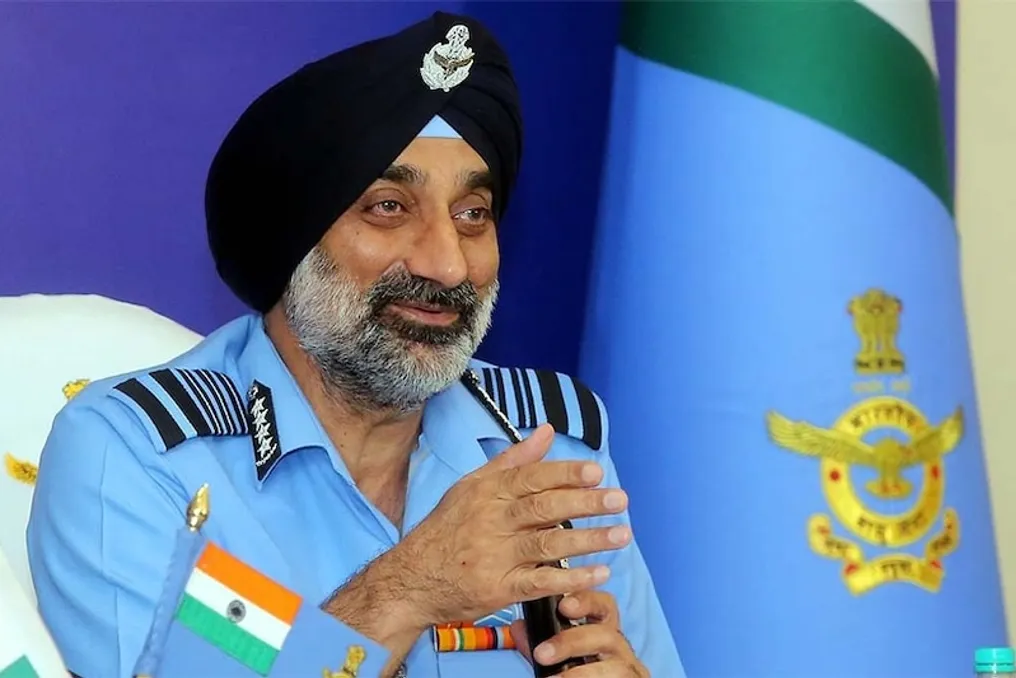
Air Commander Amar Prit Singh became the head of the Indian Air Force on September 30, 2024, and plans to retire on October 31, 2026. During his tenure, important events occurred, including Operation Sindoor, open discussions about delays in Tejas aircraft deliveries, warnings about squadron shortages, and efforts to strengthen domestic capabilities.
He is a fighter pilot, experimental test pilot, and qualified flight instructor with over five thousand flying hours. Responsibility will now be transferred to Deputy Air Commander Ashutosh Dikshit as the 29th Chief of Air Staff. Below are ten key milestones of his time in office.
In May 2025, the Air Force played a decisive role in Operation Sindoor, which began after the Pahalgam terror attack. Air Commander Singh emphasized in subsequent briefings and public statements that all three armed forces acted in coordination. In September 2025, he noted that the armed forces had clear objectives and operated unimpeded. He mentioned damage inflicted on Pakistani military infrastructure, such as radars, command centers, hangars, and aircraft, calling this operation an example of effective coordination across all services, making it the largest military action during his leadership.
During the Aero India 2025 event, the Air Commander questioned the capabilities of Hindustan Aeronautics Limited (HAL). Tejas Mark-1A aircraft deliveries were delayed, and he criticized the lack of a mission-mode approach to solving production problems. He expressed distrust in HAL and called for acceleration, bringing to public discussion issues related to the supply of the GE F404 engine and aircraft readiness. This statement caused the most resonance regarding delays in the indigenous fighter program.
In May 2025, at the annual CII conference, the Air Commander demanded accountability in defense procurement. He questioned why contracts were being signed whose delivery was impossible on schedule, as delays affected operational readiness. He stressed that self-reliance is achieved not merely by signing contracts or announcing projects, but by the timely arrival of equipment to the forces. This message was repeatedly reiterated in his speeches and served as a warning to the defense industrial system.
The Air Commander repeatedly stated that drones are changing the nature of aerial combat but cannot replace traditional fighters. In September 2025, he advocated for a balance between ground and unmanned platforms, pointing to the need to integrate long-range weapons, drones, precision systems, and fighters. Future operations will be based not on a single platform but on the combination of various technologies.
At his last annual press conference in October 2026, the Air Commander presented the most serious assessment of the situation. He reported that the Air Force has only 29 fighter squadrons out of an approved 42.5. To halt the decline and increase strength, 36–40 combat aircraft are required annually, which is about two squadrons. This delay negatively affects the force's potential, and this warning became an important part of his term.
The retiring Air Commander consistently insisted on expanding the fighter fleet. At the last press conference, he highlighted the importance of the 114-aircraft multirole fighter program focused on the Rafale. Furthermore, he mentioned Tejas Mark-1A, Mark-2, and the Advanced Medium Combat Aircraft program. He noted that the MRFA contract could commence in the current fiscal year if the process proceeds correctly. He also mentioned seeking alternatives in case of delays with indigenous fifth-generation fighters, but a decision on the Russian Su-57 proposal has not yet been made.
During his leadership, the focus was on international military cooperation and interoperability. The Tarang Shakti 2026 exercises in Jodhpur involved air forces from several countries and observers. American F-35s, UAE F-16s, along with Indian Rafales, Tejas, and other aircraft participated. On October 12, he made his final flight in the indigenous Tejas, which was a special moment as he had previously headed the Tejas project at the National Centre for Flight Testing.
In February 2026, the Vayu Shakti exercises in Pokhara demonstrated the capability for precise strikes in simulated wartime conditions. The exercises involved Rafale, Su-30MKI, Tejas, and Mirage 2000 fighters, as well as Apache and Chinook helicopters. Day and night operations, air superiority, ground troop support, and logistical capabilities were showcased. These exercises were attended by President Droupadi Murmu and Defence Minister Rajnath Singh.