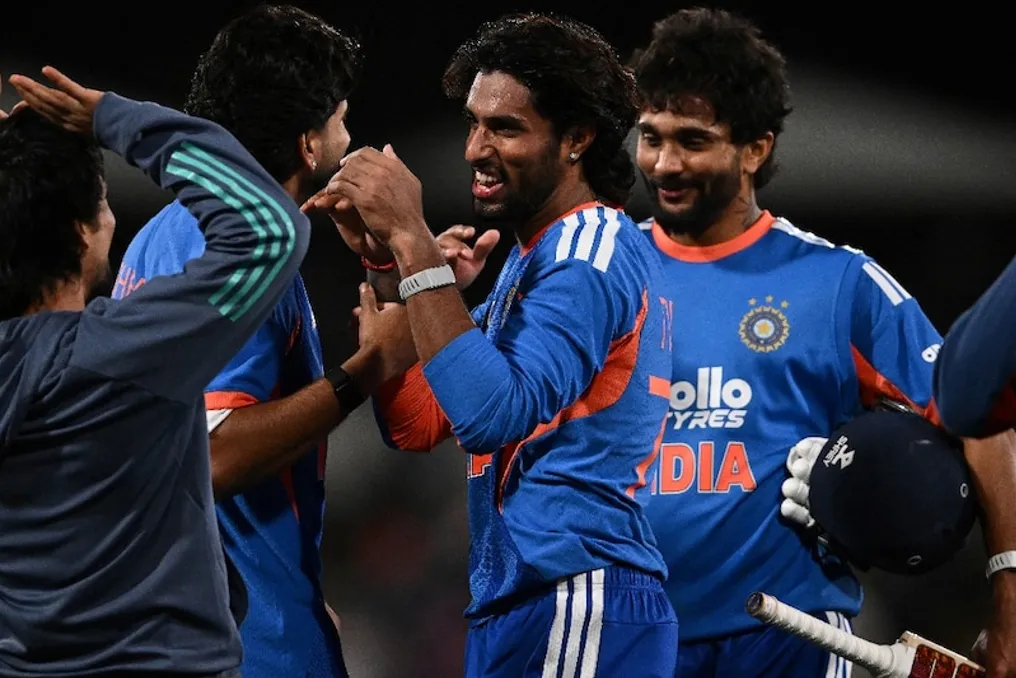
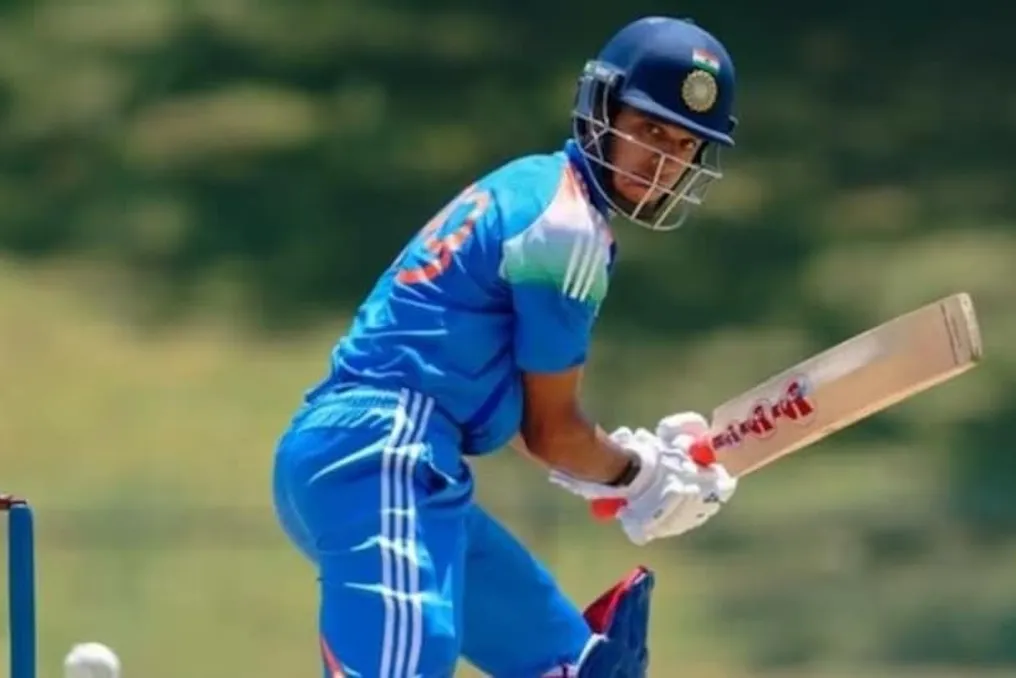
India's U19 Asia Cup 2026 squad announced; sons of Virender Sehwag and Rahul Dravid are included in the team
Read more
Aaj Tak
www.aajtak.in

India's U19 Asia Cup 2026 squad announced; sons of Virender Sehwag and Rahul Dravid are included in the team

The Board of Control for Cricket in India (BCCI) has announced the squad for the U19 Asia Cup 2026 tournament, which will take place in Muscat, Oman, from November 5 to 14. The selection of 15 players was made by the BCCI's junior cricket committee on October 30.

Lakshmi Reichandani has been appointed as the captain of the team, and Yashwardhan Singh Chauhan is designated as the vice-captain. Among the players who will attract special attention from fans are Aryavir Sehwag, the son of former Indian opener Virender Sehwag, and Anvay Dravid, the son of former captain Rahul Dravid, who has been selected as a batsman-wicketkeeper.

The team will also feature two wicketkeepers: Anvay Dravid and Rajat Baghel. India has been placed in Group A alongside Pakistan, Nepal, and the UAE. The match between India and Pakistan is scheduled for November 8.

Group B features Bangladesh, Sri Lanka, Afghanistan, and Malaysia. The top two teams from each group will advance to the semi-finals, with the final match set for November 14 and the semi-finals on November 12. Thus, in the group stage, the Indian team will face challenges from three teams, including Pakistan.

The Indian U19 squad includes: Lakshmi Reichandani (captain), Aryavir Sehwag, VK Vinit, Yashwardhan Singh Chauhan (vice-captain), Kushagra Ojha, Arjun Rajput, Manal Chauhan, Anvay Dravid (wicketkeeper), Rajat Baghel (wicketkeeper), V. Yashvir, Aryan Savasan, Mohit Ulwa, Kavya Patel, Shavin Vinod, and Ishan Sud.

According to the schedule, the team will play against Nepal on Friday, November 6, at OCC Turf 1 in Muscat. On Sunday, November 8, a match against Pakistan is planned at OCC Turf 1 in Muscat. And on Monday, November 10, the Indian team will meet the United Arab Emirates at OCC Turf 2 in Muscat.

Similar stories

Ishan Kishan's return questions India's squad composition after bright victory over New Zealand
Read more
www.aajtak.in

Ishan Kishan's return questions India's squad composition after bright victory over New Zealand

The Indian team faces a complex dilemma: how to integrate players in excellent form while accounting for the possible return of Ishan Kishan. The questions concern not only the on-field lineup but also the order of play and rotation policy.

In the third T20 match against New Zealand, the Indian team demonstrated powerful play, giving the opponents no chance. Abhishek Sharma scored 113 runs off 38 balls, and Vaibhav Suryavanshi showed his strength in the squad, allowing India to reach a target of 199 runs in just 13.2 overs.

Thanks to this impressive victory, India gained an undisputed 3-0 lead in the five-match series. However, amidst this success, a difficult question has arisen: if Ishan Kishan recovers and returns to the team, whose place will be taken?

As soon as the wait for Ishan Kishan's return ends, the Indian team may face a selection problem. On one hand, there is Abhishek, capable of changing the course of the match with his explosive playing style. On the other hand, there is Vaibhav, who was fielded at the start in the third T20. Sanju Samson is also a key player who scores runs.

Deciding to drop Abhishek will be difficult given his recent performance. Dropping Vaibhav would call into question the plan to consistently give opportunities to the young batter at his preferred position. Excluding Sanju is also not easy, especially if he is strengthening his position by scoring runs.

The question of Ishan's return is also important. When the player becomes available after recovery, the team management must decide on his inclusion and the role of the other players. The real task is not just choosing one name, but creating a combination that maximizes the strengths of all players.

In the third T20, while Ishan was absent, Vaibhav Suryavanshi got a chance to bat at the top. This sparked a new discussion about the order of play. Vaibhav's main strength is attacking bowlers at the beginning of the innings. Previously, there were doubts about experimenting with his placement at the third position.

However, if the team plans to continue using Vaibhav at the start, it will have to reconsider the batting order of the remaining batsmen. In the third T20 against New Zealand, Sanju Samson batted at the third position. Now, if they maintain the plan with Vaibhav at the start, Sanju may be forced to adapt to a different role.

The situation is complicated by the question: should Sanju give up his preferred position for Vaibhav? Will the team management change the batting order to keep the Abhishek and Vaibhav duo? And will it become harder for Sanju to secure a spot in the squad after Ishan's return?

There is currently no definitive answer to these questions. Nevertheless, it is clear that one player's return may require a review of many aspects of the batting order.

The most important question in this situation relates to the Indian team's rotation policy. India has scheduled 16 T20 international matches from August to December: 3 against Afghanistan, 5 against West Indies, 5 against New Zealand, and 3 against Sri Lanka.

There could be a scenario where the team management predetermines how many matches each player will get, who will rest, and what each player's role will be. If players were informed in advance that they could take a break after four or five matches, the decision to exclude a player would not be based solely on their performance.

This could bring two advantages to the team. Firstly, it would reduce the pressure on key players who play constantly. Secondly, players' roles would remain clear during experiments with alternative squads.

Nevertheless, rotation does not mean that players must be excluded, even with good performance. Management must make decisions based on physical condition, form, opponent, and strategy. But having a preliminary plan could significantly simplify explaining any changes.

There are about two years until the T20 World Cup. This gives the Indian team time to test various batting order options, evaluate players in their roles, and make changes if necessary.

Therefore, the current selection crisis cannot be seen merely as losing a spot for one player. It is also an opportunity for the team management to develop a future strategy. Does India want to promote the Abhishek and Vaibhav duo at the top? What position will benefit Sanju the most? What will his role be after Ishan's return?
Pakistani cricket personality Basit Ali highly praised India's performance after the match against New Zealand
Read more
www.aajtak.in

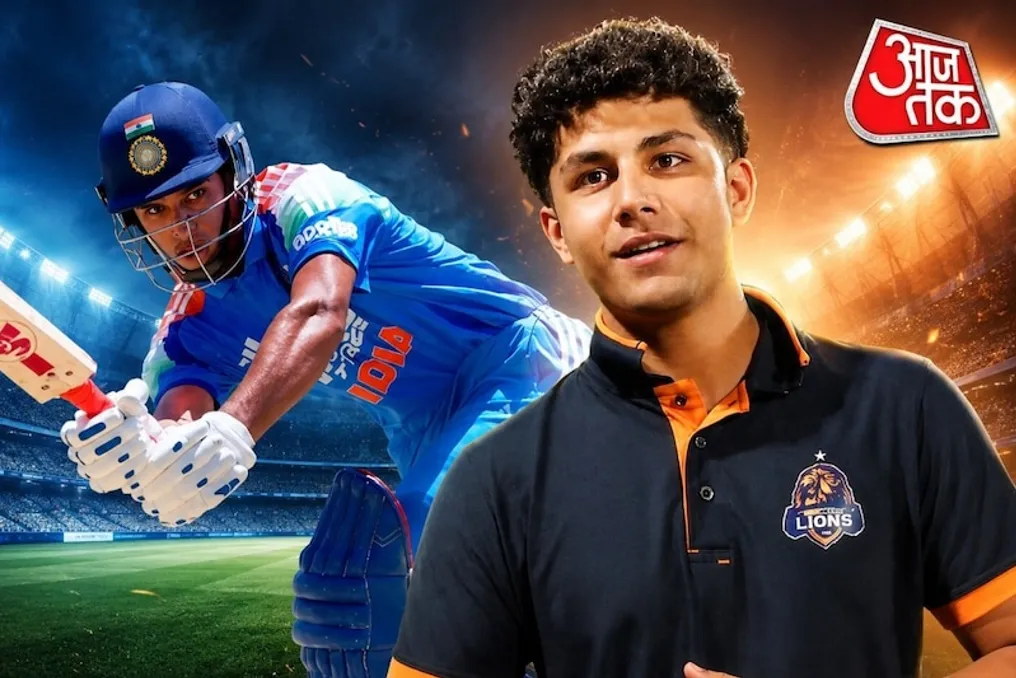
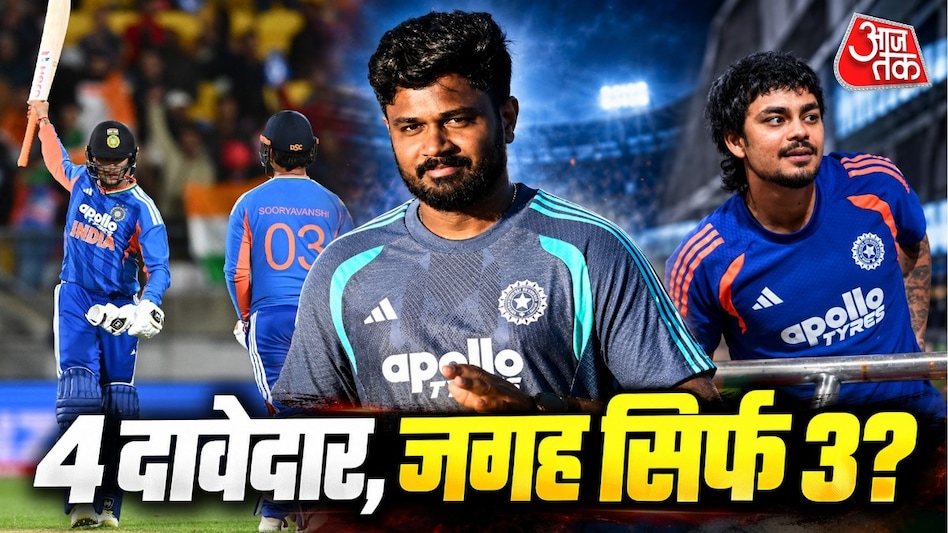
Pakistani cricket personality Basit Ali highly praised India's performance after the match against New Zealand

Following a tense T20 match between India and New Zealand in Christchurch, Pakistani former cricketer Basit Ali expressed high praise for the Indian team's performance on his YouTube channel. Analyzing the game, Basit Ali named young batsman Tilak Verma as the true hero of this victory, noting that thanks to him, India managed to win a match that seemed lost.

In his show, Basit Ali stated that when India's early wickets fell quickly, there was a feeling that the game had completely gotten out of control. It was at this moment that Tilak Verma demonstrated great skill by stabilizing the course of the match. He noted that Tilak did not take risks trying to hit the ball for big boundaries, but instead effectively used singles, doubles, and small boundaries.

He also positively commented on Captain Shreyas Iyer's decision to send Vaibhav Suryawanshi to the third position. Nevertheless, Basit Ali believes that the team composition could change if Ishan Kishan is able to return to fitness. Furthermore, Basit Ali highly praised the contribution of young Pakistani players to the sport, commending Naman Dhir and Nitish Kumar Reddy for scoring strong runs in the lower order, which helped turn the tide of the game.

Basit Ali criticized the captaincy of New Zealand's Mitchell Santner, stating that due to some tactical errors, New Zealand let go of a match that was theirs. Although Mitchell Santner played strongly with four wickets taken, as a captain he made decision-making errors. Basit Ali sharply hinted that the New Zealand players would think about how the match slipped away from them. He emphasized that in limited-overs cricket, the match does not end until the last ball is bowled.

In Basit Ali's opinion, this young Indian lower middle order not only proved its competence but also demonstrated how strong India's squad depth is.

Rahul Dravid's son scores 151 runs off 100 balls, securing Karnataka's playoff spot
Read more
www.aajtak.in

Rahul Dravid's son scores 151 runs off 100 balls, securing Karnataka's playoff spot

The son of former Indian captain Rahul Dravid, seventeen-year-old Anvay Dravid, began to demonstrate his aggressive playing style. In the Vino Mankad tournament, he played an impressive innings, scoring 151 runs off 100 balls against Gujarat.

Thanks to this outstanding performance, the Karnataka junior team under 19 won by five wickets and guaranteed their place in the playoffs. The match took place on October 16 (Friday) at the Vidhi stadium in Vijayanagar.

During this contest, Gujarat, having lost the toss, batted first and scored 357 runs in 50 overs, losing four wickets. According to VJD rules, Karnataka was set a revised target of 352 runs.

Chasing such a large target, Anvay did not let pressure get the better of him and, along with Dhruv Krishnan, drastically changed the course of the game. Anvay added 203 runs to the team in partnership with Dhruv. In his innings, Anvay hit 20 fours and three sixes, while Dhruv supported him by scoring 131 runs off 100 balls.

This partnership helped challenge Gujarat's large total and paved the way for Karnataka's victory. Both batsmen scored at the required pace, putting the team in a strong position while chasing the target.

Earlier in Gujarat's innings, Samir Bhandari and Yash Pandhwan put the opposition in a difficult position by scoring a century each. Samir scored 119 runs without getting out off 88 balls, and Yash scored 106 runs without getting out off just 57 balls. Initially, Gujarat's score was 140 runs in 30.3 overs, losing four wickets. After this, both players formed an unbeaten partnership in the fifth wicket, scoring 217 runs off just 19 overs, leading to a total of 357 runs.

Nevertheless, the brilliant play of Anvay and Dhruv completely nullified Gujarat's efforts.

The current season of the Vino Mankad tournament is Anvay Dravid's second century. Previously, he had scored 104 runs off 62 balls against Chandigarh, in a match where Karnataka won by 100 runs. Anvay also demonstrated his aggressive play, scoring 85 runs off 41 balls against Delhi.

In that match, Karnataka scored a substantial total of 418 runs, losing four wickets. His innings of 151 runs against Gujarat once again proved his ability to play a key role when chasing big targets. Anvay also handles wicketkeeping duties, serving as the captain of Karnataka. His consistent effective play, fulfilling multiple roles at such a young age, is crucial for the team.

Anvay Dravid has also represented the Indian youth team. During a visit to Sri Lanka in July, in the second match of the junior ODI tour, he scored 87 runs off 67 balls, including nine fours and one six. In September, in the first match of the junior ODI tour against Australia, which was affected by rain, he scored 38 runs off 18 balls, including three sixes and two fours. India won that match by seven runs.

Popular