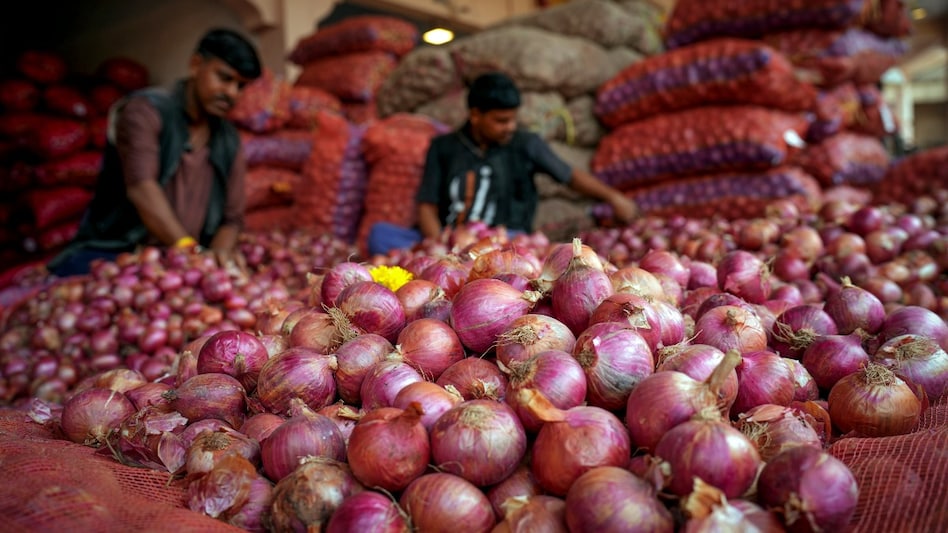
Sharp rise in food prices observed in India, including onions, sugar, and oil
Read more
Aaj Tak
www.aajtak.in

Sharp rise in food prices observed in India, including onions, sugar, and oil

During September, there was a significant increase in food prices in India. A particularly noticeable jump in prices was recorded for onions, sugar, vegetable oil, and rice. The rise in the cost of these goods is having a stronger impact on rural areas.

According to the monthly economic review for October, retail inflation based on the Consumer Price Index (CPI) increased to 5.54% in September 2026, which is 71 basis points higher than the previous month. Food consumer inflation reached 7.74%, intensifying financial pressure on households.

This growth was not uniform across all regions. In September, rural retail inflation stood at 6.08%, while in urban areas it was 4.88%. Regarding food inflation, it was 8.06% in rural areas, exceeding 7.18% in urban centers, indicating more intensive food consumption in villages.

Onion prices doubled, becoming one of the main drivers of food inflation. Sugar prices rose by 30%, and cane sugar by 23%. The review also noted that refined oil prices increased by 15%, peanut oil by 14%, and rice by 8%.

Price pressure was intensified due to supply-side issues. Stocks of last season's onions (rabi) are dwindling, and the arrival of the new harvest (kharif) has been delayed by about a month. Sugar prices were also pressured by reduced beet sugar production, heavy rains, and 'red rot' disease.

Furthermore, the price increase may be linked to increased demand before the festive season and a decline in global sugar supply. According to the review, rice prices are also under pressure due to growing international demand for Indian rice. Price increases are observed at both the retail and wholesale levels.

Wholesale price index inflation grew from 9.92% in August to 11.39% in September. Inflation in the fuel and electricity categories in the wholesale market increased to 25.85%, and in the industrial goods category to 9.76%.

If the current pressure persists, the combination of high food prices and rising wholesale costs could create a complex inflationary situation. The review showed that food inflation continued to rise in September, while the global food price index was 5.8% higher compared to the previous year.

The main concern for the public is the increase in the prices of essential goods. The rapid rise in inflation in villages indicates that households residing in rural India are facing more serious difficulties in covering living expenses compared to urban residents.
Similar stories

Expert warns of potential rise in gasoline and diesel prices after Diwali due to global oil prices
Read more
www.aajtak.in

Expert warns of potential rise in gasoline and diesel prices after Diwali due to global oil prices

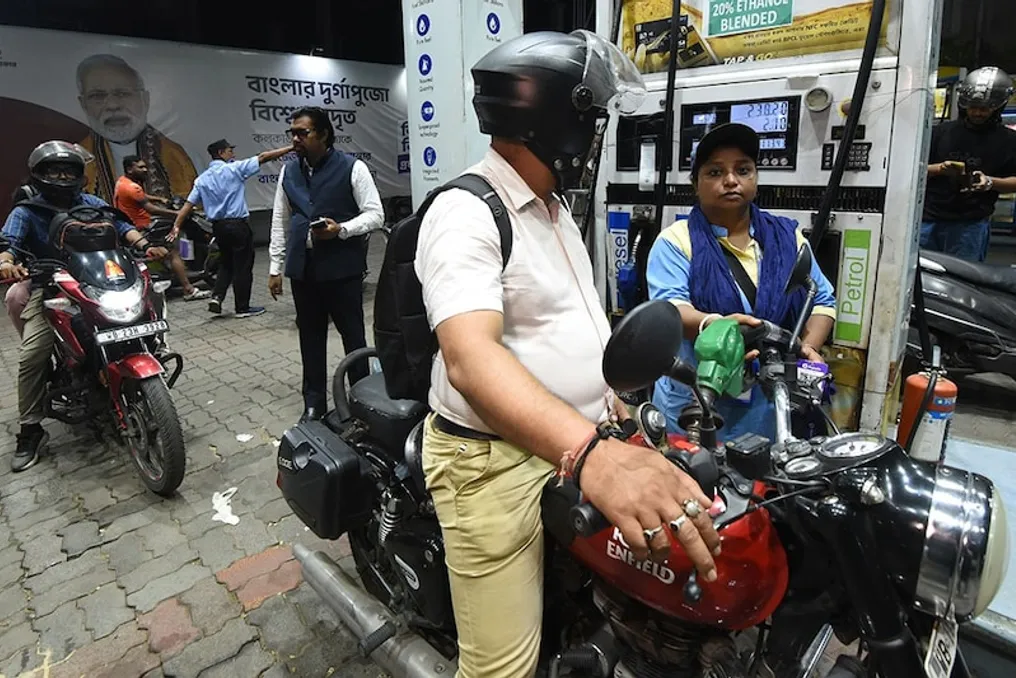
Gasoline and diesel prices in India may increase after the Diwali festival as rising global crude oil prices increase the burden on the government and state-owned oil refining companies. Energy expert Narendra Tanedge told Business Today TV that changes in domestic fuel prices could occur between Diwali and Christmas.

He warned that people cannot remain unaffected by growing global energy tensions. The rise in global prices will inevitably affect India, which could lead to an increase in the cost of gasoline and diesel fuel.

Tanedge added that a fuel price hike after Diwali and before Christmas is expected, noting that it will be extremely difficult for the government and oil companies to constantly cope with rising prices. Currently, Indian oil companies are under pressure due to high oil prices.

This pressure exceeds the headlines of crude oil prices. According to an Axis Bank Research report from October 23, the price of Brent Crude rose above $110 per barrel, and Dated Brent reached $140. Tanedge explained that the actual price paid by Indian refineries could be significantly higher than the stated market price due to increased costs for freight, marine insurance, and tanker crew wages.

He specified that when considering the landed price, it could be at least $20 higher than this base price, depending on the company and region. For India, additional costs could amount to about $25–$27 per barrel, depending on the source of raw materials and the refinery.

The average price of the Indian crude oil basket from October to October 26 rose by approximately 4% month-on-month, reaching $120.46 per barrel, the highest monthly average since March 2012. This increase occurred amid heightened tensions in the Middle East, leading to increased geopolitical uncertainty, marine insurance premiums, and freight rates. By October 26, the price of the Indian crude oil basket reached $123.72 per barrel.

Meanwhile, in 2026, global crude oil prices have risen by almost 80%; on Tuesday evening, Brent traded at $114.6 per barrel, WTI at $100.9, and Murban at $117.7. Increased transportation costs, marine insurance premiums, and geopolitical tensions in the Middle East have further increased the cost of crude oil imports.

The central government, state governments, state-owned oil refining companies, and the Reserve Bank of India are jointly bearing the brunt of the oil crisis. Axis Bank Research suggested in its October 23 report that this support would amount to 1.7% of GDP, based on an assumed average crude oil price of $100 per barrel; furthermore, every $10 increase in retail fuel prices increases the burden on GDP by 20 basis points. From April to September, India's crude oil imports grew by 46.3% year-on-year, reaching $90.6 billion.

Tanedge cautioned that the government and oil companies cannot indefinitely shield consumers from financial strain. He also emphasized the need to invest in foreign oil and gas assets to diversify crude oil supplies and ensure long-term supply for India.

Axis Bank Research forecasts that fiscal measures, such as increased duties and economic stabilization funds, could free up the equivalent of 0.6% of GDP, helping to limit the central government's financial decline by 20–30 basis points in the 2027 fiscal year. However, maintaining high crude oil prices in the long term may shift the majority of costs onto consumers.

Wealthy Buyers Purchase Elite Real Estate in India: Major Deals in Mumbai and Gurugram
Read more
www.aajtak.in

Wealthy Buyers Purchase Elite Real Estate in India: Major Deals in Mumbai and Gurugram

Prices for luxury real estate in India are reaching new heights. In 2026, numerous property deals exceeding 100 crore rupees were concluded, ranging from luxurious seaside apartments in Mumbai to ultra-luxury penthouses in Gurugram.

Among the major transactions: Dinesh Thakkar, founder of Angel One, signed an agreement to purchase an entire residential building in Juhu, Mumbai, for approximately 711 crore rupees. Concurrently, entrepreneur Manav Sardana acquired a penthouse in Gurugram valued at 271 crore rupees.

According to the report, many prominent businessmen, investors, and industrialists are purchasing expensive residential properties in both Mumbai and Gurugram this year. Some of the largest real estate deals concluded by 2026 are presented below.

Dinesh Thakkar, founder, chairman, and managing director of Angel One, entered into a contract to acquire an entire residential building in the Embassy Terracea project in Juhu, Mumbai, for approximately 711 crore rupees. The company signed a Memorandum of Understanding (MoU) for this deal. This building has seven floors in addition to the ground floor, and its area according to RERA standards is about 63,000 square feet, corresponding to a price of approximately 1.13 lakh rupees per square foot.

The purchase of two apartments in the Naman Zeena project, located in Versova, Mumbai, by Tani Dubash and her Shola Real Estates, is among the major real estate deals of 2026. This transaction is particularly significant because the demand for premium sea-view apartments in the Versova area of Mumbai remains consistently high. Large homes, excellent locations, and private amenities attract ultra-wealthy buyers.

Entrepreneur Manav Sardana purchased a penthouse in the ultra-luxury 'The Dahliyas' project by DLF, located on Golf Course Road, Gurugram, for around 271 crore rupees. This property is considered one of the most expensive single residential transactions in the country. The super area of this penthouse is approximately 17,200 square feet, with a usable area of about 10,500 square feet. Based on the total cost, its price is about 1.58 lakh rupees per square foot of super area and about 2.6 lakh rupees per square foot of usable area.

A notable feature of this deal is that such a large sum was allocated to a single penthouse, indicating that Gurugram is strengthening its position as one of the most expensive housing markets in the country.

Investor Madhusudan Kela acquired an apartment in the The Dahliyas project by DLF in Gurugram for approximately 121 crore rupees. This deal was included in the list of major elite real estate purchases of 2026. Sales of homes worth over 100 crore rupees in this project demonstrate growing demand for the premium real estate market in Gurugram. Buyers here are willing to spend large sums not only on housing but also for the best location, private amenities, and a special lifestyle.

Popular