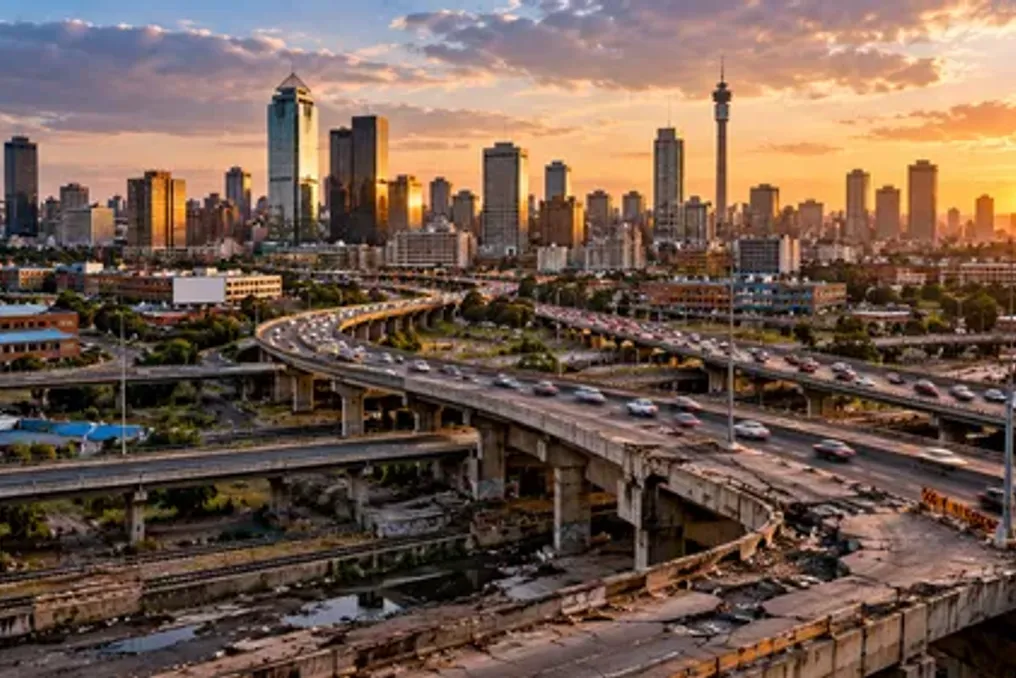
Joburg's R111 Billion Growth Plan Faces Criticism Over City's Financial Constraints
Read more
IOL
iol.co.za

Joburg's R111 Billion Growth Plan Faces Criticism Over City's Financial Constraints

The Centre for Development and Enterprise (CDE) argues that Joburg's plan to spend R111.47 billion on nearly 30 economic development projects over five years is unrealistic, given the city's financial and administrative limitations.

In its latest report, Johannesburg Matters, titled 'Joburg Needs Faster Growth,' the analytical centre asserts that the city should prioritize restoring basic services, reorganizing municipal institutions, and stabilizing finances, rather than implementing an ambitious programme of new projects.

The city's economic growth strategy, approved in September 2026, includes projects such as an international congress centre in Lanseria worth R1.5 billion, a film and apparel cluster valued at R2.14 billion, and biodiesel production worth R546 million. The city anticipates that 98% of the funding will come from private investors and donors.

However, CDE questions the municipality's capacity to plan, coordinate, and oversee projects of this scale. It notes that the strategy itself acknowledges that successful implementation will require significantly more resources and administrative capacity than Johannesburg currently possesses.

The City is Aware

In a statement published by Infrastructure News on October 6, the City stated that its Economic Growth Strategy recognizes infrastructure deficits, unreliable services, transport issues, and weak project preparation as obstacles to growth. This statement was made before the publication of the CDE report and does not respond to its findings.

During Council debates on this strategy, Economic Development Head Nomoya Mnisi stated that 'economic growth and infrastructure development are not competing priorities.' She emphasized that adopting the strategy is an important milestone, but its impact will be measured by implementation results and tangible achievements.

The report indicates the need for significantly more private investment to create jobs and restore economic growth. Nevertheless, it argues that the current approach relies on grandiose plans and expensive projects instead of first creating the conditions necessary for businesses to invest and expand.

The report states: 'Until Johannesburg restores its core functions, municipal failure will continue to restrict investment, business expansion, and job creation.' CDE draws attention to the city's economic indicators.

Slow Growth

Johannesburg's economy has grown by only about 1% per year over the last 11 years. Real GDP per capita decreased by 4.1% between 2013 and 2023, falling from R99,858 to R95,737.

The official unemployment rate in the city reached 35.9% in the second quarter of 2026, the highest among all metropolises and exceeding the national rate of 33.6%. In the year leading up to June, Johannesburg lost approximately 90,000 jobs, while Cape Town added 57,000.

CDE Executive Director Ann Bernstein states: 'Joburg is South Africa's most important economic hub. However, the city's decline over the past decade is increasingly undermining its economic potential. Municipal mismanagement has made Johannesburg a difficult place to do business, invest, find work, and build a safe family life.'

According to the report, Dickon Hall Foods factory closed its operation in Southdale, Johannesburg, and relocated production to the Western Cape after repeated water outages, resulting in a loss of R17 million in profit. In Selby, furniture manufacturer Calgan Recliners, which employs between 700 and 800 people, spent over R2 million on water storage to maintain insurance coverage.

Difficult Situation

CDE argues that these failures hinder operations, investment, and job creation for companies. The analytical centre stresses that small businesses are particularly vulnerable as they have fewer resources to compensate for unreliable electricity, water supply, and infrastructure.

Bernstein notes: 'A priority for the next Johannesburg government must be fixing the breakdowns. However, this complex process must be accompanied by serious reflection on the city's future and how to build a more dynamic economy, which is a prerequisite for faster and more inclusive growth.'

The organization recommends that the next mayor focus the administration on restoring municipal services, combating corruption, reducing infrastructure backlogs, and improving the city's and its commercial structures' finances.

Furthermore, it is proposed that the mayor appoint a task force of five to eight leaders from different segments of society to develop an economic concept and practical growth proposals within a year. According to CDE's proposal, this task force would research growth prospects for the city, consult with businesses of various sizes, and test proposals for their costs, benefits, and feasibility.

Bernstein concludes: 'The proposed CDE Task Force could be a vital contribution that helps the mayor decide on an economic growth strategy and helps unite the city around ambitious action proposals and a new vision of hope for all residents.'

>
Similar stories

South Africa's economic problems call into question Godongwana's mini-budget
Read more
iol.co.za

South Africa's economic problems call into question Godongwana's mini-budget

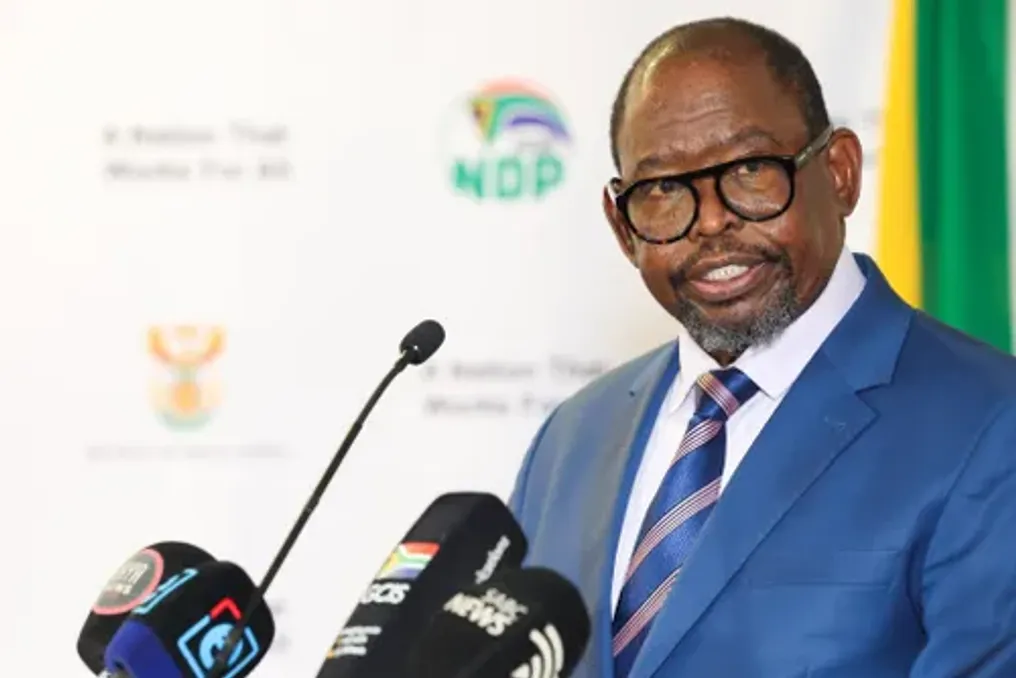
The unfavorable economic situation in South Africa, characterized by weak growth, increasing national debt, and rising pressure on the cost of living, will be under close scrutiny during Finance Minister Enoch Godongwana's presentation of the Medium-Term Budget Policy Statement (MTBPS) today. This comes against a backdrop of public demands for increased investment, improved public spending, and assistance for struggling households.

According to the Presidential office, President Cyril Ramaphosa is also expected to attend Parliament to present the MTBPS. Godongwana will present the National Treasury's economic outlook, government priorities, and plans for revenue and expenditure over the next three years, thereby setting the direction for the next national budget.

Presenting the economic assessment ahead of the statement, Siseko Maposa, director of the consulting firm Surgetower Associates Management Consultancy, warned that the government can no longer hide the country's deep economic problems behind optimistic promises. In his view, the 2026 MTBPS is unlikely to conceal the serious structural crises facing the country, despite eloquent rhetoric, as was the case in previous cycles.

Maposa pointed to persistently low growth, high national debt, and a population growing faster than the economy as key issues. He estimated the national debt at between 77.5% and 78.5% of GDP and noted that transport and logistics disruptions, along with global energy shocks driving up fuel prices, have intensified pressure on households.

Maposa also cautioned that simply cutting spending will not solve the country's economic problems, as debt servicing consumes a significant portion of government revenue. He stated that 'defensive austerity alone will not save the fiscal structure.' Instead, Maposa advocated for targeted investments in infrastructure and logistics, arguing that these sectors can stimulate economic activity, boost productivity, and help pull the economy out of stagnation.

The question of whether the government's efforts to control debt are making tangible progress is also a point of criticism from the EFF, which disputes the focus on achieving a primary budget surplus. The 2026 budget projected a primary surplus of 0.9% of GDP in 2025/26, expected to rise to 1.6% in 2026/27 and 2.3% by 2028/29. The government also forecasts debt stabilization at 78.9% of GDP. A primary surplus occurs when government revenues exceed expenditures, excluding interest payments on debt, which the Treasury believes helps reduce borrowing needs and interest costs.

However, the EFF argued that improving these figures is insignificant if unemployment remains high and people continue to struggle to access basic services. The party stated: 'Celebrating a surplus while unemployment rises is celebrating the wrong balance sheet.'

Beyond debates over debt and spending, the government is also facing calls for immediate assistance to households grappling with rising transport and food prices. Dr. Mmusisi Maimane, leader of Build One South Africa (BOSA), called for a temporary reduction in the general fuel levy, arguing that high fuel prices place additional pressure on consumers. Maimane insisted that a special allocation of 10 billion rand intended for fuel assistance be used to reduce the levy by 3 cents per liter in November. BOSA also demanded an investigation into the road insurance fund component within the fuel levy, expressing concern over the efficiency and management of this fund.

Fiscal policy is also being criticized for its role in addressing social problems related to harmful alcohol consumption. Kashefa Anser, project lead for the Rethink Your Drink campaign aimed at reducing alcohol harm from the DG Murray Trust, wants the MTBPS to clarify whether the government intends to implement a Minimum Unit Price (MUP). This policy would set a minimum price for a standard drink, making cheap hard liquor less accessible, especially to heavy consumers. Anser noted: 'These events show that the government understands that pricing and packaging sizes influence consumption patterns, and if we want to tackle alcohol harm, we must prevent excessive consumption.'

The campaign advocates for introducing MUP alongside changes to alcohol excise duties, not instead of them. Anser emphasized: 'MUP gives the government another lever to reduce harmful consumption without relying solely on tax increases. But it is not a replacement. If excise duties are reformed, MUP must accompany them. The strongest approach is to use both tools together.'

Cosatu party committee coordinator Matthew Parks stated that workers are besieged because 'unemployment is rising to dangerously high levels at 43.8%, the economy continues to develop sluggishly with an anemic growth of 1.2%, and working communities suffer from poverty, inequality, crime, and corruption.' He added: '2026 was particularly difficult due to the war in the Middle East, which led to a sharp rise in oil prices, hitting South Africa with gasoline prices increasing by more than 25% and diesel by 50%. This triggered inflation, caused two repo rate hikes, and pushed workers into even greater destitution.'

Mozambique Government Forecasts 1.6% Economic Growth in 2027
Read more
noticiasaominuto.com

Mozambique Government Forecasts 1.6% Economic Growth in 2027

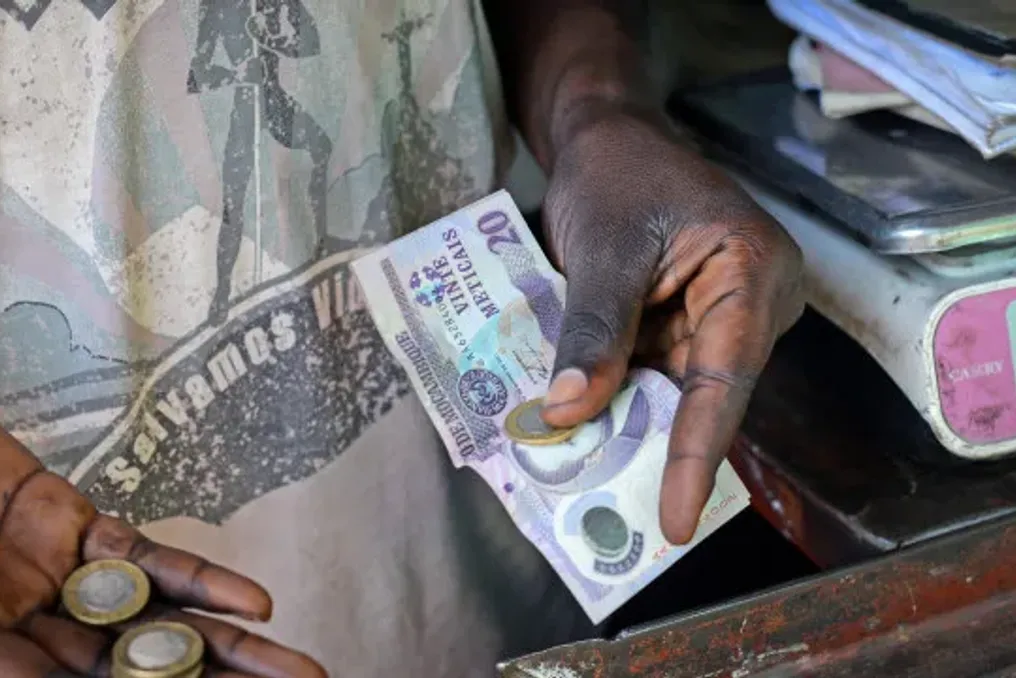
The Mozambican government expects the country's economy to grow by 1.6% in 2027, with average inflation reaching 7%, the budget deficit hitting 4.6% of GDP, and the Mozambique Development Bank being commissioned.

These target figures are outlined in the draft Economic and Social Plan and State Budget (PESOE) for 2027, which was provided to Lusa. This document defines the executive branch's economic and social priorities for the coming year and is due to be presented to the Assembly of the Republic.

The main priority stated in the draft is ensuring the sustainability of public finances. Within fiscal management, the 2027 budget policy will be based on a prudent, reliable approach and macrofiscal discipline.

The government plans to attract global resources amounting to 511.162 million meticais (7.099 million euros), while simultaneously aiming to reduce the budget deficit to 4.6% of GDP and limit the state's use of domestic credit to 1.9% of GDP.

The draft emphasizes that under this macroeconomic context, real GDP growth is expected to be 1.6% in 2027, alongside a slowdown in average annual inflation to 7.0%.

For 2026, the government forecasts economic growth at 0.6% of GDP after a downward adjustment, having recognized an economic impact equivalent to 2% of GDP caused by floods at the beginning of the year.

The draft provides for state revenues of approximately 427 billion meticais (5.9 billion euros), accounting for 23.5% of GDP, while expenditures and financial operations should amount to approximately 511 billion meticais (7.1 billion euros), or 28.1% of GDP. Thus, the budget deficit will be about 83 billion meticais (1.2 billion euros), corresponding to 4.6% of GDP.

The government characterizes the PESOE as the 'main instrument for the Government's economic, social, and budgetary planning,' aimed at 'strengthening macroeconomic stability and promoting sustainable and inclusive development of Mozambique.'

According to the document, economic transformation will be one of the main priorities for the next year, based on increasing national production, diversifying the economy, and developing value chains.

The draft indicates that the executive branch will focus efforts on implementing strategic initiatives with a high multiplier effect. The main tools named here are the Local Economic Development Fund (FDEL), the Women's Opportunity Promotion Fund (PRO-MULHER), and the Mozambique Development Bank (BDM).

FDEL will receive an allocation of 1.5 billion meticais (20.8 million euros), and PRO-MULHER will receive 500 million meticais (6.9 million euros) to finance productive business and income generation.

The Mozambique Development Bank, which will be launched in 2027, is presented in the document as a tool intended for 'financing long-term strategic projects' capable of increasing production and productivity, especially in the energy, agriculture, industry, and tourism sectors.

The executive branch also asserts that combining these mechanisms with attracting foreign direct investment and business environment reforms will help mitigate the credit constraints faced by the private sector, particularly micro, small, and medium-sized enterprises.

In agriculture, which is considered strategic for food security and job creation, the government plans to produce 17,600 tons of certified seeds, support 1,482,451 producers and 8,845 fishermen, distribute 155 thousand agricultural kits, and provide 100 thousand multipurpose silos.

The plan also includes training 2,646 aquaculture farmers, providing 170 motorboats, placing 500 floating cages, and financing 54 fishing projects.

Popular