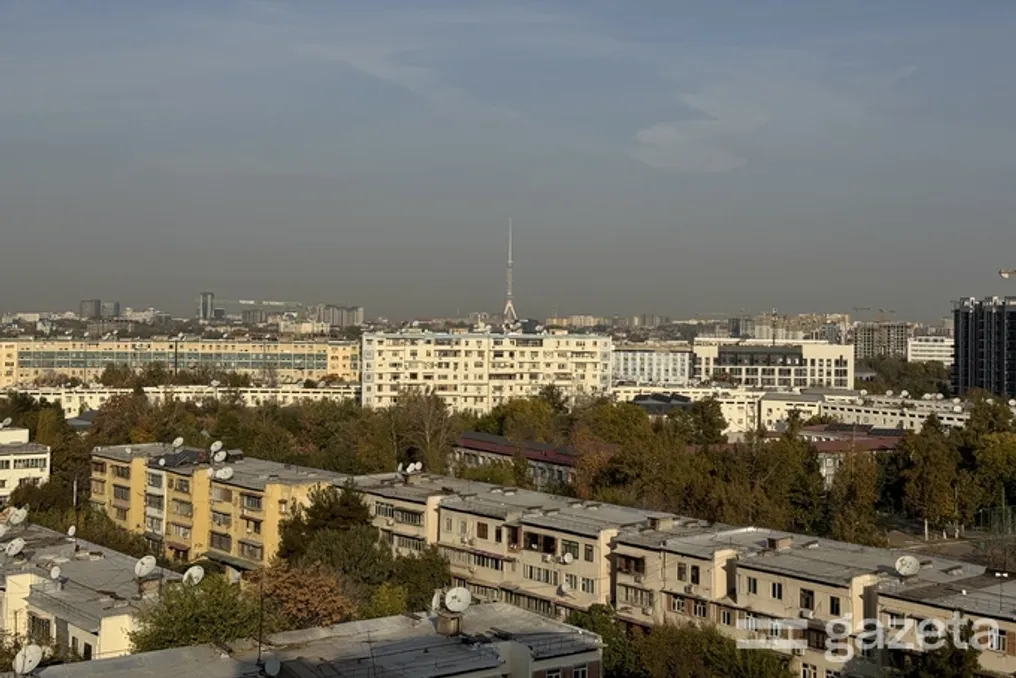
Doctors discuss health protection measures in Tashkent due to smog and dust
Read more
Podrobno.uz [uz]
podrobno.uz

Doctors discuss health protection measures in Tashkent due to smog and dust

In Tashkent and other major settlements in Central Asia, air quality has become hazardous to health: the AQI index has exceeded 100, and temperature inversion may persist for another ten days. The Ministry of Health has provided recommendations on how to minimize risks under conditions of high concentration of dust and harmful substances.

The deterioration of the atmospheric condition is linked to the establishment of an anticyclone at the end of October, weak winds, and lack of precipitation. Temperature inversion causes emissions from transport, industrial enterprises, and energy facilities, as well as natural dust, to accumulate in the lower layers of the atmosphere and not disperse.

Doctors' recommendations for the population

Specialists advise trying to reduce the time spent outdoors. This recommendation should be given particular attention to people suffering from bronchial asthma, allergic rhinitis, conjunctivitis, bronchitis, and other chronic respiratory diseases. The use of anti-allergic agents must be done only after consulting a doctor.

To reduce the level of dust exposure inside residential premises, it is recommended to keep windows tightly closed, conduct frequent wet cleaning, and use air conditioners and special air purification systems. Additional measures include hanging damp towels and placing containers with water both indoors and near buildings.

Medics also insist on increasing fluid intake, regular showering, and rinsing the nose and mouth with saline solutions. These actions help ease breathing and reduce irritation of mucous membranes.

If symptoms such as cough, shortness of breath, itching or eye redness, nasal congestion, or runny nose appear against the backdrop of dustiness, it is necessary to consult a family doctor. The Ministry of Health reminded that round-the-clock emergency medical assistance is available by calling 103.

Furthermore, a directive has been announced regarding the cleaning of streets in Tashkent and other regions from sand and dust, as well as the activation of city fountains to reduce particle concentration in the air.

Similar stories

Forecasts indicate continued air pollution in Tashkent for the next 10 days
Read more
podrobno.uz

Forecasts indicate continued air pollution in Tashkent for the next 10 days

According to the latest forecasts, atmospheric inversion, previously considered one of the causes of air pollution in Tashkent, may continue for another ten days. Uzhydromet reports that due to this phenomenon, pollutants disperse poorly in the atmosphere and accumulate near the ground surface.

Forecasters explain that dust and various pollutants continuously enter the atmosphere. Without wind activity, the dispersion process slows down, and precipitation helps wash away some dust particles. If there is no precipitation and the wind is weak, impurities accumulate in the air, and atmospheric inversion further prevents their rise into higher layers of the atmosphere.

The level of pollution varies depending on the time of day. According to Uzhydromet, during daytime hours when the temperature is higher, the wind usually strengthens, leading to the dispersion of dust and a decrease in pollution levels. Conversely, in the morning and evening, under the influence of inversion, dust dispersion is less effective, and the concentration of harmful substances increases.

Uzhydromet also reports on measures being taken to improve air quality. These measures include watering road surfaces, installing filters in greenhouses, greening urban areas, and controlling dust at construction sites. Additionally, inspections are conducted of greenhouse farms and industrial enterprises that negatively affect the environment.

The recent exacerbation of the air quality problem has drawn public attention. Nevertheless, environmentalists note that this situation affects not only the capital of Uzbekistan but also has a regional character. A detailed analysis of the causes of the current situation was presented in the Committee on Ecology and Climate Change, which is based on both national and international observation data.

Ecologists explain the reasons for deteriorating air quality in Central Asia
Read more
podrobno.uz

Ecologists explain the reasons for deteriorating air quality in Central Asia

The issue of a sharp decline in atmospheric air quality has once again attracted public attention. Ecologists note that this problem affects not only the capital of Uzbekistan but also has a regional character. A detailed analysis of the causes was presented at the Committee on Ecology and Climate Change, based on data obtained from national and international observations.

According to monitoring data, on October 26, the Air Quality Index (AQI) exceeded the critical threshold of 100 units in six out of the eight largest cities in Central Asia. Specifically, in Bishkek, the indicator reached 160, placing the city fourth in the global anti-ranking for pollution. In Tashkent, the AQI was 157, and in Shymkent, it was 149, while in Dushanbe and Karaganda, it reached 134.

In neighboring Kazakhstan, the number of cities experiencing adverse meteorological conditions increased from four to ten in a short period. In Tashkent, the average daily index over a five-day period rose by 76%: from 93 points on October 21 to 164 points on October 26. The peak pollution was observed at night: over the last month, the average reading at 23:00 was 119, whereas during the day at 17:00, it remained at 82. The synchronous atmospheric haze in remote cities indicates that the main cause lies in the scale of regional atmospheric processes.

Causes: Anticyclone and Temperature Inversion

During the third decade of October, a sluggish anticyclone formed over Central Asia. The combination of calm winds, lack of precipitation, and strong temperature inversion prevented natural air movement. Physically, this manifests as warm air covering cooled ground, acting like an airtight lid, which stops vertical mixing of the atmosphere.

Under such conditions, the concentration of PM2.5 microparticles rapidly increases even with unchanged emission volumes, as exhaust fumes, heating smoke, industrial emissions, and lifted dust remain trapped in the lower layers of the atmosphere.

Natural Dust vs. Anthropogenic Factor

Central Asia is located within a vast arid zone that includes territories such as the Karakum and Kyzylkum deserts and the dried bed of the Aral Sea (Aralkum). Dusty plumes easily cross national borders, making it impossible to solve the problem of transboundary dust transport within a single city. Laboratory analysis of air samples taken in the Almazarsky, Yunusabadsky, and Mirzo-Ulubeksky districts of Tashkent revealed the composition of PM2.5 pollution particles:

39.7% was attributed to natural mineral dust from the deserts, and 42.6% to combustion processes related to transport, industry, and the energy system. During periods of intense dust storms, the share of the natural factor in the capital's air could reach 64%, and in some samples, 78%.

Annual Trend and Monitoring Network

The Ecology Committee emphasizes the need to separate short-term pollution spikes from the overall annual trend. For the period from January to October 19, 2026, the content of PM2.5 particles in Tashkent decreased by 28%, and PM10 by 32% compared to the same period last year. Furthermore, the average air quality index for October improved from 124 to 104.

To ensure timely control, the monitoring system in Uzbekistan has been expanded: 28 automatic monitoring stations have been connected to the national platform, whose data is available to scientists and the public in real time.

What needs to be done?

Specialists point out that climate change, drought, and reduced soil moisture contribute to an increase in the frequency of dust storms and atmospheric stagnation. In this regard, key measures have been identified: strengthening regional cooperation and prompt data exchange between the hydrometeorological services of Central Asian countries for joint dust transport forecasting; advance prediction of inversion phenomena and timely public notification; systematic reduction of emissions from factories, boilers, and transport, as well as increasing energy efficiency.

Strict control over dust suppression at construction sites and large-scale greening of uncultivated land, as well as competent urban planning that preserves air corridors, are also necessary. The main conclusion of the scientists is that weather conditions can significantly worsen the ecological situation, but protecting public health depends on reducing anthropogenic load and interregional coordination.
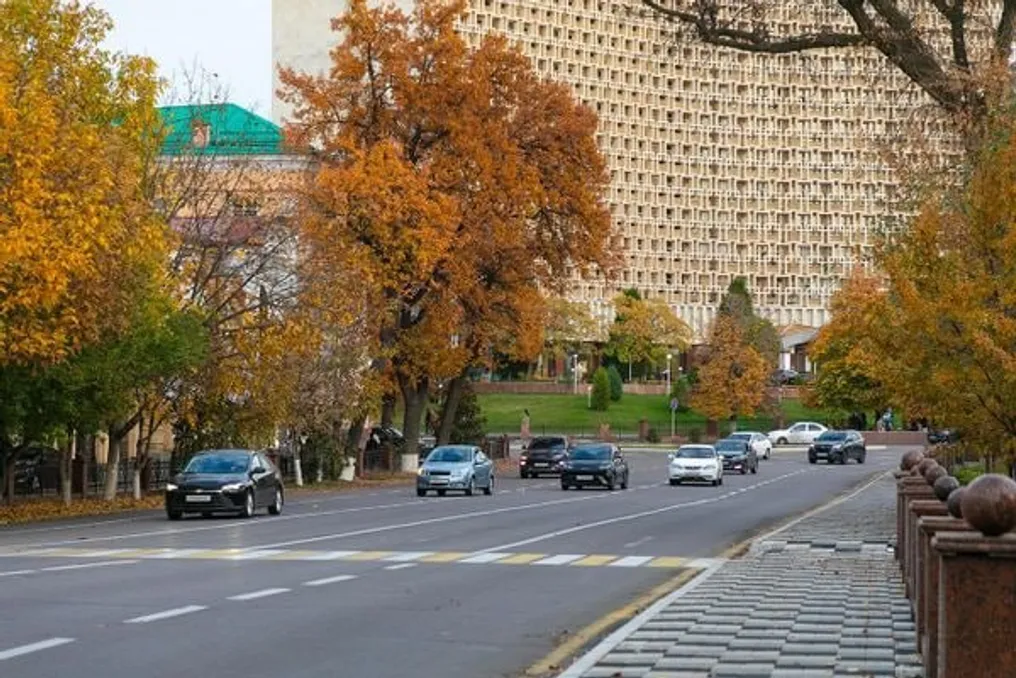
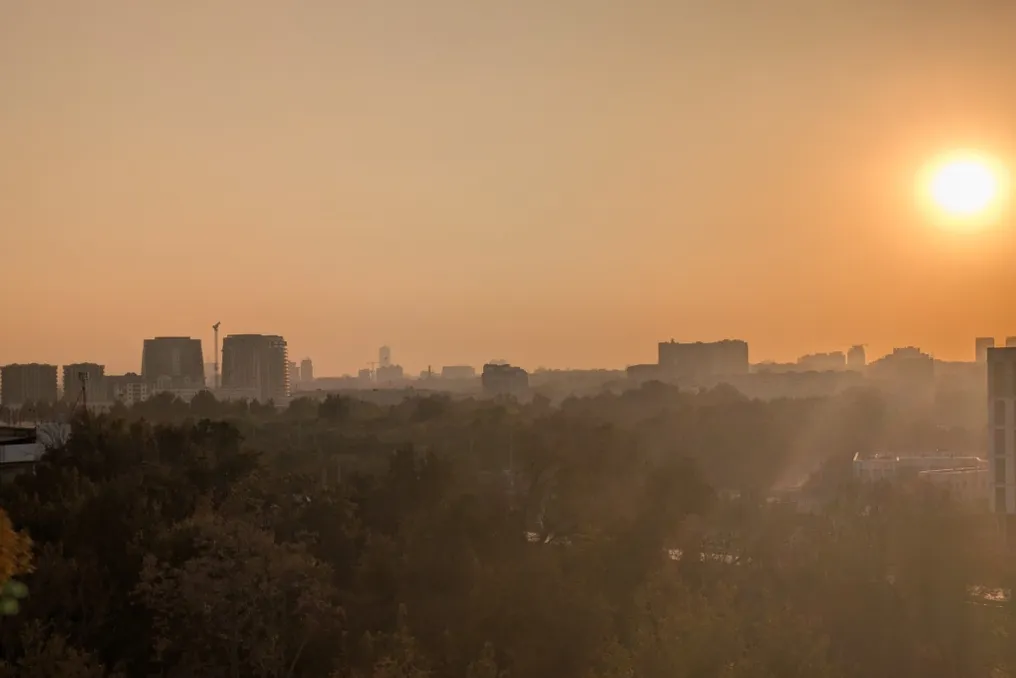
Dust masses and unfavorable weather conditions worsen air quality in Tashkent and the region
Read more
gazeta.uz

Dust masses and unfavorable weather conditions worsen air quality in Tashkent and the region

Unfavorable meteorological conditions and natural factors are one of the key causes of air pollution in Uzbekistan, especially in Tashkent. These factors include low precipitation levels, as well as processes related to wind and natural atmospheric air movement. These conclusions were stated by Dr. Farrukh Sattarov, Doctor of Philosophy in Technical Sciences and Director of the National Climate Change Center, whose comments were published by the press service of the National Committee on Ecology and Climate Change.

As of October 26, only 3.9 mm of precipitation fell in Tashkent, which is significantly below the monthly norm of 23.7 mm, meaning almost six times less. This lack of precipitation prevents the washing out of dust particles from the atmosphere, contributing to their accumulation.

The current conditions are recognized as unfavorable, especially for the most vulnerable segments of the population. Residents are strongly advised to limit physical activity outdoors and use protective face masks. Farrukh Sattarov also noted that over the past decade, changes have occurred in the natural exchange of atmospheric air: during the cold half of the year, the frequency of unfavorable weather conditions caused by the absence of strong winds and precipitation has increased by 57% compared to previous years, complicating natural air purification.

Specialists use both ground monitoring stations and satellite imagery to monitor air quality. Analysis of satellite data for the period from October 1 to 26 using the SILAM model and comparison with the international Air Quality Index (AQI) showed an increase in the index during periods when dust masses penetrated Tashkent and surrounding areas. For example, on October 4–5, when there was precipitation, the AQI remained at 66–71 (moderate); however, after this, against the backdrop of insufficient precipitation and dust accumulation, air quality worsened: on the evening of October 26, the AQI reached 155–195 (unhealthy), and the forecast for the evening of October 27 was 150–190.

Images obtained from the European platform EUMETSAT and the Meteosat satellite recorded large dust pollution in Tashkent and neighboring regions on October 25–26. This phenomenon affected Tashkent, Tashkent Region, as well as parts of Syrdarya and Jizzakh Regions. According to the center's forecasts, unfavorable conditions related to dust and pollution may persist until the beginning of next week.

Furthermore, Uzgidromet warned about the possibility of atmospheric inversion occurring during the current week due to warm weather. The combination of lack of precipitation, weak wind, and inversion can slow down the self-purification of the atmosphere, which, according to the report, may lead to an increase in the concentration of dust particles and other pollutants in Tashkent until November 1. Uzgidromet also emphasized that the actual state of the air depends on emission volumes, as well as wind speed and direction.

The National Committee on Ecology and Climate Change is taking a number of measures to improve air quality. Warnings were sent to 30 major construction companies regarding the need to apply dust suppression methods. Additionally, 131 major economic entities belonging to Category I and II environmental impact were ordered to reduce their emissions into the atmosphere by half. A number of seven thermal power plants (TPP) located in Tashkent and its vicinity were also warned.

The Committee proposed to the Council of Ministers of Karakalpakstan, the city administrations of Tashkent and other regions, to organize the cleaning of dust and sand from roads and verges, as well as ensure the operation of existing fountains. To effectively solve the problem, the committee insists on the need to accurately determine the sources of pollution. In this context, the Center for Specialized Atmospheric Laboratory was established to study pollutant sources. The head of the center, Doctor of Technical Sciences Zikrilla Alimov, reported that air samples are being taken from different districts of Tashkent using special filters for laboratory analysis to study the sources, their impact on air quality, and patterns of dispersion, and this experience is planned to be scaled up to the entire republic in the future.

Popular