Wild orcas once called whale hunters to work at Eden, located on the southeast coast of Australia. They did this by slapping their tails on the water before directing boats with rowers toward their prey.
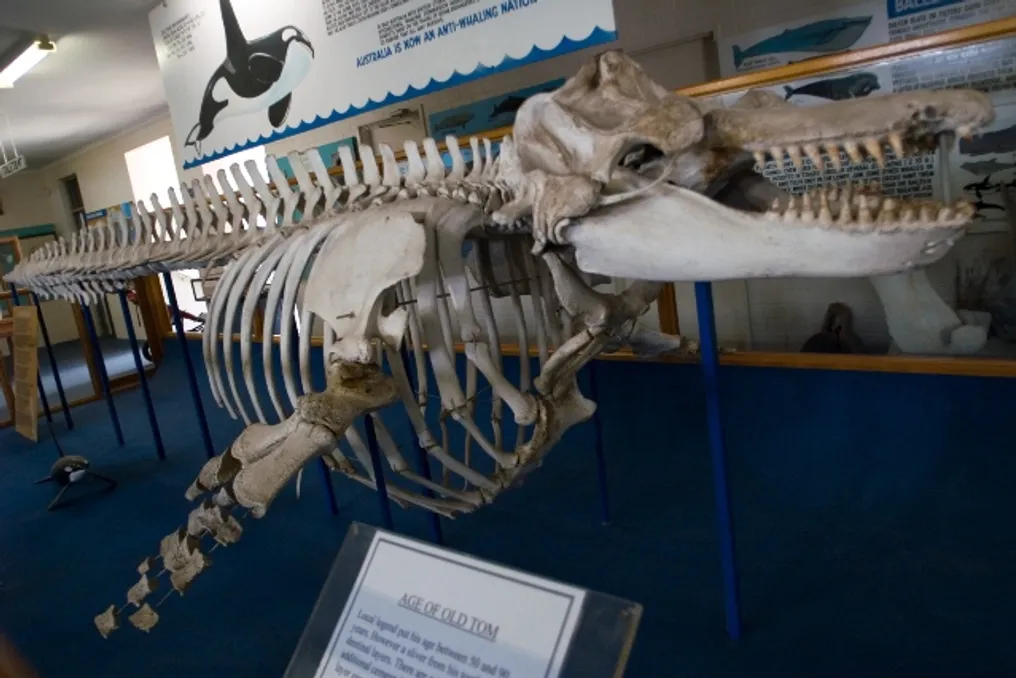
In Tuoifold Bay, participants in the hunt, both those in the boats and those underwater, shared the catch. The Eden Orca Museum preserves the history of this partnership, including the skeleton of the most famous participant—an orca named Old Tom.
The history of the hunters' cooperation goes deeper than European whaling stations, reaching back to the local Taua people. Steven Holmes, a traditional custodian of the Taua people, provided his people's narrative for a study published in 2023 in the Journal of Heredity. This study examined both Old Tom's DNA and the relationships that made him famous.
In the article's preface, Holmes wrote: 'We consider beowas (orcas) our brothers.' He described the belief that the Taua people return as orcas after death, remaining part of the community. According to family history passed down to him, ancestors swam with Old Tom, holding onto his dorsal fin, and sang to the orcas from the beach.
Researchers traced this connection even before European colonization. Later, commercial whalers took advantage of this, hiring locals whose knowledge and skills were in demand.
Historical records describe how orcas herded migrating humpback and southern right whales, while others warned people on the shore. Whalers followed them and then used harpoons and spears to kill the exhausted prey. This agreement was known as the 'Tongue Law.'
According to the article's reconstruction, the dead whale was kept for 24–48 hours so that the orcas could eat its tongue and lips before the whalers took the carcass for processing. Researchers also noted that orcas in other areas prefer whale tongues. In Eden, this appetite allowed two hunting groups to receive different parts of one animal, with humans waiting their turn.
The fishing partners in Eden had a very specific dining order. According to the study, whaling operations ceased by 1928, and most orcas had already left. Old Tom died in 1930, meaning his death occurred after the industry ended, not suddenly stopping the hunt.
His remains eventually offered another way to investigate the missing group. For the 2023 study, scientists extracted DNA from his teeth and jawbone and compared it with samples of orcas from around the world. Tom showed the greatest genetic similarity to modern New Zealand orcas, but researchers found no clear descendants. This raised the possibility of local extinction, although it still allows for the possibility that descendants may exist in unstudied populations.
No one has heard a tail slap in Tuoifold Bay for almost a century, but it remains an open question whether anyone is there to answer for Old Tom.