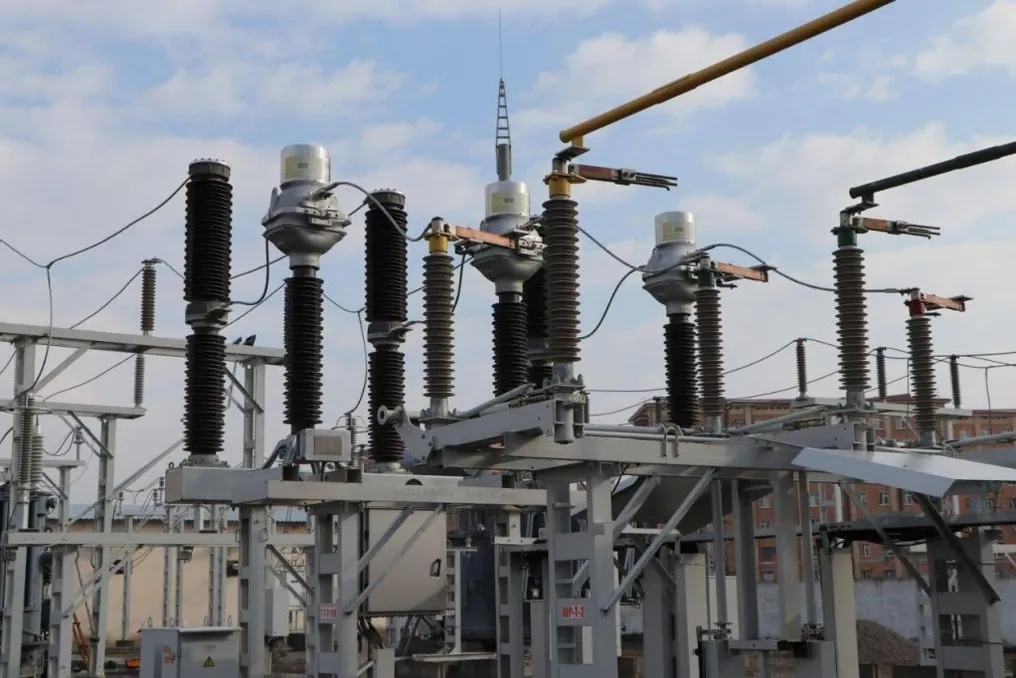
Discrepancy in Electricity Generation Data: Ministry of Energy and Uzbekistan's Statistical Committee Differ by 2.4 Billion kWh
Read more
Podrobno.uz [uz]
podrobno.uz

Discrepancy in Electricity Generation Data: Ministry of Energy and Uzbekistan's Statistical Committee Differ by 2.4 Billion kWh

The Ministry of Energy and the National Committee on Statistics of Uzbekistan have presented divergent figures regarding electricity generation volume for the first nine months of 2026. The discrepancy found between the data of the two agencies amounts to approximately 2.4 billion kilowatt-hours.

Economist Otabek Bakirov noted the need for clarification from the relevant agencies regarding this divergence. A correspondent from Podrobno.uz requested comments from the Ministry of Energy to determine the probable cause of the differences in the reported figures.

According to information provided by the National Committee on Statistics, 67.16 billion kilowatt-hours of electricity were produced in the country from January to September. However, the Ministry of Energy reported a higher figure—69.6 billion kilowatt-hours for the same period, resulting in a difference of about 2.44 billion kilowatt-hours.

Previously, it was suggested that the discrepancy might be due to the agencies accounting for different groups of producers. Specifically, the Ministry of Energy separately provides information on generation carried out by small solar installations and power plants.

Explanation of Discrepancies

In response to Podrobno.uz's inquiry, the Ministry of Energy's press service suggested that the National Committee on Statistics may not have accounted for energy generated by small rooftop solar stations installed on building roofs. According to the Ministry of Energy, these installations alone produced 2.5 billion kilowatt-hours of electricity from January to September.

This figure was also stated at the Ministry of Energy briefing on October 20, which covered the results of electricity production and supply for nine months. At this event, the agency specified that small-capacity solar panels generated 2.5 billion kilowatt-hours, while this figure amounted to two billion kilowatt-hours for the entire year 2025.

Thus, the volume of generation from small solar stations almost entirely corresponds to the difference observed between the data of the two state structures. Nevertheless, the Ministry of Energy indicated this as only one possible explanation for the existing discrepancy.

Similar stories

Uzbekistan's thermal power plants generated 15.2 billion kWh in nine months
Read more
uzdaily.uz

Uzbekistan's thermal power plants generated 15.2 billion kWh in nine months

The enterprises of JSC 'Thermal Power Plants' produced 15.2 billion kilowatt-hours of electricity in the first nine months of 2026, exceeding the planned indicator by 108%. Additionally, heat supply amounted to 5.9 million gigacalories, reaching 107% of the planned level, according to the company's press service.

The company manages eight thermal power plants with a total capacity of 6.9 GW, as well as nine heating centers operated by LLC 'Tashkent Issiqlik Markazi'. An additional power plant with a capacity of 2.1 GW is also under the company's purview.

The specific consumption of traditional fuel for electricity generation was 272.11 grams per kWh. This figure was 3.46 grams below the annual forecast and 5.79 grams lower than during the same period in 2025.

During the reporting period, 3.8 billion cubic meters of natural gas and 645,500 tons of coal were consumed for heat and electricity production.

Energy saving measures at the company's facilities are organized in accordance with the international standard for energy management ISO 50001. Based on this system, a plan of organizational and technical measures for 2026 was approved jointly with Uzenergoinspektsiya under the Cabinet of Ministers.

The measures implemented in the first nine months allowed for savings of 52 million cubic meters of natural gas and 137.7 million kWh of electricity. The goal for gas savings was achieved at a level of 137.7%, and the goal for electricity savings was achieved at a level of 107%.

Modernization of Ten Substations Underway in Tashkent to Increase Power System Capacity
Read more
podrobno.uz

Modernization of Ten Substations Underway in Tashkent to Increase Power System Capacity

The modernization of ten electrical substations is being carried out in the city of Tashkent with the aim of increasing their throughput capacity and ensuring more stable electricity supply. The replacement of power transformers will lead to an increase in total additional capacity by 333.2 megavolt-amperes, allowing the entire system to cope with increased loads.

The work covered the following substations: 'Risovaya', 'SAZIIT', 'Istikbol', 'Yangi Tuzel', 'Tuzel', 'Karasu', 'Charogon', 'Gornaya', 'Bibliotechnaya', and 'Vystavochnaya'. More powerful transformers were installed at each of these stations, which contributed to the increase in throughput capacity and the creation of additional reserve.

The most significant increase in capacity was recorded at the 'Karasu' substation, where the indicator rose from 53.6 to 138.6 megavolt-amperes. Additionally, the capacity at 'Yangi Tuzel' increased almost fourfold—from 12.6 to 50 megavolt-amperes. At the 'Istikbol' station, after the completion of the work, the capacity will reach 126 megavolt-amperes, exceeding the previous 80 megavolt-amperes.

Overall, this modernization will enable Tashkent's energy infrastructure to better withstand loads, minimize the probability of outages, and improve the overall quality of electricity supply for all consumers. It should be noted that as of the end of 2025, Uzbekistan has commissioned 11 substations with a total capacity of 1,614 megavolt-amperes and 420 kilometers of electrical networks.

Ministry of Economy and Finance explains the establishment of the basic electricity consumption norm at 350 kWh instead of 500 kWh
Read more
gazeta.uz

Ministry of Economy and Finance explains the establishment of the basic electricity consumption norm at 350 kWh instead of 500 kWh

The basic electricity consumption norm for non-gasified regions of Uzbekistan is proposed to be raised from the current 200 to 350 kWh. This decision was made after analyzing actual consumption during the winter period. Deputy Minister of Economy and Finance Khurshed Mustafayev presented this information at a press conference held on October 14.

During the meeting, representatives of state bodies discussed issues related to measures to support the population and changes in tariffs for the upcoming autumn-winter period. Particular interest was drawn to the question of choosing exactly 350 kWh as the basic indicator for territories where gas supply is absent or difficult, as a 500 kWh option had previously been considered in discussions.

Circumstances of Choosing the New Norm

Mustafayev justified the choice of the norm by naming two key factors. Firstly, there is the existing social assistance system for low-income families. He specified that the Social Protection Agency covers the difference between the basic and increased tariffs for an additional 150 kWh above the initial 200 kWh, allowing these families to pay under the basic tariff.

The second reason was a detailed analysis of how much electricity is consumed in non-gasified areas during winter. The analysis showed that 60% of residents in these areas consume no more than 300 kWh in winter months. Based on this data, it was proposed to set the monthly basic norm at 350 kWh.

According to the official, about 4 million households in Uzbekistan do not have access to natural gas via main pipelines and use, for example, liquefied gas. Furthermore, there are areas where natural gas supply is unstable, especially during the heating season, as pressure can drop or supply can cease entirely during the day.

To determine such territories, authorities studied data on gas supply to individual households from December 2, 2025, to March 13, 2026. Following the study, it was proposed to extend the increased basic norm not only to non-gasified areas but also to territories experiencing problems with natural gas supply. However, no separate calculation demonstrating the possible impact of raising the norm to 500 kWh on the budget was presented at the press conference.

Previously, on October 6, President Shavkat Mirziyoyev approved the initiative to increase the basic electricity consumption norm for residents of non-gasified zones and areas with gas supply problems—from 200 to 350 kWh. The relevant draft government resolution was put up for public discussion on October 13.

How Will the Situation Change for Families Using the New Norm?

According to explanatory materials prepared by the authorities, an analysis of electricity consumption for the period from September 2025 to August 2026 showed that approximately 4 million subscribers live in Uzbekistan who are not connected to natural gas and use bottled liquefied gas. The consumption structure in the heating season differs from other months:

  • The share of subscribers consuming up to 200 kWh decreases from 74% to 61%.
  • The share of those consuming from 201 to 350 kWh increases from 17% to 19%.
  • The share of consumers in the 351–500 kWh range increases from 5% to 9%.
  • The share of those consuming over 500 kWh grows from 3% to 10%.

Thus, during the heating season, about 39% of households without gas supply consume over 200 kWh monthly, compared to approximately 25% in other months.

Regarding households connected to gas networks but facing difficulties in obtaining gas, their numbers vary significantly. According to official data, between December 2, 2025, and March 17, 2026, their number fluctuated from approximately 5,000 to 607 thousand depending on the day.

The proposed increase in the basic norm from 200 to 350 kWh will lead to a reduction in the cost of electricity in the range of 201 to 350 kWh from the current 900 to 650 soms per kWh, which is almost a 28% saving. According to official estimates, the new norm will cover about 80% of subscribers in non-gasified territories. Over 1.5 million consumers will save a total of about 171 billion soms during the heating season, with an average saving of approximately 27.5 thousand soms per month for them.

Specifically, with a monthly consumption of 250 kWh, expenses will decrease by 12.5 thousand soms; with 300 kWh—by 25 thousand; and with 350 kWh—by 37.5 thousand soms.

The increased norm is planned to be applied from November 1, 2026, throughout the entire heating season. In Karakalpakstan and Khorezm region, it will be effective from October to February, and in other regions—from November to February. Lists of households having difficulties obtaining natural gas must be approved by regional khokimiyats based on proposals from 'Uzenergoinspektsiya', 'Khududgaztaminot', and 'Regional Electric Networks'. As part of support measures, payments of over 1 million soms are also planned for more than 1 million needy families in November in Uzbekistan, as well as expanding the circle of recipients of compensation for electricity, gas, and coal with extended payments.
Popular