Zhuoyu Company Adapts Autonomous Driving Model for Heavy Trucks; PDS 4 System Now in Mass Production
Read more
Pandaily
pandaily.com

Zhuoyu Company Adapts Autonomous Driving Model for Heavy Trucks; PDS 4 System Now in Mass Production

Zhuoyu Technology, formerly known as DJI Automotive, unveiled a commercial vehicle driver assistance solution at an event held in Zhuhai on October 29th. This solution is presented in two versions.

The PDS 4 version operates based on the company's driving model version 4.0 and later, providing Navigation On Autopilot (NOA) functionality for heavy trucks used on long-haul logistics routes. This version has already entered serial production.

The company plans to develop PDS 5, which will run on the next generation of Zhuoyu's native multimodal base model and will add urban NOA functionality for buses, light trucks, and vans.

Instead of creating a separate system specifically for trucks, Zhuoyu adapted its model developed for passenger cars. Company management described this approach as a unified foundation, scenario improvement, and engineering adaptation.

The company claims that its passenger car system has accumulated over 3 billion kilometers of driving data. Furthermore, approximately 400 million frames of data collected during highway travel were trained for the truck version.

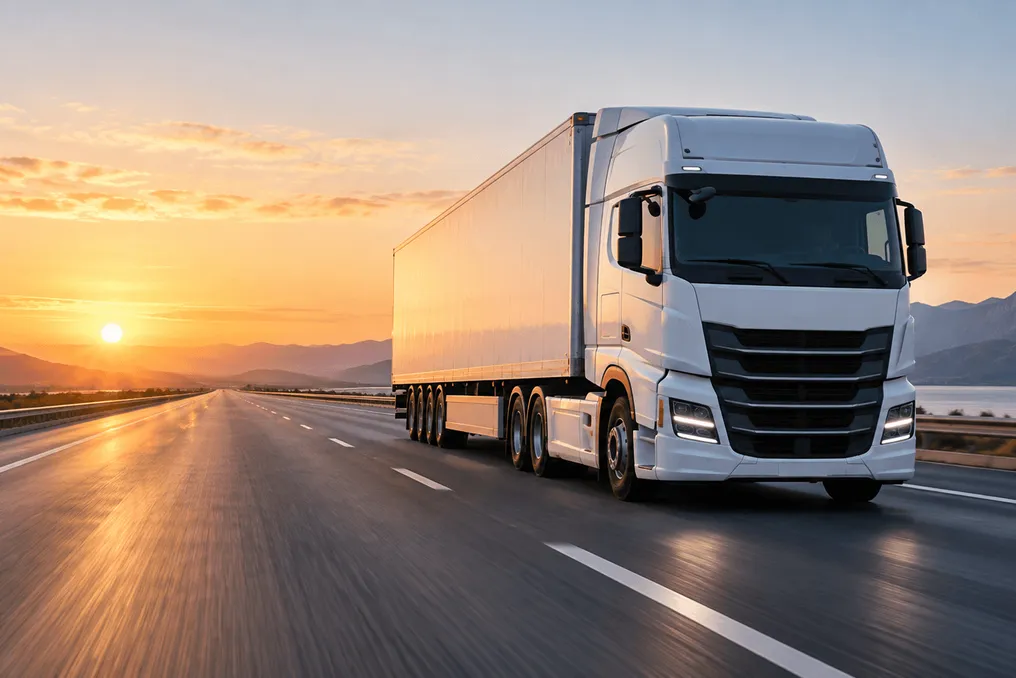
Trucks present specific challenges: a fully loaded heavy truck can weigh around 40 tons, has large blind spots, and requires significantly more stopping time. Zhuoyu notes that the truck's braking chain has a delay approaching one second. The lidar system, installed inside the cabin rather than externally, reduces exposure to rain, snow, dirt, and stones. The company states that the system can detect obstacles on highways up to 500 meters away, including small objects with low reflectivity, such as tires and cardboard boxes.

The system also assesses trailer position, the angle between the tractor and trailer, and current load, coordinating the operation of the engine, retarder, auxiliary, and service brakes during ascents and turns.

Zhuoyu has additionally integrated a fuel-saving algorithm trained using reinforcement learning. This algorithm determines when to release the accelerator, apply power, or use the retarder based on gradient, curvature, powertrain characteristics, and surrounding traffic. Over two months of operation on more than 200 production trucks, covering over 20 million kilometers, the company reports fuel savings ranging from 4.5 to 7.5 percent.

The first serial vehicle is the Shacman X5000 from Shaanxi Automobile Group, production of which began in June. Several hundred such vehicles are currently being used on long-haul routes by the courier company Yunda. Zhuoyu is also collaborating with XCMG, Sinotruk, FAW Jiefang, Foton, and Dongfeng Commercial Vehicle, with several models expected to be released by the end of the year. The Yutong Bus will utilize PDS 5 on an urban bus.

It is important to note that this system remains a driver assistance system requiring constant monitoring, not fully autonomous control.

Similar stories

Maruti Fronx to receive update with enhanced features while maintaining the price at 6.90 lakh rupees
Read more
www.aajtak.in

Maruti Fronx to receive update with enhanced features while maintaining the price at 6.90 lakh rupees

Maruti Suzuki continues to update its range of vehicles. Recently, the updated Baleno Facelift was introduced, and now the company is preparing to release the updated Maruti Fronx model. Work on the phased version of this car is underway, and its test samples have been spotted on the roads multiple times.

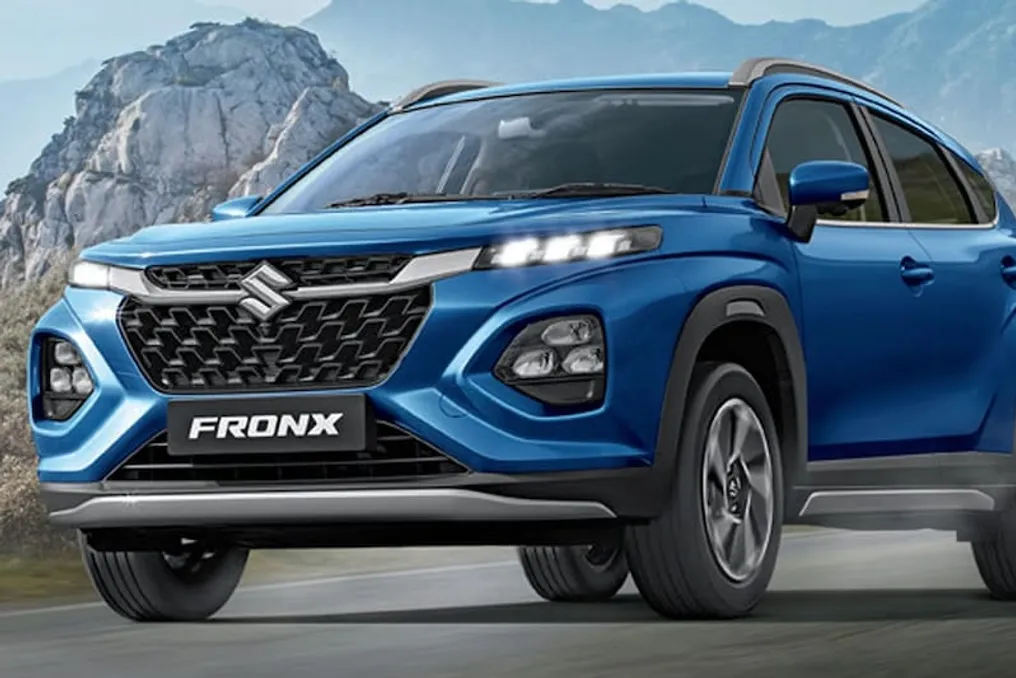
The new version of the Maruti Fronx has been spotted again, with the car completely covered in camouflage. Nevertheless, some design elements are visible even under this camouflage. The car will feature elements such as dual-function LED daytime running lights (DRLs), split headlights with black internal elements, and a large front grille.

Changes are expected in the front grille of the updated Fronx. Protective skid plates may be added to give the crossover a bolder appearance. The car has also been seen with existing alloy wheels.

The overall exterior look of the updated version will remain similar to the current Fronx, with significant changes focusing specifically on the front end. The rear section is not expected to undergo radical changes. The new Fronx will be equipped with a range of new features, including Level 2 ADAS, which was previously implemented in the Baleno Facelift.

Level 2 ADAS features will include automatic emergency braking, lane keeping assist, adaptive cruise control, and automatic high beam assist. In the cabin, the company plans minimal changes, but options such as keyless start, automatic climate control, six airbags, a 360-degree camera, a Head-Up Display, wireless Android Auto and Apple CarPlay support will be available.

The car will retain characteristics such as electrically adjustable rearview mirrors, cruise control, leather-wrapped steering wheel, 16-inch alloy wheels, wireless phone charging, a 9-inch touchscreen system, ventilated seats, and other conveniences.

The main change might occur in the engine. The new Fronx may be fitted with a 1.2-liter three-cylinder Z12E engine, used in the company's latest models such as Baleno, Dzire, and Swift. According to available data, Maruti is also working on an economical hybrid system that could potentially appear in the Fronx, although its release is not expected anytime soon.

Currently, the car is available at a starting price from 6.90 lakh rupees for the exterior. When used in CNG mode, fuel consumption is 28.51 kilometers per kilogram.

NGO suggests limiting plug-in hybrid tanks to 15 liters to encourage electric use
Read more
autopapo.com.br

NGO suggests limiting plug-in hybrid tanks to 15 liters to encourage electric use

The non-governmental organization (NGO) advocates that plug-in hybrid vehicles should have a fuel tank limited to 15 liters. Although these models promise to operate exclusively on electricity in urban environments, reality shows that many owners rarely connect the cars to the electrical grid, resorting to gasoline use.

To promote this change, the European NGO Transport & Environment (T&E) recommends that governments across the continent offer incentives only to models with a maximum tank capacity of 15 liters, given that the current average is 51 liters.

With a smaller tank volume, a driver who chooses not to recharge the battery would have to refuel 57 times a year, compared to the 17 times currently recorded. The total fuel cost would remain unchanged; the strategy aims for the inconvenience of going to the gas station to motivate the driver to use electric charging.

This proposal is based on consumption data collected directly by the vehicles themselves and compiled by the European Environment Agency. According to T&E, plug-in hybrids registered in 2024 emitted an average of 145 grams of CO2 per kilometer during actual use, a value almost six times higher than the 24 g/km established in official homologation.

This discrepancy occurs because official standards assume that these cars will travel more than 80% of the distance in electric mode, when in reality, this proportion was only 27%. As a result, they emitted only 14% less than combustion and conventional hybrid cars, contradicting the official promise of an 83% reduction.

Large capacity tanks intensify this problem. In Europe, Chinese manufacturers such as BYD and Chery, which owns the Omoda and Jaecoo brands, dominate sales in this segment with models offering over 1,000 km of total range, thanks to tanks close to 70 liters.

The 15-liter limit is associated with other requirements proposed by T&E. By 2030, the NGO wants there to be a minimum real electric range of 200 km, support for fast charging exceeding 100 kW, and an electric motor with a power at least three times greater than that of the combustion engine.

With 15 liters and a consumption of 14.9 km/l when the battery is discharged, the vehicle could travel approximately 220 km using only fuel, which is comparable to the distance traveled in electric mode.

It is important to note that this measure is a recommendation from the NGO and not a regulation from the European Union. However, the debate is relevant to Brazil, given that Chinese plug-in hybrids are among the best-selling electrified vehicles in the country.

Five categories of vehicles in Brazil that will resist replacement by Chinese models
Read more
autopapo.com.br

Five categories of vehicles in Brazil that will resist replacement by Chinese models

The Brazilian automotive market has its own characteristics. Although Chinese electrified vehicles are gaining ground in more common segments, such as SUVs, hatchbacks, and sedans, there are still niches where established brands maintain dominance and models that lack direct competitors.

Some of these Brazilian segments are quite specific, depending on local projects, or are areas of less interest for Chinese manufacturers. Below, five types of cars that are unlikely to be overtaken in the country are detailed.

Minivans and tradition

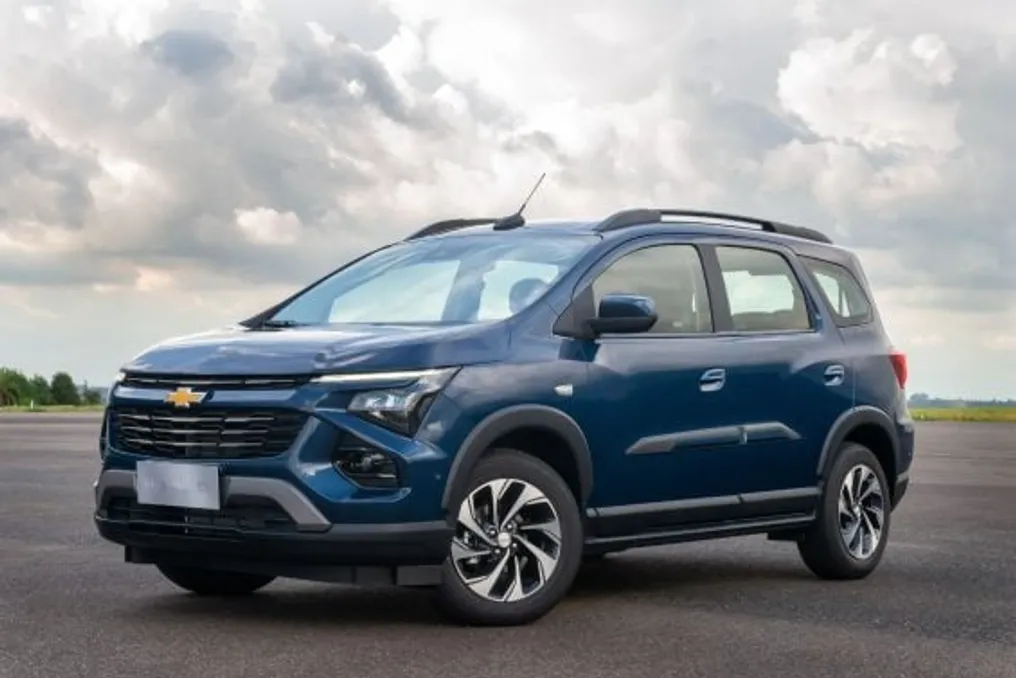
Chevrolet renewed its entire passenger car line using new platforms and three-cylinder engines. However, the Spin minivan remains a strong point from the previous generation, maintaining its Gamma II architecture and the 1.8 Family 1 engine.

Despite being an older model, the Spin received a major update in 2024, incorporating six airbags, active safety assistance systems, greater connectivity, and other modernizations. The automaker itself justified this maintenance with internal data, indicating that the minivan audience is the most loyal within the company.

This vehicle is popular among taxi drivers, large families, ride-share drivers, tourism professionals, bidding agencies, and corporate fleets. The Family 1 engine is known for its durability and low maintenance cost, having been present in the Brazilian market since the introduction of the Corsa in 1994.

Stellantis tried to compete with the Spin through the Citroën Aircross, which offers seven seats and comparable prices. However, the model's simplicity, the absence of a manual transmission, the use of a turbo engine, and the limited presence of the brand in the national territory were unfavorable factors.

Although there are compact and simple minivans manufactured by Chinese companies, such as the Wuling Hongguang (sold as Chevrolet in certain markets), this model is considered more basic than the Spin and is primarily focused on Asian markets.

Compact Pickups and the Italian legacy

The Fiat Strada has held the title of best-selling car in Brazil for several years. This segment of compact pickups was conceived in Brazil by the Italian manufacturer, with the launch of the 147 Pick-up in 1979.

The main challenge to Strada's leadership does not come from Chinese brands, but rather from the Volkswagen Tukan. The German automaker replicated crucial elements of Fiat's success, such as the rear suspension with semi-elliptic springs and the availability of a naturally aspirated engine as an entry option.

BYD is preparing the launch of the Mako, an intermediate pickup derived from an SUV, aiming to compete with the Fiat Toro. Furthermore, there is information that the Chinese company is developing a rival for the Strada, but in this entry-level segment, simple work-oriented models are still highly valued.

An electrified compact Chinese pickup would have a limited impact, affecting at most the Chevrolet Montana.

Compact SUVs and distinct proposals

Currently, there are options for compact Chinese SUVs available in Brazil, including the GAC GS3, Caoa Chery Tiggo 5X, BYD Atto 2, and GWM Ora 5. These models have generated significant competition for traditional brand vehicles in retail, betting on embedded technology to gain market share.

The Renault Duster also falls into the compact SUV category but operates with a different proposal. It resembles a classic utility vehicle, characterized by its high ground clearance, durable suspension, uncomplicated mechanics, and large trunk.

This configuration has made it one of the most popular vehicles used as police patrol cars in Brazil. Stellantis tries to capture part of this audience with the Citroën Aircross, but Chinese brands do not come close to developing an SUV as simple as the Duster.

Mid-size Pickups and American dominance

Chinese brands are entering the mid-size pickup market, with GWM, JAC, and Foton adopting the traditional approach by launching models equipped with diesel engines. However, there is an upper range explored exclusively by North American manufacturers: large trucks.

Specifically, we are talking about robust vehicles with diesel engines and a gross weight exceeding 3.5 tons. In Brazil, only Ram explores this category with its 2500 and 3500 models.

These pickups are highly appreciated by the agricultural sector and attract an audience divided between those seeking ostentation and real users who employ the Ram to tow trailers, often pulled by horses.

The largest Chinese trucks in the global scene are classified as mid-size; some are hybrid and exceed 400 hp, but none possess the operational capabilities of a Ram 3500.

Sports Cars and the preference for classic experiences

Although modest, Ford registered the sale of 858 Mustangs in Brazil in 2025. When the company announced the importation of 200 units with a manual transmission, they sold out quickly.

There is a dedicated public for sports cars in Brazil; the Mustang had notable sales through independent importers before Ford began official distribution. With the discontinuation of the Chevrolet Camaro production, the pony car's position has become even more favorable.

Consumers are aware that, for a much lower cost, there are Chinese electric cars with over 400 hp and impressive acceleration. However, those seeking a sports car value other aspects, such as excellent dynamic balance, engine sound, and the entire sensory experience provided by driving such a vehicle.

Current Chinese brands focus on producing generalist electric cars that are also extremely fast. Their sports models are supercars with over 1,000 hp and equally high prices. On the other hand, enthusiasts continue to prefer the Ford Mustang, the BMW M2, the Porsche 911, and other automobiles with traditional characteristics.
Popular