Tencent opens internal data analysis tool Beacon AI for public use
Read more
Pandaily
pandaily.com

Tencent opens internal data analysis tool Beacon AI for public use

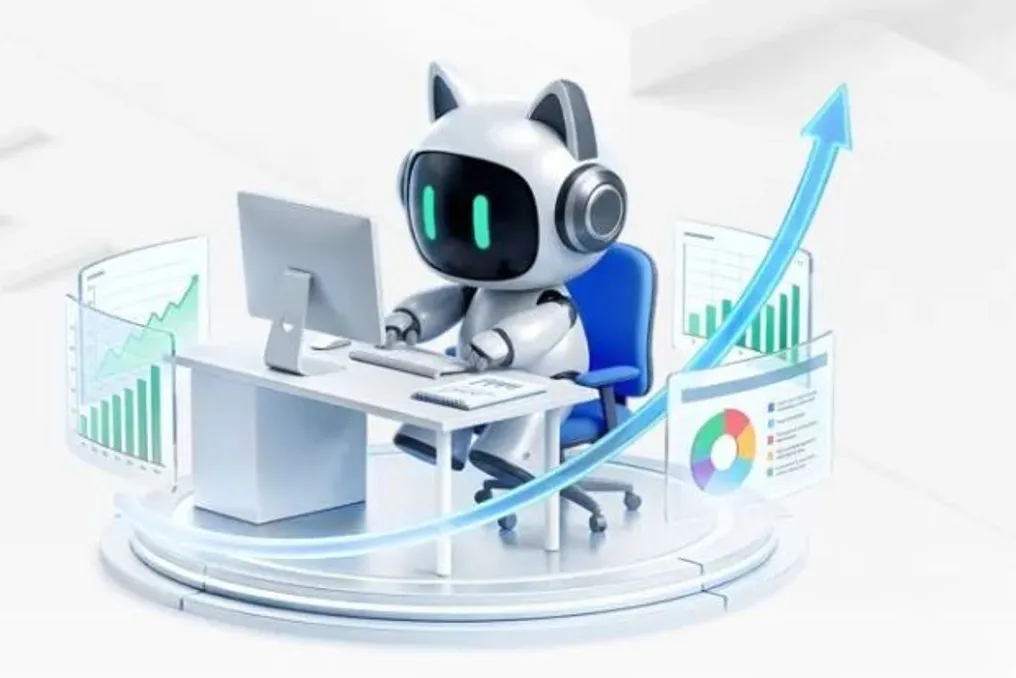
Tencent has made its artificial intelligence-based data analysis platform, Tencent Beacon, available to external companies and private users. Users can register on the website beacon.qq.com. Previously, Beacon was used exclusively by internal Tencent teams for self-service data analysis and visualization for about ten years.

The platform has now been completely redesigned into a comprehensive set of AI-powered data analysis tools. This allows business employees to ask questions in plain language, create dashboards, track the reasons for metric changes, configure monitoring, and collaborate without needing to write SQL code.

Tencent reports that the updated Beacon AI is used by over one hundred internal teams, including QQ Studios, Tencent Video, Tencent News, WeChat Pay, Yuanbao, and TiMi game studios. The company provided examples where an end-to-end operational dashboard, which traditionally required four to six working days in standard Business Intelligence (BI) tools, was created in less than two hours. Furthermore, a monitoring panel was completed in just eight minutes after the user opened the chat.

Beacon AI integrates with three categories and ten types of data sources. These include MySQL, StarRocks, PostgreSQL, and ClickHouse databases, as well as local Excel and CSV files, and online documents from Tencent Docs, WeCom smart sheets, and Feishu. Users can tag fields as dimensions, metrics, or temporal dimensions so that the AI interprets them correctly.

When a user mentions a dataset in the chat and describes the desired outcome, the AI begins delivering results as it understands the request, matching fields, selecting charts, and displaying the dashboard. Many chart types are supported. Dashboards can be edited by pointing to an element and describing the required change, correcting the AI-generated SQL, or directly modifying the HTML dashboard, while maintaining version history and rollback capability.

For attribution purposes, users can click on an unusual chart and ask for the reason behind a numerical value change. The alerting system can trigger when thresholds are reached, data is missing, or queries fail, with notifications sent via WeCom or email. The platform comes with twelve data analysis skills and three visualization skills, supports more functions through a skill marketplace and team-created skill sets, and connects to internal knowledge bases and other systems via the Model Context Protocol (MCP).

A feature called Self-Harness transforms feedback, corrections, and successful methods from past tasks into reusable experience. Regarding data security, Tencent asserts that the model only sees metadata, such as field names and data types, during reasoning. Actual values are filled via placeholders and are not read by the model, and every step is recorded in an audit log. Team spaces offer three levels of permissions, and administrators can restrict the use of AI models for team members. The enterprise version supports private deployment.

Similar stories

Tencent's WorkBuddy adds remote control feature to monitor AI tasks from mobile devices
Read more
technode.com

Tencent's WorkBuddy adds remote control feature to monitor AI tasks from mobile devices

Tencent's artificial intelligence agent platform, WorkBuddy, has released a remote control feature supported by the Tencent Edge One team. This new capability allows users to connect to a computer logged into the same account using a mobile application. Users can view the desktop in real-time and intervene in operations if necessary.

Unlike traditional remote desktop tools, which primarily focus on device-to-device access, the WorkBuddy feature is specifically designed for AI agent workflows. Users gain the ability to monitor the agent's actions in real time and intervene if tasks deviate from course or require manual confirmation.

To use this feature, the mobile application must be updated to version 2.7.0 or later, as well as the macOS desktop client to version 5.9.3 or higher. After connecting, the computer screen is displayed in a pop-up window on the app's home page or at the top of the dialogue, allowing monitoring of the agent without leaving the current chat.

If an agent encounters an issue while performing a task, users can intervene directly from their phones. For example, if an account is not authorized or the connector authorization has expired, users can attempt to resolve the issue on mobile devices instead of returning to their computers.

For manual control, users can press the full-screen mode button, which switches the phone interface to landscape orientation and activates the ability to control the desktop via touch input. The interface provides three options: Control, Keyboard, and Mouse, which support actions such as switching windows, returning to the desktop, and text input. A virtual mouse is also available for more precise clicking and scrolling in small areas of the screen.

Regarding security, Tencent states that the feature limits each device to one authenticated mobile device simultaneously. Screen data and control commands are transmitted over an encrypted channel. The platform does not record user input or store video recordings of remote control sessions. Network traffic generated by remote control is deducted from the device's data usage and does not consume WorkBuddy AI agent token quota.

To get started, users need to enable the remote connection option for devices logged into the same account in WorkBuddy settings, install the necessary remote control component, and grant screen recording and accessibility permissions. Once configured, users can connect remotely while the computer remains powered on and WorkBuddy is online.

In practice, this feature helps solve a common problem in AI agent workflows—the need for human intervention during task execution. AI agents are already capable of performing multi-step tasks, such as document organization and data collection, but they can still encounter authorization requirements, permission requests, or operational errors. Remote control gives users the ability to monitor progress and make adjustments from their phones without being tied to their desks.

However, this feature may offer more than just a way to control computers from a phone. It could potentially introduce a more flexible model of human-AI collaboration, where AI handles routine work, and users intervene to make decisions and correct errors at critical moments. Rather than striving for completely autonomous execution at all costs, maintaining human oversight might be a more practical approach for AI productivity tools at the current stage of development.

Nevertheless, a smartphone cannot fully replicate the computer experience. Remote access may be convenient for simple tasks, such as approving permissions or switching windows, but its effectiveness in more complex workflows involving data processing and multiple windows remains to be seen. The feature is currently available for trial use by all users. Tencent reports that future versions will include more enterprise-oriented capabilities, including role-based permission management and audit logs.

NCERT develops modules on AI and Computational Thinking for students from Class 9 to 12
Read more
www.aajtak.in

NCERT develops modules on AI and Computational Thinking for students from Class 9 to 12

The National Council of Educational Research and Training (NCERT) has prepared an introductory module for students from Class 9 to 12 under the provisions of the National Education Policy (NEP) 2020, focusing on Computational Thinking (CT) and Artificial Intelligence (AI).

Developed under the guidance of the Ministry of Education, Government of India, the main objective of this module is to provide secondary level students with a fundamental understanding of artificial intelligence and computational thinking. Students do not need prior knowledge of any specific subject to begin this course.

This module emphasizes developing crucial skills in students such as critical thinking, creativity, and problem-solving. Additionally, students will gain help in understanding how AI works, where and how it is applied in real life, as well as its potential limitations and possibilities.

This program is based on an experiential and activity-based learning methodology, which includes activities like discussions, practical exercises, experiments, and self-reflection. These activities can be conducted with or without the aid of digital tools, allowing students from schools with various resources and facilities to benefit from it.

The module defines computational thinking as a process of identifying problems and solving them in an organized manner. It will also help students develop a basic understanding of the growing role and practical applications of artificial intelligence in daily life.

Special attention has been given to the safe and responsible use of artificial intelligence in the module. It includes topics such as data privacy, misinformation, fairness, digital security, and critical verification of information generated by AI. The aim of this initiative is to teach students to check the truthfulness and reliability of content received from AI, rather than blindly trusting it.

Furthermore, it underscores the importance of human judgment, creativity, and ethical responsibility in technology-based education.

This module aligns with the priorities of the National Education Policy 2020, which centers on developing technological awareness and essential 21st-century skills in school students. NCERT aims to prepare students to understand emerging technologies, use them wisely, and responsibly face the challenges associated with them by integrating computational thinking, AI literacy, and ethical awareness.

This module is designed for students from Class 9 to 12, and its structure is kept such that it can be implemented in diverse educational environments, including schools with limited availability of digital devices.

AI Micro-drama Boom in China Aligns with Global Growth in Mobile Viewing
Read more
technode.com

AI Micro-drama Boom in China Aligns with Global Growth in Mobile Viewing

The Chinese market for serialized mobile entertainment is expanding due to the emergence of new distribution channels, including services featuring AI-generated content. Tencent introduced Lüpaopao—a free short drama service within WeChat that offers both AI-generated series and live and animated projects.

Concurrently, ByteDance's Hongguo platform reached 168 million daily active users in July, representing a 107% increase compared to the previous year. These figures, according to QuestMobile data cited in a Nomura study published by TechWeb, surpassed the combined audience of four leading Chinese professionally produced drama and show services: Tencent Video, iQiyi, Youku, and Mango TV. Hongguo's scale places free, ad-supported short dramas in direct competition with established streaming platforms for daily viewing time.

Significance of this Phenomenon

Both specialized drama applications and social platforms are contributing to the growth of this format. The increasing supply of AI-created series in China is developing against a backdrop of growing international demand for short, serialized content.

According to a Sensor Tower report, the average daily usage time for short drama apps globally was 25 minutes in April 2026, an 85% increase from January 2025. Meanwhile, traditional streaming service usage remained relatively stable at around 35 minutes, while consumption of short dramas in Southeast Asia approached 40 minutes.

Implementation details include integrating free viewing, social discovery, and AI-produced content across various products and distribution channels. Hongguo functions as a standalone platform for free dramas, whereas Lüpaopao is integrated into WeChat, offering recommendations based on friend activity and a floating window playback feature allowing users to continue watching while replying to messages.

AI-generated dramas are also attracting viewers in short video feeds. According to DataEye's September ranking, 76.46 billion additional views were recorded for AI and animated dramas in the top 100 on Douyin; nineteen titles garnered over a billion views each, compared to five in August.

Internationally, Holywater Tech, a company based in Ukraine, manages the services My Drama (live shoots), My Muse (AI series platform), and Freebits (ad-supported). Their portfolio demonstrates the development of AI programs parallel to film production, with free viewing also being part of the international market.

In the global market context, it is noted that downloads of short drama applications are growing faster than consumer spending, with emerging markets accounting for the largest share. Sensor Tower estimated that in the first quarter of 2026 worldwide, short drama app downloads increased by 140% year-over-year, while revenue from in-app purchases grew by 20%. Southeast Asia, Latin America, and India together accounted for over three-quarters of all downloads.

Paid content remains significant: DramaBox and ReelShort each generated nearly $140 million in in-app purchase revenue in the first quarter. Ad-supported services are also expanding, such as Melolo, which is growing its audience in Indonesia, according to Sensor Tower.

Social video continues to play a role in the distribution chain. According to an Ampere Analysis survey from 2025, 44% of mini-drama viewers on social media watched them on YouTube, and 38% watched them on TikTok. Producers use these platforms both to distribute full series and to promote episodes, directing viewers to specialized drama apps.

Popular