Although Halloween is associated with pumpkins, costumes, and ghost stories, India has long celebrated its own versions of mystery and magic. Throughout the country, lamps are lit at night, dancers take on the guise of spirits, and tales of the unseen are told by the light of the bonfire. From the festival of Bhut Chaturdashi in Bengal to Theyyam in Kerala, each region brings its own rhythm to this eternal fascination with light and darkness.
Some of these traditions mark the change of seasons, while others honor folklore, but all convey the same blend of wonder and warmth, proving that the Indian calendar of festivals possesses its own spirit of Halloween.
While these events may not involve trick-or-treating or carving pumpkins, they share striking parallels with Halloween, connecting people to folklore, community, and the idea that light always finds a way through the darkness. Below is an overview of five Indian traditions that reflect the essence of Halloween, each with its own history, symbolism, and seasonal charm.
What people do:
Bhut Chaturdashi, also known as Bengali Halloween (West Bengal and Eastern India), is celebrated one day before Diwali. On this evening, families light fourteen lamps to ward off negative energy. These lamps are placed in corners, near windows, and around the Tulsi plant, illuminating every dark corner of the house. It is also a night of storytelling, where elders share tales of ancestors and benevolent spirits, filling homes with curiosity and warmth. This festival focuses on protection and spirits, similar to the Halloween idea of driving away darkness with light and play.
Kati Bihu (Assam) takes place in October, around Diwali. In rural Assam, Kati Bihu marks the transition between seasons and the beginning of a new agricultural cycle. Villagers place small lamps on bamboo poles in fields and granaries, hoping to protect the harvest from pests and ensure a good yield. This year, Kati Bihu coincided with Dhanteras, adding shared light to homes and fields. The essence of this festival lies in protection from harm and illuminating the darkness, which is an echo of the symbolic warmth of Halloween amidst the cold.
Kartik Purnima (across North and West India) occurs in November. Families and communities gather by the water to celebrate light, gratitude, and the change of season. This night possesses a serene yet mystical atmosphere, where contemplation meets celebration, and the soft glow of lamps paints a picture of unity and peace. The moonlit night, burning lamps, and celebration of transition carry the same sense of wonder that makes Halloween nights unforgettable.
Bhuta Kola (Tulu Nadu – coastal Karnataka) is a performance where Bhuta Kola devotees use elaborate costumes, vibrant makeup, and rhythmic dances. The event takes place under a fiery sky and drumbeats while villagers watch tales of bravery and justice—it is both a performance and oral history. Bhuta Kola is India's way of connecting the visible and the invisible.
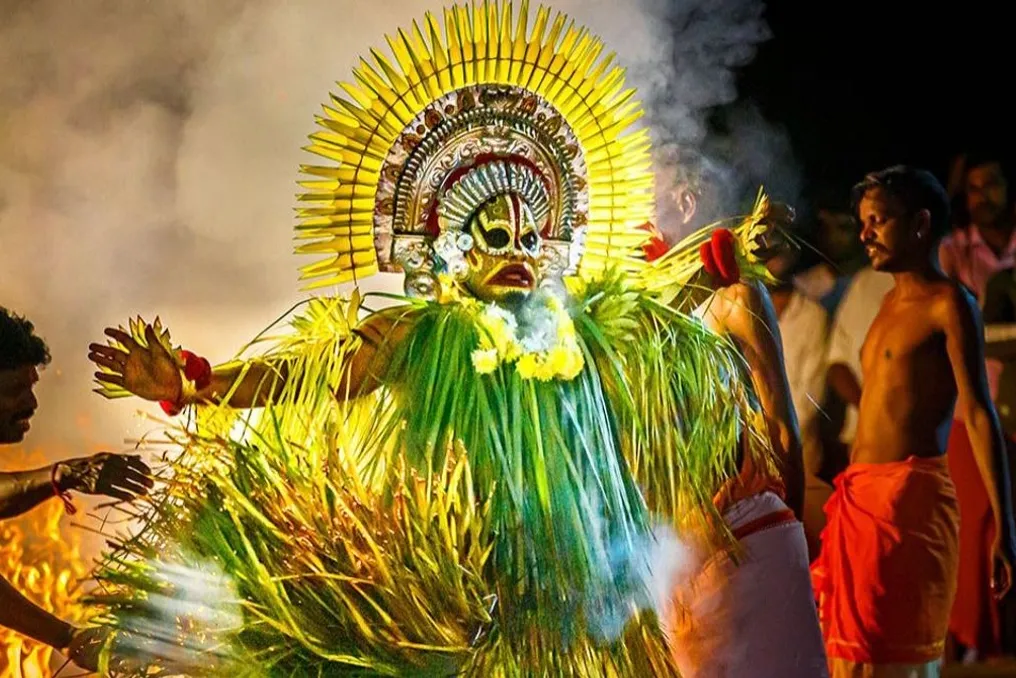
Theyyam (Northern Malabar, Kerala) is one of Kerala's most mesmerizing ritual art forms, combining dance, theatre, and transformation. Performers adorn themselves with vivid makeup, richly decorated costumes, and tall headdresses, embodying ancestral or mythical characters in a trance state. The community gathers around as the fully transformed performer narrates stories through movement, rhythm, and the light of fire—it is a living example of folklore. Like the symbolic costumes and narrative in Halloween, Theyyam celebrates transformation and mystery, having deep roots in art and heritage.