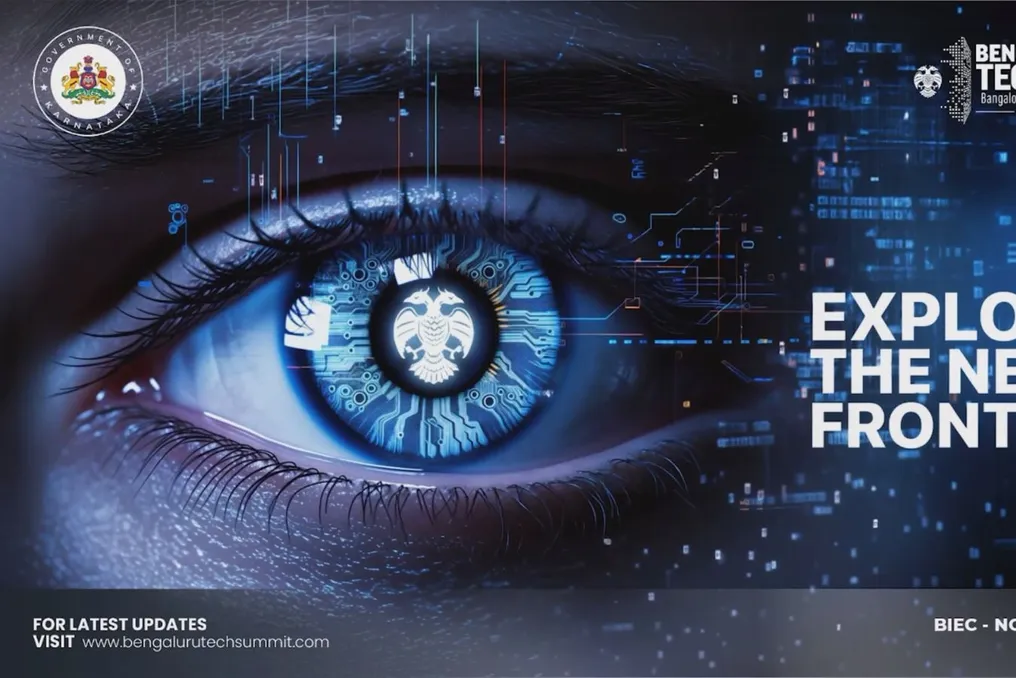
Bengaluru Tech Summit 2026 to Showcase New Technologies, Markets, and Opportunities Beyond AI
Read more
YourStory [india, en]
yourstory.com

Bengaluru Tech Summit 2026 to Showcase New Technologies, Markets, and Opportunities Beyond AI

For technology entrepreneurs, the ability to stay ahead requires looking beyond the immediate business environment. New technologies emerge rapidly, industries merge, and opportunities for partnerships, investments, and market expansion are often found at the intersection of various ecosystems.

This makes technological platforms that bring together enterprises, innovators, investors, researchers, and global tech communities particularly valuable. The Bengaluru Tech Summit (BTS) 2026, taking place from November 17 to 19 at the Bangalore International Exhibition Centre, is one such important platform.

The XXIX edition of BTS will gather technology companies, startups, investors, research institutes, and global tech ecosystems from a wide range of sectors. The presence of global tech giants, Indian conglomerates, unicorns, and near-unicorns creates an environment where entrepreneurs can gain a broader understanding of their industry's direction and identify potential business connections.

The international aspect is also highly significant. Tech communities from over 75 countries, including Sweden, Italy, Australia, Poland, the USA, Israel, Spain, Japan, China, Germany, and South Korea, will participate in the exhibition, conferences, and special events.

This opens up opportunities for companies or startups seeking to understand international markets, explore collaboration possibilities, or simply expand their technological network beyond India's borders.

The co-location of Embedded World India, organized by Nuernberg Messe India, highlights embedded technologies at BTS 2026. As embedded systems increasingly form the basis of applications in electronics, automotive, industrial technology, and connected devices, their presence adds another crucial dimension to the technological landscape presented at the summit.

Artificial intelligence and robotics will take center stage at BTS 2026 thanks to the AI and Robotics Pavilion, curated by Bharat fi.AI, showcasing new innovations and advancements shaping the future of these transformative technologies.

For startups and emerging businesses, BTS 2026 offers opportunities far beyond the exhibition hall. Through workshops, masterclasses, mentoring sessions, presentation and product launch opportunities, entrepreneurs can gain practical knowledge, demonstrate their developments, connect with potential investors, and explore new business prospects.

Conclave of the Future

This conclave further brings together founders, investors, and industry leaders, creating a venue for substantive discussions on innovation, funding, and business scaling. All these initiatives aim to help entrepreneurs expand their networks, increase visibility, and build relationships that can accelerate their growth.

The breadth of represented sectors is another reason why the summit stands out. From IT and deep tech, advanced technologies, fintech, healthcare, and biotechnology to electro-semiconductors, cybersecurity, data centers, and Global Capability Centers (GCCs), the summit explores technologies transforming business and creating new avenues for growth. It also extends beyond traditional tech domains, examining emerging opportunities in electric mobility, circular economy, orange economy, and educational technology (edtech), emphasizing how innovation changes industries, opens new markets, and creates opportunities for entrepreneurs.

For companies aiming to identify emerging trends, explore cross-industry opportunities, and understand where the next wave of growth might come from, this diversity makes BTS 2026 a valuable platform for discovery, collaboration, and business development.

The future belongs to entrepreneurs who are ready to dream, innovate, and take the next step. Bengaluru Tech Summit 2026 provides a platform to exchange ideas, gain fresh perspectives, and forge connections that can open new doors. After all, sometimes one conversation, a new point of view, or an unexpected connection can be the start of something extraordinary.
Similar stories

Prime Minister Modi called on Indian scientists to lead the development of future technologies and make the country a global center for solutions
Read more
timesofindia.indiatimes.com

Prime Minister Modi called on Indian scientists to lead the development of future technologies and make the country a global center for solutions

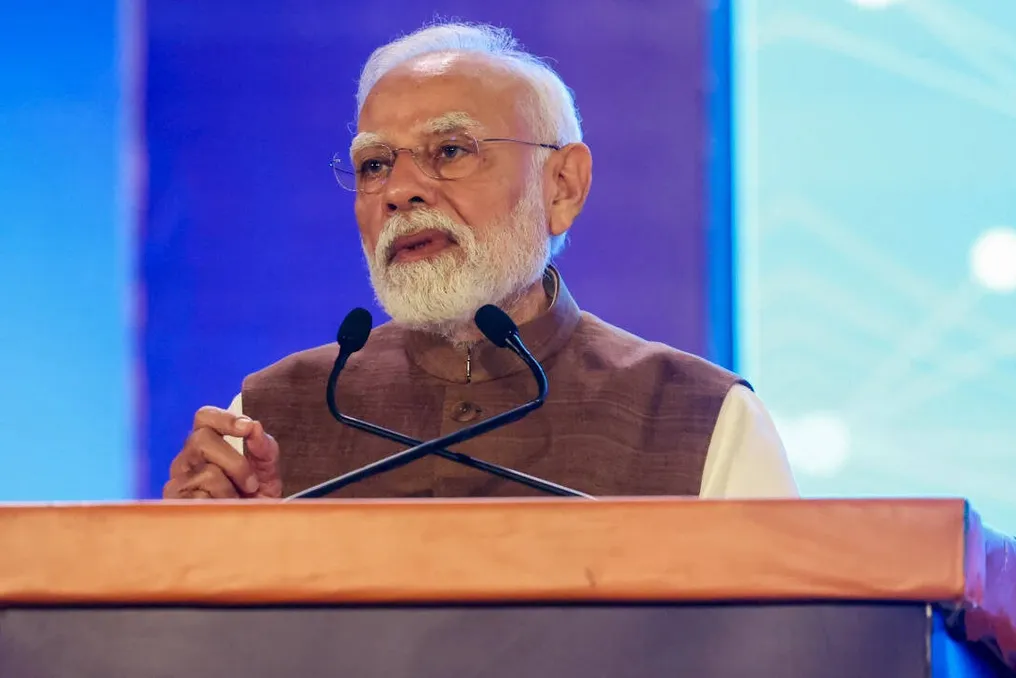
Prime Minister Narendra Modi addressed the Conclave on new scientific developments, technologies, and innovations in New Delhi on Tuesday. He stated that India must actively implement future technologies, boldly engage in innovation, and lead the world in the development of these technologies.

Modi emphasized the necessity of transforming the country into a global hub that provides solutions.

TechSparks Experts Emphasize Need for Global Ambitions for Deep Tech Startups in India
Read more
yourstory.com

TechSparks Experts Emphasize Need for Global Ambitions for Deep Tech Startups in India

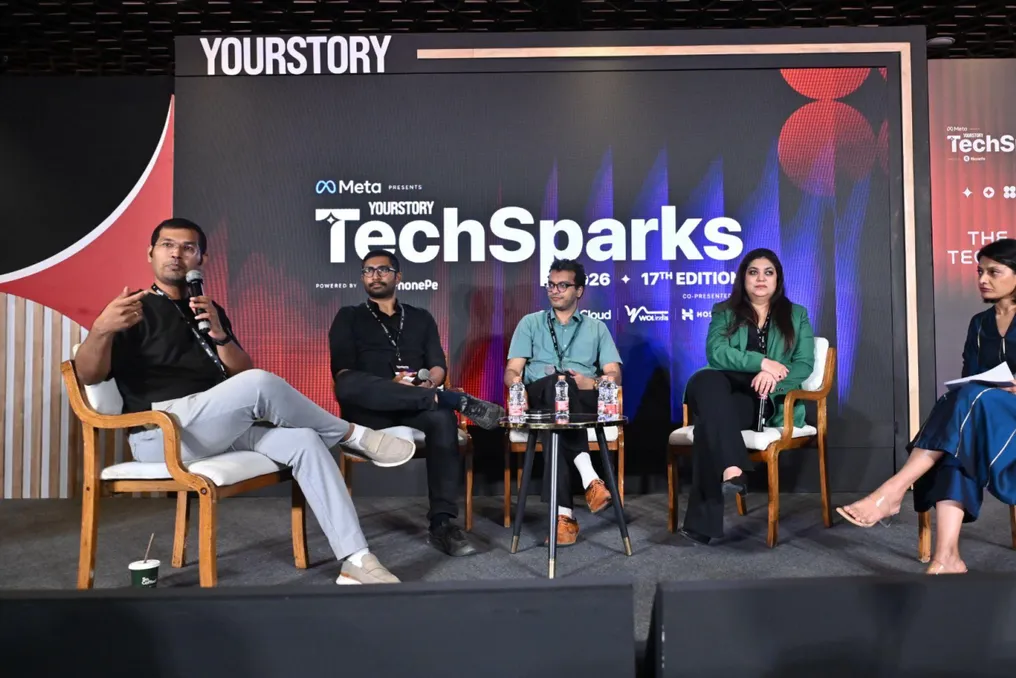
Participants of the panel discussion at the TechSparks summit by YourStory concluded that deep technology startups in India should target global markets despite existing challenges.

The deep tech sector within the Indian startup ecosystem has emerged from the shadows and secured its niche. Although various problems exist, experts agreed that the overall situation in the sector is improving. The panel included founders from robotics, precision manufacturing, and semiconductor fields, as well as a representative from an analytical policy center. Shivani Mutanna, Senior Director of Strategic Content and Video at YourStory, moderated the discussion.

Kaushik Mudda, founder and CEO of Ethereal Machines, a precision manufacturing company, stated that his company possesses most of the necessary conditions for international competition. Shweta Rajpal Kohli, President and CEO of Startup Policy Forum, noted that thanks to significant government contributions in terms of capital and policy, the deep tech ecosystem has found its rightful place. She emphasized: 'I think the government has done many right things in creating a conducive environment. Now is the time for India to advance deep technologies.'

Today, deep technologies aim to create or possess technologies critical to the country's sovereignty. Harish Chandrasekar, co-founder of Agnit Semiconductors, noted that all ecosystems need to develop, but this will only happen over time. Agnit Semiconductors is the first vertically integrated startup in India producing gallium nitride-based semiconductors.

Gokul N A, founder of the robotics startup CynLr, highlighted the challenges faced by deep tech startups in the country, especially in their field, pointing out the lack of a complete ecosystem. He also pointed to the shortage of skilled manpower, particularly at the middle management level, adding that the country produces insufficiently high-quality engineers because its focus remains predominantly service-oriented.

The panelists agreed that the country needs clearly defined directions in the deep technology segment, which is a very broad topic. Mudda stated that it is necessary to begin forming the basic elements for becoming a manufacturing superpower. Chandrasekar stressed the importance of developing sovereign capabilities for the country in the current climate where semiconductors are used as weapons.

Access to capital is also a hurdle, although the situation has significantly improved compared to the past. Gokul noted that while seed funding has improved, more effort is required to attract long-term capital to this segment. Kohli reported that the capital problem is being addressed, particularly through the Government's Research, Development, and Innovation fund of 1 lakh crore.

Mudda suggested that raising funds up to $5 million is not a major issue for deep tech startups, but there is a deficit when attracting larger sums—from $10 to $15 million.

Regarding the role of the state as a customer for deep tech startups in the country, the panelists believe the government can act as an assistant, but startups must look towards global markets. Kohli stated that demand generation and the government's role as the first buyer are a big stimulus for any sector, but she added that the government procurement process is somewhat complex.

Chandrasekar noted that although startups would like the government to be their first client, it cannot be the only one. Gokul emphasized that deep tech requires a global market and cannot focus solely on India. In conclusion, Kohli noted that increasing the self-confidence of ecosystem participants is necessary to ensure the growth of deep technologies, stating: 'India has the talent, the scale, and everything needed. We just need to accelerate this at a feverish pace now.'

IMF and World Bank Meetings Focus on Potential Benefits and Risks of Artificial Intelligence
Read more
cgtn.com

IMF and World Bank Meetings Focus on Potential Benefits and Risks of Artificial Intelligence

Artificial intelligence is already transforming almost all sectors of the global economy. At meetings of the International Monetary Fund (IMF) and the World Bank, held in Thailand, policymakers and industry leaders are addressing the challenge of ensuring that this technology serves the good of humanity and does not leave workers behind, especially in developing countries.

Popular