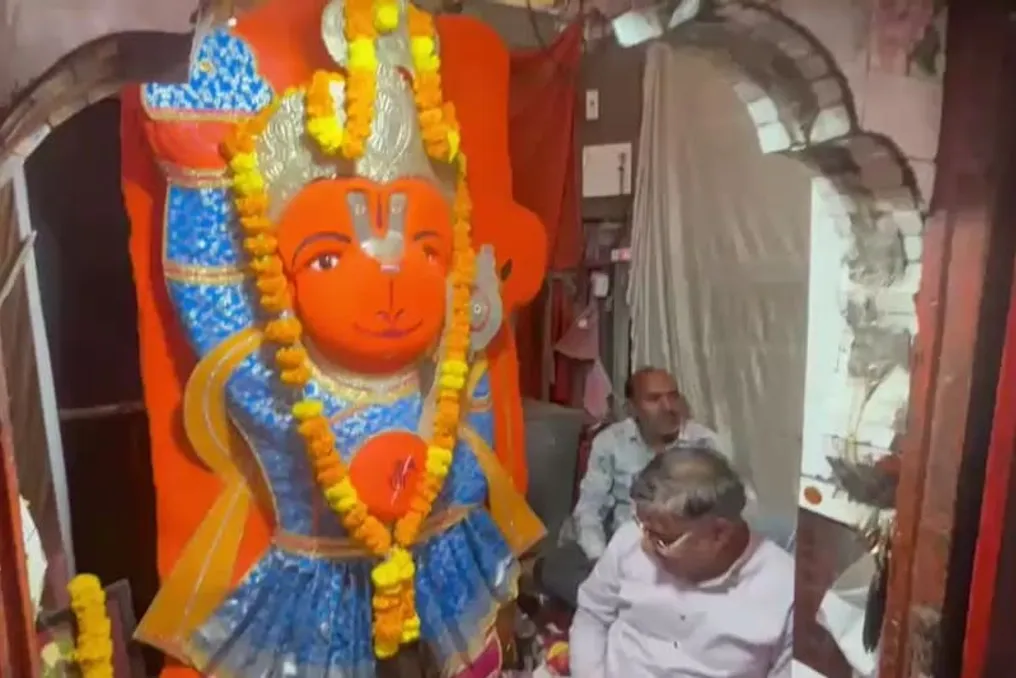
Preparations are underway in Ujjain, Madhya Pradesh, for the possible relocation of the Hanumanji statue located in a temple that is about 170 years old. The temple's frame is destroyed, and the statue is currently housed in a tent, but the administration continues its activities regarding this matter.
A recent night between Monday and Tuesday caused new resonance: a special group arrived in Ujjain from Bhopal. The temple was opened at night, and an inspection of the Hanumanji statue began using modern equipment. The team remained on site for about an hour and a half.
The purpose of the inspection was to determine the depth of the statue underground, assess its fixation, and identify the potential risk of damage during extraction attempts. However, after this operation, the question arose: why conduct such an important inspection secretly, late at night?
This incident occurred in the Sarafa area of Ujjain, where the Hanumanji temple is located. Street expansion work is ongoing in the city as part of preparations for the Singhasth fair. The temple itself, which is about 170 years old, is situated on the route from Kantal to Chhatri Chowk.
Attempts to move the temple to another location have been ongoing since the end of August. Although the district administration has dismantled the main frame of the temple, the Hanumanji statue has not yet been moved and remains in a tent, where devotees visit it. According to the temple caretaker, Ramu Guru, pilgrims continue to come regularly for prayers despite the destruction of the temple structure.
After the temple closed on the night from Monday to Tuesday, the team from Bhopal began the inspection. Accompanying the Bhopal team was L.N. Garg, Deputy District Magistrate of Ujjain. Specialists used modern tools to study the statue. Special attention was paid to two aspects: firstly, how deep the statue is buried underground; and secondly, what the system for fixing the statue to the ground is.
The inspection, which lasted about an hour and a half, aimed to ascertain a safe method for extracting the statue and to assess the probability of damage during the process. Nevertheless, the administration has not yet released a report or the results of this inspection, and it is unclear whether a decision has been made regarding the statue's relocation.
Regarding the late-night inspection, Hindu leader and former council member Santosh Vyas commented. He questioned the method of the inspection, asserting that if the administration needed to study the statue's structure and fixation, it could have been done transparently and publicly. He asked why a team was needed in the dark without public notification, as this could cause anxiety among devotees.
Santosh Vyas also mentioned the Shahi mosque in Chhatri Chowk. He noted that construction had begun there after part of the building was demolished, whereas the Hanumanji temple statue has remained in a tent since the frame was destroyed. No official response has yet been received regarding these comparisons and allegations against the administration.
The main question in this matter remains open: what will happen to the Hanumanji statue? Will it be moved after the survey, or is the administration seeking another solution? At present, the administration has neither announced any relocation of the statue nor the results of the inspection conducted.