Forge Code Expert Explains Why an AI-Based 'Software Factory' is Necessary for Effective Software Development
Read more
YourStory [india, en]
yourstory.com

Forge Code Expert Explains Why an AI-Based 'Software Factory' is Necessary for Effective Software Development

Although artificial intelligence is capable of generating code at unprecedented speeds, the process of testing, verifying, and deploying it into a working environment remains a separate complex task. Engineering teams are increasingly using AI agents to write code, fix bugs, and create new features, but faster coding does not guarantee faster software delivery.

As code generation gains momentum, the volume of checks increases, testing slows down, and teams find it difficult to coordinate the growing amount of changes.

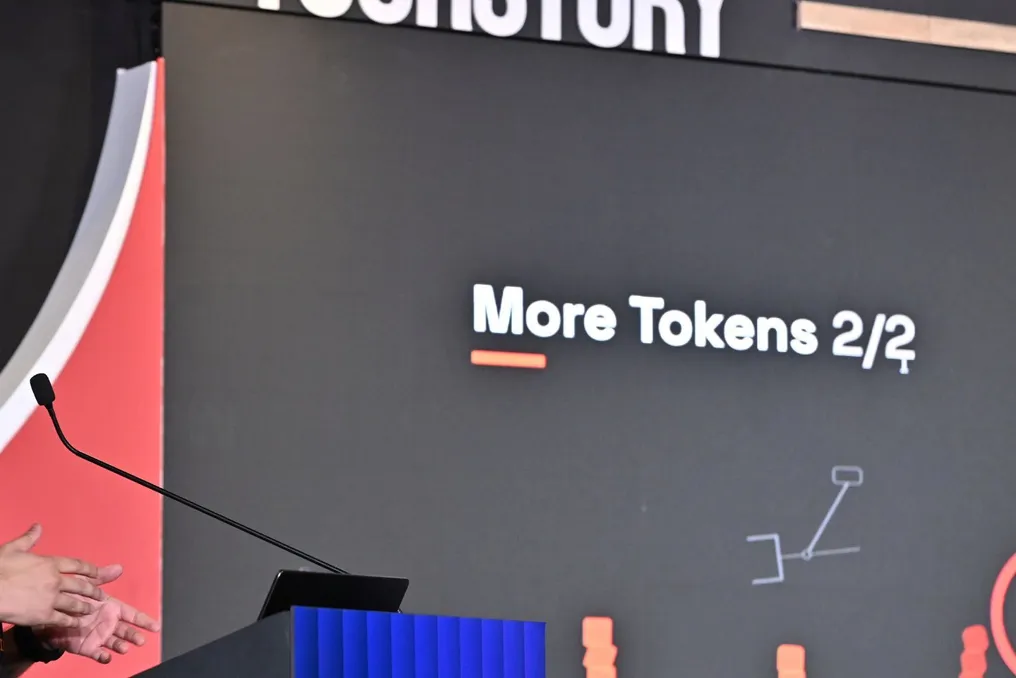
At the TechSparks 2026 conference, Tushar Matur, CEO of Forge Code, highlighted this issue in his session 'Anatomy of a Software Factory.' He explained how AI-focused engineering organizations can move beyond automating individual coding tasks and start creating systems that manage the entire Software Development Life Cycle (SDLC).

Matur noted that just because code generation has become easier and faster does not mean the overall SDLC will accelerate. He reminded that the traditional development approach focused on writing code efficiently, requiring teams to define requirements, prepare specifications, and design architecture to reduce the load on the implementation phase.

However, since AI takes on much of the coding work, bottlenecks shift to other areas. Matur described a situation where organizations face a huge number of pull requests awaiting review, longer testing cycles, and more errors than existing regression suites can detect.

He emphasized that solving the problem does not necessarily involve hiring more engineers or launching more AI agents. Additional staff can increase coordination costs, and adding agents without effective feedback mechanisms can lead to code that overwhelms the verification and testing systems.

'The reason for this is the lack of signal,' Matur explained, clarifying why simply connecting automated steps does not create an effective software factory.

Matur presented Forge Code as a software factory that coordinates AI agents throughout the development cycle. The process begins with sorting requests, creating specifications, and implementing features. Then, agents check the changes before they are deployed, with human engineers intervening when decisions or feedback are required.

The system also monitors in the working environment, using the gathered data to inform future tasks. This forms a feedback loop, allowing the factory to identify issues, improve its workflows, and generate new work based on the experience gained. During the presentation, Matur reported that Forge Code used about 100 agents in the background to work on features, compatibility, and bug detection.

He outlined six principles for building an effective software factory: autonomy, scalability, cost-effectiveness, measurability, self-improvement, and alignment with business goals. The last principle is particularly important.

The factory should not operate as a task of writing code for every request, but rather be aimed at achieving specific outcomes, such as increasing customer retention or meeting regulatory compliance. Teams can then prioritize features based on the value they bring. In this model, engineers spend less time managing each task and more time observing results, analyzing signals, and improving the system itself. Business leaders can also provide requests and priorities directly, allowing the factory to translate organizational goals into a development backlog.

Code writing speed is good, but creating better software is the real victory. For engineering teams, the key is transforming AI-driven speed into reliable products, measurable progress, and real business results.

Similar stories

Startup PeakVision AI offers an alternative approach to implementing artificial intelligence in the corporate sector
Read more
technode.com

Startup PeakVision AI offers an alternative approach to implementing artificial intelligence in the corporate sector

For companies implementing artificial intelligence, key questions are not only about choosing a model but also about where the AI operates, its cost, and the ability to keep confidential data under the company's control. PeakVision AI offers a solution that involves moving most of the AI tasks inside the enterprise.

The company's system considers the task, rather than an individual application, as the main unit of work: users state a goal, and AI agents perform the necessary steps in a local computing environment. Co-founder and CTO Liangyu Nie told TechNode that PeakVision AI was founded in 2024, overcoming two major obstacles to AI adoption in corporations: the complexity of technology deployment and concerns over data security.

In March 2026, the company opened its headquarters in Hangzhou and received government support for research and development amounting to 15 million yuan. In May, it presented its first enterprise systems and completed an initial funding round, followed by a second round worth tens of millions of yuan in August.

PeakVision AI creates an enterprise AI stack that integrates locally deployed computing, FengKan AIOS, and AI agent services. This system is designed to focus on how agents complete tasks, rather than how people move between different applications. As Nie noted, users no longer need to load different applications; they just need to tell the AI what they want via a chat window, and it will do the work.

The startup's central thesis is that enterprise software will increasingly be structured around intent and execution, rather than menus, files, and separate applications. The company plans to make FengKan AIOS open source by the end of October. PeakVision AI monetizes through hardware, subscriptions, and custom enterprise AI implementations. The company's broader goal is to transform project-specific work into universal solutions for various industries.

FengKan AIOS supports third-party hardware, while PeakVision AI takes a selective approach to its skills ecosystem. Nie clarified that users' end skills, which may contain proprietary workflows, will remain untouched. However, more generalized skills created by partners and leading engineers can be released to the market.

Currently, the company is testing its model through the FDE academy, launched by Shanghai Sixunited Intelligent Technology with support from Advanced Micro Devices (AMD). AMD provides computing hardware, technical toolchains, and resources for projects. PeakVision AI also collaborates with chip manufacturers in early product development stages to optimize costs and performance, including a partnership with ChangXin Memory Technologies to reduce memory costs.

Unlike companies such as Wonderful, which target large, often regulated organizations and provide them with AI platforms and implementation teams, PeakVision AI targets small and medium-sized businesses. Nie emphasized that these enterprises face the same problems—costs, technical complexity, and data security—but have fewer resources to solve them. PeakVision AI uses inexpensive hardware from the Chinese supply chain so that each implementation becomes a repeatable solution for similar clients.

Nie stated:

Popular