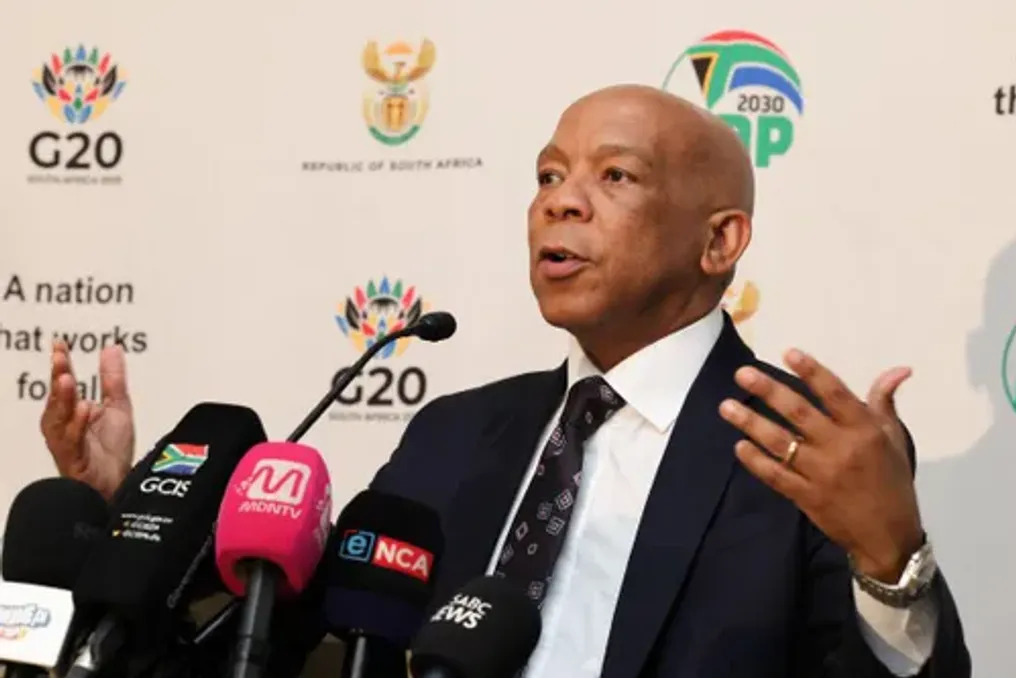
The Minister of Electricity and Energy, Kgosientsho Ramkgoppa, stated that the government is studying the possibility of increasing the current Free Basic Electricity (FBE) norm from 50 kilowatt-hours per household per month to a level between 200 and 300 kilowatt-hours, but a final decision has not yet been made.
Ramkgoppa disclosed this information in response to questions from IFP parliamentarian Nomphumelelo Mkhlongo, who inquired how many low-income households could benefit from the proposed measures under the revised electricity pricing policy.
Mkhlongo also asked about conducting an impact assessment of the new pricing structure on household expenses and the timeline for developing this policy.
In his response, Ramkgoppa emphasized that the goal of this policy is to strengthen the protection of vulnerable electricity consumers and low-income citizens by reviewing the free basic electricity system and support mechanisms for them.
How many households can benefit?
The Minister specified that the government is considering increasing the existing FBE norm from 50 kWh to a qualified household monthly to the range of 200–300 kWh. He stressed that this is only a proposal for consideration, not an already active right.
Furthermore, Ramkgoppa noted that the number of beneficiaries from the revised measures will depend on the final identification and registration of eligible households, as well as the adopted approaches to financing and implementation.
He added that the department will be able to confirm the number of recipients after these issues are settled. Previously, the Cape Argus reported that out of approximately 2.8 million identified needy households, only 1.7 million received free basic electricity.
Many qualified households do not receive FBE
According to Ramkgoppa, reasons why qualified households did not receive the full benefit of FBE included gaps in the identification and registration of relevant households, limited municipal capacity, and a lack of uniformity in administration and maintenance of needy registries.
The Minister also mentioned that municipalities redirected funds allocated by the National Treasury to address other urgent tasks related to service provision and financial priorities.
He stated that the updated policy promotes the implementation of transparent tariff structures, adequate distribution of electricity costs, and oversight by the South African National Energy Regulator.
The proposed review of FBE aims to strengthen support for needy households. However, the impact of the new pricing structure on individual household expenses will depend on the tariffs applied, electricity consumption, supplier, and the implementation of relevant support measures.
Timeline for public consultation needs clarification
Responding to specific questions from ANC parliamentarian Zama Khanyase, Ramkgoppa explained that implementing the proposed measures will require coordination between the Department of Electricity and Energy, the National Treasury, the South African National Energy Regulator, and municipalities. This coordination is necessary to determine target groups, deliver FBE, develop lifeline tariffs, and monitor availability.
These mechanisms are intended to ensure that the sustainability of the power supply industry is achieved in parallel with protecting households least able to withstand rising electricity prices.
Ramkgoppa also stated that it is currently impossible to name a precise date for the final approval of the revised electricity pricing policy. He explained that this depends on public opinion review and the completion of necessary approval procedures.
The Cabinet approved the publication of the revised policy for public consultation on July 29, 2026. Although it was published a day earlier, Ramkgoppa extended the deadline for submitting proposals to October 28, 2026.
After the consultation period, the department will review the received comments, make necessary changes, and complete the relevant approval and consultation processes, including with the Council for National Economic Development and Labour, before presenting the final policy to the Cabinet.