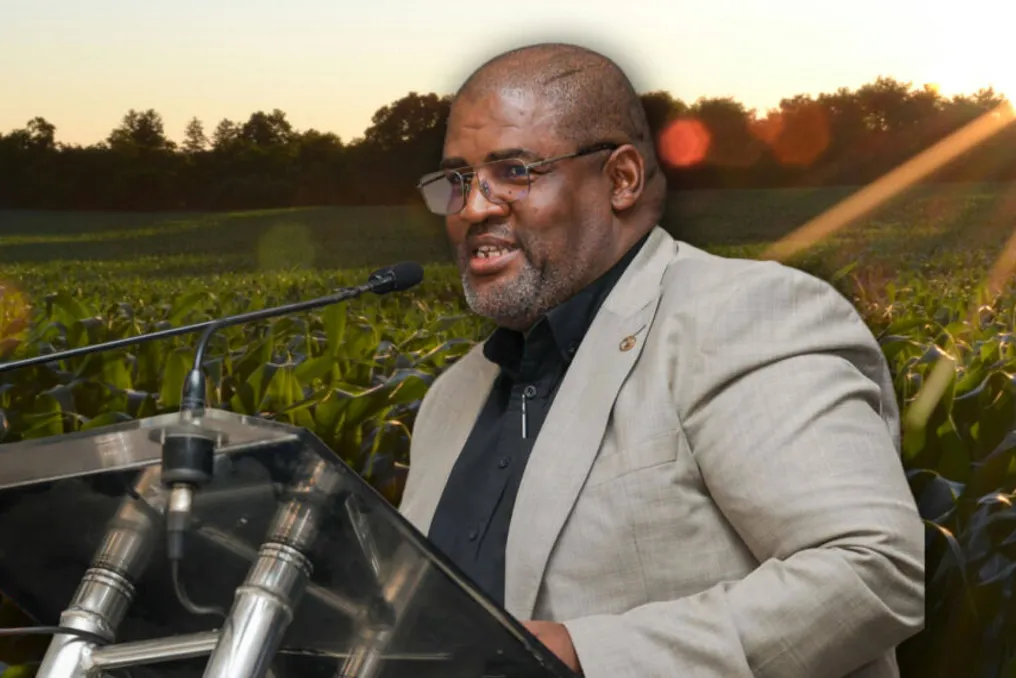
Minister launches R1.2 billion land reform program to support farmers
Read more
Food For Mzansi
foodformzansi.co.za

Minister launches R1.2 billion land reform program to support farmers

The Minister of Land Reform and Rural Development, Mzwanele Nyakhontso, recently presented the Integrated Land Reform and Rural Development Support Programme (ILRRDSP) in Nyavarkha village in the Eastern Cape. The event was attended by traditional leaders, beneficiaries of the land reform, government officials, and community members. The main theme of the programme was 'From land access to sustainable livelihoods: empowering rural communities through integrated support.'

This programme provides funding, technical assistance, skills development, infrastructure support, and market access for land reform beneficiaries. For the current financial year, R1.2 billion has been allocated to this programme.

Nyakhontso emphasized the injustice of land transfer without additional support and explained how the programme will operate in such cases. He stated that transferring land without comprehensive and restorative support for recipients is not justice, but merely an empty gesture. According to him, land without the means for productive use simply perpetuates past inequalities. He added that with the launch of the Integrated Support Programme, the era of people being 'thrown onto the land without support' officially ends.

He also noted that during colonization, not only land was taken; 'when colonial invaders took our land, they did not just take the soil. They also stole livestock, which was the most important source of wealth and economic capital for our ancestors.'

All nine provinces of the country will receive funds ranging from R100 million to R170 million per financial year. Nyakhontso outlined a support system where the farmer-beneficiary goes through a single coordinated process and receives a clear plan that includes funding, technical consultation, infrastructure support, and market access. He assured that the practice of directing a farmer from one organization to another will remain in the past.

The Department has established partnerships with several financial institutions, including the Development Bank of South Africa (DBSA) and the Industrial Development Corporation (IDC), to strengthen and improve the Green Bank's blended finance scheme. Nyakhontso clarified that these are not just promises, as R500 million has already been allocated through the Green Bank's blended finance scheme. He added that the planting event held with DBSA two weeks ago confirms the programme's transition from policy to practical implementation.

He highlighted the importance of the agricultural sector and the need for the support programme to go beyond farming. Nyakhontso noted that while agriculture is the foundation, ILRRDSP covers much more than just farming. Furthermore, he reported that work is underway to accelerate the assessment and review process for submitted applications to provide results to farmer-beneficiaries as quickly as possible. He stressed the commitment to accelerating decision-making, timely notification of results, and ensuring that approved beneficiaries receive support without unnecessary delays.

Similar stories

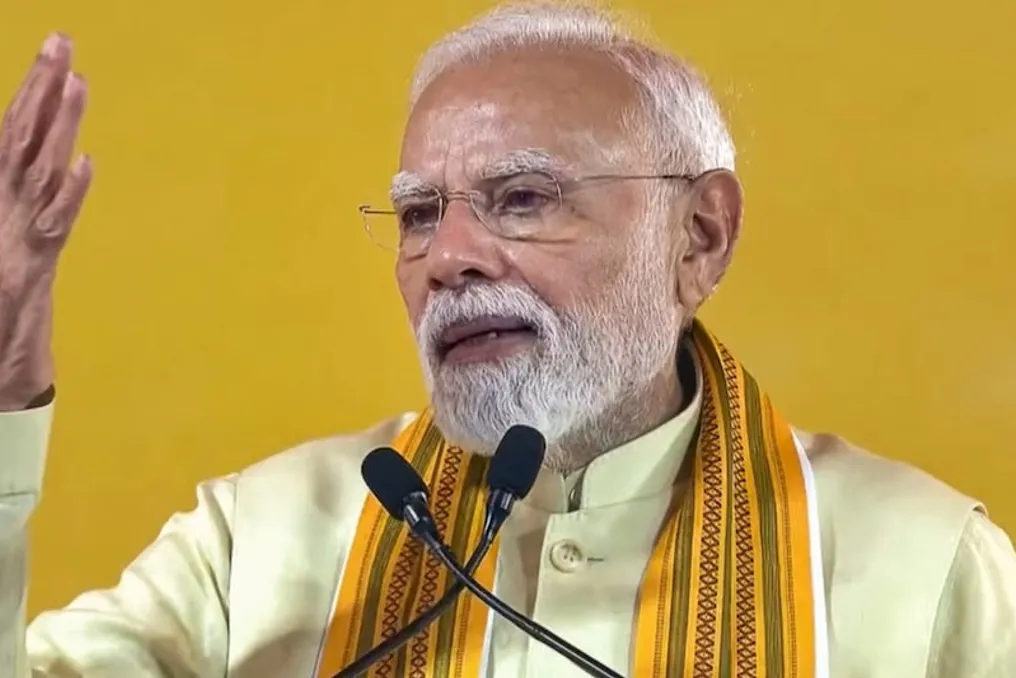
PM Modi to visit Banaskantha in Gujarat to launch projects worth ₹14,000 crore and distribute farmer subsidies
Read more
www.aajtak.in

PM Modi to visit Banaskantha in Gujarat to launch projects worth ₹14,000 crore and distribute farmer subsidies

Prime Minister Modi will visit Banaskantha, Gujarat, on Friday. During this visit, he will inspect the embryo transfer and in vitro fertilization (ET-IVF) laboratory, as well as the Indian Buffalo Breeding Research Centre (BBBRC). Furthermore, he will participate in the groundbreaking, inauguration, and handover ceremony of development projects worth over ₹14,000 crore in Banaskantha.

As part of the event, which will take place in Bildi, Banaskantha, the Prime Minister will release the twenty-fourth installment of the PM-Kisan scheme for farmers across the country. This time, financial assistance of ₹2,000 will be provided to over 9.34 million farming families through Direct Benefit Transfer (DBT) to their bank accounts.

According to available information, the ceremony for releasing the twenty-fourth tranche of PM-Kisan will take place in Banaskantha around 10:30 AM. Special arrangements have been made for the gathering in Banaskantha: instead of chairs for farmers and cattle rearers, loungers have been installed so they can listen to the Prime Minister's speech, during which he will also convey messages about various programs launched by him.

Before the start of the assembly, a large number of farmers and cattle rearers began gathering. Women associated with the Bana Dairy milk industry arrived with special placards and banners inscribed with 'Modi will not leave'.

Additionally, on Saturday, October 31st, around 9 AM, the Prime Minister will commence, open, and dedicate a series of development projects worth over ₹400 crore to the nation in PM Ekta Nagar near the 'Statue of Unity'. After this, he will visit the 'rainforest' and 'Vamana Garden' in PM Ekta Nagar. In the evening, around 5:30 PM, he will participate in the 'National Unity Day' ceremony dedicated to the 151st anniversary of Sardar Vallabhbhai Patel.

Maharashtra Government to Provide ₹5000 to 1.5 Million Drought-Affected Farmers Before Diwali
Read more
www.aajtak.in

Maharashtra Government to Provide ₹5000 to 1.5 Million Drought-Affected Farmers Before Diwali

The Maharashtra government has announced the provision of significant aid to the state's farmers affected by drought. It is planned to disburse ₹5000 as Farmers Advanced Financial Support to approximately 1.5 million farmers to provide them with relief before the Diwali festival.

Following a state cabinet meeting, Chief Minister Devendra Fadnavis instructed officials to ensure that these funds are transferred directly to the farmers' bank accounts within the current week, meaning before Diwali.

In connection with this announcement, the total expenditure is expected to amount to ₹7500 crore, as ₹5000 will be allocated to about 1.5 million farmers. Furthermore, the Chief Minister directed bank employees not to withhold any amounts from this aid for the repayment of old debts or outstanding farmer balances. The government's goal is to provide immediate financial assistance to rural families facing crop losses and water scarcity.

It should be noted that this month, the Maharashtra government declared a drought condition in 305 talukas, covering 34 districts of the state, due to severe drought. Initially, the drought was declared in 265 talukas, but the number was subsequently increased to 305, which accounts for about 75% of the state's territory. This drought affects many districts across six administrative divisions of the state, including Marathwada, Vidarbha, North Maharashtra, and Pune district.

The Maharashtra government provides several support measures to drought-affected farmers, such as suspension of agricultural loan recovery, discounts on electricity bills, water supply, and financial aid. The announcement of providing ₹5000 before Diwali is a major relief for these farmers.

Last September, Chief Minister Devendra Fadnavis visited drought-affected villages and stated the imminent introduction of aid measures for needy farmers. He emphasized that the state government would not wait for assistance from the central government and would ensure immediate support for farmers in the affected regions. The announcement of the ₹5000 payment is a step in this direction.

According to reports, as of September 21 last month, the average rainfall in Maharashtra from June 1 to September 21 was only 80.82%. Fifty to 75% of the normal rainfall was recorded in 17 districts, while other 14 districts received 75-100% of the rainfall. Solapur was the most affected, receiving only 48.65% of the average rainfall.

Agda Conference: Land Parcels Are Insufficient for Farmers' Success
Read more
foodformzansi.co.za

Agda Conference: Land Parcels Are Insufficient for Farmers' Success

At the Agda congress held in Boxburg, Gauteng, industry participants called for comprehensive support for emerging farmers so they can establish sustainable commercial enterprises. This support must include infrastructure, timely financing, business development, and market access, as mere land distribution is insufficient to ensure agricultural success.

Discussions, moderated by Agda CEO Leona Archari, brought together government representatives, commercial farmers, and investors to explore ways to strengthen transformation and increase the participation of black farmers in commercial agriculture.

Nomtandazo Moyo, Deputy CEO for Land Reform and Rural Development, noted that the government recognizes the limitations of providing land without the necessary support for its productive use. She mentioned that farmers were often allocated land and left to decide what to do with it independently.

The Ministry is now adopting an integrated approach, linking land allocation with commodity planning and value chain development. Key requirements include access to water, energy, fencing, and soil preparation, as well as training, skills development, and enterprise support.

Moyo emphasized that agriculture, much like the hospitality industry, is a business, and beneficiaries need help running sustainable operations. Support should extend not only to those ready for commercial growth but also to smallholder farmers and subsistence farmers.

Dr. Dan Mosia, a commercial farmer, agreed that land ownership alone does not guarantee commercial success. He stated that farmers also require timely capital, sound business organization, production discipline, and effective partnerships.

Mosia warned that delays in securing financing can cause farmers to miss critical production opportunities. He urged farmers to plan the next production season in advance and build capacity for future operations funding. Furthermore, he noted that partnerships must facilitate the transition of emerging farmers into sustainable businesses with clear milestones and shared responsibility.

He also insisted on expanding participation beyond primary production to include packaging, export, and market access, allowing farmers to derive greater value from their produce.

Keneilwe Nailana-Mabona, representing the Public Investment Corporation (PIC), explained that the problem is not just a lack of capital, but also a shortage of investment-attractive projects that align with available funds. She clarified that PIC's direct investment approach targets expanding companies, with potential support through equity partnerships.

Investment decisions are made considering governance, corporate management, operational activities, and how the funds will be utilized. Nailana-Mabona expressed a desire to see more black agribusinesses operating at the agro-processing level, adding that infrastructure investment is also vital. She also stressed that partnerships must include clear exit strategies to help businesses become sustainable over time.

Kalli Shoeman, Chairman of Schoeman Group Holdings and General Manager of its North Cape division, demanded closer integration between farmers and other value chain stakeholders. He highlighted the pressure of production costs such as fertilizer, fuel, pesticides, herbicides, electricity, seeds, and financing.

According to him, farmers face significant production and market risks that are not necessarily shared by other supply chain participants. Shoeman called on enterprises across the chain to provide stronger support to farmers, including encouraging those facing financial pressure and uncertainty.

Muketsa Ramasodi, Director General of the Department of Agriculture, identified market access, skills development, and broader inclusion of women, youth, and people with disabilities as priorities for agricultural development. He called for more inclusive participation throughout the entire agricultural value chain so that transformation creates meaningful economic opportunities for historically excluded groups. Ramasodi stated that the main goal is to determine how to promote the advancement of women, youth, and people with disabilities up the career ladder in the country.

Popular