
Samsung unveils new foldable phone Samsung W27 with 200MP camera
Read more
Aaj Tak
www.aajtak.in

Samsung unveils new foldable phone Samsung W27 with 200MP camera

Samsung recently released a series of foldable smartphones, including the Samsung Galaxy Z Fold 8, Fold 8 Ultra, and Flip 8. The company has now introduced the Samsung W27 model in the Chinese market. The Samsung W27 will be sold alongside other foldable variants in China.

According to media reports, the Samsung W27 was developed based on the Samsung Galaxy Z Fold 8 Ultra. Furthermore, the company has decided not to release any additional variants for the Samsung Galaxy Z Fold 8 and Flip 8 for now.

A few days before the announcement of the Samsung W27, known leaks from tipster Evan Blass and Ice Universe were published in image form.

The Samsung W27 smartphone is equipped with a 6.5-inch external display and an 8-inch internal display. It features a 5000 mAh battery and uses the Snapdragon 8 Elite Gen 5 chipset.

The main camera of the Samsung W27 has a resolution of 200 MP and also includes a secondary camera and a 50 MP ultra-wide-angle lens. Additionally, a 10-megapixel telephoto lens is installed. A 10 MP camera is provided for selfies on both the external and internal displays.

The weight of the Samsung W27 is 215 grams. The device's design is original; it is presented in red and blue panel colors with gold accents. A free protective magnetic case and a 45W charger are also provided upon purchase.

The Samsung W27 is available in various memory configurations. The starting price in China is set at 18,999 Chinese yuan, which is approximately equivalent to 2,71,356 rupees. It should be noted that the starting price of the Samsung Galaxy Z Fold 8 Ultra in India is 1,99,999 rupees. While the Indian version offers 12 GB of RAM, the Chinese version is equipped with 16 GB of RAM.

Similar stories

New Touchscreen MacBook Pros from Apple Launch Above 60 Thousand Rand Price Point
Read more
iol.co.za

New Touchscreen MacBook Pros from Apple Launch Above 60 Thousand Rand Price Point

Apple has introduced its first touchscreen laptop—updated MacBook Pro models with 14 and 16-inch diagonals. However, the price of these devices has significantly increased.

The base model of the 14-inch MacBook Pro is priced at $2,899 USD (equivalent to 48,183 Rands) in the US, while the 16-inch version starts from $3,399 USD (56,490 Rands). This means that after importation into South Africa, the cost of these laptops could exceed 60,000 Rands, positioning them as premium purchases.

These devices are equipped with next-generation M5 Pro and M5 Max chips, which emphasize advanced artificial intelligence capabilities while ensuring exceptional battery life of up to 24 hours. In addition to internal upgrades, the new lineup features a thinner, lighter, and more refined chassis.

Both the 14-inch and 16-inch variants feature revolutionary Ultra Retina XDR displays, setting a new standard for laptop screens. These displays support an adaptive refresh rate of up to 120Hz and can achieve peak HDR and SDR brightness of up to 2,000 nits.

The integration of touch functionality into macOS allows the MacBook Pro to borrow popular elements from Apple's premium iPad line. Navigation through 3D models and spatial content becomes more intuitive, and music studios and virtual instruments gain a completely new tactile dimension.

The design overhaul also introduced the Dynamic Island to the Mac for the first time, officially eliminating the notch that caused controversy upon launch and remained a source of dissatisfaction across several generations of Apple Silicon-based MacBooks.

High-demand users can configure the M5 Pro and M5 Max models with up to 128GB of unified memory and high-speed SSD storage up to 16TB.

Sound quality has also seen substantial improvement: the redesigned six-speaker audio system provides 50% deeper bass and enhanced clarity, developing a system that was already leading in laptop audio performance.

Running on macOS Sequoia with deep Siri AI integration, the new MacBook Pro is poised to dominate the high-end laptop market for years to come.

During the presentation, Apple's hardware director stated: 'The new MacBook Pro with Ultra Retina XDR displays represents a monumental leap forward for Mac. Ultra Retina XDR is the best display for laptops in the world; it combines advanced tandem OLED technology with sophisticated algorithms in our display engine to deliver visual accuracy that professionals have dreamed of.' He continued: 'And with the magic of touch brought to the MacBook Pro, combined with the game-changing performance of the M5 Pro and M5 Max, we have created an entirely new way for professionals to interact with their content, taking their workflows to a whole new level. The new MacBook Pro is the result of deep integration between Apple Silicon hardware and software, and there is simply nothing like it.'

Although the new MacBook Pros look like another premium offering, it remains difficult to determine exactly who will need a touchscreen, given the existence of the iPad.

Scientists raise new hope in Parkinson's treatment by creating dopamine cells in the brain from stem cells
Read more
www.aajtak.in

Scientists raise new hope in Parkinson's treatment by creating dopamine cells in the brain from stem cells

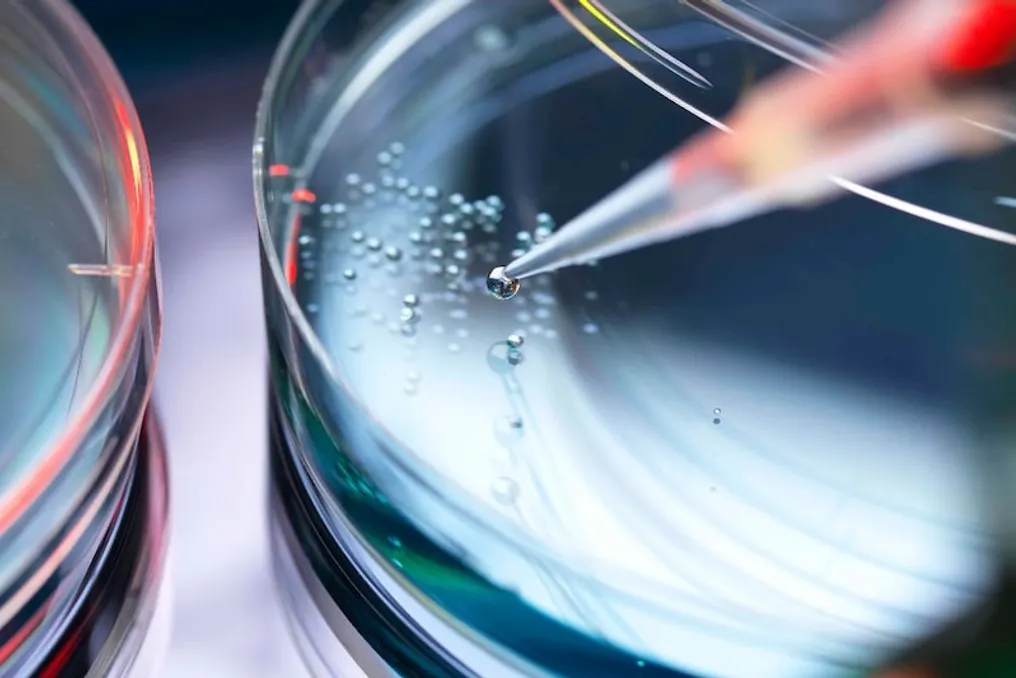
Parkinson's is a serious disease whose symptoms include tremors in hands and feet, difficulty walking, and impaired body balance. Currently, there is no permanent cure for this disease, and only the symptoms are managed. However, a new technique adopted by scientists has revived the possibilities of treating this disease, and initial tests have been successful. This technique is called iPS stem cells. The results of these tests have been published in the prestigious medical journal Nature.

In Parkinson's, the dopamine-producing brain cells gradually begin to degenerate. Scientists in Japan have worked to compensate for this deficiency. For the first time, cells derived from laboratory-grown stem cells have been transplanted into a patient's brain. The goal of this method is to regenerate dopamine-producing cells in the brain.

The Japanese pharmaceutical company Sumitomo Pharma reported this progress. According to the company, the first transplant was performed at Kyoto University Hospital in October. According to Japanese media reports, this transplant was done on a woman over fifty years old, who returned to work after being discharged from the hospital. However, it would be premature to conclude how long this treatment will remain effective.

This treatment uses induced pluripotent stem cells, known as iPS cells. These are cells that are prepared by reverting normal or previously developed cells of the body back to their original state. Subsequently, they are converted into specific types of cells in the laboratory. Using this technique, scientists have prepared progenitor cells, which are early forms of dopamine-producing cells from healthy donor iPS cells. These cells are transplanted into a specific area of the patient's brain so that they can function in the future.

The initial clinical trial of this technique was conducted on seven patients at Kyoto University Hospital, aged between 50 and 69 years. Cells were transplanted into both hemispheres of the patients' brains. According to the trial results published in the medical journal Nature, the effect of the treatment could be evaluated in six patients. Four of these patients showed improvement in symptoms, while five patients registered an improvement even in the condition after taking medication. However, some minor side effects also appeared.

This research is still in the clinical trial phase and has not been implemented on a large scale. Therefore, it would be too soon to say whether it will completely cure the disease or halt its progression. Scientists also believe that further investigation is required. Japan has also approved this therapy with conditions and timelines, meaning that the treatment can begin to be used, but further investigation into its safety and efficacy is necessary. The company plans to perform transplants on 20 to 30 patients by March 2029.

Delegation from Fergana Region of Uzbekistan Studies Belarusian Food Technologies
Read more
uzdaily.uz

Delegation from Fergana Region of Uzbekistan Studies Belarusian Food Technologies

A delegation from the Fergana region of Uzbekistan visited Belarus to study modern technologies and scientific developments used in the meat and dairy industries. The main focus was on food safety, processing efficiency, and industrial modernization.

As part of the working trip, regional representatives, including officials from the Main Directorate for Food Safety of the Fergana Region, visited the Institute of Meat and Dairy Industry of the National Academy of Sciences of Belarus in Minsk.

Belarusian specialists presented the delegation with the institute's main scientific directions, laboratory capabilities, and production processes. Innovative solutions and technologies used in meat and milk processing were demonstrated.

Discussions focused on ensuring the quality and safety of food products, implementing advanced processing technologies, and increasing the competitiveness of domestic food products. Participants exchanged views on the practical application of scientific research in industrial enterprises and the use of international experience to update the food processing sector.

The Institute of Meat and Dairy Industry of the National Academy of Sciences of Belarus conducts research in the field of meat and milk processing, develops new technologies, and works on implementing scientific innovations into industrial production. The visit allowed representatives of the Fergana region to learn how research results and technological achievements are applied in food processing processes.

The delegation also studied methods for improving production processes and maintaining food safety standards through the use of modern scientific and technological solutions. It is expected that this exchange will strengthen cooperation in the field of food safety, increase the efficiency of processing enterprises, and expand the application of modern technologies in the Fergana region of Uzbekistan.

Popular