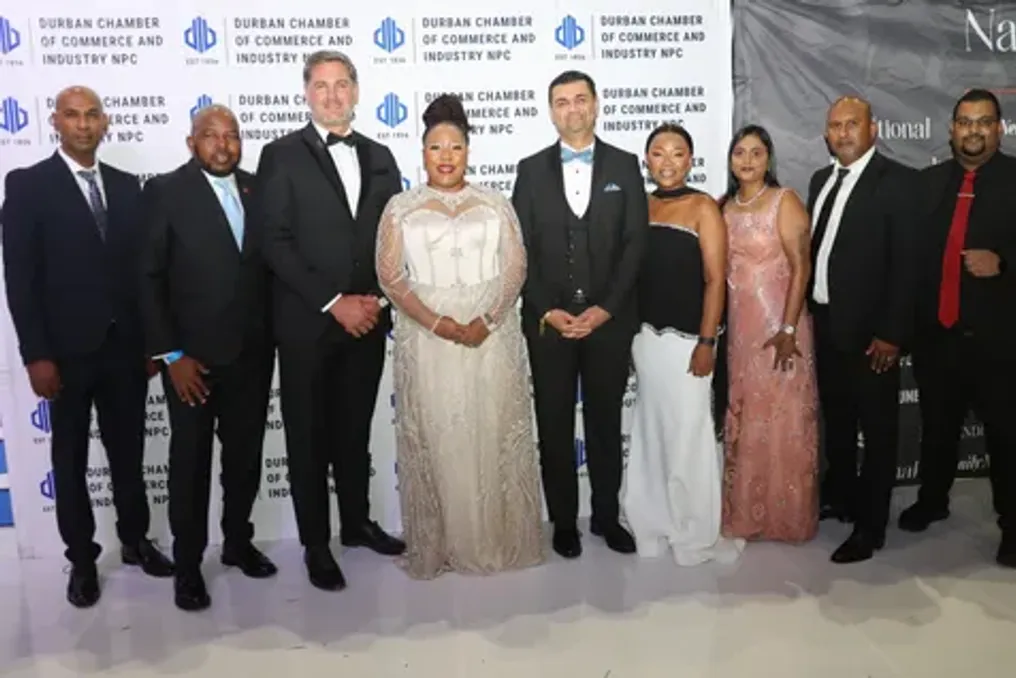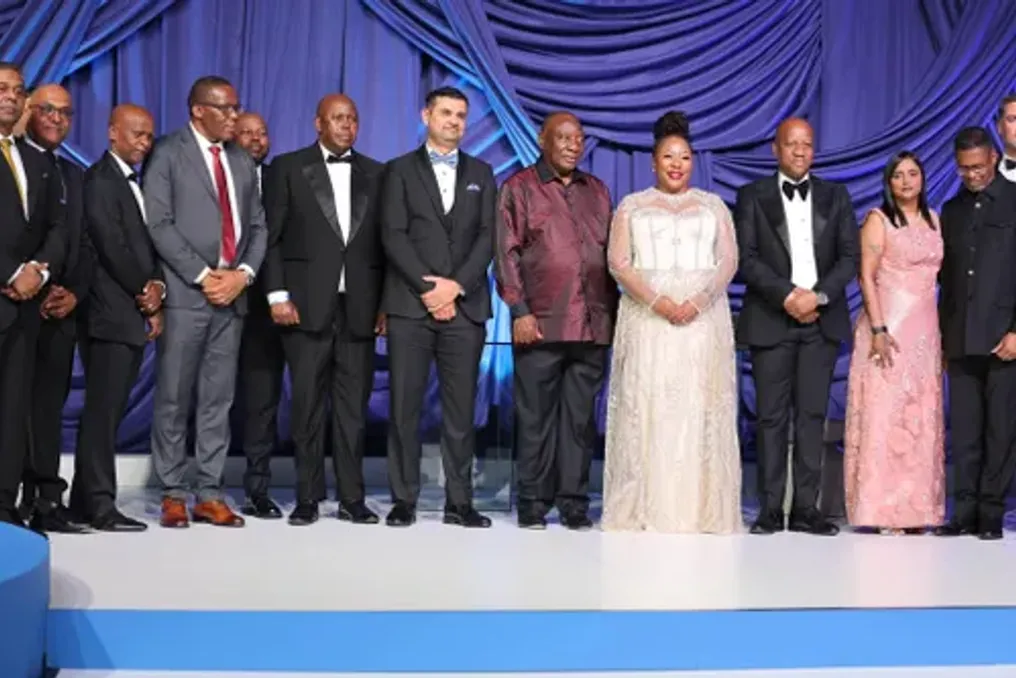
On the night of Wednesday in the playTSOGO Globe at Suncoast, a meeting took place—a rare event for Durban—bringing together the President of the Republic, the Premier, the Executive Mayor, and corporate leaders whose financial reports depend on the city's trade. Small and medium-sized enterprise (SME) owners and informal traders, as well as leaders from other chambers in KwaZulu-Natal, were also present in this room.
These participants gathered at the invitation of Palese Phili. She stated that the ability to gather people is not bought or inherited; it is earned through usefulness to those who owe you nothing. Phili's goal was to unite business and government with the President's participation.
President Cyril Ramaphosa warmly spoke about Durban, noting that when Durban fails, the entire country suffers. He thanked the Chamber of Commerce, the oldest and largest metropolitan chamber on the continent, for guiding the business response to the unrest of July 2021 and the floods of April 2022.
"Not Again"
Premier Themba Ntlali addressed the deep anxiety in the room. He recalled the violent anti-immigrant protests on October 8th in central Durban, during which fourteen vehicles were burned, trade was halted, and acts of vandalism and looting occurred over almost two days. For many present, this brought back the tragedy of July 2021, which claimed more than 350 lives.
Ntlali declared: "Durban will never burn under my leadership. Never again." He pledged to protect every factory, shop, port, and livelihood, stating that burning Durban means depriving millions of people of food. He repeated this oath in isiZulu, adding that those responsible for crimes and economic destabilization would not go unpunished. He requested the President deploy the army, and 510 soldiers under Operation Prosperity will now work alongside the police in the province until November 30th.
Entrepreneurs demonstrated to the Premier that investor confidence depends on government safety, predictability, and responsiveness. He noted that the Chamber and the province have partnered to restore this trust, which was tested on October 8th, and thanked the business for its willingness to help.
Numbers and Their Meaning
Ramaphosa presented evidence of positive momentum. The eThekwini city contributes the majority of the record R124.5 billion in investment commitments secured at the KwaZulu-Natal Investment Conference. Employment in the metro stands at 1.29 million, and eThekwini has the lowest unemployment rate among the eight metros. However, he clarified that these are only commitments, not completed projects.
The Port of Durban recorded the largest increase in the World Bank and S&P Global Container Port Performance Index, but still ranks low globally. He acknowledged that progress is real, but the path to the goal remains long.
Palesa Phili informed the audience that the Durban Business Confidence Index has fallen from a record 63.38 in Q4 2025 to 48.82 in Q2 2026, becoming the first indicator below the neutral level of 50 since 2024. She attributed this decline largely to national and international pressure, while Durban remains 39 points above the national index. Phili emphasized that confidence does not replace investment, but it usually precedes it.
Economists argue that business confidence is a prerequisite for foreign investment. However, that night Phili reinterpreted this concept. She stated that confidence is not just a quarterly index, but a leader who tells the President they believe in their city, and then spreads that belief one business at a time. This is the kind of confidence she conveyed in the hall.
Regarding the service sector, 31.5% of respondents in the latest survey cited costs as the worst issue, with environmental management and water following closely. Water supply interruptions forced some businesses to secure their own supplies.
Capital expenditure, such as funds for replacing old pipes and roads, amounts to approximately R6.3 billion from the municipal budget to R75.3 billion, representing about 8.4%. She urged the government to increase this share, stating that Durban needs 'decisive action, not just ongoing discussions.' Her comments on the port generated the most resonance. She described vessels waiting anchored outside the harbour, the days lost by each ship, and the producers and retailers awaiting goods. Phili noted that every delay is paid for by someone who has never seen the vessel, and that business complaints are extremely sharp.
She was equally clear about what is working well. The President's eThekwini task team includes public companies, private companies, and small businesses interacting with each other. She concluded: 'The pain of one is the pain of all.'
What the Government Proposed
The President's response was candid. Ramaphosa admitted that delays in water supply and infrastructure are hindering recovery. Water license processing used to take about three years, but now takes 75 days, and he aims to reduce this period. He advised businesses to approach him if the government fails to keep its promises. Mayor Cyril Shabala stated that investments are substantial, and prospects, including tourism, are bright.
Corporate South Africa in Attendance
Phili also did something rare for the host side: she called for networking. She advised guests to develop their businesses and conduct business with each other, as finding such people in one place will be difficult, so this time must be utilized. This is an act of someone who places the city's interests above their own organizational interests.
Corporate South Africa reciprocated. Toyota and Unilever proudly discussed their investments in KwaZulu-Natal, their plans for expansion there, and their desire to remain loyal to the province and South Africa. Furthermore, Momentum, Sanlam, FNB, and Old Mutual, who usually compete daily, stood together that evening, celebrating the achievements of Durban and the Chamber.
The financial sector derives income from KwaZulu-Natal clients, which imposes a responsibility on it to contribute to regional development. Partnership with the Chamber is a practical way to fulfill this duty for the sector and the small businesses that create jobs in the province. She added that the door is open for institutions that did not attend, and they will be welcomed with open arms, as are the residents of Durban.
Why This Matters for Your Business
The results of the task team were achieved through a structure where the Chamber holds a seat, and the President called this a central element of progress. A company needing more stable water supply, a faster port, safer streets, or expedited permits has a greater chance of being heard through an organized body than acting alone. The cost of staying outside this room is paid for by water tankers, delayed containers, and closed shops.
The Chamber has existed for 170 years. Its CEO demonstrated the ability to bring the President, Premier, Mayor, and other provincial chambers to the same table, and then inform them of the problems. This room will not be assembled tomorrow. The invitation to join it is open now.