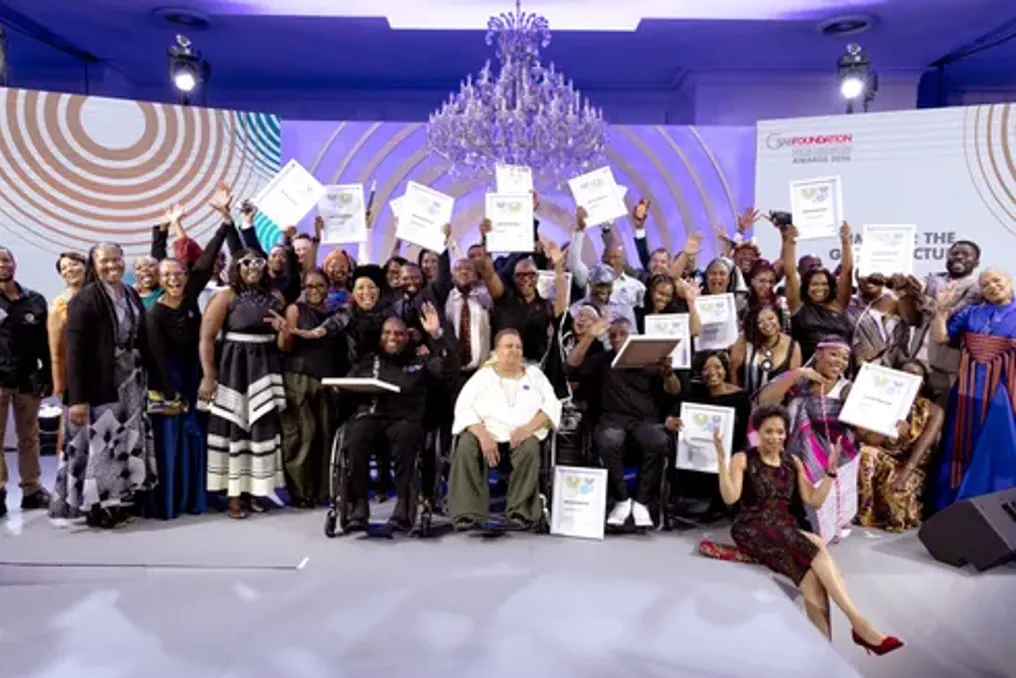
Twenty social innovators from South Africa were awarded a total funding of 18.4 million rand and business support at the SAB Foundation Awards ceremony for Social Innovation and Disability Empowerment, held in Johannesburg on October 15, 2026.
Social Innovation
The Executive Director of SAB Foundation, Sarah Mtintso, noted the wide range of issues addressed by this year's innovators, as well as the high quality of the solutions being developed in South Africa. She emphasized that these entrepreneurs are tackling challenges in healthcare, education, housing, mobility, water supply, financial access, and economic participation, seeking alternative ways to solve them. There is potential to help these solutions evolve into stronger enterprises capable of reaching more people.
The first place in the 'Social Innovation' competition was awarded to MagiTech Science for its product NuvionDerm. This advanced wound care solution uses donor human placental tissue to support the natural healing of chronic wounds, burns, ulcers, and surgical injuries. Second place went to LolaHouses from Earth and Plastic Waste, developed by Lola Green, which transforms local soil and recycled plastic into affordable and durable housing. Third place was awarded to BuddyAI—a WhatsApp-based tutoring platform providing personalized, multilingual, curriculum-aligned support to students from grade one to twelve.
Mtintso commented: 'NuvionDerm works to expand access to advanced wound care, LolaHouses utilizes local materials and recycled waste for affordable housing, and BuddyAI makes supplementary educational support accessible through technology that many South Africans use daily. These are very different innovations, but each addresses a real need in a practical way. This is where social innovation gains strength.'
Disability Empowerment
The awards for disability empowerment, supported by the Disability Empowerment Trust (DEC Trust), were presented for innovations that improve the access, independence, and economic participation of people with disabilities. NAVU Mobility won first place for NK Gen-1—an affordable, locally produced knee prosthesis for above-knee amputees. Its modular design allows for the replacement of individual components, reducing costs while supporting mobility and self-reliance.
Second place in this category went to Wheels of Change Inclusive Enterprise Hub for its 'Train-Produce-Trade-Sustain' model. This model creates economic opportunities for people with disabilities by training them in textile production, catering, farming, and wheelchair repair. Third place was awarded to nXtABLED—an entrepreneurship platform and online marketplace that connects businesses owned by people with disabilities with customers, sponsors, and partners.
Mtintso added that the recipients of the disability empowerment awards demonstrate the diversity of opportunities for creating businesses around enhancing access and participation. She noted that these entrepreneurs are developing commercially viable solutions while responding to barriers that continue to exclude people with disabilities from full societal and economic participation.
Nyameka Mkikela, CEO of DEC Trust, stressed that supporting entrepreneurs with disabilities and enterprises developing disability-focused solutions directly contributes to greater economic inclusion. According to her, disability should not determine a person's ability to run a business or participate fully in the economy. She concluded that the spectrum of innovations presented shows that disability innovation in South Africa is a growing area of entrepreneurship and business, as these enterprises create solutions that can improve access while simultaneously generating economic opportunities.
All 20 award recipients will receive 12 months of individualized business development assistance and mentorship to refine their business models and expand the reach of their innovations.