Transport Minister Barbara Creecy states that clearing congestion at Durban Pier 2 will take until February
Read more
IOL
iol.co.za

Transport Minister Barbara Creecy states that clearing congestion at Durban Pier 2 will take until February

Transport Minister Barbara Creecy reported that the problematic container terminal Durban Pier 2 will face a prolonged recovery after the latest congestion, which will last for months. She expects new equipment to arrive in December, and a gradual improvement in the situation is forecast until February of next year.

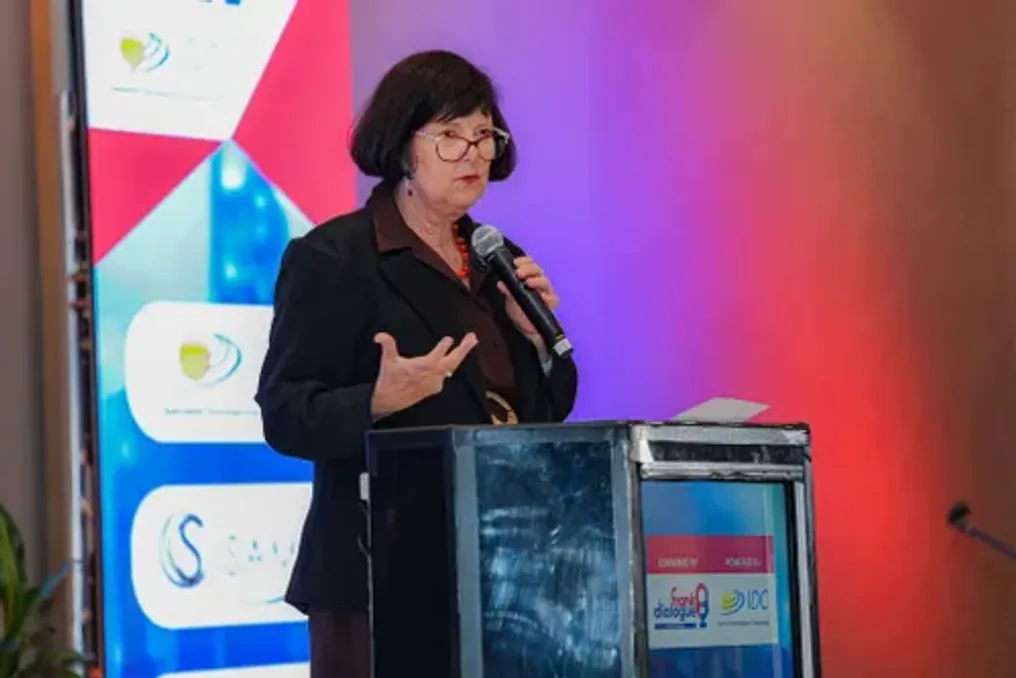
During her address at the South African transport industry Frankofsky Dialogue in uMhlangi yesterday, Creecy stated that during her flight to the city on Wednesday, she counted 39 vessels near Durban, compared to 32 vessels during her previous visit.

“When I landed… I had a heart attack because I was counting the ships,” she shared with the delegates.

Creecy immediately contacted the Group Transnet Chief Operating Officer Solly Letsoalo, who provided information on which terminals were being used by the vessels. Eight of them were linked to the Durban Gateway Terminal (DGT), a privately managed facility at Pier 2.

She warned that not all vessels off the coast should be attributed to the problems of this terminal. The disruption at DGT began after the transition to the Navis N4 computer system in August, which affected cargo movement, truck booking, and vessel operations. Despite attempts to restore normal operations, delays persist, forcing importers, exporters, and carriers to incur additional costs.

Creecy acknowledged that while the private operator controls daily operations at Pier 2, Transnet remains a partner. She noted that the system change was poorly timed, which created the congestion that will require time to resolve.

She mentioned visiting the facility, as did the Chairman of the Transnet board, while the group's CEO and COO inspected it on Wednesday. The operator is taking steps to increase productivity, but additional equipment is required.

“The point is that we brought in these partners because the entire port needs capital repairs. Everything requires new equipment,” Creecy stated. She expected that the incoming equipment would help restore productivity during December, January, and February, rather than providing an immediate turnaround.

“So I cannot promise an instant solution, but I can say that we are satisfied with the appropriate steps being taken to solve the problem,” she added.

Pier 2, which handles about 46% of South Africa's container volumes according to Transnet data, is managed by DGT since January under a 25-year partnership between Transnet and the Philippines-based company International Container Terminal Services Inc (ICTSI). Transnet retains a controlling stake, while ICTSI manages daily operations.

During the inspection of Durban Gateway Terminal on October 2, Creecy reported that vessels waited an average of 8.3 days, whereas the target was 24 hours. Following this, officials presented plans for implementing a new truck booking system, increasing rail transport, and changes in container yard operations. These measures were announced before the fourth dialogue.

Overcrowding is also felt outside the port. Truckers complain about long waits at gates and on adjacent roads, intensifying pressure on routes used for moving containers between Durban and Gauteng.

On Tuesday, trucks stood in kilometer-long queues outside the harbour during severe thunderstorms in Durban, although the cause of the congestion had not yet been determined.

The Truckers Association of South Africa warned that prolonged delays put small transport companies in financial difficulty, forcing operators to incur extra costs for fuel, driver overtime, and standing charges.

Letsoalo reported that Transnet has tasked work on an intermodal freight system along the Johannesburg-Durban corridor, studying how Transnet's railway lines and land can connect ports, inland terminals, and facilities where goods are transferred between trucks and trains. The work will also consider opportunities for private investment in these freight facilities.

Letsoalo did not specify timelines for the proposed intermodal system's commissioning. He insisted that existing lines have sufficient capacity for a larger volume of cargo, including what is currently transported by road. According to him, the national network could theoretically carry 250 million tons per year, compared to almost 170 million tons moved last year.

“The problem is that its quality is very low. It has not been maintained,” Letsoalo noted. He described stolen copper cables, damaged electrical infrastructure, and manual signaling, which can delay trains on the Durban-Gauteng route. He argued that repairing these systems is more urgent than building new tracks.

Letsoalo stated that the deterioration of freight railways has contributed to the increase in road traffic on the N2 and N3. “We must transport most of our raw materials by rail,” he added, noting that more containers should be transported by train to reduce congestion. Trucks will continue to play a role, especially over short distances.

Creecy assured that Transnet will continue to demand results from the terminal operator. “We will monitor them until the situation changes,” she concluded.

Similar stories

Delays at Durban Port Threaten Diwali Stockpiles and Drive Up Prices for Religious Goods Retailers
Read more
iol.co.za

Delays at Durban Port Threaten Diwali Stockpiles and Drive Up Prices for Religious Goods Retailers

Shipping problems at the port of Durban are threatening stock levels for the Diwali festival and leading to price increases for retailers of prayer items. Many shops supplying goods for Hindu festivals have not received the full volume of ordered imported goods, including decorations, spices, snacks, and clay lamps, for two months.

These delays have negatively impacted businesses, and many fear they will be unable to meet customer demand ahead of Diwali, which is celebrated on November 8th.

On Friday, the Durban Gateway Terminal (DGT) cited operational difficulties as the reason for the delays. DGT stated that it would hold meetings with land, sea, and freight transport associations as part of ongoing engagement to provide regular updates on terminal operations, recovery initiatives, and operational changes.

The statement also emphasized that DGT acknowledges the difficulties faced by some port users and noted that the operational situation has stabilized and continues to improve thanks to the stability of Navis N4 and enhanced operational control. Furthermore, DGT plans to replace the existing truck booking system with a modernized digital solution called Navigate to improve planning, visibility, and flow management for transport operators.

Kuraisha Maharaj from Maharaj’s Prayer Goods reported that she has yet to receive much of the merchandise she imported from India. Expected shipments include Diwali decorations, spices, and snacks. Maharaj stated that port authorities reported a computer system failure, preventing them from planning container releases. She noted that her container is in the harbor but believes the authorities lack the capacity or knowledge to release the cargo.

Maharaj also mentioned that goods intended for sale during Navaratri are still held in the harbor. The business has 'suffered' due to the delays, as she placed orders in August, two months before the start of the prayer season, considering a four-to-six-week delivery time. Due to the delays, she had to purchase some goods from suppliers in Johannesburg, which resulted in increased transportation costs, forcing customers to pay more. Consequently, she has had to limit the number of prayer items she can sell, which she says is disappointing for buyers.

A representative of one of the largest importers of Indian cultural goods in Springfield Park, who wished to remain anonymous, confirmed that his business and other suppliers of religious and cultural items are facing delivery delays. This representative noted that due to the conditions at the port, many businesses have delayed supplies, including decorations, packaging, and clay lamps from India for Diwali. He added that missing the seasonal shipment will lead to customer disappointment.

Sandra John from Nishan’s Prayer Goods reported that she has not been affected by the port delays so far. She purchased goods in advance from an importer and is satisfied with her Diwali stock. John noted that while her business performed well during the fasts of Purttasi and Navaratri, it could 'stagnate' if the port delays continue.

Indian Navy prepares domestic AIP system to increase submarine underwater endurance
Read more
www.aajtak.in

Indian Navy prepares domestic AIP system to increase submarine underwater endurance

The 'Setting to Work Phase-2' of the Autonomous Underwater Vehicle (AUV) energy module for diesel-electric submarines has been launched to enhance the capabilities of the Indian Navy. This system was developed by the Naval Materials Research Laboratory (NMRL) and DRDO.

The AIP system allows a submarine to increase its time spent underwater by reducing dependence on atmospheric oxygen. The inauguration ceremony took place on October 24, 2026, at the AM Nic Heavy Engineering Complex of Larsen & Toubro in Hajira, Gujarat state.

The main guests at the event were Defence Minister and Chairman of DRDO Rajesh Kumar Singh, who joined virtually. Present were the Chief of Staff of the Indian Navy, Vice Admiral B. Shivakumar, and DRDO Director General Dr. A. Balamurikrishnan.

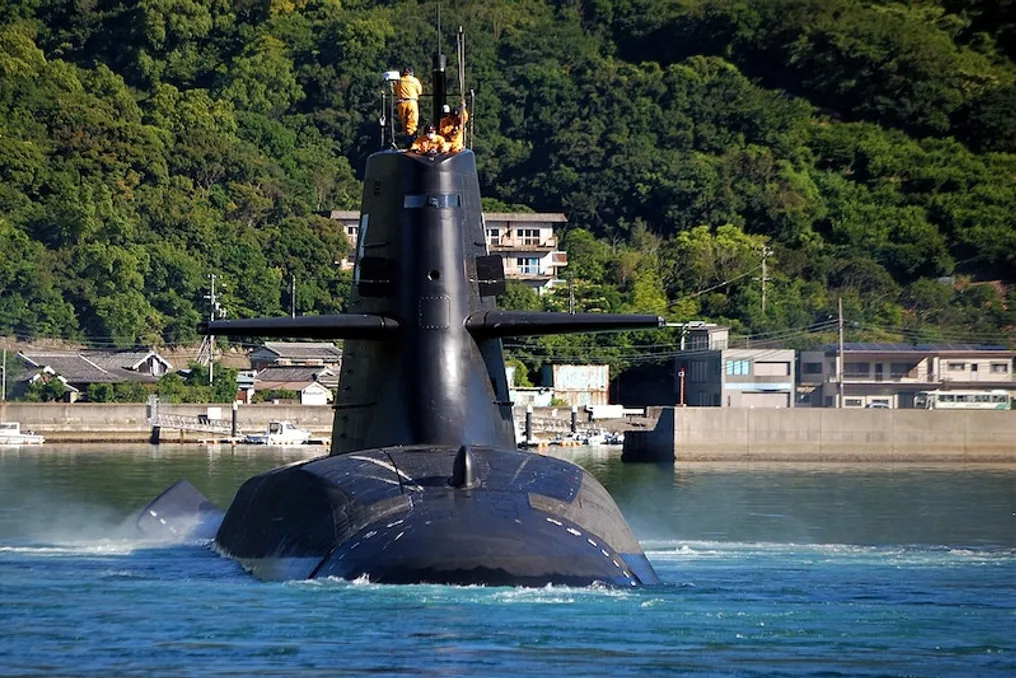
Traditional diesel-electric submarines cannot remain submerged for long because they must surface to replenish air oxygen supplies for battery charging, which increases the risk of detection by the enemy. The AIP system solves this problem by utilizing fuel cell and hydrogen technology, minimizing the need for oxygen.

As a result, the submarine is capable of conducting patrols underwater for a longer period, carrying out stealth attacks, and increasing its safety. This is a significant step towards India's self-reliance, as similar technologies previously depended on foreign sources. It is planned to install this system on Kalvari-class submarines based on the Scorpene design.

At the ceremony, the DRDO Chairman highly praised the cooperation between scientists, industry partners, and the Navy. He emphasized that the Navy's contribution to testing and validation at every stage was critically important. He stressed the need to meet the operational deployment deadlines for the Navy while maintaining a strict safety culture regarding hydrogen and fuel cell systems.

In the next phase, the AIP energy module will be launched for power generation and undergo rigorous testing according to Indian Navy protocols. Following this, it will be handed over to Mazagon Dock Shipbuilders Limited for integration into the Kalvari-class submarine in early 2027. Collaboration with partners like Larsen & Toubro strengthens the 'Make in India' concept.

This achievement will elevate the naval power of the Indian Navy to a new level. In the context of security threats in the Indian Ocean, submarines with extended autonomy will provide a strategic advantage. The use of indigenous technologies will lead to reduced costs and simplified maintenance, decreasing reliance on external supplies. Further application of this system on other submarines and exploration of export opportunities are planned.

The main objective remains ensuring timely commissioning while adhering to safety standards. This step demonstrates both the research and industrial potential of India in the defense sector.

Popular