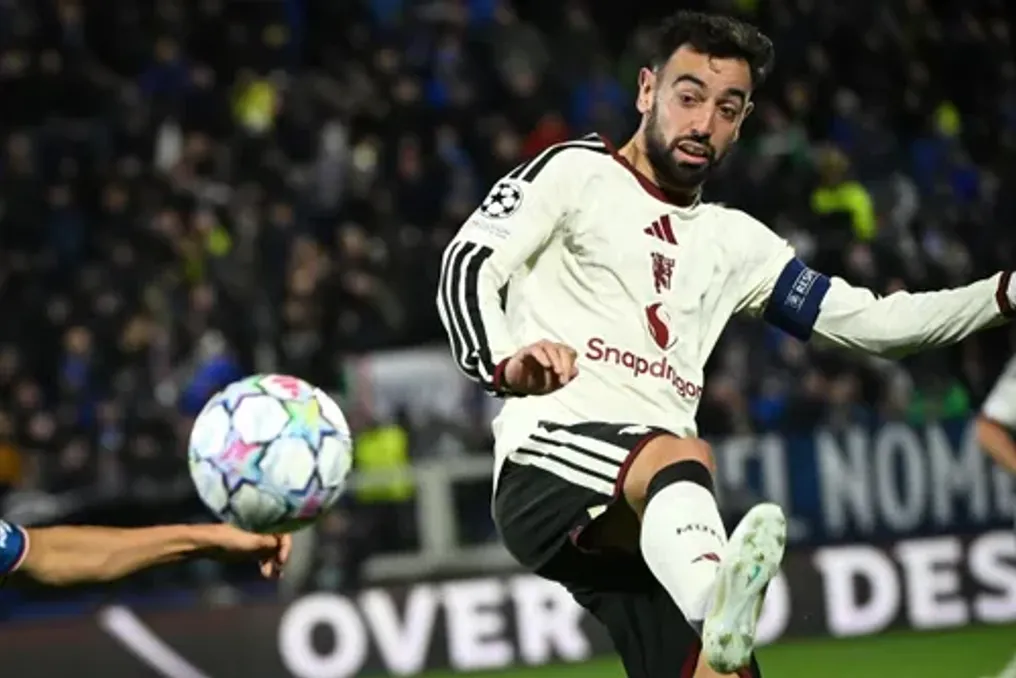
In modern elite football, a handshake without apologies is regarded not as a diplomatic gesture, but as a polite capitulation. When reports surfaced this week that Michael Carrick and Bruno Fernandes had 'reconciled' after the captain openly disagreed with the coach's tactical plan, public relations specialists at Old Trafford surely felt a sense of relief.
The initial version of events was supposed to look flawless, mature, and reassuring: two passionate footballers clashed, resolved their differences, and moved forward for the common good of a club that has won only one league match this season and is dangerously close to the relegation zone.
However, anyone familiar with the subtleties of modern football PR can spot an obvious gap in the foundation of this truce. In an era of hyper-controlled corporate media operations, genuine remorse never remains hidden. If Fernandes had offered an unconditional, unambiguous apology behind closed doors, the back pages of newspapers would not have needed to speculate.
Friendly briefings would have instantly appeared in all national publications before match reports had even dried, reassuring the public that the Portuguese playmaker expressed deep regret and confirmed his coach's absolute authority. Instead, we received a classic set of institutional maneuvers: 'constructive dialogue,' 'frank conversations,' and mutual agreement to move on.
This deafening silence in PR says a lot. It shows that Fernandes never backed down, and Carrick was forced to accept it. What is worse, Carrick allowed this player to publicly question his plan without any tangible consequences.
This soft compromise should be contrasted with how truly serious, system-oriented organizations handle insubordination in the dressing room. When Pierre-Emerick Aubameyang violated the cultural protocol at Arsenal, Mikel Arteta sent his captain away, stripped him of his armband, and showed him out of the Emirates Stadium. When João Cancelo allowed his tactical frustrations to manifest in negative non-verbal communication at Manchester City, Pep Guardiola sent him to Bavaria for the rest of the week.
At Brighton, Fabian Hürzeler demands unconditional acceptance of the collective opinion, and at Aston Villa, Unai Emery's microscopic positional demands are absolutely non-negotiable.
At Old Trafford, the star dictates the terms because the club fears the consequences if it dares to bench him. The humiliating defeat last weekend against Bournemouth with Fernandes on the bench only strengthened his position. This is a direct consequence of the incident with Lisandro Martínez in Madrid. When a central defender feels bold enough to criticize Technical Director Jason Wilcox live, and a club captain can openly challenge his head coach's tactical intelligence without a hint of regret, decay ceases to be structural—it becomes terminal.
This exposes a dressing room that knows hierarchy is completely powerless. Michael Carrick may believe he extinguished a dangerous fire before the next crucial weekend when United plays Chelsea away in the league. In reality, he has only confirmed his status as a hostage to the dressing room leaders. As is known, Sir Alex Ferguson ruled by one unshakeable principle: once a player becomes more important than the coach, the club is doomed. Carrick's unstable truce with Bruno Fernandes proves that at Manchester United, player power remains the only undisputed authority in the building.