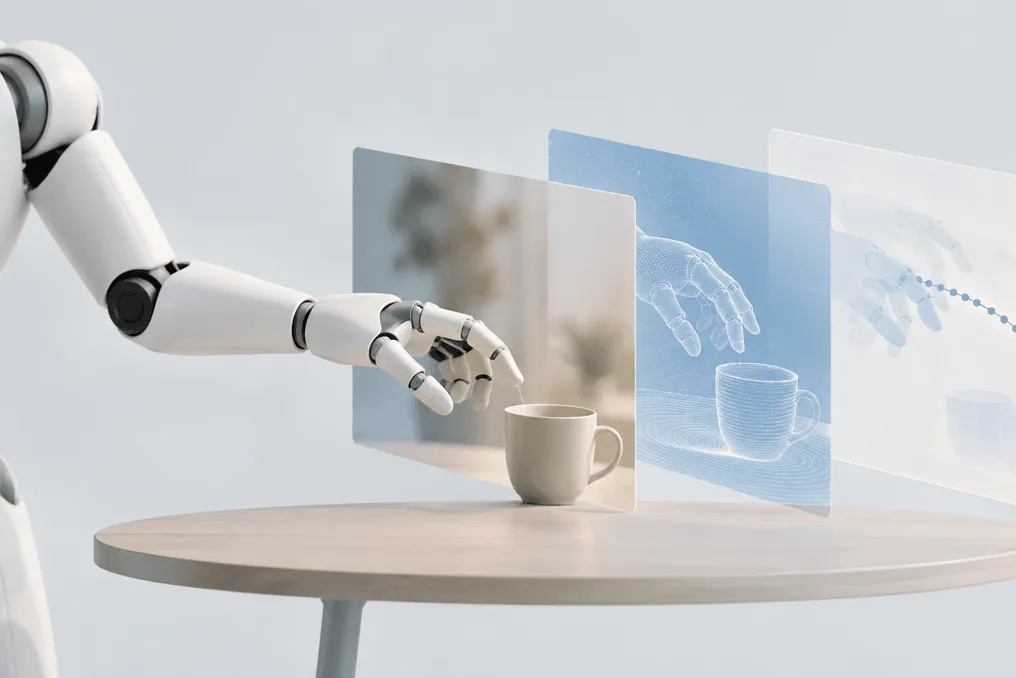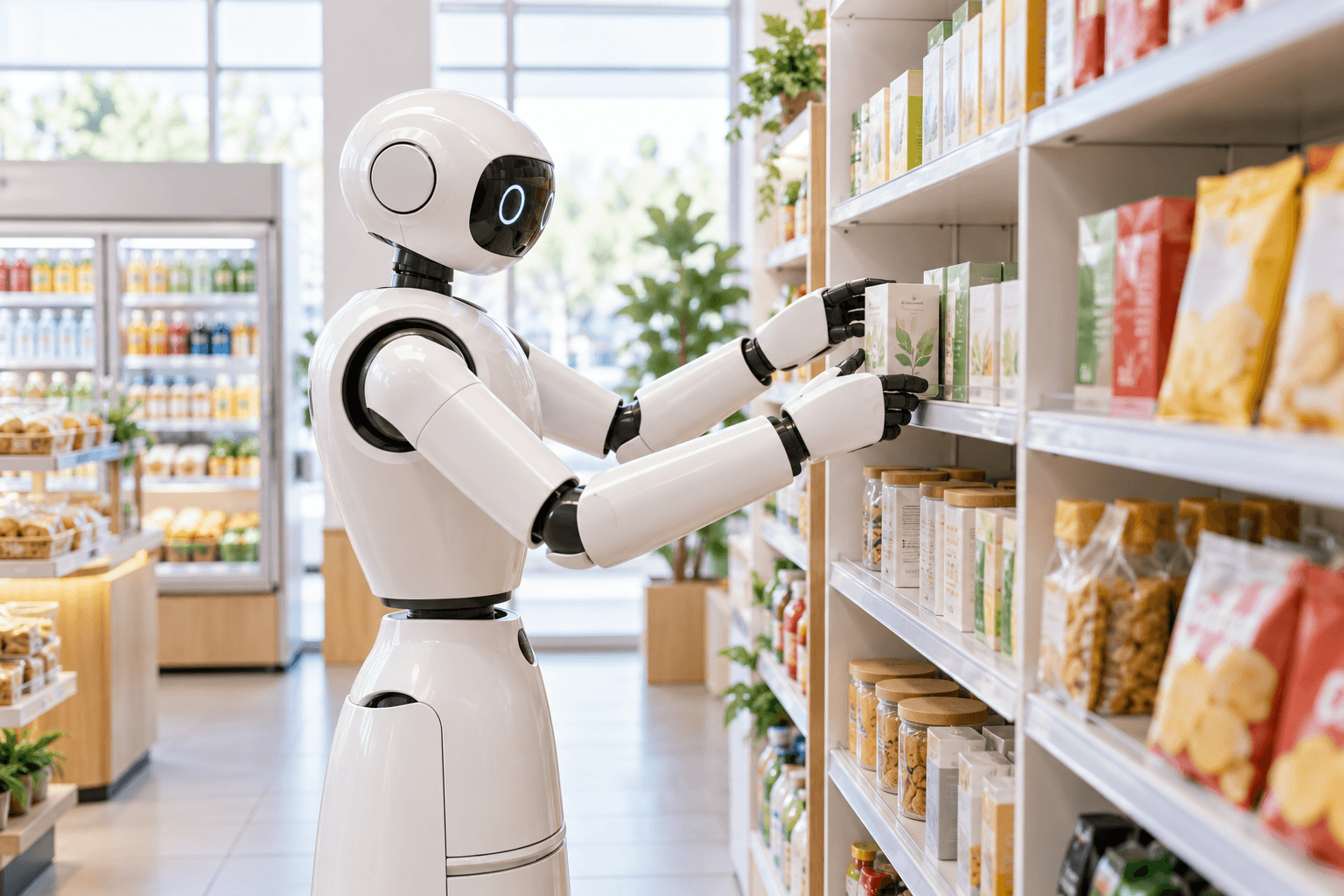
AgiBot unveiled GO-3 Preview robot, which ranked first in three ratings and plans to become an open-source project
Read more
Pandaily
pandaily.com

AgiBot unveiled GO-3 Preview robot, which ranked first in three ratings and plans to become an open-source project

AgiBot released the GO-3 Preview model on October 29. This embodied artificial intelligence model is capable of continuous learning at all stages: during pre-training, after it, and even after deployment into operation. AgiBot intends to make the full model publicly available by the end of 2026.

GO-3 Preview is based on an architecture that AgiBot calls WRAM, or World Reasoning Action Model. This architecture links task reasoning, future event prediction, and action generation, allowing the robot to understand instructions, anticipate outcomes, and perform corresponding movements.

The model recently won first place in three embodied AI rankings: RoboDojo, RoboTwin, and RoboColiseum. AgiBot claims that the model scales in two directions. On one hand, rich examples of object processing and task development are provided by first-person videos of people, while robot trajectories link observations with actions and physical results.

On the other hand, the model's higher learning capacity transforms this disparate experience into skills that can be applied to new tasks. After pre-training, the company notes that robots can perform unfamiliar tasks in homes, kitchens, multi-robot systems, and execute fine manipulation without additional fine-tuning.

With several demonstrations, the model is capable of mastering long and delicate operations, such as making jianbing—a Chinese savory crepe. After fine-tuning and step coordination by the agent, the robot can also assemble Lego pieces.

For the post-training phase, AgiBot developed the Genie Evolver distributed learning system, which combines about one hundred real robots with physics simulation and world models. In a table curling game, the robot surpassed the average tested human after four hours of online training. In a block tower game, it managed to pull out five blocks consecutively while maintaining the tower's stability.

After deployment, the Genie Master agent structure ensures communication between reasoning, execution, and feedback, allowing robots to continuously improve during operation. The AgiBot G2 robot, operating in a real 24-hour store, independently detected the causes of its own failures, adjusted its approach, and retained the acquired knowledge without human intervention or tuning. This robot's success rate in a full workflow increased from 28.6 percent on the first day to a stable 85.7 percent after five days.

In a task similar to hanging small hooks, AgiBot states that this method increased the success rate of the individual task by 17.7 percentage points compared to traditional controlled fine-tuning, and the training process continues online.
Similar stories

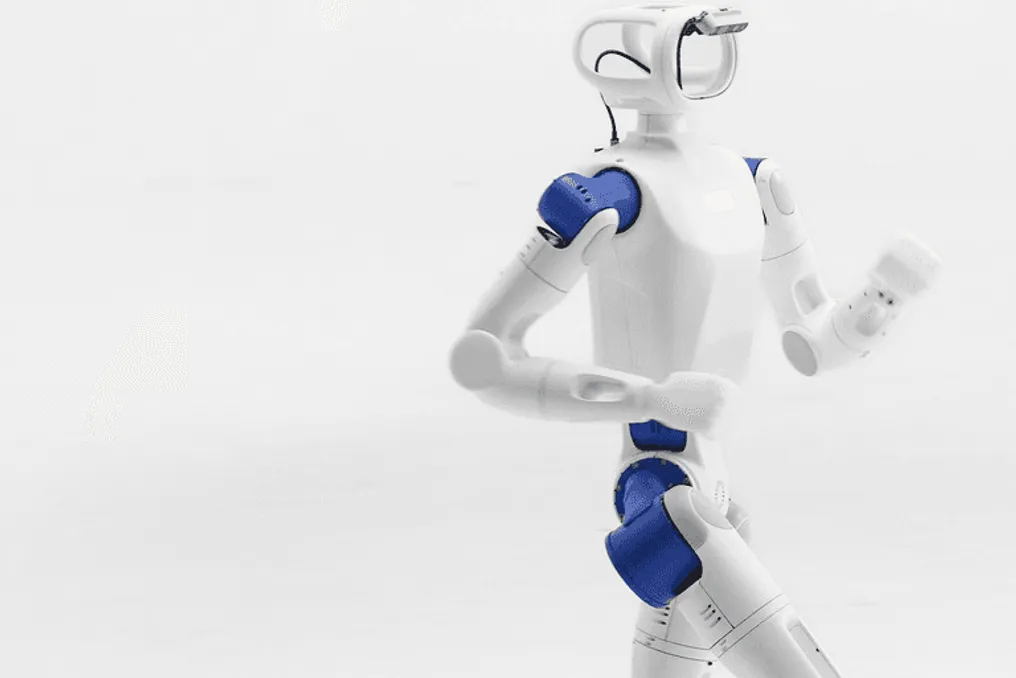
RoboParty releases source code for its humanoid robot RP1, including mechanical design and control software
Read more
pandaily.com

RoboParty releases source code for its humanoid robot RP1, including mechanical design and control software

RoboParty has released the RP1, a humanoid robot positioned as a fully open, fully functional platform. Instead of providing only a Software Development Kit (SDK) or a few Application Programming Interfaces (APIs), the company is publishing materials across the entire development chain: from mechanical and electrical design and proprietary joint modules to firmware, robot models, deployment tools, and training. The description of this project was presented in technical documentation on October 25th.

The RP1 robot stands 135 cm tall. The open version is equipped with 24 active degrees of freedom, while the Professional version offers 30 degrees of freedom, including two in the head and seven in each arm, suitable for more complex manipulation research. The head and hand modules can be replaced for use in various applications such as education, scientific research, data collection, tours, or entertainment. RoboParty demonstrated the robot's ability to walk continuously, track human movements, recover from pushes, and stand up after falls.

The hardware is based on ROMOMO, RoboParty's integrated rotary joint module. According to published specifications, the nominal peak torque ranges from 25 to 160 Newton-meters when powered by 48V and using CAN-FD communication. These modules combine inner rotor motors with planetary gearboxes, allowing for the sacrifice of low rotor inertia for fast response, stiffness, overload resistance, and reduced cost. RP1 uses an off-axis hip joint and a parallel ankle, where two motors jointly control pitch and roll, and the hollow cable routing attachment simplifies joint disassembly.

On the GitHub platform, the RP1 overview repository contains links to subprojects dedicated to mechanical source files, electronics, testing and assembly procedures, ROMOMO joint firmware, and host tools, as well as the RP Hand dexterity with SDKs in C++, Python, and ROS 2, full machine testing, and controller application. The repository lists mechanical CAD models, schematics, PCB layouts, Gerber files, material specifications, and assembly documentation for the hardware, while URDF, MJCF, and mesh models are available for simulation. The original article notes that the exact scope of each release should be checked in individual repositories.

Regarding software, the embedded stack connects motors, inertial sensors, and the battery management system through a unified device interface, enabling control at a frequency of 500 Hz and policy updates at 50 Hz. An open-source motion remapping tool called hhtools maps human movements onto the robot while respecting joint limits and ground contact. Within the basic development platform, RoboParty's PartyOS opens parts of the base motion layer, including hhtools, MimicLite, and UFO—a recovery project for disturbances and falls. Higher levels for intent representation and agent skill orchestration remain under research.

RoboParty has opened applications for the RP1 beta program, intended for developers and teams with real projects ready to report issues and provide feedback on this platform.

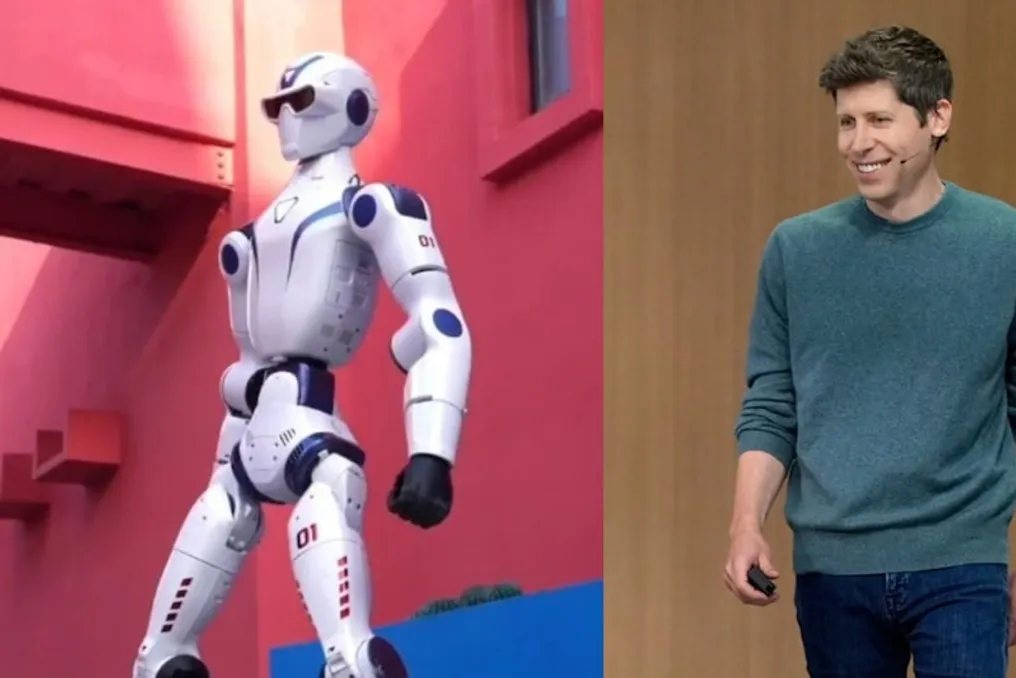
OpenAI to develop humanoid robots; first demonstration expected in 2027
Read more
www.aajtak.in

OpenAI to develop humanoid robots; first demonstration expected in 2027

OpenAI, the company that created ChatGPT, plans to undertake an even larger project—the development of robots that resemble humans externally. Special attention is paid not only to these robots' ability to move but also to their capacity to understand their environment and perform tasks.

OpenAI CEO Sam Altman has hinted at a robot demonstration. This raises questions about the robot's capabilities and its expected arrival timeline.

First demonstration possible in 2027

According to a report, Sam Altman stated that OpenAI could present a demonstration of its humanoid robot in 2027. However, the company has not yet disclosed full information regarding the release date, price, or characteristics of the robot, and this does not mean it will go on sale specifically in 2027.

A natural question arises regarding the necessity of creating humanoid robots, given that machines already exist. Modern homes, offices, and factories are designed with human anatomy in mind. A robot with a structure similar to a human can function more easily in such environments.

However, simply creating a human body is not enough. The robot must possess the ability to analyze what is happening around it and make decisions about subsequent actions.

The robot's brain will be the most important

OpenAI's main strength lies in its artificial intelligence technologies. The company intends to use this technology to give the robot intelligence. For example, if the robot is tasked with picking up an object, it must first recognize the object, understand how to lift it, and then complete the task. Thus, what becomes critically important is not just following pre-set commands, but the robot's ability to make decisions based on understanding the current situation.

Competition with Tesla?

OpenAI is not the only company participating in the humanoid robot race. Tesla, led by Elon Musk, is also working on its Optimus robot. Other companies are also advancing this technology.

Currently, complete information about the OpenAI robot is unavailable. It remains to be seen what the company will demonstrate in 2027 and how effectively its robot will be able to operate in the real world.

UBTECH introduces Thinker-WM—a world model that unifies video, depth, and robot actions
Read more
pandaily.com

UBTECH introduces Thinker-WM—a world model that unifies video, depth, and robot actions

UBTECH has unveiled details of Thinker-WM, a world model developed by its Thinker team. This model is capable of encoding RGB video, metric depth, and robot actions into a single unified representation. Technical documentation for this development is available on arXiv.

According to the company's statements, Thinker-WM ranked first in three embodied world model benchmarks. These rankings are based on results available at the time of the announcement.

Model Testing Results

According to UBTECH, the Thinker-WM model achieved an overall score of 0.740 on WorldOlympiad. This benchmark is built on real-world robot interaction data and covers over ten robots and several camera configurations. Furthermore, the model reached the highest individual scores for 3D consistency (0.531) and interaction accuracy (0.765).

On the EWMBench platform, the model demonstrated a cumulative score of 4.66, surpassing models such as Qwen-RobotWorld and Sora 2, with leading results achieved in the dynamics and trajectory matching metrics. On the WorldArena 1.0 Track-1 simulation benchmark, the company claims it led across 12 different evaluation criteria.

Architecture and Operating Principle

The main argument for developing Thinker-WM is that many existing world models consist of separate components: video generation handles pixels, the policy network handles actions, and a separate module predicts geometry. UBTECH believes this approach separates physically related signals. Instead, Thinker-WM passes each modality through its own encoder into a common latent space and jointly models them within a Unified Dynamics Transformer before decoding video, depth maps, and executable actions. Depth is treated as an integral output signal, not an auxiliary one.

In single-task experiments on RoboTwin, adding depth increased manipulation success by 15 percentage points compared to the baseline model where depth was absent.

Because all modalities utilize a single set of weights, the model can function in six different modes, including joint video and action generation, future prediction, policy inference, video-to-action translation, and inverse dynamics, simply by changing the input data and generated outputs.

Training Data

The total volume of training data amounts to approximately 30,000 hours. Of this, about 20,000 hours consists of first-person video shot in home environments, retail stores, and factories; about 10,000 hours comprises real robot data from various types; and about 1,000 hours is simulation data. All robot actions are represented as end-effector poses with a body-specific tag, allowing different machines to use the same generation space. A data pipeline called Data Factory handles sampling, multi-level quality checking, and depth-video alignment.

To verify whether the shared space truly connects the modalities, the team trained a small test motion mechanism on frozen visual features to recover end-effector offset, which UBTECH presents as evidence of cross-modal binding.

Popular