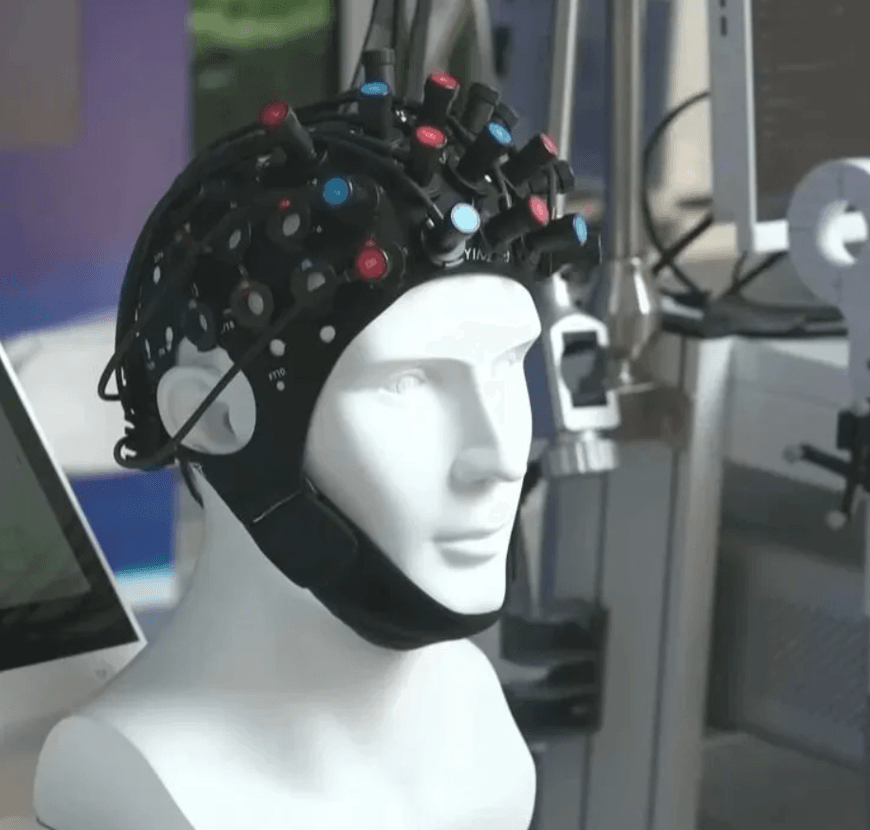
A team including specialists from the Shenzhen Institute of Advanced Technology of the Chinese Academy of Sciences has developed a non-invasive ultrasound-based brain-computer interface. This technology was demonstrated at the Brain-Computer Interface Industry Conference in Shenzhen, according to CCTV News.
Unlike most existing systems, this device does not require surgical intervention, such as skull opening or electrode implantation. Instead of simply reading brain signals, the system directs precisely focused ultrasonic waves into the brain. Researchers explain this as a method of inputting regulatory signals into neural circuits, which potentially can activate the brain's capacity for self-reorganization, restoring damaged or inactive neural pathways.
The technology is being studied for treating a range of conditions. In a preliminary clinical trial conducted jointly with Kunming Medical University, 13 out of 24 participants with chronic consciousness disorders, including patients in a vegetative state, showed clear improvement in consciousness-related behavior. The treatment protocol involved three 20-minute sessions every week for four weeks.
The report specifically highlighted the case of a patient who had not responded for three months after a cerebral hemorrhage. After 30 days of ultrasonic exposure, the patient regained consciousness and, following rehabilitation, was able to hold conversations, feed himself, and walk with assistance. However, researchers emphasize that such isolated cases do not provide a complete picture of the approach's effectiveness across all patients, and the study itself is early and small in scale.
Scientists note that the method can be adapted for various diseases. For epilepsy, where a specific area of the brain becomes excessively excited at a high frequency, ultrasound is used to suppress this hyperactive zone. In cases of depression linked to imbalances in emotional regulation circuits, ultrasound is applied to modulate these circuits. For consciousness disorders, when communication between the thalamus and the cerebral cortex is disrupted, repeated gentle ultrasound procedures aim to promote the gradual restoration of the neural network. Work on treating epilepsy and depression is still in the intervention research stage.
Brain-computer interfaces are traditionally classified into invasive, semi-invasive, and non-invasive methods. The focused ultrasound presented by the researchers is considered a new vector in the non-invasive category, allowing avoidance of surgical risks while previously offering less precise access to deep brain structures.
The results obtained so far are based on a preliminary study reported in the media. Before this approach can be considered an approved treatment method, larger controlled trials are necessary, and the text did not mention receiving any regulatory approval.