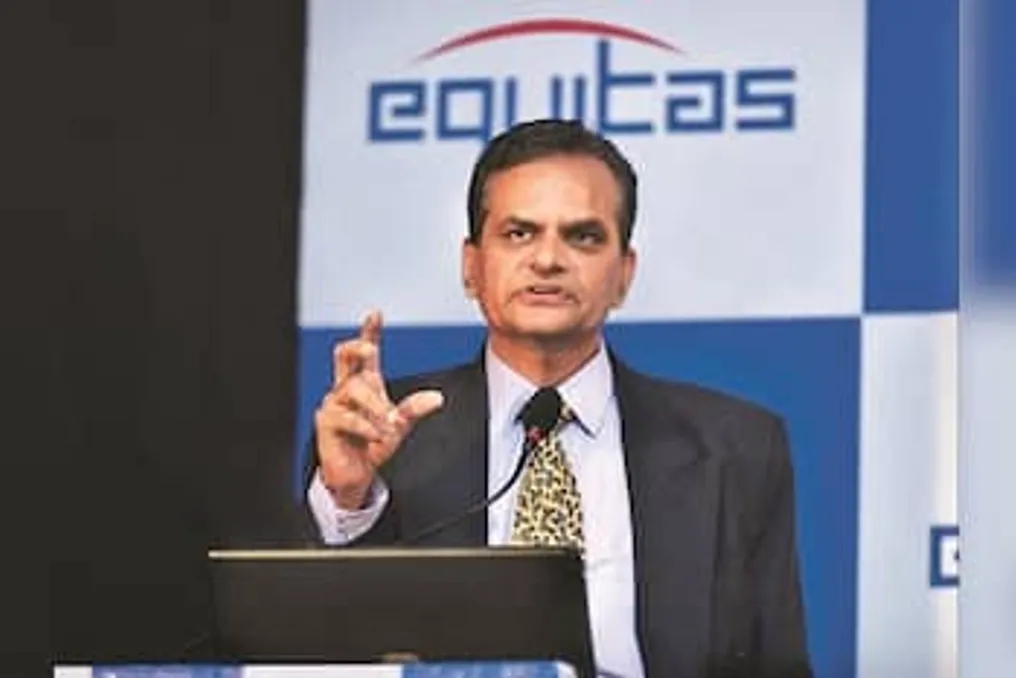
P N Vasudevan, the Managing Director and Chief Executive Officer of Equitas Small Finance Bank (SFB), submitted his resignation on Thursday. This decision came less than three months after the board had extended his term until July 2029. The reason cited was ongoing apprehension from investors concerning a perceived conflict of interest linked to his daughter's involvement with a non-banking financial company (NBFC).
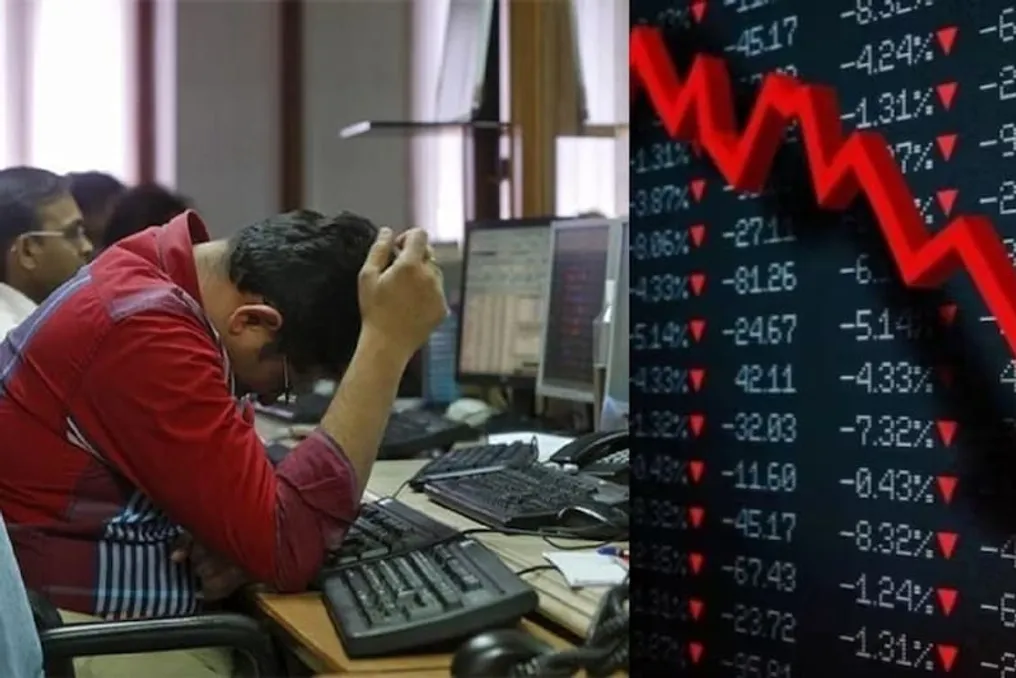
Following the public announcement of his departure, the lender's stock experienced a significant decline, dropping 20 percent during intraday trading and touching the lower circuit, before settling over 12 percent lower at ₹56.99 on the BSE.
In his formal resignation letter, dated October 29, Vasudevan stated that the perception of a conflict of interest remained despite his efforts to reassure investors that no current dealings existed between the bank and the NBFC. He noted that this issue negatively impacted the bank's stock performance and hindered value creation for both shareholders and employees.
Vasudevan defended his position in the letter sent to the bank's chairman, asserting that his role as MD of a bank alongside his daughter serving as a co-promoter of an NBFC falls within the parameters of the Banking Regulations Act. He further clarified that the NBFC, which his daughter promoted, obtained a license from the Reserve Bank of India (RBI) in 2023, and that both his association with the bank and her role in the NBFC had been duly disclosed to the board and the RBI, as mandated.
He emphasized that the only transaction between Equitas SFB and the NBFC was a short-term deposit made approximately two and a half years prior, which was subsequently repaid upon maturity, confirming the absence of any other dealings, such as loans, between the two entities. Vasudevan remarked, “Sometimes perceptions are stronger than reality,” adding that investors had repeatedly brought up this matter during meetings over the last three years. To alleviate this 'overhang' caused by the perception issue, he expressed his desire to step down, hoping his exit would allow the stock price to better reflect the bank's actual financial health.
The bank's board acknowledged his resignation during a meeting held on Thursday and asked him to remain in his capacity as MD & CEO until a replacement is appointed. The nomination and remuneration committee is tasked with identifying appropriate internal and external candidates, whose appointments require approval from the RBI and other relevant regulatory bodies.
Vasudevan established Equitas as a microfinance institution in 2007 and oversaw its transformation into an SFB in 2016. Prior to founding Equitas, he worked for two decades at Cholamandalam, followed by a brief period at DCB Bank. In his correspondence, he mentioned his intention to take a hiatus after dedicating roughly 20 years to Equitas to concentrate on establishing a fund for a trust aimed at assisting a different societal group.
This change in leadership occurs as the bank aims to capitalize on its recent business expansion. Vasudevan reported that the bank's total business surpassed ₹1 trillion in the quarter ending September 2026, concurrently achieving its highest quarterly profit to date of ₹218 crore. The SFB has outlined a five-year strategy extending to March 2031, targeting an annualized growth rate exceeding 20 percent for both advances and deposits, with the goal of reaching approximately ₹1.2 trillion in each category. Over the preceding five years, advances and deposits have demonstrated compound annual growth rates (CAGRs) of about 26 percent and 27 percent, respectively. Furthermore, he noted that unsecured microfinance constituted around 10 percent of the bank's advances, and its branch network had expanded to approximately 1,100 locations.
It was revealed that this marks the second instance of Vasudevan stepping down from the role. In May 2022, he had previously resigned as MD & CEO but later retracted that decision in December 2022, following the board's request for him to continue leading the bank, at which time his plan was to dedicate more time to his social service endeavors. The SFB's board conveyed that it did not anticipate this leadership transition would negatively impact the lender's long-term strategic objectives.