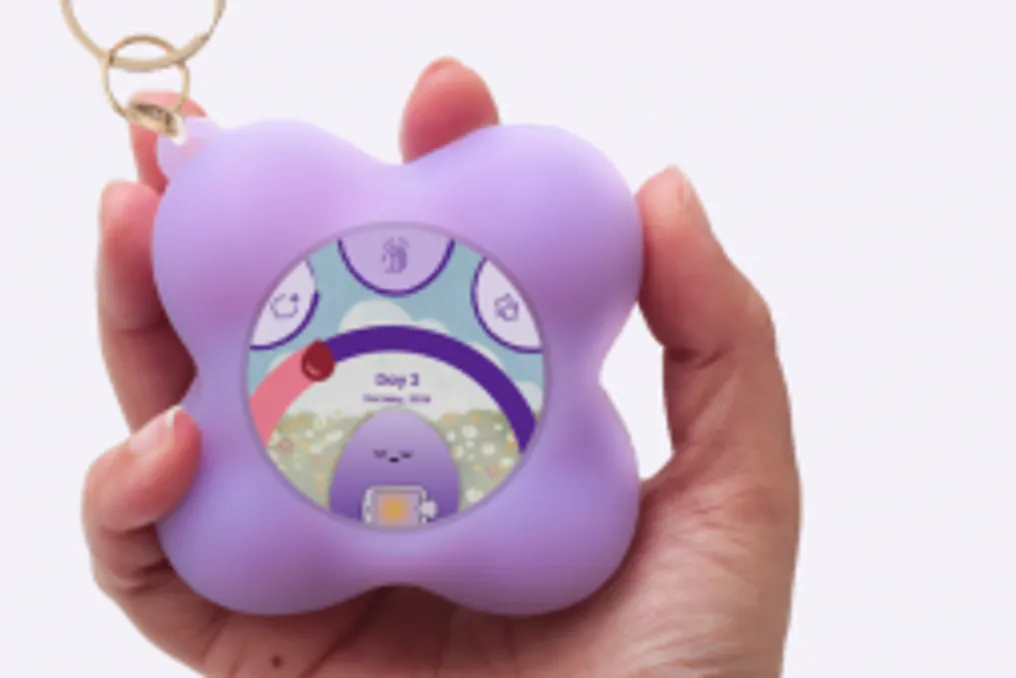
Bobo is a discreet and interactive companion device developed by Anushka Sawardekar as part of her diploma project at the Imperial College London and the Royal College of Art. It is designed for users aged 8 to 16 and serves to record symptoms such as pain, nausea, bloating, or mood changes.
Users can log this data through a simple touch interface to then share it with healthcare professionals and support their health during menstruation. Often, young people ignore painful periods, considering them normal, and do not record or report many symptoms. For individuals suffering from conditions like endometriosis, this can lead to years of uncertainty before receiving a diagnosis. Bobo's goal is to bridge the gap between user experience and professional medical care.
The device has a soft, tactile form that can be attached to a school backpack, offering an alternative to using a smartphone. A pressure-sensitive sensor allows users to mark their level of discomfort simply by squeezing the device, providing an intuitive way to convey information. The system accumulates records throughout menstrual cycles, helping to identify patterns that can be presented to a doctor during an appointment.
After completing three or more cycles, Bobo generates a structured clinical report that can be transferred to a therapist with a single tap using NFC technology. Medical data is stored locally and encrypted, giving young users control over their information. Sawardekar emphasized personal experience in the design process, relying on interviews with doctors, parents, and youth. Bobo was named a national finalist for the James Dyson Award in 2026 and is intended to empower young people to advocate for their health.